A checking balance can look comfortable and still be too low.
It can also look reassuring while holding far more money than the account actually needs.
The difficulty is that checking does several jobs at once. It receives income, pays bills, supports debit-card purchases, absorbs timing differences, and sometimes serves as an informal emergency reserve. The number shown in the banking app may include money already committed to payments that have not posted yet.
That is why there is no universal checking-account target such as one month of income, exactly $2,000, or a fixed percentage of your savings.
A useful target depends on:
- how often income arrives;
- when bills are due;
- how variable spending is;
- how many automatic payments leave the account;
- whether pending card transactions are common;
- and how much margin you need to avoid routine shortfalls.
The practical goal is not to maximize the checking balance.
It is to keep enough for near-term obligations and normal timing errors without leaving large amounts there simply because they have never been assigned another job.
Scope note: This article explains how to estimate an operating balance and checking buffer. The final article in this cluster separately explains deposit insurance and what it does and does not protect.
Quick Answer
A practical checking target is:
**Money needed before the next reliable income deposit
- scheduled payments not yet completed
- expected variable spending
- a reasonable checking buffer**
For example, suppose you expect before the next paycheque:
- $1,400 in scheduled bills;
- $650 in groceries, fuel, and ordinary spending;
- and you want a $400 buffer.
Your working target would be about:
$1,400 + $650 + $400 = $2,450
That amount is not a recommendation for everyone. It is an example of a method.
Someone paid weekly with few automatic payments may need less.
Someone with irregular income, variable bills, or several days between payment authorization and posting may need more.
The useful question is:
How much must remain available so that ordinary life does not depend on perfect timing?
Checking Money Has Three Different Jobs
Before choosing a number, separate checking money into three categories.
1. Committed Money
This money is already assigned to obligations such as:
- rent or mortgage;
- utilities;
- insurance;
- loan payments;
- credit-card payments;
- childcare;
- subscriptions;
- and transfers scheduled before the next deposit.
The payment may not have posted yet, but the money is not truly available for another purpose.
2. Expected Spending
This is money likely to be used before the next income deposit for:
- groceries;
- fuel;
- transit;
- medicine;
- household supplies;
- and ordinary discretionary spending.
It is not tied to one scheduled bill, but it still has a near-term job.
3. Checking Buffer
This is a modest margin for:
- a bill posting earlier than expected;
- a utility payment being higher than estimated;
- a pending restaurant tip;
- a delayed deposit;
- a forgotten subscription;
- or another ordinary timing difference.
The buffer is not intended to pay for a major financial emergency.
It protects the operating account from small forecasting errors.
The Difference Between a Checking Buffer and an Emergency Fund
A checking buffer and an emergency fund are both reserves, but they solve different problems.
| Reserve | Main purpose | Typical location |
|---|---|---|
| Checking buffer | Small cash-flow and timing errors | Checking |
| Emergency fund | Larger unexpected expense or income interruption | Separate savings or another accessible cash account |
A checking buffer may cover:
- a $75 bill that arrives earlier;
- a $120 utility increase;
- or a two-day payroll delay.
An emergency fund may be intended for:
- urgent car repair;
- home repair;
- medical expense;
- job loss;
- or another larger disruption.
Keeping the two concepts separate helps prevent checking from becoming an undefined storage account.
The emergency fund should remain accessible, but it does not necessarily need to sit in the account connected to daily purchases and automatic debits.
Start With the Next Income Cycle
The most useful planning period is often the time between reliable income deposits.
That may be:
- one week;
- two weeks;
- twice a month;
- one month;
- or an irregular period for self-employed workers.
Begin on the day after income arrives.
Then list every amount expected to leave before the next dependable deposit.
Case Example: Biweekly Pay
Sofia is paid every two weeks.
Before the next paycheque, she expects:
| Item | Amount |
| Rent contribution | $900 |
| Car payment | $320 |
| Utilities | $180 |
| Groceries and fuel | $450 |
| Subscriptions | $55 |
| Expected need | $1,905 |
She chooses a $300 checking buffer.
Her target immediately after payday is approximately:
$1,905 + $300 = $2,205
If the account contains $2,900 after income arrives, about $695 may be available for savings, another planned goal, or spending not included in the estimate.
The calculation gives Sofia a starting point. It does not guarantee that every category will match exactly.
Use the Available Balance Carefully
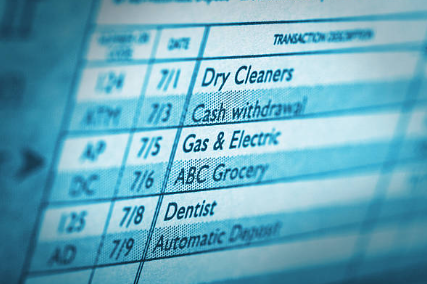
The balance shown in an app may not reflect every commitment already made.
The FDIC warns that an online or mobile balance may not include all purchases or payments already initiated.[1]
Possible reasons include:
- a cheque that has not cleared;
- an automatic payment scheduled for tomorrow;
- a debit-card transaction still pending;
- a restaurant tip not yet finalized;
- a deposit that is visible but not fully available;
- or a merchant authorization that temporarily disappears before posting.
Banks may show several figures:
- current balance;
- available balance;
- pending transactions;
- and funds on hold.
The available balance is generally more useful for immediate spending decisions, but it still may not include a payment you know is coming and the bank has not yet received.
Your own list of scheduled obligations remains important.
Case Example: The Balance That Looked $600 Higher
Ethan’s app shows an available balance of $2,100.
He has already mailed a $500 cheque and scheduled a $100 charitable payment, but neither appears in the app.
His practical available amount is closer to:
$2,100 – $500 – $100 = $1,500
If he treats the full $2,100 as available, the account may become short when those payments arrive.
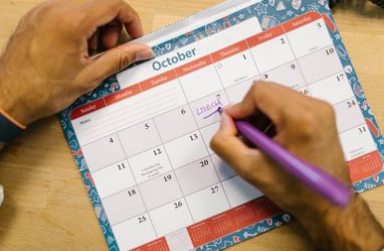
Build a Bill Calendar
A monthly budget tells you how much you expect to spend.
A bill calendar tells you when the money must be available.
That distinction matters when income and bills do not arrive in a convenient order.
The CFPB’s cash-flow tools encourage consumers to place income and expenses on a calendar so they can see whether timing creates a shortfall even when total monthly income appears sufficient.[2]
Record:
- income dates;
- bill due dates;
- automatic debit dates;
- transfer dates;
- annual and quarterly payments;
- and irregular expenses that are predictable.
A Timing Problem Can Look Like an Income Problem
Suppose a household receives $6,000 per month and spends $5,200.
On paper, the budget has an $800 surplus.
But if $4,000 of bills leave during the first week and only $3,000 of income has arrived, checking can still run short.
The solution may involve:
- keeping a larger beginning-of-month balance;
- changing a due date where available;
- allocating part of the previous paycheque to next month’s bills;
- or changing when automatic transfers occur.
The checking target should reflect timing, not only monthly totals.
Choose a Buffer Based on Actual Variability
There is no official universal buffer amount.
The right margin depends on how much uncertainty exists inside the account.
A smaller buffer may be reasonable when:
- income is stable;
- bills are predictable;
- the household checks the account frequently;
- few payments are automatic;
- and overdraft settings are understood.
A larger buffer may be reasonable when:
- income timing varies;
- utilities fluctuate;
- multiple people use the account;
- several automatic payments can post without notice;
- card holds are common;
- or a shortfall would create serious disruption.
Possible starting approaches include:
- one week of ordinary variable spending;
- the amount of one meaningful recurring bill;
- the largest normal month-to-month variation;
- or a fixed amount established after reviewing several months of activity.
The buffer should be large enough to be useful and small enough to remain clearly separate from long-term savings.
Case Example: Two Households, Different Buffers
Household A
- weekly pay;
- stable rent;
- few automatic payments;
- account checked several times a week.
A $250 buffer may be workable.
Household B
- commission income;
- variable childcare and utility costs;
- several automatic payments;
- account managed by two people.
A $1,000 buffer may be more appropriate.
The larger amount is not proof that Household B is less disciplined.
Its cash flow contains more uncertainty.
Review Three to Six Months of Account Activity
A target based only on one month may miss:
- seasonal utilities;
- annual renewals;
- school costs;
- travel;
- insurance payments;
- and months with an extra paycheque.
Review at least three months and preferably six to twelve when your expenses vary substantially.
Look for:
- the lowest balance reached;
- the largest week of withdrawals;
- bills that change month to month;
- payments that surprised you;
- days when deposits and debits crossed;
- repeated transfers from savings;
- and fees or declined payments.
The target should reflect patterns, not one unusually quiet month.
Case Example: The “Comfortable” Balance That Failed Every Quarter
Andre usually keeps $2,000 in checking and rarely has a problem.
Every three months, however, a $640 insurance payment posts.
During those months, he transfers money back from savings at the last minute.
The problem is not necessarily that his everyday target is wrong.
The quarterly expense has not been incorporated into the system.
Possible solutions include:
- keeping an additional amount in checking before the payment month;
- setting aside about one-third of the quarterly bill each month in a designated savings category;
- or transferring the full amount to checking shortly before it is due.
The better choice depends on how Andre prefers to organize predictable irregular expenses.
Planned Irregular Expenses Are Not Emergencies
Some expenses feel surprising because they do not occur monthly.
They are still predictable.
Examples include:
- annual insurance;
- vehicle registration;
- property tax;
- school fees;
- holiday travel;
- professional dues;
- and seasonal maintenance.
These expenses should not permanently inflate the checking target all year unless they are due soon.
A separate savings category can hold the money until the payment approaches.
Then it can be transferred to checking before the scheduled withdrawal.
This keeps checking focused on current operations.
Irregular Income Requires a Different Method
For freelancers, commission workers, seasonal employees, and business owners, the next deposit may not be reliable enough to define the planning period.
Instead, separate income into stages.
Income Holding
New income arrives in one account or designated category.
Regular Household Transfer
A planned amount moves into checking on a schedule, such as twice a month.
Reserve for Slow Periods
Additional money remains outside routine checking to support future transfers when income is lower.
This approach turns irregular earnings into a more predictable household pay cycle.
Case Example: Creating a Personal Paycheque
Nina is self-employed.
Her monthly income ranges from $4,000 to $9,000, while ordinary household spending averages $4,800.
Instead of letting the full business payment balance determine spending, she transfers $2,500 to household checking twice a month.
Checking is managed around a planned $5,000 monthly inflow.
Higher-income months strengthen the income reserve rather than increasing the checking balance automatically.
The method does not eliminate business or tax planning. It simply gives household checking a clearer operating rhythm.
Shared Accounts Need Shared Visibility
When two people use the same checking account, the target must account for overlapping activity.
One person may see $1,200 available and make a $300 purchase.
The other may have scheduled a $1,000 payment that has not posted.
Neither transaction is unusual, but together they create a shortfall.
Useful practices include:
- both owners receiving low-balance alerts;
- alerts for large withdrawals;
- a shared bill calendar;
- clear rules for large discretionary purchases;
- and one agreed checking floor.
The joint-account ownership questions were covered in EW-M-0003. For balance management, the point is narrower:
A shared account needs a shared view of commitments, not merely shared access.
Pending Card Holds Need Their Own Margin
Hotels, rental cars, fuel stations, restaurants, and some service providers may place authorization holds.
EW-M-0005 explains how those card transactions work.
For checking-balance planning, the important point is that a hold can temporarily reduce available funds by more than the final purchase.
If you expect a large hold:
- estimate the possible authorization;
- avoid scheduling the account too tightly;
- consider whether another payment method is practical;
- and continue watching the account until the hold is released.
Do not permanently enlarge the checking balance for occasional travel.
Increase the temporary margin when the situation requires it.
Automatic Savings Should Not Create Repeated Shortfalls
Automatic transfers can help savings happen consistently.
The CFPB notes that many institutions allow recurring transfers from checking to savings and advises monitoring checking balances so automatic activity does not create overdraft problems.[3]
A transfer may be too aggressive when it repeatedly causes:
- money to be moved back;
- bills to approach the account floor;
- declined transactions;
- or overdraft risk.
That does not mean automation has failed.
It means the amount or timing needs adjustment.
Case Example: Saving $500, Returning $300
Leo automatically transfers $500 to savings on payday.
By the end of most months, he transfers about $300 back to checking for groceries and bills.
His real sustainable transfer may be closer to $200.
Reducing the automatic amount does not make him less committed to saving.
It makes the system reflect his actual cash flow.
Too Little in Checking
A checking balance is probably too low when:
- routine bills regularly approach or exceed the available balance;
- money must repeatedly be transferred back from savings;
- several ordinary transactions create stress;
- payments are often delayed until the next deposit;
- or overdraft and declined-payment risk has become normal.
The solution may involve:
- a larger buffer;
- better timing;
- fewer automatic withdrawals;
- lower spending;
- due-date adjustments;
- or a different income-transfer schedule.
Not every shortfall can be solved by moving more money into checking.
The cause matters.
Too Much in Checking
A checking balance may be larger than necessary when:
- a substantial amount has no near-term purpose;
- the balance remains far above the working target month after month;
- emergency savings is mixed with daily spending;
- a large displayed balance encourages extra spending;
- or the account pays little interest compared with a suitable savings option.
The cost of excess checking is not always a fee.
It may be:
- lower interest;
- weaker separation;
- less clarity;
- or more money exposed to routine card and payment activity.
Do not move money only because the balance exceeds a formula for one day.
First confirm that no major payment, transfer, or irregular expense is approaching.
Use a Target Range Instead of One Exact Number
An exact target can create false precision.
A range is often more practical.
For example:
- Working floor: $2,200
- Comfortable target after payday: $2,700
- Review point for moving excess: $3,500
The floor is the amount the household tries not to cross during normal activity.
The target is the amount expected after income and planned transfers.
The review point signals that money may no longer need to remain in checking.
Case Example: A Range for Variable Utilities
Mei’s near-term commitments usually total $2,100.
Her utility and grocery spending can vary by about $350.
She keeps a $400 buffer.
Her range might be:
| Level | Amount |
| Working floor | $2,100 |
| Typical target | $2,500 |
| Review point | $3,200 |
When the balance reaches $3,600 and no unusual payment is coming, she reviews whether part should move to savings.
When it approaches $2,100, she postpones optional spending and checks pending transactions.
A Six-Step Checking-Balance Process
Step 1: Choose the Planning Period
Use the time until the next reliable income deposit, or create a regular household transfer if income is irregular.
Step 2: Add Scheduled Obligations
Include bills, automatic debits, transfers, cheques, and payments you know are coming.
Step 3: Estimate Variable Spending
Use recent history for groceries, fuel, transit, medicine, and ordinary purchases.
Step 4: Add a Buffer
Base it on actual variability, payment timing, shared-account activity, and the consequences of a shortfall.
Step 5: Account for Temporary Events
Add short-term room for travel holds, annual bills, large purchases, or delayed income.
Step 6: Review and Adjust
Compare the target with actual account behaviour for several months.
Increase it when ordinary shortfalls continue.
Reduce it when excess money remains unused and has a clearer purpose elsewhere.
Practical Worksheet
| Component | Your amount |
| Scheduled bills before next income | $_____ |
| Expected variable spending | $_____ |
| Pending or unposted commitments | $_____ |
| Checking buffer | $_____ |
| Temporary upcoming need | $_____ |
| Estimated target | $_____ |
Then record:
| Threshold | Your amount |
| Working floor | $_____ |
| Normal post-income target | $_____ |
| Review point for excess cash | $_____ |
The worksheet creates a repeatable decision.
It does not guarantee that every transaction will occur as expected.
Account Alerts That Support the Target
Many institutions offer alerts for:
- low balances;
- large withdrawals;
- debit-card activity;
- deposits;
- failed payments;
- and upcoming bills.
The FDIC recommends asking whether low-balance alerts are available, especially when an account has minimum-balance requirements or overdraft risk.[4]
Useful alert levels may include:
- one alert above the working floor;
- one alert at the working floor;
- and transaction alerts for amounts large enough to affect the plan.
An alert should provide enough time to respond.
Setting it only after the account is already negative is less useful.
Common Mistakes
Using One Month of Income as a Universal Rule
Income does not show how bills are timed or how variable spending behaves.
Build the target from obligations and timing.
Counting Pending Money Twice
A pending transaction may already reduce the available balance.
Do not subtract it again unless the displayed balance has not accounted for it.
Forgetting Unposted Commitments
Cheques, scheduled transfers, and known automatic payments may not yet appear.
Track them separately.
Treating Every Irregular Expense as an Emergency
Annual and quarterly expenses can be planned outside checking and transferred in before payment.
Keeping the Emergency Fund in Everyday Checking by Default
A buffer belongs in checking.
A larger reserve may benefit from clearer separation.
Automating Savings Before Understanding Cash Flow
A transfer that repeatedly returns to checking is probably too large or poorly timed.
Copying Someone Else’s Dollar Target
The correct amount depends on income timing, bills, account users, and uncertainty.
Ignoring the Cost of Excess Cash
Too much in checking can reduce interest and weaken financial clarity, even when no direct fee appears.
Decision Summary
| Situation | Likely adjustment |
| Stable weekly income and few automatic bills | Smaller operating period and potentially smaller buffer |
| Biweekly or monthly income | Cover all obligations until the next deposit |
| Several automatic payments | Add scheduled payments before evaluating available cash |
| Irregular income | Create a regular personal-paycheque system and income reserve |
| Shared checking | Use shared alerts and one view of upcoming commitments |
| Frequent card holds | Add temporary margin during travel or large authorizations |
| Repeated transfers from savings | Reassess the target, spending estimate, or savings-transfer amount |
| Large unused balance | Confirm upcoming needs, then assign excess elsewhere |
| Predictable annual expense | Save separately and transfer before the due date |
| Frequent overdraft risk | Increase margin and fix the underlying timing or spending problem |
The EverydayWise Question
Before deciding that checking has “enough,” ask:
After every known obligation and likely purchase is counted, how much room remains for an ordinary timing mistake?
That remaining room is the buffer.
It should not be mistaken for an emergency fund, long-term savings, or money with no purpose.
Final Thoughts
The right checking balance is not a universal number.
It is an operating target built from:
- the time until the next reliable income deposit;
- scheduled bills;
- expected spending;
- unposted commitments;
- and a reasonable buffer.
A checking account is underfunded when ordinary life depends on perfect transaction timing.
It may be overfunded when large amounts remain there without a near-term job.
The strongest system usually uses a target range rather than one exact amount:
- a working floor;
- a normal post-income target;
- and a review point for excess cash.
That range should change when income, bills, account ownership, or spending patterns change.
The goal is not to predict every transaction.
It is to make routine cash flow resilient enough that one early bill, delayed deposit, or small forecasting error does not destabilize the account.
FAQ
How much money should I keep in checking?
Keep enough to cover scheduled obligations and expected spending until the next reliable income deposit, plus a buffer for normal timing and cost variations.
Should I keep one month of expenses in checking?
That may work for some households, especially those paid monthly, but it is not a universal rule. The correct amount depends on bill timing, income frequency, automatic payments, and variability.
What is a good checking-account buffer?
There is no standard amount. A useful starting point may be one week of variable spending, one meaningful recurring bill, or the largest normal monthly variation.
Is a checking buffer the same as an emergency fund?
No. A checking buffer covers small timing errors and ordinary variation. An emergency fund is intended for larger unexpected expenses or income disruption.
Should pending transactions be included in my calculation?
Yes, but first check whether they already reduce the available balance. Also include known payments that have not yet appeared.
Why do I keep transferring money back from savings?
The automatic savings amount may be too high, checking may be underfunded, spending may exceed the estimate, or planned irregular expenses may not have their own category.
Is it bad to keep too much money in checking?
Not automatically. However, money without a near-term purpose may earn less interest, weaken separation, and make the balance appear more spendable than it is.
How should irregular earners manage checking?
A regular personal-paycheque system can help. Income is held separately, then a planned amount moves to household checking on a consistent schedule.
How often should I recalculate my checking target?
Review it after major income or expense changes and periodically when repeated shortfalls, excess balances, or reversed savings transfers appear.
Should couples keep a larger checking buffer?
Not necessarily, but shared accounts may need more coordination because two people can create overlapping activity. Shared alerts and a common bill calendar can reduce uncertainty.
Sources
- CFPB – Your Money, Your Goals Cash-Flow Tools
- CFPB – An Essential Guide to Building an Emergency Fund
- CFPB – Make Saving Automatic
- FDIC – Overdraft and Account Fees
- CFPB – Know Your Overdraft Options
- CFPB – Consumer Experiences With Overdraft Programs
More in This Cluster: Banking Basics
- Checking vs Savings Accounts: What Each Is For and Why You May Need Both
- Online Bank vs. Traditional Bank: Which Fits Your Needs?
- Joint vs Individual Bank Accounts: Which Should You Choose?
- How to Compare Bank Fees Before Switching Accounts
- Debit Cards, ATM Cards, and Bank Cards Explained
- How Much Cash Should You Keep in Your Checking Account? (you are here)
- What Deposit Insurance Does—and Does Not—Protect