Vaccination records often look complete until someone needs them. A childhood booklet may be in a box, a pharmacy may hold recent doses, and a patient portal may show only what reached that medical record. Vaccines received at school, work, while travelling, or abroad can be especially easy to lose.
The goal is not to memorize every vaccine schedule or build a flawless medical archive. It is to create one dependable view that answers three questions:
- Which vaccinations can I verify?
- Which parts of my history are uncertain?
- Who should help me decide what is due next?
That distinction between verified, uncertain, and planned matters. A missing entry does not prove that a dose was never given, while a memory of receiving “all the usual shots” is not a dated record. One documented dose also does not show whether a series is complete under today’s recommendations.
The practical goal: Build a record that is reliable enough for a healthcare professional to assess—not a schedule you diagnose or complete by yourself.
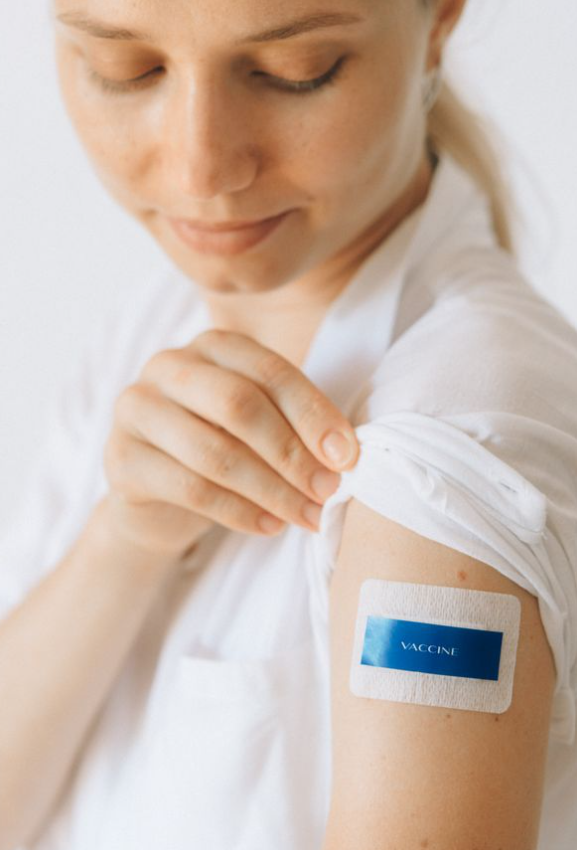
Start With a Vaccination-Only Record
Your vaccination record can sit inside a larger personal health-record system, but it needs its own working view. Immunization decisions depend on details that are easy to miss when doses are scattered among general appointment notes.
Create a table, spreadsheet, paper sheet, or secure digital note with one row for each documented dose. Include:
- vaccine or disease protected against;
- product or brand, if shown;
- dose number, if known;
- date administered;
- provider or location;
- country, province, state, or territory;
- lot number, if available;
- source document;
- status: verified, uncertain, planned, or not applicable;
- next action; and
- notes relevant to a clinician.
Do not guess missing details. If a card says “tetanus shot” without identifying the product, enter that wording and mark the product unknown. Put remembered but undocumented vaccinations in an uncertain history section.
Keep images or copies of the original evidence. Your table is an index, not a replacement for an official record, signed card, clinic printout, or registry statement.
A small status system makes the record easier to interpret: verified means supported by dated evidence; uncertain means remembered or incompletely documented; planned means recommended or booked but not administered; and needs review means a clinician must decide whether the dose counts.
Avoid marking a vaccine simply “done.” That label can hide whether a multi-dose series was completed, whether a later dose is recommended, or whether a special-risk recommendation applies.
Gather Records From the Places Most Likely to Hold Them
Start with the easiest high-value sources. Searching everywhere at once can produce duplicates without resolving the important gaps.
Check what you already control
Look for childhood cards, school or university forms, immigration documents, occupational health files, travel certificates, pharmacy receipts, and records kept by a caregiver. Search secure email or cloud storage for “immunization,” “vaccination,” “vaccine,” and relevant disease or product names.
Treat photographs of original records as useful copies, but keep the original if it has legal or travel significance. The International Certificate of Vaccination or Prophylaxis used for yellow fever, for example, has requirements beyond an ordinary personal spreadsheet.
Ask current and previous providers
Contact your primary-care practice, pediatric clinic, public health clinic, pharmacy, travel clinic, occupational health department, and other providers that may have administered vaccines. Ask for the vaccination history or administration record, not merely a general visit summary.
Provide names previously used and approximate dates. Records may not be kept forever, and a current clinic may not possess doses given elsewhere.
Check the official system where you live
The available route differs substantially by country.
In the United States, vaccination records are decentralized. The Centers for Disease Control and Prevention advises checking healthcare providers and the Immunization Information System, or IIS, in the state where the vaccination was given.[1] State systems differ, and some adult or older records may be incomplete.
In Canada, records and programs are managed primarily by provinces and territories. The Public Health Agency of Canada directs people to their healthcare provider or local, provincial, or territorial public health unit and links to the appropriate access route.[2] Even within one province, doses received from a pharmacy, physician, workplace, another province, or another country may need separate confirmation.
In England, some users can view vaccination history through the NHS App, depending on their GP surgery and how the information was recorded.[3] If the vaccination view is unavailable or incomplete, the GP record and the original administering service may provide additional information. Other UK nations use their own systems and access routes.
In Australia, the Australian Immunisation Register is a national register for people of all ages. An Immunisation History Statement lists vaccinations recorded on the AIR.[4] However, older adult vaccinations—particularly those given before adult reporting became comprehensive—may not all appear, so other provider or state records can still matter.[5]
The lesson is simple: a portal or registry is an important source, but “not displayed” and “never received” are not necessarily the same statement.
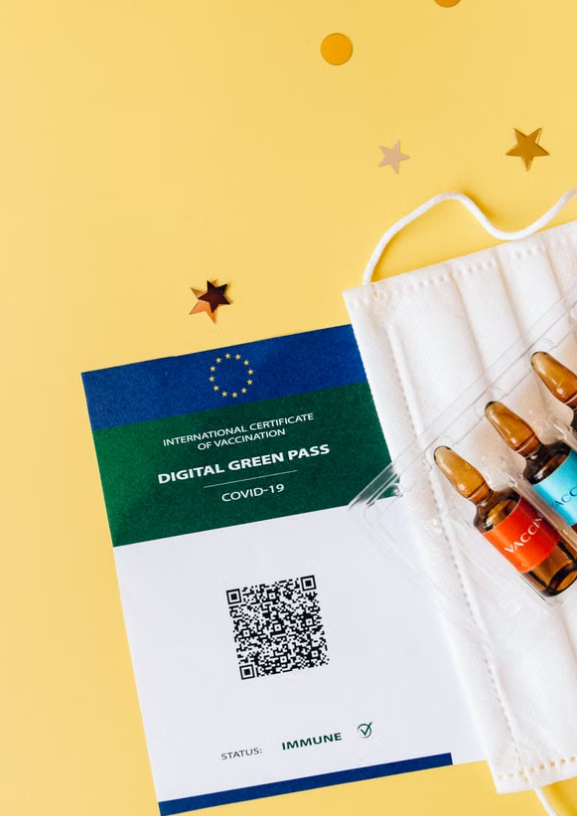
Reconcile the Records Without Erasing Uncertainty
When records arrive, compare them line by line. The same dose may appear in several places with slightly different wording.
Match entries using:
- administration date;
- vaccine or antigen;
- product name;
- provider or location;
- dose or series number; and
- lot number, when available.
If two sources clearly refer to the same dose, keep one row and list both sources. If dates or products conflict, preserve both entries for review rather than choosing the version that “looks right.”
Standardize dates and labels without changing the evidence. Retain the source wording in a notes field. Do not split a combination vaccine into components unless the product is known.
Separate three kinds of gaps:
- Document gap: You probably received the dose, but reliable evidence is missing.
- Schedule gap: The record shows that a recommended dose or series was not completed.
- Information gap: You have enough data to know a dose occurred, but not enough to decide whether it counts under the current schedule.
These gaps lead to different next steps. More searching may fix a document gap. A provider may recommend catch-up vaccination for a schedule gap. An information gap may require review of dates, products, age at vaccination, or the country’s schedule at the time.
Do not combine “unknown” with “overdue.” Unknown means the history is unresolved. Overdue is a conclusion made after the relevant schedule and personal circumstances have been assessed.
Compare Your Record With the Right Schedule
Vaccination schedules are not universal. They vary by age, country, region, prior doses, medical conditions, pregnancy, occupation, travel plans, and public health circumstances. Funding and eligibility may also differ from clinical recommendation.
Use a current official schedule for the place where you receive care:
- the CDC schedules in the United States;[6]
- federal guidance plus your province or territory’s program in Canada;[7]
- the NHS vaccination schedule for the relevant UK nation;[8] or
- the Australian National Immunisation Program Schedule and Australian Immunisation Handbook.[9]
Rather than copying every vaccine into a to-do list, create a short review list:
| Question | What to record |
|---|---|
| What appears complete? | Verified doses that seem to match the local schedule |
| What is missing or uncertain? | Absent dates, incomplete series, or conflicting records |
| What changed? | New age band, condition, medicine, pregnancy, work, travel, or local program |
| Who will confirm the plan? | Primary-care clinician, pharmacist, public health clinic, travel clinic, or specialist |
This is not a self-prescribing tool. Vaccine choice, doses, intervals, or timing may change with pregnancy, immune status, certain treatments, or medical conditions. Live vaccines require particular attention in some circumstances.
Also distinguish routine, catch-up, risk-based, seasonal, travel, and occupational recommendations. A person can be up to date for routine community vaccination yet still need a separate review before international travel or a new healthcare job.
Know the Events That Should Trigger a Review
An annual glance at the record is useful, but event-based review is more reliable than waiting for the same date every year.
Review the record when:
- a child begins school, changes schools, or enters childcare;
- an adolescent reaches a school-program age;
- you start university, training, or communal living;
- a job introduces healthcare, laboratory, animal, childcare, travel, or exposure requirements;
- you become pregnant, plan pregnancy, or enter postpartum care;
- a new diagnosis or medicine changes immune function;
- you reach an age associated with additional vaccines;
- you plan international travel;
- you move between provinces, states, territories, or countries;
- a public health authority announces a relevant outbreak or campaign;
- you begin caring for a vulnerable person; or
- you cannot remember the last time the record was reconciled.
Each trigger calls for a different conversation. Work may require formal proof, travel may involve destination-specific timing or certificates, and pregnancy or immunosuppressive treatment may change recommendations. If a deadline is near, allow time for records and appointments. If exposure may already have occurred, promptly contact the appropriate healthcare or public health service.
Handle Missing Records With a Clinician
Many people reach adulthood without complete childhood records. Others lose documentation after migration, a clinic closure, a natural disaster, family separation, or years of fragmented care. Missing records are common; inventing certainty is the unsafe part.
Prepare a short summary for the clinician:
- which official sources you checked;
- which documents you found;
- where and roughly when you believe vaccines were given;
- which doses are verified;
- which are only remembered;
- relevant medical conditions, medicines, pregnancy, or allergies;
- upcoming travel, school, work, or caregiving deadlines; and
- the specific proof or protection you need.
The provider can decide whether to keep searching, use a catch-up schedule, repeat particular doses, or consider laboratory evidence of immunity.
Do not order antibody tests on your own as a universal solution. Serology is useful for some diseases and situations, but it does not reliably answer every vaccination question. Interpretation may depend on the test, the disease, the timing, and the purpose of testing. The CDC notes that when records are unavailable, an age-appropriate schedule may be started, while serologic testing can be an alternative in selected circumstances.[10] The Canadian Immunization Guide similarly directs providers to assess people with inadequate records rather than treating undocumented recollection as complete proof.[11]
Australia’s catch-up guidance notes that some vaccines given to adults before September 2016 may be absent from the AIR.[5] In England, the NHS advises people who think they missed a vaccination to contact their GP surgery; most routine vaccines can still be caught up.[8]
Do not restart or repeat a series merely because a dose was late unless a qualified provider confirms the plan. In many schedules, delayed doses can be continued without starting over, but vaccine-specific exceptions and age limits exist. Bring the dates you do have so the provider can apply the correct intervals.
Track Special-Purpose Proof Separately
A personal health record and an institution’s acceptable proof are not always the same.
Schools, employers, immigration authorities, and travel destinations may require a specific form, official statement, translation, signature, result, or exemption process. A personal table may not satisfy the requirement.
For each requirement, record:
- the requesting organization;
- exactly what proof it accepts;
- submission deadline;
- whether an original, certified copy, official registry statement, or provider form is required;
- whether translation is required;
- who can correct an error;
- date submitted; and
- confirmation received.
Keep this tracker separate from clinical status. An accepted work form does not establish that you are clinically up to date, and a complete registry does not eliminate destination-specific travel requirements. Use official destination guidance and an authorized travel health professional when appropriate.
Record Every New Vaccination Before You Leave
The easiest missing record to prevent is the next one.
After a vaccination, confirm that the record includes:
- vaccine name;
- date;
- provider or clinic;
- product and lot number when supplied;
- dose or series information when known; and
- any official certificate or statement required.
Ask whether the provider will submit the dose to the relevant registry or primary-care record. If it was given outside your usual system, ask how to send proof to the organization maintaining your main record.
Before leaving, take a clear photograph or download the updated statement. Store it in the same protected location as the rest of the record. Then add the dose to your working table as verified and note where the source copy is stored.
Do not mark a future dose as completed when you schedule it. Keep it as planned until administration is documented. If a multi-dose series is involved, record the expected review date without assuming the next dose date is final; appointment availability, clinical circumstances, or official guidance may change.
If a record later shows an error, preserve the original and request correction from the provider or registry. Do not edit an official PDF, certificate, or image to make it match your personal table.
Build Reminders That Point Back to the Record
Reminders should prompt verification, not replace it.
Choose one primary reminder system: your phone calendar, a health app, a paper planner, or the reminder service used by your clinic or pharmacy. Too many systems can create conflicting dates.
A useful reminder includes:
- the vaccine or review topic;
- whether it is a firm appointment or a date to check eligibility;
- the provider to contact;
- the record location;
- any deadline; and
- a note to confirm current guidance before booking.
Use two levels:
- Near-term action reminders for booked or clinician-confirmed next steps.
- Review reminders for seasonal campaigns, age changes, travel, or uncertain history.
For example, “Ask pharmacy whether I am eligible for this season’s vaccine” is safer than entering a permanent annual dose date based on an old rule. Public health recommendations and program eligibility can change.
The full preventive-health calendar belongs elsewhere. Here, the reminder exists only to close a vaccination-specific gap and return the result to the record.
Protect Privacy Without Making the Record Unusable
Vaccination records contain personal identifiers and health information. Protect them, but keep an accessible path for situations where proof is genuinely needed.
For digital copies, use a strong passcode, multi-factor authentication where available, secure sharing, and a separate backup. Remove unnecessary copies from shared or work devices. Keep paper originals in a predictable protected place and carry a copy rather than the only original when practical.
Use formal proxy or caregiver access where the healthcare system provides it. Sharing your password can expose far more information than the other person needs and may make it difficult to track who changed or viewed the account.
Use a 30-Minute Minimum System
If your records are scattered, do not begin with a perfect historical reconstruction. Build a minimum usable version.
Minutes 1–5: Create the table. Add the standard columns and the four statuses: verified, uncertain, planned, and needs review.
Minutes 6–15: Add available evidence. Enter records from your main portal, registry statement, vaccination card, or recent pharmacy history. Link or note the source for every verified entry.
Minutes 16–20: List likely sources. Write down prior clinics, schools, pharmacies, workplaces, public health units, and countries that may hold missing records.
Minutes 21–25: Mark decision gaps. Identify the few uncertainties tied to current age, health, school, work, travel, pregnancy, or treatment.
Minutes 26–30: Choose one next action. Request one high-value record or book a vaccination review with the appropriate provider.
Stop there. A functioning record with visible uncertainty is safer and more useful than a polished spreadsheet containing guessed dates.
Consider Malik, who finds a childhood card, an employer form, and a pharmacy printout before starting a healthcare training program. He first enters every item as verified, then notices that the employer form copied several childhood dates without identifying its source. He changes those entries to “needs review,” requests his regional record, and takes the documents to the occupational health appointment. His task is not to decide which doses count; it is to give the clinician enough reliable evidence to make that decision.
Maintain the Record With One Simple Rule
Use this rule:
Every vaccination event must end with evidence stored, the working record updated, and the next action clarified.
Periodically—and whenever a trigger event occurs—check:
- Have any vaccines been given outside my usual healthcare system?
- Are planned doses still pending?
- Did a provider or registry correct any entry?
- Has my age, health, medicine, pregnancy status, work, or travel changed?
- Is my local official schedule still the same?
- Does someone who depends on me need their record reviewed?
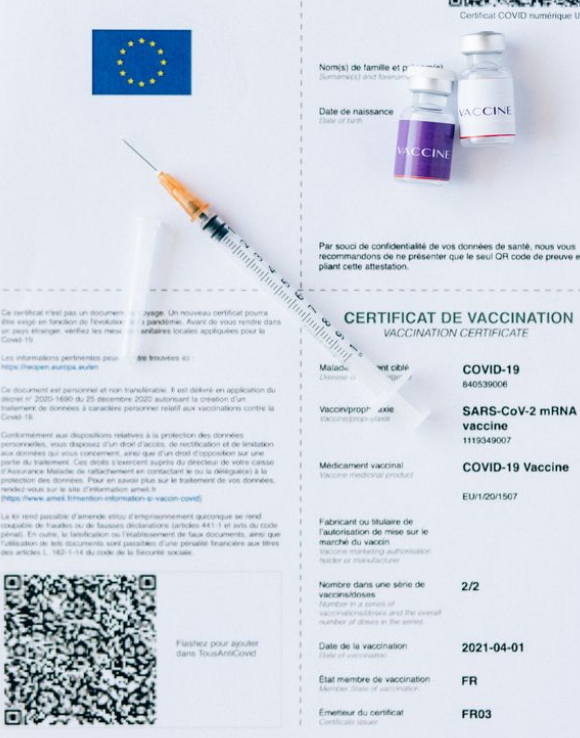
The Bottom Line
A useful vaccination record does more than list injections. It separates reliable evidence from memory, shows where the source documents live, makes gaps visible, and gives a healthcare professional enough context to recommend the next step.
Begin with official records and provider documents. Preserve uncertainty rather than filling it with guesses. Compare your history with current guidance for your country and circumstances, but let a qualified provider resolve missing doses, catch-up timing, antibody testing, and special-risk questions.
Then prevent the next gap: record each vaccination before you leave, store the evidence, and create only the reminder you actually need.
FAQ
What if I cannot find any childhood vaccination records?
List the sources you checked and bring any partial evidence to a healthcare professional or vaccination provider. Depending on the vaccine, your age, your risks, and local guidance, the provider may recommend a catch-up schedule, selected testing, or further record retrieval. Do not invent dates or assume that all childhood vaccines were completed.
Does a missing vaccine in an app or registry mean I never received it?
Not necessarily. Reporting practices, older records, vaccines given elsewhere, and system transfers can create omissions. Treat the dose as undocumented until you locate evidence or a provider assesses the situation.
Can a blood test prove that I received all my vaccines?
No single blood test can reconstruct a complete vaccination history. Serologic testing may help for selected diseases and clinical situations, but it is not appropriate or conclusive for every vaccine. A healthcare professional should decide when it is useful.
Should I restart a vaccine series if I missed the next dose?
Often a delayed series can be continued rather than restarted, but rules and age limits vary by vaccine and country. Bring the dates you have to a qualified provider and follow the current local catch-up guidance.
Is my personal spreadsheet official proof of vaccination?
Usually not. It is an organizing tool. A school, employer, government body, or destination may require a registry statement, provider record, signed form, laboratory evidence, or recognized certificate.
Should I keep records for vaccines received in another country?
Yes. Preserve the original document and a clear copy, including product names, dates, and locations. A local healthcare professional may need to compare the record with the current schedule and determine whether each dose can be counted.
How often should I review my vaccination record?
Review it after every vaccination and whenever age, health, medicines, pregnancy, work, school, travel, relocation, or public health guidance changes. A brief periodic check can catch doses given outside your usual system.
References
- U.S. Centers for Disease Control and Prevention. “Staying Up to Date with Your Vaccine Records.” June 13, 2024. https://www.cdc.gov/vaccines-adults/recommended-vaccines/keeping-vaccine-records-up-to-date.html
- Public Health Agency of Canada. “Vaccine records: Access your or your child’s vaccination history.” Updated April 1, 2026. https://www.canada.ca/en/public-health/services/immunization-vaccines/vaccine-records-access-vaccination-history.html
- National Health Service. “Viewing vaccinations – NHS App help.” Accessed July 30, 2026. https://www.nhs.uk/nhs-app/help/vaccinations/view-vaccinations/
- Australian Government Department of Health, Disability and Ageing. “Check immunisation history.” Updated October 13, 2025. https://www.health.gov.au/topics/immunisation/getting-vaccinated/check-immunisation-history
- Australian Immunisation Handbook. “Catch-up vaccination.” Accessed July 30, 2026. https://immunisationhandbook.health.gov.au/contents/catch-up-vaccination
- U.S. Centers for Disease Control and Prevention. “Vaccine Schedules for You and Your Family.” Updated July 2, 2025. https://www.cdc.gov/vaccines/imz-schedules/index.html
- Public Health Agency of Canada. “Vaccines and immunization.” Updated March 31, 2026. https://www.canada.ca/en/public-health/services/immunization-vaccines.html
- National Health Service. “NHS vaccinations and when to have them.” Reviewed August 9, 2023. https://www.nhs.uk/vaccinations/nhs-vaccinations-and-when-to-have-them/
- Australian Government Department of Health, Disability and Ageing. “Immunisation.” Accessed July 30, 2026. https://www.health.gov.au/topics/immunisation
- U.S. Centers for Disease Control and Prevention. “Immunizations: Immigrant and Refugee Health.” Updated June 28, 2024. https://www.cdc.gov/immigrant-refugee-health/hcp/domestic-guidance/immunizations.html
- Public Health Agency of Canada. “Immunization of persons with inadequate immunization records.” Canadian Immunization Guide. https://www.canada.ca/en/public-health/services/publications/healthy-living/canadian-immunization-guide-part-3-vaccination-specific-populations/page-3-immunization-persons-inadequate-immunization-records.html
Medical disclaimer: This article provides general educational information and is not a substitute for personalized medical advice, diagnosis, or treatment. Vaccination recommendations, schedules, eligibility, and record systems may vary by country and individual circumstances. Consult a qualified healthcare professional or the appropriate health authority in your country before making decisions about vaccination or catch-up care.