A daily walk seems simple, but it involves more safety considerations than most owners think about until something goes wrong — traffic, other dogs, extreme weather, or a dog suddenly bolting after something interesting. A few habits and pieces of equipment significantly reduce the risk of an incident, without making walks feel complicated or overly cautious.
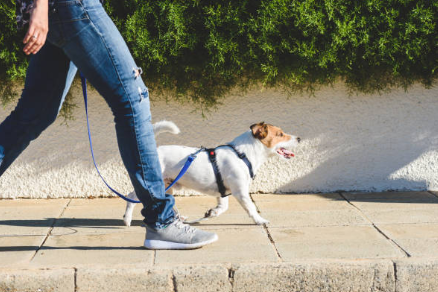
Step 1: Use the Right Equipment for Your Dog
A well-fitted collar or harness matters more than owners often realize. Harnesses generally offer better control and reduce strain on a dog’s neck, particularly for dogs that pull, while collars work well for dogs with solid leash manners. Whichever you use, check that it fits snugly enough that your dog can’t slip out of it, especially important for dogs that startle easily.
Step 2: Keep the Leash at a Reasonable Length in High-Traffic Areas
Retractable leashes can extend several meters, which is risky near roads, bike paths, or crowded areas — a dog can dart into traffic or tangle around another person before you have time to react. A standard fixed-length leash (4–6 feet) offers more immediate control in these situations.
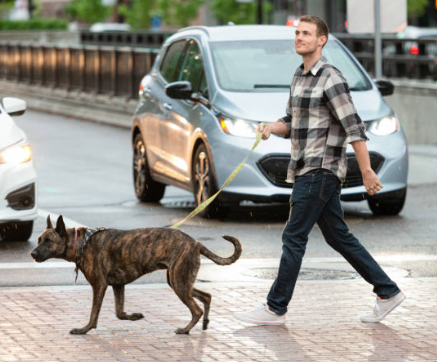
Step 3: Check Pavement and Ground Temperature
In hot weather, pavement can reach temperatures high enough to burn a dog’s paw pads, even when the air temperature itself feels tolerable. Test the pavement with the back of your hand — if it’s too hot to hold comfortably for five seconds, it’s too hot for your dog to walk on. In cold weather, ice, salt, and de-icing chemicals can also irritate or injure paw pads.
Step 4: Be Alert Around Other Dogs, Even Friendly-Looking Ones
Not every dog approaching is looking to be friendly, and body language can be hard to read at a distance. Watching for signs of tension in either dog (stiff posture, raised hackles, prolonged staring) and being ready to create distance if needed reduces the chance of a negative interaction escalating.
Step 5: Carry Basic Identification and a Way to Reach You
A collar tag with a phone number, and ideally a microchip as a backup, matters more than owners often think about until a dog slips a leash unexpectedly. This is a simple, low-cost safeguard that makes a real difference if a dog gets separated during a walk.
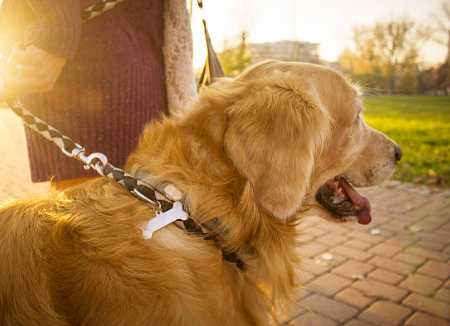
Step 6: Watch for Signs of Overheating or Fatigue
During warmer months especially, watch for heavy panting that doesn’t ease up, lagging behind, or reluctance to continue — these can be early signs a dog needs to stop, rest in shade, and have water before continuing or heading home.
Step 7: Be Cautious Around Unfamiliar Plants and Substances
Dogs often sniff and sometimes eat things along a walking route — certain plants, mushrooms, and discarded food can be toxic. Keeping a dog from eating unknown items along the route, and knowing what’s common in your specific area, reduces this risk.
What NOT to Do
- Don’t use a retractable leash in high-traffic areas like busy sidewalks or near roads
- Don’t assume every approaching dog is friendly just because it looks calm from a distance
- Don’t walk a dog on hot pavement without checking the temperature first
- Don’t skip ID tags or microchipping, even for a dog that’s never gotten loose before
- Don’t ignore early signs of overheating or fatigue hoping your dog will “push through” the walk
Product Recommendation Section
(Recommended: a well-fitted no-pull harness)
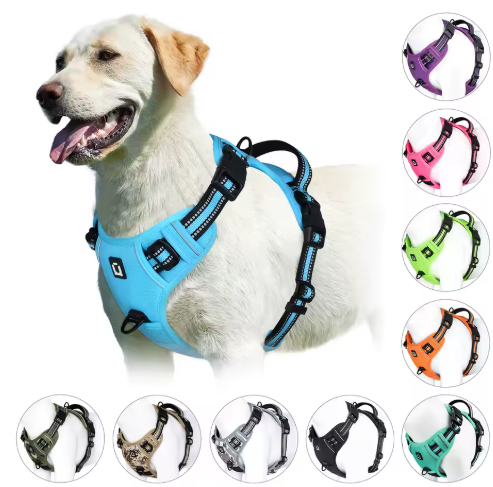
Recommended: A no-pull harness combined with a standard fixed-length leash gives noticeably better control than a collar-and-retractable-leash setup, especially in busier walking areas.
FAQ Section
Are retractable leashes ever safe to use? They can be reasonable in open, low-traffic areas like a quiet park, but they’re generally not recommended near roads, crowded sidewalks, or anywhere quick control is important, since the extra length and reaction time can be a real safety gap.
How can I tell if pavement is too hot for my dog’s paws? Press the back of your hand against the pavement for five seconds — if it’s uncomfortable for you, it’s too hot for your dog’s paw pads, which are more sensitive to surface heat than most owners expect.
What should I do if an off-leash dog approaches during a walk? Stay as calm as possible, avoid direct eye contact with the approaching dog (which can be read as a challenge), and try to create distance or put yourself between the dogs if your dog seems anxious. Carrying a training treat or noise deterrent can help redirect attention in some situations.
Is a harness always better than a collar for walks? Not universally — harnesses generally offer more control and reduce neck strain, which is especially helpful for dogs that pull, but a well-fitted collar works fine for dogs with solid leash manners. The right choice depends on the individual dog’s behavior and any relevant health considerations.