Peace lilies are known for being low-maintenance, which is exactly why overwatering is such a common mistake — people assume more water means a healthier plant. In reality, peace lilies are far more likely to die from too much water than too little. Here’s how to catch it early and fix it.
How to Tell It’s Overwatering (Not Underwatering)
Both problems can cause drooping leaves, which is why people often make it worse by watering more. Look for these specific signs of overwatering:
- Yellowing leaves that feel soft or mushy (not dry and crispy)
- Soil that stays wet for days after watering
- A musty or sour smell coming from the soil
- Brown, mushy spots at the base of leaves or stems
- Standing water in the drainage saucer
If leaves are yellow but dry and brittle, and the soil is bone-dry, that’s underwatering instead — the fix below doesn’t apply.
Step 1: Stop Watering Immediately
This is the most important step and the one people skip. Don’t water again until you’ve completed the steps below and the soil has had a chance to dry out.
Step 2: Check the Roots
Gently remove the plant from its pot and look at the root system:
- Healthy roots are firm and light tan or white.
- Rotted roots are dark brown or black, mushy, and may have a bad smell.
If you see rot, this step is essential — leaving rotted roots in place will keep spreading the problem even after you fix the watering.
Step 3: Trim Away Rotted Roots and Damaged Leaves
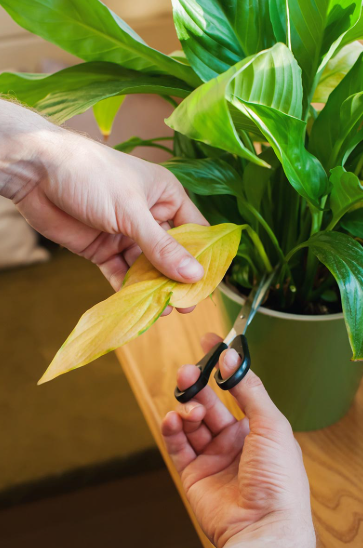
Using clean, sharp scissors, trim off any mushy or blackened roots. Also remove any leaves that are yellow, soft, or drooping badly — the plant can’t save these, and removing them lets it focus energy on healthy growth.
Step 4: Repot in Fresh, Well-Draining Soil
Old, waterlogged soil holds onto moisture and can harbor the fungus that caused the rot in the first place. Repot into fresh potting mix formulated for houseplants, and make sure the pot has a drainage hole — this is non-negotiable for peace lilies.
Step 5: Adjust Your Watering Habit Going Forward
Peace lilies actually communicate their watering needs fairly clearly — they droop noticeably when they’re thirsty, then perk back up within hours of watering. Use this to your advantage:
- Check soil moisture with your finger about 1–2 inches down before watering.
- Only water when that layer feels dry, not on a fixed schedule.
- Always empty the drainage saucer — never let the pot sit in standing water.
Step 6: Give It Time
Recovery isn’t instant. A peace lily that’s been root-trimmed and repotted may look stressed for a couple of weeks before new, healthy growth appears. Resist the urge to over-care for it during this period — consistent, moderate conditions help it recover faster than extra attention.
Product Recommendation Section
Smart Soil Sensor Humidity Temperature Moisture Detector— recommended: a soil moisture meter, or a well-draining houseplant potting mix)

Recommended: A simple moisture meter takes the guesswork out of watering and is especially useful while your peace lily is recovering.
FAQ Section
Can a peace lily fully recover from overwatering? Yes, in most cases — especially if caught before extensive root rot sets in. Removing damaged roots and correcting the watering routine gives it a strong chance of bouncing back.
How often should I water a peace lily normally? There’s no fixed schedule — it depends on light, humidity, and pot size. Checking soil moisture with your finger before every watering is more reliable than a calendar.
Should I mist an overwatered peace lily to help it recover? Misting the leaves is fine and doesn’t affect soil moisture, but it won’t speed up root recovery — the fix has to happen at the soil and root level.
Why does my peace lily droop even right after I water it? This can indicate root rot has already affected the plant’s ability to absorb water properly, even though the soil is wet. Check the roots as described in Step 2.