Hot, humid weather changes how clothes need to be stored, whether you’re rotating out winter items, packing for travel, or just dealing with a closet that stays warm and slightly damp all summer. Fabric stored improperly during heat and humidity is at real risk for mildew, musty odors, and even fading or fabric breakdown — problems that are much easier to prevent than to fix afterward.
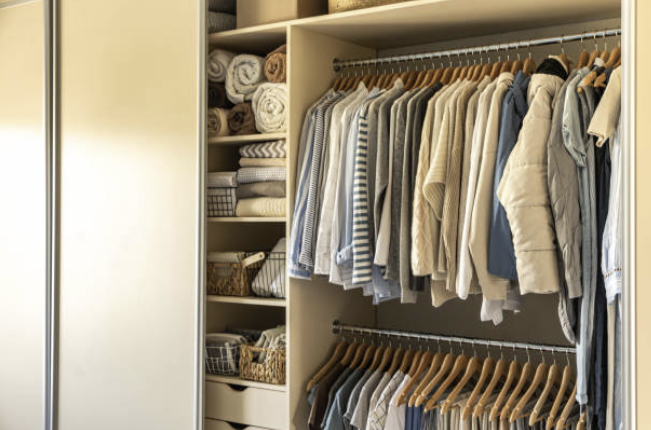
Why Heat and Humidity Damage Stored Clothes
- Humidity encourages mold and mildew growth on natural fibers like cotton, linen, and wool, especially in enclosed, poorly ventilated storage spaces
- Heat accelerates fabric breakdown in some synthetic materials and can cause elastic to degrade faster
- Trapped moisture in storage containers creates a closed, humid microenvironment that’s worse than open closet air, if containers aren’t chosen carefully
- Direct sun exposure fades fabric faster in summer months due to stronger, more direct sunlight
Step 1: Make Sure Clothes Are Completely Dry Before Storing
Any clothing item stored even slightly damp — including items that feel dry but were recently in a humid room — is a mildew risk. Ensure items are fully dry, ideally with a day of open-air time, before placing them in any enclosed storage.
Step 2: Choose Breathable Storage Over Airtight Plastic
While airtight plastic bins seem protective, they can trap residual humidity inside if anything isn’t perfectly dry, creating conditions worse than open shelving. Breathable cotton garment bags or bins with ventilation holes are generally safer for warm, humid conditions, reserving airtight containers mainly for short-term or already very dry conditions.
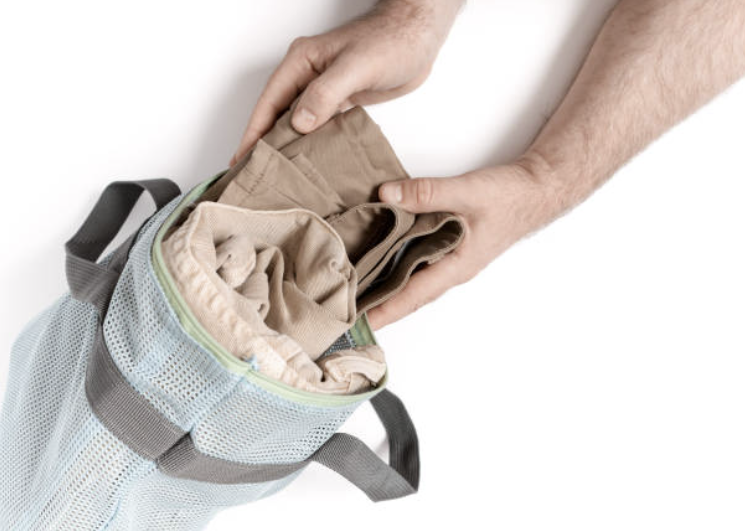
Step 3: Add Moisture Absorbers to Closets and Storage Areas
Silica gel packets, moisture-absorbing crystals, or charcoal bags placed in closets and storage bins help control humidity levels inside enclosed spaces, reducing mildew risk without needing to run a dehumidifier constantly.
Step 4: Keep Storage Areas Ventilated
Closets that stay closed for long periods trap warm, still air, which is exactly the environment mildew favors. Leaving closet doors cracked periodically, or using a small fan for a few hours weekly during a humid stretch, keeps air moving and reduces moisture buildup.
Step 5: Avoid Direct Sunlight for Stored or Displayed Clothing
Clothes stored near sun-facing windows fade considerably faster during summer months due to more intense, direct sunlight. Move seasonal storage away from windows, or use blackout curtains in storage rooms that get significant sun exposure.
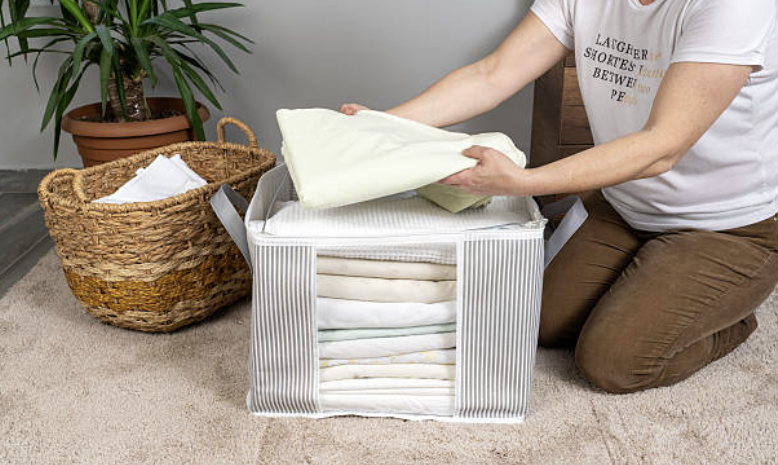
Step 6: Check Stored Items Periodically, Not Just at Season Change
During an extended hot, humid stretch, it’s worth checking stored clothes every few weeks rather than waiting until the next season change — catching early mildew smell or spotting is far easier to address than a fully developed problem discovered months later.
What NOT to Do
- Don’t store clothes in airtight plastic containers unless you’re fully confident every item is completely dry
- Don’t pack storage bins or garment bags too tightly — airflow around items matters as much as the container type
- Don’t store seasonal clothes directly against a garage or attic wall in summer, since these areas often run hotter and more humid than the rest of the home
- Don’t ignore a musty smell in storage — address it immediately rather than waiting for the next time you open that closet or bin
Product Recommendation Section
(Recommended: breathable garment storage bags)
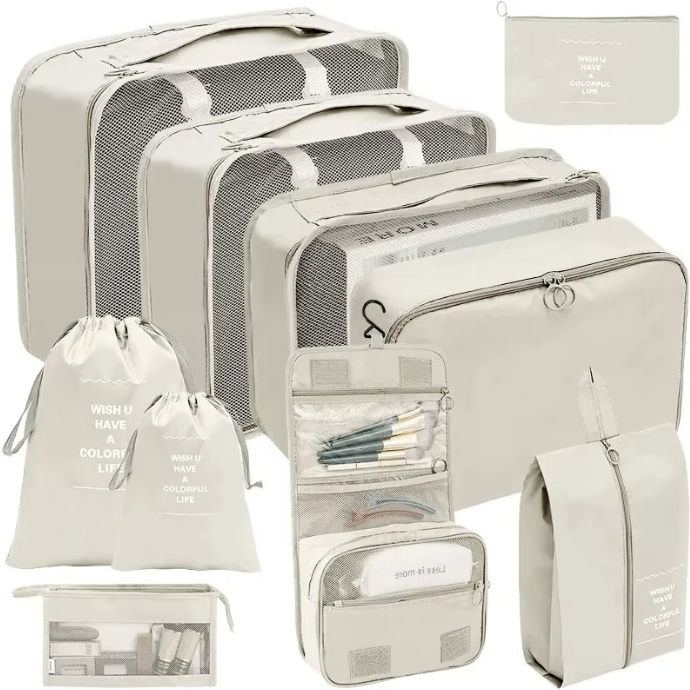
Recommended: Breathable cotton garment bags combined with a few silica gel packets are a simple, low-cost way to protect stored clothes through a humid summer without needing a dedicated dehumidifier.
FAQ Section
Is it safe to use vacuum-sealed bags for clothes in humid weather? Vacuum-sealed bags work best for completely dry, non-humidity-sensitive items and shorter storage periods — for long-term humid-season storage, breathable options are generally safer since any trapped residual moisture has nowhere to go in a vacuum-sealed bag.
How can I tell if stored clothes already have mildew starting? A musty smell is usually the earliest sign, sometimes appearing before any visible spotting. Small dark or greenish spots, especially on natural fibers, confirm mildew has already started and the item needs immediate cleaning and drying.
Do synthetic fabrics need the same care as natural fibers in humid storage? Synthetic fabrics are generally more mildew-resistant than natural fibers like cotton or wool, but they can still trap odors and are affected by heat-related elastic degradation, so ventilation and dryness still matter, just for slightly different reasons.
Is a closet dehumidifier worth it for clothes storage specifically? For homes in consistently humid climates or for particularly humid closets (windowless, poorly ventilated), a small closet dehumidifier or moisture absorber system can meaningfully reduce mildew risk compared to no humidity control at all.