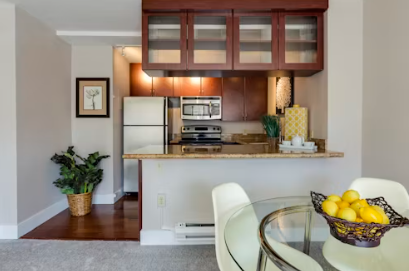
A lot of apartment kitchens simply weren’t built with a pantry in mind — just a few small upper cabinets and maybe one lower cabinet next to the stove. That doesn’t mean you’re stuck with cluttered countertops. With the right layout, you can create pantry-level storage without a pantry.
Step 1: Audit What You Actually Store
Before organizing, sort your food and kitchen items into three groups:
- Everyday items (things you reach for daily — oils, spices, coffee)
- Bulk/backup items (extra cans, bags of rice, backup condiments)
- Rarely used items (holiday baking supplies, specialty appliances)
This matters because everyday items should get the easiest-to-reach spots, while rarely used items can go in harder-to-access places like the back of a high cabinet.
Step 2: Use Vertical Space Inside Cabinets
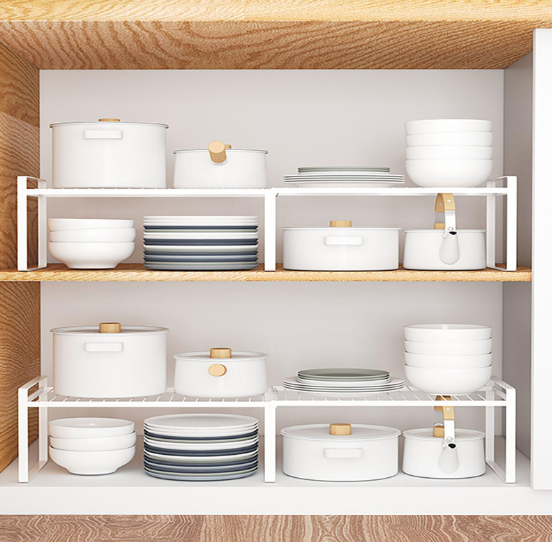
Most small cabinets waste vertical space because items are just stacked loosely. Adding stackable shelf risers inside a cabinet effectively doubles your usable space — you can fit cans or boxes underneath and jars or smaller items on top.
Step 3: Add a Door-Mounted Rack
The inside of a cabinet door is almost always empty space. A slim door-mounted rack (metal or plastic) is ideal for:
- Spice jars
- Small condiment bottles
- Aluminum foil / plastic wrap boxes
This alone can free up an entire shelf that was previously used for these items.
Step 4: Use the Space Under the Sink
The area under the sink is usually wasted around the pipes. A pull-out organizer or stackable bins designed to fit around plumbing can hold cleaning supplies, freeing up kitchen cabinets for food instead.
Step 5: Add a Freestanding Storage Piece — If You Have Any Floor Space
If there’s even a narrow gap (as little as 6–8 inches) next to the fridge or in a corner, a slim rolling cart or narrow shelving unit can function as a mini pantry. Look specifically for “slim kitchen cart” or “narrow pantry cabinet” — many are designed exactly for this gap.
Step 6: Decant Bulky Packaging
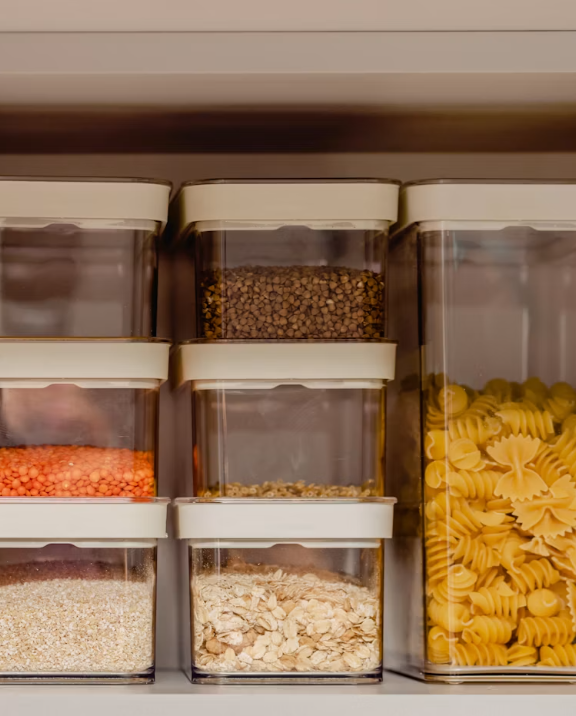
Cardboard boxes and bags take up more room than their contents need. Transferring items like cereal, pasta, rice, and flour into stackable, uniform containers can save a surprising amount of space — and makes it easy to see what you’re running low on.
Step 7: Use a Magnetic Strip for Small Metal Items
A magnetic strip mounted on the inside of a cabinet or on the side of the fridge can hold small metal items (bottle openers, measuring spoons, spice tins) off the counter entirely.
Product Recommendation Section
Wall-Mounted Kitchen Spice Rack
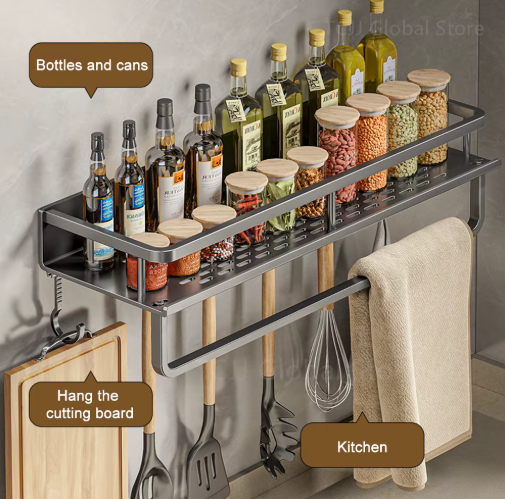
Recommended: The storage rack is equipped with sturdy rods and multiple hooks, making it convenient to hang kitchenware, towels, aprons, and other items, increasing storage space.
FAQ
What’s the single best first step if I only have time for one change? Adding shelf risers inside your existing cabinets. It’s the cheapest, fastest change and immediately doubles usable shelf space without any installation.
Where should I store bulk items like large bags of rice or flour? Decant them into stackable containers and store on the highest shelf, since these are typically used less frequently than daily items.
Is a rolling cart worth it if I don’t have much floor space? Yes, if you have even a narrow gap (6+ inches). A slim rolling cart adds real storage without a permanent installation, and it can be moved if you rearrange later.
How do I organize a kitchen with only one small cabinet total? Prioritize ruthlessly — keep only true everyday items in the cabinet, and consider open wall storage (a hanging shelf or rail system) for the rest.