If a litter box smells bad within a day or two of cleaning, the problem usually isn’t a lack of effort — it’s one or two things in the setup working against you: the wrong litter type, poor box placement, or a cleaning routine that misses the parts that actually cause odor buildup.
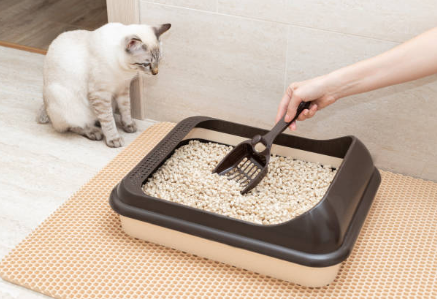
Why Litter Boxes Start to Smell
Odor builds up from a few overlapping sources:
- Ammonia from urine breaks down and gets stronger the longer it sits, even under fresh litter poured on top
- Bacteria in the litter itself accumulates below the surface, not just in visible clumps
- Poor box placement — a box in a small, unventilated space traps odor far more than one in an open area
Step 1: Scoop at Least Once Daily, Twice If Possible
Scooping clumps and solid waste daily is the single biggest factor in odor control. Waiting two or three days lets ammonia build up in the litter even if the box “looks” fine on the surface.
Step 2: Do a Full Litter Change Every 1–2 Weeks
Scooping alone doesn’t remove everything — bacteria and residual odor build up in the litter under the surface over time. A complete dump-and-refill, along with washing the box itself, resets the odor cycle in a way that scooping alone can’t.
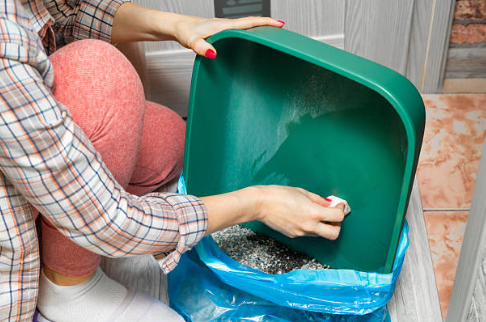
Step 3: Wash the Box with Mild Soap, Not Harsh Chemicals
Use mild, unscented soap and warm water to wash the box during full changes. Avoid bleach or strong-scented cleaners — bleach can react with ammonia residue, and strong scents can actually make some cats avoid the box altogether.
Step 4: Choose the Right Litter Type for Odor Control
Clumping clay litter with activated charcoal or baking soda additives tends to control odor better than basic non-clumping litter, since clumping isolates urine into removable pieces rather than letting it spread through the whole box. If your cat seems sensitive to scented litter, unscented clumping litter with charcoal additives is usually the better compromise over strongly perfumed options.
Step 5: Fix the Box’s Location, Not Just the Box
A box tucked into a small closet or bathroom corner with no airflow will smell worse than the same box in a slightly more open, ventilated spot. If moving it isn’t possible, a small fan nearby or cracking a door can make a noticeable difference.
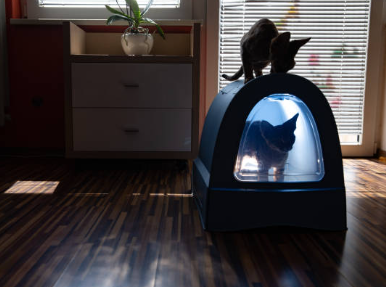
Step 6: Match the Number of Boxes to the Number of Cats
The general guideline is one litter box per cat, plus one extra. Fewer boxes than that means each one gets used more heavily, which speeds up odor buildup regardless of how often you clean.
What NOT to Do
- Don’t use bleach or strongly scented cleaners on the box
- Don’t just add fresh litter on top of old litter instead of a full change
- Don’t assume more litter fixes odor — it’s usually a cleaning frequency or placement issue
- Don’t ignore a sudden change in your cat’s litter box habits — that can signal a health issue, not just a cleaning problem
Product Recommendation Section
(Recommended: enclosed litter box with ventilation)
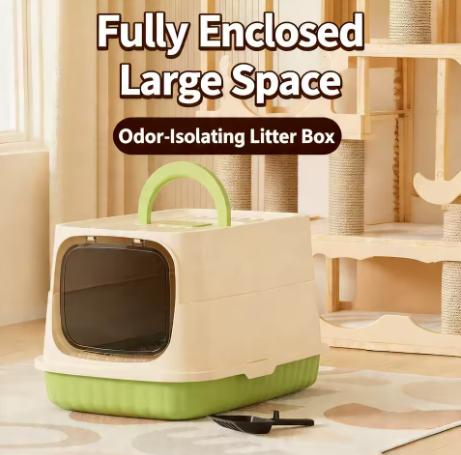
Recommended: An enclosed litter box with a built-in charcoal filter can meaningfully cut down on odor in smaller spaces, especially combined with a regular scooping routine.
FAQ Section
How often should I completely replace the litter, not just scoop?
Every 1–2 weeks for clumping litter, and every 2–3 days for non-clumping litter, along with washing the box itself each time.
Is scented litter better for odor control?
Not necessarily — some cats avoid strongly scented litter altogether, which leads to accidents outside the box. Unscented litter with charcoal or baking soda additives is often a better balance.
Why does my litter box smell bad even though I scoop daily?
Daily scooping removes visible waste, but bacteria and residual odor can still build up below the surface over time, which is why a full litter and box change every 1–2 weeks matters even with daily scooping.
My cat suddenly stopped using the litter box — is that just an odor problem?
Not usually. A sudden change in litter box habits can indicate a urinary tract issue or other health problem, so it’s worth checking with a vet rather than assuming it’s purely a cleanliness issue.