When a geopolitical conflict such as Iran war escalates and drags on longer than expected, one of the first questions many people ask is what happens to their money — savings, investments, mortgage rates. The honest answer is that it depends heavily on how the conflict affects oil supply, and oil supply shocks tend to push interest rate expectations in a direction that surprises a lot of people: higher, not lower.
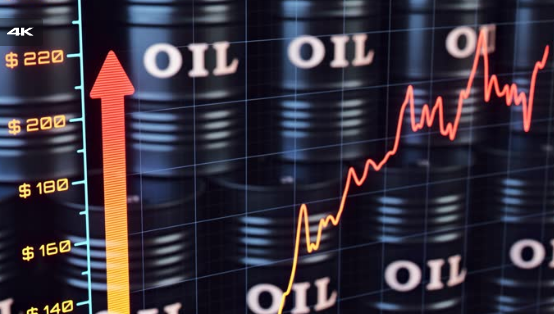
As of mid-2026, this is playing out in real time. Renewed military strikes and retaliation around the Strait of Hormuz — a critical corridor for global oil shipping — have pushed oil prices up sharply, and futures markets are now pricing in a meaningfully higher chance of an interest rate hike in the coming months, a reversal from earlier expectations of rate cuts.
Why Conflict-Driven Oil Shocks Push Rates Up, Not Down
This surprises people because wars and conflicts are often assumed to be “bad for the economy,” which people associate with lower rates. But the mechanism works differently:
- Conflict disrupts oil supply or shipping routes (like the Strait of Hormuz), reducing how much oil reaches global markets
- Oil prices rise as supply tightens
- Higher oil prices raise the cost of gasoline, transportation, and manufacturing, which feeds directly into inflation
- Central banks respond to inflation, not to the conflict itself — if inflation rises well above target, the central bank’s job is to cool it down, and raising interest rates is the primary tool for that
So a conflict can simultaneously slow economic growth and push inflation up — a combination that puts a central bank in a difficult position, often forcing it to prioritize inflation control even at the cost of growth.
What This Has Looked Like So Far
Earlier in 2026, an escalation of this same conflict pushed oil above $110 a barrel at its peak, and core inflation readings climbed to their highest levels in roughly three years. Central bank rate-cut plans for the year were scaled back sharply — from several planned cuts down to essentially none — as policymakers shifted focus toward preventing inflation from becoming entrenched. When a ceasefire briefly took hold, oil prices eased and rate-cut expectations returned; when the ceasefire broke down again, the same pattern reversed just as quickly.
This back-and-forth illustrates an important point: rate expectations in this kind of environment can shift quickly in both directions, closely tracking the state of the conflict rather than moving in one steady direction.
What Higher-for-Longer Rates Can Mean Across Your Finances
If rates stay elevated or rise further, the effects tend to show up in a few places:
- Savings accounts and GICs/CDs — these typically offer better yields when rates are high, which is one of the few silver linings for savers
- Variable-rate debt (mortgages, lines of credit) — becomes more expensive, and monthly payments can rise
- Bond prices — generally move inversely to rates, so existing bonds can lose value when rates rise
- Stock market valuations — growth-oriented stocks in particular are often more sensitive to higher rates, since future earnings are worth less in today’s dollars when discounted at a higher rate
How to Think About Your Portfolio During This Kind of Uncertainty
This is where it’s worth being careful: nobody — including professional economists — can reliably predict how a live geopolitical conflict will unfold, or exactly how central banks will respond week to week. What’s more useful than trying to predict the next move is understanding a few general principles:
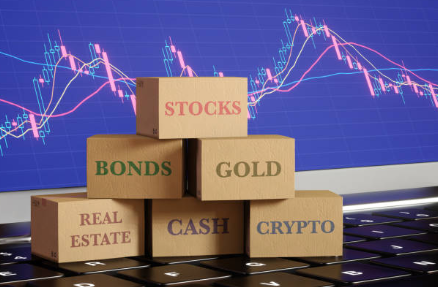
- Diversification matters more, not less, during uncertain periods. Being overly concentrated in one asset class, sector, or country increases how exposed you are to any single shock.
- Cash and short-term instruments become more attractive when rates are elevated, since you can earn a meaningful yield while staying flexible.
- Longer-term investors have historically been better served by staying the course than by reacting to headlines, since conflict-driven volatility often reverses as quickly as it appears — as seen with the ceasefire-and-breakdown cycle earlier this year.
- Higher rates increase the cost of carrying debt, so this can be a reasonable time to reassess variable-rate borrowing, even separate from any investment decisions.
What NOT to Do
- Don’t make large, sudden portfolio changes based on a single news headline — conflict news can reverse quickly
- Don’t assume “conflict = rate cuts” — as this situation shows, the opposite is often true when oil is involved
- Don’t ignore variable-rate debt exposure just because the focus is usually on “investing” — rising rates affect borrowing costs just as much
- Don’t treat any single forecast (rate hike odds, oil price predictions) as certain — these are probabilities that shift daily with new developments
FAQ
Why would a war cause interest rates to go up instead of down? It depends on what the conflict disrupts. If it disrupts oil supply, prices for fuel and related goods rise, which pushes inflation up — and central banks typically raise or hold rates higher to fight inflation, even during a period of slower economic growth.
Should I sell my investments if a conflict is escalating? This article isn’t personalized financial advice, but historically, reacting to short-term geopolitical headlines with major portfolio changes has often not worked out as well as maintaining a diversified, long-term approach. A licensed financial advisor can help you assess your specific situation.
Are high interest rates good or bad for savers? Generally good for savers in the short term — savings accounts and fixed-income instruments tend to offer better yields when rates are elevated. They can be less favorable for borrowers, especially those with variable-rate debt.
How long could this kind of elevated-rate environment last? It depends entirely on how the underlying conflict evolves, which is inherently unpredictable. Rate expectations have shifted quickly in both directions already this year based on ceasefire and escalation cycles.
This article is for general informational and educational purposes only and does not constitute financial or investment advice. Interest rate and market outcomes are inherently uncertain and can change quickly based on developing events. Please consult a licensed financial advisor for guidance specific to your situation.
Story Recommendation
Which Industry Sectors Tend to Be Affected When Extreme Heat Persists
Too Hot to Work Safely? How to Decide When Workplace Heat Becomes a Hazard (2026 Guide)