If you live in a historic city center — Paris, Rome, Vilnius, and many others — you may have discovered the hard way that installing a traditional split-system air conditioner isn’t as simple as calling a technician. Heritage preservation rules in many European cities restrict or outright prohibit outdoor AC units that are visible from the street, since they’re considered a change to a building’s protected facade. As summer heatwaves have become more frequent and intense in recent years, this creates a real problem: the buildings most restricted from adding AC are often also the ones least designed to handle extreme heat, since they were originally built to retain warmth through the winter, not release it in summer.
The good news is that a full split-system unit isn’t the only way to meaningfully cool a room. Here’s a practical set of alternatives, roughly ordered from least to most effective.

Why Traditional AC Installation Gets Blocked
A few recurring reasons show up across different cities:
- Facade preservation laws — any visible alteration to a historic building’s exterior, including a small outdoor unit, often requires approval that’s difficult or impossible to get
- Building association rules — even where the law allows it, co-owners or building associations can block installation, especially over noise concerns
- Structural limitations — older buildings often weren’t built with the wall thickness, drainage, or electrical capacity that some AC systems need
Option 1: Portable Air Conditioners (No Permanent Installation)
A portable AC unit vents hot air out through a window using a flexible hose, rather than requiring a permanently mounted outdoor unit. Since nothing is fixed to the building’s exterior, these generally fall outside facade regulations. They’re less energy-efficient than a split system and can be noisier, but they’re often the closest thing to “real AC” available where installation is restricted.
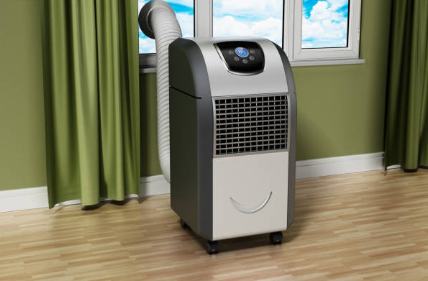
Option 2: Window Unit Air Conditioners (Where Permitted)
Traditional window units sit inside the window frame rather than requiring drilling into an exterior wall. Some cities still restrict these if visible from certain angles, so it’s worth checking local rules specifically — but window units face fewer restrictions than permanent split systems in many jurisdictions, since installation and removal are simple and reversible.
Option 3: Evaporative (Swamp) Coolers — Best in Dry Climates
Evaporative coolers cool air by passing it over water, which works well in low-humidity climates but is much less effective in humid conditions. They use significantly less electricity than compressor-based AC and don’t require the same kind of external unit. Not a fit for coastal or humid areas, but worth considering in drier regions experiencing heat.
Option 4: Passive Cooling Strategies (Combine With Any Option Above)
These won’t replace AC entirely, but they meaningfully reduce how hot a space gets in the first place:
- Close shutters or blackout curtains during peak sun hours, and open windows for cross-ventilation at night when it’s cooler outside
- Use reflective or blackout window film to reduce solar heat gain during the day
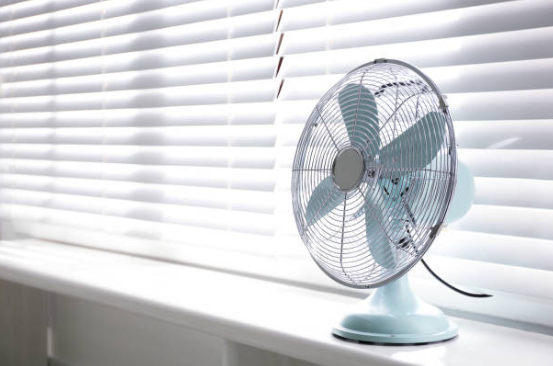
- Run ceiling or standing fans — they don’t lower air temperature, but they increase evaporative cooling on skin, making a room feel several degrees cooler
- Avoid heat-generating appliances during the day (ovens, dryers) — shift cooking and laundry to early morning or evening
Option 5: Thermal Mass and Building-Level Strategies
Older stone and brick buildings actually have a cooling advantage built in — thick walls absorb heat slowly, which is why interiors often stay cooler than outside during the hottest part of the day. The strategy is to work with this instead of against it: keep windows and shutters closed during the day to trap the cool air already inside, and only open them at night to flush out accumulated heat with cooler outdoor air. Opening windows during peak daytime heat actually works against this natural cooling effect.
What NOT to Do
- Don’t install an unauthorized outdoor unit — in many cities this can result in fines and a forced removal order, not just a warning
- Don’t run a portable AC with the exhaust hose disconnected or improperly sealed — most of its cooling effectiveness is lost, and it can even make a room net warmer
- Don’t rely on fans alone during a serious heatwave, especially for elderly household members or young children — fans increase comfort but don’t reduce heat-related health risk the way actual cooling does
- Don’t keep windows open all day during extreme heat if you’re using thermal mass strategies — this defeats the purpose of trapping cooler indoor air
Product Recommendation Section
(Recommended: portable air conditioner unit)
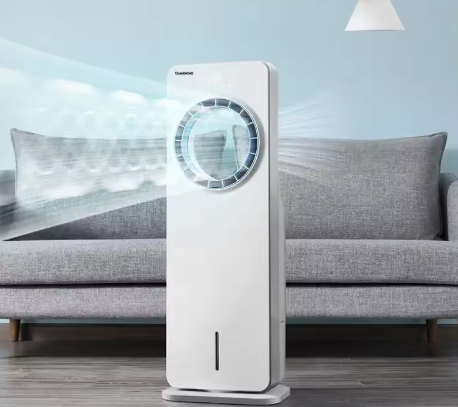
Recommended: A portable AC unit with a window venting kit is typically the most effective option where permanent installation isn’t allowed, especially when combined with reflective window film to reduce heat gain during the day.
FAQ Section
Is it ever worth trying to get permission for a visible outdoor unit? In some cities, applying with a building association or local heritage office is possible, though approval isn’t guaranteed and can take months. Portable or window units are usually a faster, lower-risk option in the meantime.
Do portable air conditioners actually work well, or are they mostly marketing? They do meaningfully cool a room, though generally less efficiently than a split system. Proper installation — a short, sealed hose run to the nearest window — makes a significant difference in performance.
What’s the single most effective free strategy if I can’t buy any equipment? Managing daytime shutters/curtains and nighttime cross-ventilation together is usually the most effective no-cost strategy, since it works with a building’s natural thermal mass instead of against it.
Are evaporative coolers worth it in a humid European city? Generally not — evaporative cooling loses most of its effectiveness in humid conditions. They work best in dry climates and are a poor fit for coastal or already-humid regions.