Working from home sounds simple until your entire living space is one room. There’s no door to close, no separate office to walk away from at the end of the day, and your bed is sometimes visible in every video call. If you’re trying to build a real, functional workspace in a studio apartment, the good news is that it’s completely doable — it just requires a different approach than a traditional home office. The goal isn’t more square footage; it’s a clearly defined zone your brain learns to associate with “work mode,” even if that zone is only a few feet wide.
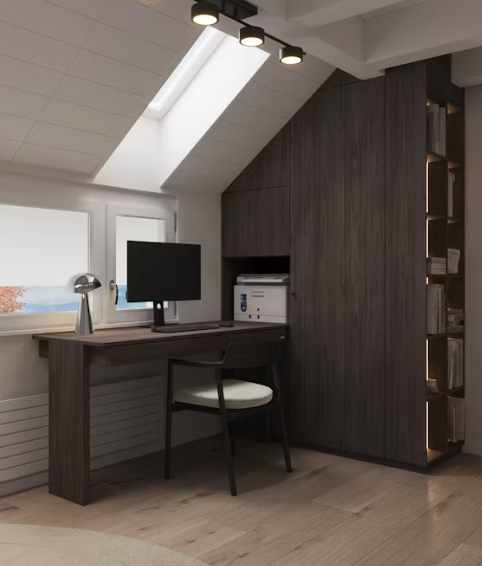
Step 1 — Pick One Spot and Commit to It
Before buying anything, walk through your space and identify the one area that makes the most sense for a permanent (even if small) work zone. Good options include:
- A corner near a window, for natural light
- A sliver of wall space just wide enough for a narrow desk
- The space behind a floated sofa (pulled a foot or two away from the wall)
- An alcove, nook, or the area under a lofted bed, if you have one
The specific spot matters less than consistency. Once you choose it, keep the desk and chair anchored there rather than moving them around for other uses — that repetition is what trains your brain to switch into focus mode when you sit down.
Step 2 — Create Physical Separation From Your Bed
One of the most consistently recommended strategies for studio living is placing your bed on one side of the room and your desk on the opposite side, so the two zones don’t visually blend together. If your layout allows it, angle the desk to face a wall or window rather than the bed, so the sleeping area falls out of view while you’re working. This small adjustment does a lot of psychological work — it’s easier to “leave the office” mentally when your desk setup doesn’t double as a view of your bed.
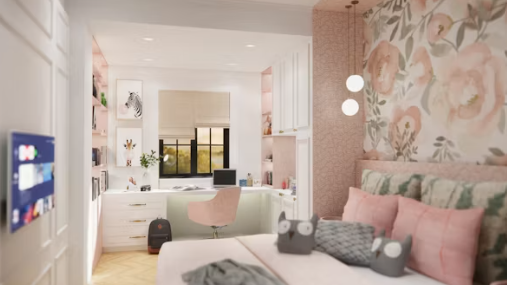
Step 3 — Choose Space-Efficient Furniture
A studio office doesn’t need a full-size desk to be functional. Look for:
- A narrow or console-style desk (18–24 inches deep is often enough for a laptop setup)
- A fold-away or wall-mounted desk if floor space is extremely limited and you need to reclaim the area when not working
- A chair that can tuck fully under the desk or be rolled aside when the space needs to serve another purpose
- Convertible furniture, such as a desk that folds flat against the wall, or a console table that floats behind a sofa and doubles as a desk during the day
Step 4 — Solve Storage Vertically, Not Horizontally
In a studio, floor and desktop space are both precious, so storage needs to go up rather than out:
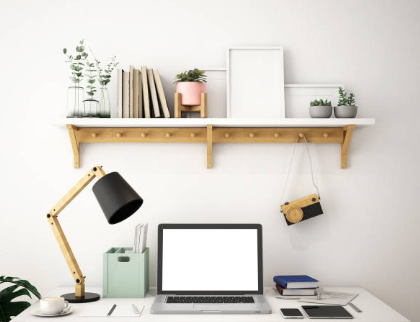
- Install a wall shelf or two directly above the desk for documents, books, or supplies
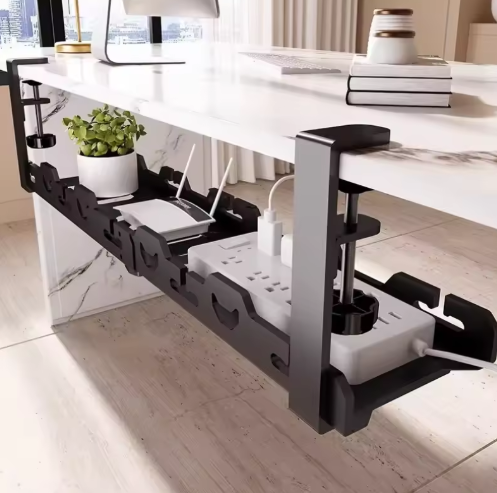
- Use an under-desk organizer or small drawer unit to keep cables and small items out of view
- Add cable clips or sleeves to keep cords bundled and off the floor
- Choose wireless keyboards, mice, and headphones where possible to reduce visible cable clutter
Vertical storage keeps your desktop clear, which matters more in a studio than in a larger office — a cluttered desk in a small space tends to visually spill into the rest of the room.
Step 5 — Handle Lighting and Glare
- Position the desk near a window when possible — natural light is consistently linked to better focus and mood during work hours.
- Angle the desk so the window light comes from the side rather than directly behind or in front of your screen, to avoid glare during video calls.
- Add a dedicated desk lamp with adjustable brightness for evenings or darker days, rather than relying only on overhead lighting.
Step 6 — Set Boundaries Without a Door
Without a separate room, the boundary between “work” and “home” has to be built through habit rather than architecture:
- Set defined start and end times, and use calendar tools to mark your working hours so notifications and expectations align.
- Tidy the desk at the end of each work day — even a two-minute reset makes the space feel closed for the day, similar to shutting an office door.
- Avoid working from the bed or couch, even occasionally. Keeping work confined to the dedicated zone reinforces the mental separation you’re trying to build.
- Use headphones or ambient sound to create a focus cue and reduce distractions from household noise.
What NOT to Do
- Don’t set up your workspace on the bed or couch, even temporarily — it blurs the boundary you’re trying to create and can affect both work focus and sleep quality.
- Don’t oversize the furniture. A desk that’s too large for the space will dominate the room and make the whole apartment feel cramped.
- Don’t skip the lighting plan. Poor lighting is one of the most common reasons a small home office setup feels uncomfortable to work in for long stretches.
- Don’t ignore cable clutter. In a small, visible space, tangled cords have an outsized effect on how organized (or chaotic) the whole apartment feels.
- Don’t treat the setup as permanent on day one. Test the layout for a few days and adjust — comfort issues like chair height or glare are often only obvious after actually working in the space.
Make It Feel Like a Real Workspace
A few finishing touches can make a small work corner feel intentional rather than makeshift: a small plant, a piece of art, or a photo nearby can make the corner feel less like an afterthought. Neutral wall colors with a small pop of color nearby are often associated with a calmer, more focused feel, though personal preference matters most here — the goal is a space you actually want to sit down at each day.
Product Recommendation Section
(Insert AliExpress affiliate link once ready — recommended: narrow console/floating desk for small spaces)
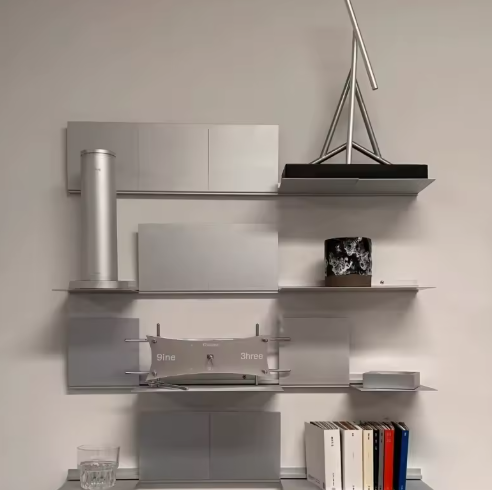
(Recommended: wall-mounted floating shelves)
(Recommended: under-desk cable management organizer)
FAQ Section
Q1. How much space do I actually need for a home office in a studio apartment? Often as little as two to three feet of wall space is enough for a narrow desk and a chair. The key is consistency of location rather than the total amount of space available.
Q2. Where’s the best place to put a desk in a studio apartment? A corner or wall space near a window is generally ideal for natural light, but the more important factor is placing it on the opposite side of the room from your bed, so the two zones stay visually and mentally separate.
Q3. How do I stop feeling like I’m always “at work” when my desk is in the same room as everything else? Setting defined work hours, tidying the desk at the end of each day, and avoiding working from the bed or couch all help recreate the boundary that a separate office door would normally provide.
Q4. What furniture works best for a studio apartment home office? Narrow or console-style desks, fold-away or wall-mounted desks, and chairs that tuck fully under the desk all help minimize the footprint. Convertible furniture, like a desk that doubles as a console table, is especially useful in multi-purpose rooms.
Q5. How do I deal with video call backgrounds in a studio apartment? Facing the desk toward a wall or window, rather than toward the bed or kitchen area, naturally improves the background. A small shelf, plant, or piece of art behind the desk area can also create a more intentional-looking backdrop.