Reader Recognition
If you’ve noticed dry air, frequent allergies, lingering odors, or constant dust in your home, it’s easy to wonder whether buying an air purifier or a humidifier will solve the problem. The challenge is that these two devices are often recommended for similar symptoms, even though they work in completely different ways. This guide explains what each device does, when it helps, and which one is more appropriate for your situation.
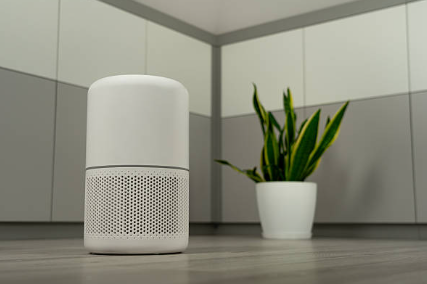
Quick Answer
Neither device is universally better.
- Choose an air purifier if your main concern is airborne particles such as dust, pollen, pet dander, smoke, or odors.
- Choose a humidifier if the air inside your home is genuinely too dry and is causing dry skin, irritated sinuses, or static electricity.
- Some homes may benefit from both, but they solve different problems.
Reader Navigation
| If your situation is… | Read first |
|---|---|
| Seasonal allergies | Air Purifier |
| Pets at home | Air Purifier |
| Wildfire smoke | Air Purifier |
| Dry skin or dry throat | Humidifier |
| Winter indoor dryness | Humidifier |
| Not sure which problem you have | Understanding the Difference |
Understanding the Difference
Many people assume these products improve “air quality” in the same way.
They don’t.
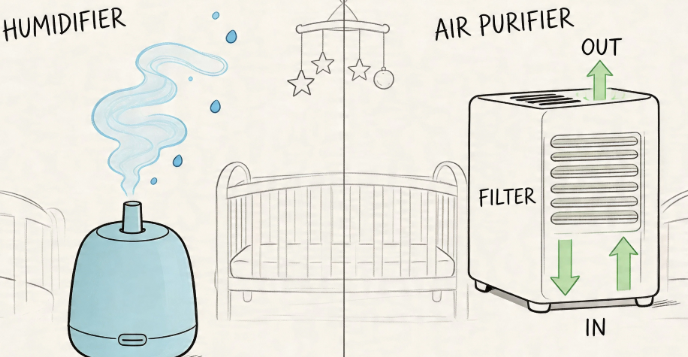
An air purifier removes unwanted particles from the air.
A humidifier adds moisture to the air.
Those are two completely different jobs.
For example, if pollen is causing your allergies, adding moisture won’t remove the pollen. Likewise, if your home’s relative humidity is only 25% during winter, an air purifier won’t solve the discomfort caused by dry air.
Understanding this distinction is the first step toward choosing the right solution.
Why They’re Often Confused
The confusion is understandable because some symptoms overlap.
For example:
- Dry air can irritate your nose and throat.
- Allergies can also irritate your nose and throat.
- Smoke may make your eyes feel dry.
- Low humidity may make your eyes feel dry.
Although the symptoms may feel similar, the underlying causes are different.
Choosing the wrong device may leave the real problem unchanged while adding unnecessary cost and maintenance.
Air Purifier vs. Humidifier: Side-by-Side Comparison
| Feature | Air Purifier | Humidifier |
| Primary Purpose | Removes airborne particles | Adds moisture to dry air |
| Best For | Allergies, dust, pollen, pet dander, smoke | Dry skin, dry throat, dry sinuses, static electricity |
| Removes Odors | Yes (with activated carbon filter) | No |
| Removes Allergens | Yes | No |
| Increases Humidity | No | Yes |
| Typical Maintenance | Replace filters | Clean water tank regularly |
| Potential Risks | Reduced performance if filters aren’t replaced | Mold and bacteria if not cleaned properly |
When an Air Purifier Makes More Sense
If your concern is what’s floating in the air, an air purifier is usually the better choice.
Common situations include:
- Seasonal allergies
- Pet hair and dander
- Dust accumulation
- Wildfire smoke
- Cooking odors
- Traffic pollution
- Mild indoor odors
A quality purifier equipped with a HEPA filter can capture very small airborne particles, while an activated carbon filter can help reduce many household odors and certain gases.
Quick Takeaway
If your symptoms become worse when pollen counts are high, after vacuuming, or when pets are indoors, an air purifier is generally the more appropriate solution.
When a Humidifier Is the Better Choice
A humidifier is designed for an entirely different problem.
It increases indoor humidity when the air becomes excessively dry.
This commonly happens during winter when heating systems reduce indoor moisture.
Signs that your home may be too dry include:
- Dry skin
- Cracked lips
- Dry or itchy throat
- Frequent nosebleeds
- Static electricity
- Dry wooden furniture
- Houseplants drying quickly
Most health organizations recommend maintaining indoor relative humidity within a moderate range. Air that is too dry can cause discomfort, while excessive humidity may encourage mold growth and dust mites.
Quick Takeaway
If your home feels noticeably dry during winter and a hygrometer confirms low humidity, a humidifier is often the more effective solution.
Can You Use Both?
Yes.
Many households benefit from using both devices because they solve different problems.
For example:
- An air purifier removes pollen and pet dander.
- A humidifier keeps indoor humidity at a comfortable level.
Using both can improve comfort without one replacing the other.
However, balance matters.
Running a humidifier continuously without monitoring humidity can create excessive moisture, increasing the risk of mold growth. Likewise, using an air purifier without replacing filters on schedule reduces its effectiveness.
The Importance of Measuring Humidity
One of the most common mistakes is buying a humidifier without knowing whether the air is actually dry.
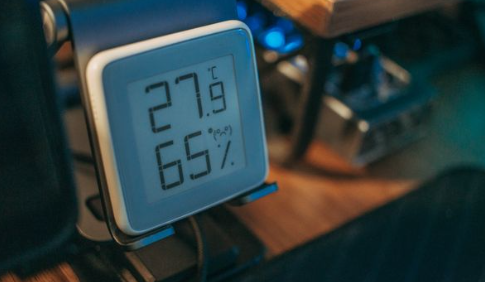
Instead of guessing, consider using an inexpensive digital hygrometer.
Indoor humidity generally falls into three broad categories:
- Below 30%: Often too dry for comfort.
- Around 30–50%: Comfortable for most homes.
- Above 50–60%: May increase the risk of mold, mildew, and dust mites if maintained for extended periods.
Knowing your home’s humidity level allows you to choose a solution based on evidence rather than assumptions.
Common Mistakes When Choosing Between an Air Purifier and a Humidifier
Many purchasing decisions go wrong because people focus on symptoms instead of identifying the underlying problem.
Here are some of the most common mistakes.
Buying a Humidifier for Allergies
A humidifier will not remove pollen, pet dander, or dust from the air.
If allergies are caused by airborne particles, increasing humidity alone is unlikely to solve the problem.
Buying an Air Purifier for Dry Indoor Air
An air purifier cleans the air but does not add moisture.
If your skin, throat, and nasal passages become dry every winter because indoor humidity is too low, an air purifier won’t address the root cause.
Ignoring Maintenance
Both products require regular maintenance.
For an air purifier:
- Replace filters according to the manufacturer’s recommendations.
- Clean the exterior and air intake regularly.
For a humidifier:
- Empty and refill the water daily when in use.
- Clean the tank frequently to reduce mineral buildup and microbial growth.
- Follow the manufacturer’s cleaning instructions.
Poor maintenance can reduce performance and, in the case of humidifiers, may introduce unwanted contaminants into the air.
Assuming More Is Better
Running a humidifier continuously is not always beneficial.
Indoor humidity that remains too high can encourage mold growth and increase dust mite populations.
Similarly, purchasing an oversized air purifier for a small room is not necessarily harmful, but choosing the correct unit based on the room’s size helps ensure efficient operation.
Which One Is Right for You?
| If your priority is… | Better Choice |
| Seasonal allergies | Air Purifier |
| Pet dander | Air Purifier |
| Wildfire smoke | Air Purifier |
| Cooking odors | Air Purifier |
| Dry winter air | Humidifier |
| Dry skin | Humidifier |
| Frequent static electricity | Humidifier |
| Both clean air and comfortable humidity | Consider using both |
EverydayWise Perspective
Many people ask whether an air purifier or a humidifier is the “better” purchase.
A more useful question is:
What problem am I actually trying to solve?
The answer often becomes much clearer once you identify whether the issue is air quality or air moisture.
An air purifier improves the cleanliness of the air you breathe by removing particles and, in some models, reducing odors.
A humidifier improves comfort by restoring moisture when indoor air becomes excessively dry.
Because these devices address different conditions, comparing them as direct competitors can lead to the wrong purchase.
Choosing the right one begins with understanding your home—not simply buying the product that receives the best reviews.
Conclusion
Air purifiers and humidifiers serve different purposes.
If airborne particles such as pollen, dust, smoke, or pet dander are your primary concern, an air purifier is generally the better investment.
If your home becomes uncomfortably dry during the heating season, a humidifier is likely to provide greater relief.
Some households benefit from using both, but neither device replaces the other.
By identifying the real cause of the problem before making a purchase, you’re more likely to spend your money on a solution that genuinely improves your home.
Final Decision Question
Before purchasing either device, ask yourself:
“Am I trying to remove something from the air, or am I trying to add moisture to it?”
That single question will often point you toward the right choice.
FAQ
Is an air purifier the same as a humidifier?
No. An air purifier removes airborne particles such as dust, pollen, pet dander, and smoke. A humidifier adds moisture to dry indoor air. They perform different functions and are designed to solve different problems.
Can an air purifier help with dry skin?
No. Air purifiers do not increase humidity. If dry indoor air is causing dry skin or throat irritation, a humidifier is usually the more appropriate solution.
Do humidifiers remove dust or allergens?
No. Humidifiers do not filter the air. While proper humidity levels may improve comfort for some people, they do not remove pollen, dust, pet dander, or smoke from the air.
Can I use an air purifier and a humidifier in the same room?
Yes. Many households use both devices together because they address different needs. An air purifier improves air cleanliness, while a humidifier helps maintain comfortable humidity levels.
What humidity level is recommended for most homes?
For most homes, maintaining indoor relative humidity between 30% and 50% provides a comfortable balance. Humidity that remains too high may increase the risk of mold growth and dust mites.
Story Recommendation
Portable Air Cleaner or DIY Box-Fan Filter: Which Is Better for Wildfire Smoke?