Reader Recognition
Whether you’re trying to save money, reduce your utility bills, or simply keep your kitchen clean, you’ve probably wondered whether washing dishes by hand or using a dishwasher is the better choice. Some people believe hand washing always saves water, while others assume dishwashers are more hygienic and efficient. The reality depends on how you wash your dishes, the type of dishwasher you have, and what matters most to you.
This guide compares both methods(hand washing vs dishwasher) to help you choose the option that best fits your home and daily routine.
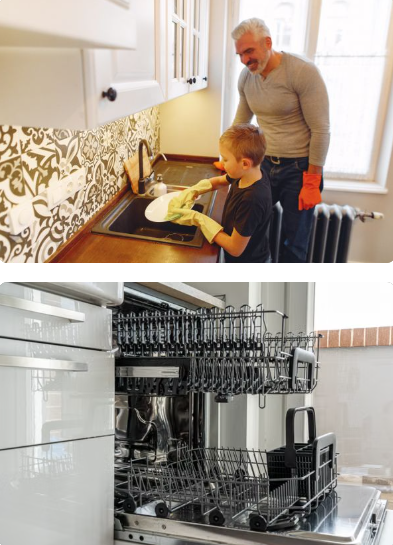
Quick Answer
For most modern households, a full dishwasher is usually more water-efficient and energy-efficient than washing dishes by hand, especially when using an ENERGY STAR® certified model.
However:
- Hand washing may be more practical for a few lightly used dishes.
- Large cookware or delicate items may still need to be washed by hand.
- The best choice often depends on the number of dishes and how you wash them.
Reader Navigation
| If your priority is… | Read first |
|---|---|
| Saving water | Water Usage |
| Saving electricity | Energy Comparison |
| Better hygiene | Cleaning Performance |
| Saving time | Convenience |
| Lower household costs | Which Method Saves More? |
| Unsure which is best | Final Recommendation |
Why This Question Isn’t as Simple as It Seems
For many years, people assumed washing dishes by hand used less water because they could control the faucet.
That assumption isn’t always true.
Modern dishwashers have become significantly more efficient than older models. At the same time, many people unintentionally use far more water than they realize when washing dishes by hand—especially if the tap runs continuously.
This means the answer depends less on which method you choose and more on how each method is used.
What We’ll Compare
This guide examines both methods using practical factors that affect everyday households:
- Water consumption
- Energy use
- Cleaning performance
- Hygiene
- Time required
- Long-term household costs
- Situations where one method makes more sense than the other
Rather than declaring a universal winner, the goal is to help you decide which approach fits your kitchen, your habits, and your priorities.
Water Usage: Which Method Uses Less Water?
For many people, saving water is the main reason they compare hand washing with using a dishwasher.
Surprisingly, the answer often favors the dishwasher.
Modern dishwashers are designed to reuse and recirculate water throughout the wash cycle. Instead of continuously spraying fresh water, they filter and reuse much of the same water before draining it.
By contrast, hand washing can use significantly more water if the faucet is left running while rinsing dishes.
Typical Water Use
| Method | Typical Water Use* |
| Modern dishwasher (full load) | Approximately 3–6 gallons (11–23 liters) |
| Hand washing with running tap | Often 9–27 gallons (34–102 liters) |
| Hand washing using two basins | Can be similar to or slightly higher than an efficient dishwasher |
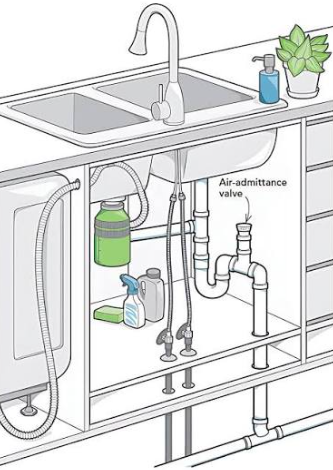
*Actual water use varies depending on the appliance, household habits, and local water pressure.
Quick Takeaway
If you normally leave the tap running while washing dishes, switching to a full dishwasher load will often reduce your household water use.
Energy Comparison
Water isn’t the only utility cost to consider.
Heating water typically accounts for much of the energy used when washing dishes.
Modern dishwashers reduce this energy use by:
- Using less total hot water.
- Heating water efficiently inside the machine.
- Optimizing wash cycles for different soil levels.
Hand washing may use less energy only when cleaning a very small number of lightly soiled dishes.
For larger loads, a modern dishwasher generally becomes the more energy-efficient option.
Quick Takeaway
When operated with full loads, newer dishwashers usually save both water and the energy required to heat that water.
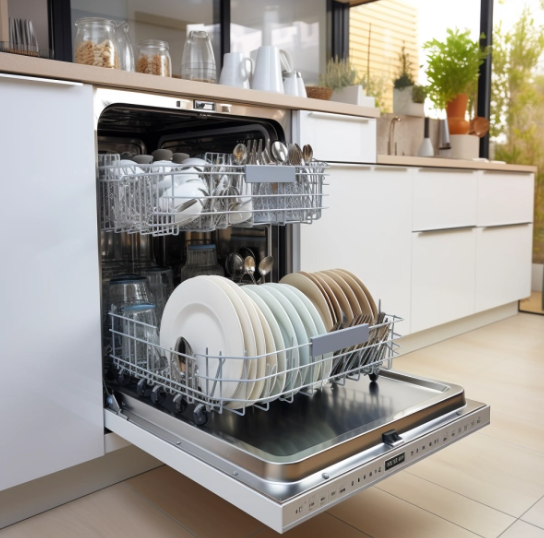
Which Cleans Better?
Cleaning performance depends on both the method and how it’s performed.
Modern dishwashers clean dishes by combining:
- High-temperature water
- Specialized detergents
- Extended wash cycles
- Consistent water pressure
These features help remove grease and food residue that can be difficult to eliminate with quick hand washing.
Hand washing can also produce excellent results, particularly when stubborn food is scrubbed thoroughly. However, cleaning quality varies more because it depends on the individual’s technique.
What About Hygiene?
Many people assume washing dishes by hand is just as sanitary.
In practice, modern dishwashers often have an advantage.
Many machines include a Sanitize cycle that reaches temperatures higher than most people can comfortably tolerate when washing dishes by hand.
Higher water temperatures can improve sanitation when combined with proper detergent and wash cycles.
That said, either method can produce hygienic results if dishes are washed thoroughly, rinsed properly, and allowed to dry completely.
Quick Takeaway
For households where sanitation is a priority—such as homes with infants or someone recovering from illness—a dishwasher’s high-temperature sanitize cycle may provide an additional benefit.
Convenience: Which Saves More Time?
Time is often just as valuable as water or electricity.
At first glance, washing dishes by hand may seem faster because you can clean a few items immediately.
However, the total time tells a different story.
A dishwasher may take one to three hours to complete a cycle, but most of that time requires no effort from you. Your active involvement is usually limited to loading and unloading the machine.
Hand washing, on the other hand, requires continuous attention from start to finish.
Active Time Comparison
| Task | Hand Washing | Dishwasher |
| Washing a few dishes | Usually faster | Usually unnecessary |
| Washing a full day’s dishes | More active work | Less active work |
| Time you must personally spend | Higher | Lower |
Quick Takeaway
If you value your time or regularly wash dishes for a family, a dishwasher often reduces the amount of work you need to do.
Long-Term Household Costs
Many people focus only on utility bills when comparing the two methods.
In reality, the total cost includes several factors:
- Water consumption
- Energy used to heat water
- Dishwasher detergent
- Hand dish soap
- Appliance purchase and maintenance
- Your own time
For households that regularly wash large loads, the lower water and energy use of an efficient dishwasher can offset much of its operating cost over time.
However, purchasing a dishwasher solely to reduce utility bills may not make financial sense if you already wash only a few dishes each day.
Quick Takeaway
The larger your household and the more dishes you wash, the more likely a dishwasher is to provide long-term value.
When Hand Washing Makes More Sense
Despite the advantages of modern dishwashers, hand washing is still the better choice in some situations.
Examples include:
- A few cups or plates after a snack
- Large pots or pans that don’t fit in the dishwasher
- Cast iron cookware
- High-quality kitchen knives
- Fine china
- Crystal glassware
- Wooden cutting boards and utensils
These items may require special care or may be damaged by repeated dishwasher cycles.
When a Dishwasher Is the Better Choice
A dishwasher is generally the better option when:
- You have a full load of dishes.
- Your household cooks frequently.
- You want to reduce water use.
- You prefer spending less time washing dishes.
- You regularly sanitize baby bottles or cutting boards.
- Your dishwasher is relatively modern and well maintained.
Using the dishwasher efficiently means waiting until it’s reasonably full rather than running small loads multiple times a day.
Which Method Is Right for You?
| If your priority is… | Better Choice |
| Lowest water use | Dishwasher |
| Lowest active effort | Dishwasher |
| Better sanitation | Dishwasher |
| Washing a few dishes | Hand Washing |
| Delicate cookware | Hand Washing |
| Large family meals | Dishwasher |
| Mixed household needs | Use both when appropriate |
EverydayWise Perspective
People often ask whether washing dishes by hand or using a dishwasher is the “better” choice.
A more useful question is:
Which method makes the most sense for today’s dishes?
A dishwasher isn’t automatically the right answer simply because it’s newer.
Likewise, washing by hand isn’t automatically cheaper simply because you’re doing the work yourself.
The most practical approach is to match the method to the situation.
Use the dishwasher when efficiency, sanitation, and larger loads matter.
Wash by hand when dealing with delicate cookware or only a few items.
Choosing based on the task—not habit—is usually the smartest decision.
Conclusion
Modern dishwashers have become remarkably efficient, often using less water and less energy than many people expect.
For most households, running a full dishwasher load is usually the more efficient option for everyday dishes.
Hand washing still has an important role for delicate cookware, oversized pots, and small numbers of dishes.
Rather than treating one method as universally better, consider what you’re washing, how much you’re washing, and what matters most to your household.
Final Decision Question
Before you start washing, ask yourself:
“Am I cleaning a few special items, or am I cleaning a full load that a dishwasher can handle more efficiently?”
That simple question will usually lead you to the better choice.
FAQ
Does a dishwasher really use less water than hand washing?
In many homes, yes. A modern dishwasher running a full load often uses less water than washing the same number of dishes under a continuously running tap.
Is a dishwasher more hygienic?
Many modern dishwashers include sanitize cycles that reach higher temperatures than most people can comfortably use when washing by hand, which can improve sanitation.
Should I rinse dishes before putting them in the dishwasher?
Most modern dishwashers are designed to handle lightly scraped dishes without extensive pre-rinsing. Check your dishwasher manufacturer’s recommendations for best results.
What should never go in a dishwasher?
Items such as cast iron cookware, many wooden utensils, fine crystal, certain non-stick pans, and high-quality kitchen knives are often better washed by hand. Always follow the manufacturer’s care instructions.
Is it worth running a dishwasher when it’s only half full?
Generally, waiting until you have a reasonably full load improves water and energy efficiency, unless you need certain items cleaned immediately.