Reader Recognition
A smoke detector that starts beeping can be frustrating—especially when it happens in the middle of the night. Many people immediately replace the battery, while others assume the entire detector needs to be replaced.
The problem is that not every beep means the same thing.
Sometimes a fresh battery solves the issue. Other times, the detector has reached the end of its service life and should be replaced entirely. Knowing the difference can save money, prevent unnecessary frustration, and most importantly, help ensure your home remains properly protected.
This guide explains how to tell whether your smoke detector needs a new battery, a complete replacement, or simply a little maintenance.

Quick Answer
In many cases:
- A single chirp every 30–60 seconds usually indicates a low battery.
- If the detector continues to chirp after installing a new battery, it may have reached the end of its lifespan.
- Most smoke detectors should be replaced approximately every 10 years, even if they still appear to work properly.
- Always test the alarm after replacing the battery.
The right action depends on why the detector is beeping—not simply that it is making noise.
Important Safety Note
This article discusses maintenance chirps, such as low-battery or end-of-life warnings.
A single chirp every 30–60 seconds is typically a maintenance signal that indicates the detector needs attention.
A full alarm pattern (often three loud beeps followed by a pause, repeating) is different. It may indicate that smoke has been detected.
If your smoke detector is sounding a full alarm, leave the building immediately, move to a safe location, and follow your household fire emergency plan. Treat every full alarm as a potential fire emergency until you have confirmed otherwise.
Alarm patterns may vary by manufacturer, so always refer to your smoke detector’s user manual for the correct interpretation.
Reader Navigation
| If your question is… | Read first |
|---|---|
| Why is my detector beeping? | Common Causes of Chirping |
| Should I replace the battery? | Battery Problems |
| When should the whole detector be replaced? | Replacement Guidelines |
| How long do smoke detectors last? | Service Life |
| How can I maintain it properly? | Maintenance Tips |
| What’s the safest choice? | Final Recommendation |
Why This Question Matters
Smoke detectors are one of the simplest safety devices in a home, yet they are often overlooked until they begin making noise.
Unlike many household appliances, a smoke detector is expected to work perfectly during an emergency. A detector that fails because of an expired sensor or a neglected battery may not provide enough warning during a fire.
Understanding the difference between routine maintenance and complete replacement helps ensure that your home’s first line of defense remains reliable.
What We’ll Compare
This guide explains:
- Why smoke detectors chirp
- When replacing the battery is enough
- When the detector itself should be replaced
- Typical service life
- Common maintenance mistakes
- Practical recommendations for homeowners and renters
Rather than assuming every chirp means the same thing, we’ll look at the different causes and the appropriate response for each.
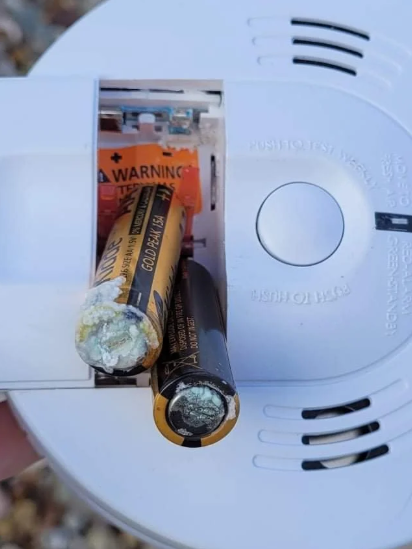
Common Causes of Chirping
One of the biggest misconceptions is that every beep means the battery is dead.
In reality, smoke detectors use different sound patterns to communicate different problems.
Understanding those patterns can help you choose the correct solution instead of replacing parts unnecessarily.
Common Reasons a Smoke Detector Chirps
| Possible Cause | Typical Solution |
| Low battery | Replace the battery |
| End of service life | Replace the smoke detector |
| Battery not installed correctly | Reinstall or replace the battery |
| Dust or insects inside the detector | Clean the detector |
| Temporary electrical interruption (hardwired models) | Reset the detector |
| Internal malfunction | Replace the detector if troubleshooting fails |
Always consult the manufacturer’s instructions because beep patterns vary between models.
When Replacing the Battery Is Enough
Low batteries remain the most common cause of occasional chirping.
Many smoke detectors provide several weeks of warning before the battery becomes completely depleted.
If your detector:
- Chirps every 30–60 seconds,
- Is less than about 10 years old,
- Has no visible damage,
then replacing the battery is usually the first step.
After installing a new battery:
- Press the Test button.
- Confirm the alarm sounds normally.
- Monitor the detector for several minutes.
- If chirping continues, additional troubleshooting may be necessary.
Quick Takeaway
Replacing the battery is often the simplest solution—but only if the detector itself is still within its expected service life.
When the Entire Smoke Detector Should Be Replaced
A new battery cannot fix an aging sensor.
Inside every smoke detector is a sensing chamber that gradually becomes less reliable over time.
As the sensor ages, it may:
- Become less sensitive to smoke
- Trigger false alarms
- Produce end-of-life warning chirps
- Fail internal self-tests
Many newer smoke detectors include an automatic end-of-life notification specifically designed to remind homeowners that the entire unit—not just the battery—needs replacement.
Signs It’s Time to Replace the Detector
- Approximately 10 years old
- Continues chirping after a fresh battery
- Fails the Test button
- Visible physical damage
- Frequent unexplained false alarms
- Manufacturer indicates end-of-life warning
Quick Takeaway
If your detector has reached its expected lifespan, replacing the entire unit is usually safer than continuing to troubleshoot.
How Long Do Smoke Detectors Last?
Although batteries require periodic replacement, the detector itself also has a limited lifespan.
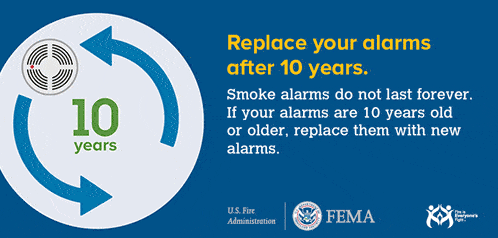
Most manufacturers recommend replacing smoke detectors approximately every 10 years from the date of manufacture.
The manufacturing date is usually printed on the back or inside the detector.
If the detector is already close to or beyond 10 years old, replacing the entire unit is generally recommended—even if it still appears to function during testing.
Hardwired vs. Battery-Powered Smoke Detectors
The type of smoke detector also affects maintenance.
| Type | Maintenance Needs |
| Battery-powered | Replace batteries as recommended and replace the unit at end of life |
| Hardwired with battery backup | Replace backup battery when needed and replace the entire detector at end of service life |
| Sealed 10-year battery models | Replace the entire detector when the sealed battery expires |
Regardless of the power source, every smoke detector eventually requires complete replacement.
Maintenance Tips That Improve Safety
Replacing batteries and smoke detectors on time is only part of proper maintenance.
Simple routine care helps ensure the detector works correctly when it is needed most.
Good maintenance practices include:
- Test every smoke detector at least once a month using the Test button.
- Vacuum or gently clean around the detector several times a year to remove dust.
- Never paint over a smoke detector.
- Keep detectors free of insects and debris.
- Replace batteries promptly when low-battery warnings occur (unless using a sealed 10-year model).
- Follow the manufacturer’s installation and maintenance instructions.
Quick Takeaway
Regular testing takes only a few seconds but helps confirm the detector is operating properly before an emergency occurs.
Preventive Battery Replacement
For smoke detectors with replaceable batteries, many fire safety organizations recommend changing the batteries about every six months, even if the detector has not started chirping.
In the United States, a common reminder is to replace smoke detector batteries when daylight saving time begins and ends, making it easier to remember a regular maintenance schedule.
If your detector uses a sealed 10-year battery, replace the entire unit when it reaches the end of its rated service life rather than attempting to replace the battery.
Always follow the manufacturer’s maintenance recommendations for your specific model.
Common Mistakes Homeowners Make
Many smoke detector problems result from misunderstandings rather than equipment failure.
Avoid these common mistakes:
1. Ignoring Repeated Chirping
Some people remove the battery simply to stop the noise and forget to fix the underlying problem.
A smoke detector without power provides little or no protection.
2. Assuming a New Battery Solves Every Problem
If the detector has reached the end of its service life, replacing the battery will not restore the aging sensor.
3. Forgetting to Test After Battery Replacement
Installing a battery without pressing the Test button leaves you uncertain whether the detector is actually functioning correctly.
4. Keeping Detectors Beyond Their Service Life
A smoke detector that is more than 10 years old may still make sounds, but its sensing performance may no longer meet its original design specifications.
5. Removing a Detector After False Alarms
Occasional nuisance alarms should be investigated—not solved by permanently removing the detector.
Sometimes relocating the detector or improving ventilation is a better solution.
Which Option Is Right for You?
| Situation | Recommended Action |
| Occasional chirp and detector under 10 years old | Replace the battery |
| Chirping continues after a new battery | Check for end-of-life warning or replace the detector |
| Detector is about 10 years old | Replace the detector |
| Detector fails the Test button | Replace the detector immediately |
| Detector has physical damage | Replace the detector |
| Unsure of manufacturing date | Consider replacing the detector if its age cannot be verified |
EverydayWise Perspective
When a smoke detector starts chirping, many people ask:
“Do I really need a new detector, or is it just the battery?”
The better question is:
“Can I still rely on this detector to protect my home if a fire occurs tonight?”
Replacing a battery is inexpensive.
Replacing an aging smoke detector costs more.
But compared with the value of early fire warning, replacing a detector that has reached the end of its service life is often the safer decision.
Good home safety isn’t about fixing the noise—it’s about maintaining reliable protection.
Conclusion
A chirping smoke detector doesn’t always mean the battery is dead.
Sometimes the battery is the only problem.
Other times, the detector is telling you that its sensing components have reached the end of their useful life.
Understanding the difference helps you avoid unnecessary replacements while ensuring your home remains properly protected.
When in doubt, check the detector’s age, replace the battery if appropriate, test the alarm, and replace the entire unit if it has reached its recommended service life.
Final Decision Question
Before replacing anything, ask yourself:
“Is this detector warning me about the battery—or warning me that it can no longer protect my family?”
That question usually points you toward the safest choice.
FAQ
How often should I replace the battery in a smoke detector?
For models with replaceable batteries, follow the manufacturer’s recommendations. Many homeowners replace batteries annually, while others wait for the low-battery warning. Sealed 10-year battery models do not require battery replacement.
How do I know if my smoke detector is 10 years old?
Look for the manufacturing date printed on the back or inside the detector. If it is around 10 years old, replacing the entire unit is generally recommended.
Why is my smoke detector still chirping after I replaced the battery?
Possible causes include an expired detector, an improperly installed battery, dust inside the unit, or an internal malfunction. Consult the manufacturer’s troubleshooting guide.
Can I replace only the battery in a sealed 10-year smoke detector?
No. Sealed battery models are designed to be replaced as a complete unit when the battery reaches the end of its life.
Should renters replace smoke detectors?
Maintenance responsibilities vary by lease agreement and local regulations. If a detector is malfunctioning or has reached the end of its service life, notify your landlord or property manager promptly rather than simply removing the battery.