Quick Answer
Most kitchen sponges should be replaced every one to two weeks with regular household use.
You may need to replace yours sooner if it develops a persistent odor, begins to break apart, or has been used to clean up raw meat or poultry juices. While disinfecting methods such as dishwashers, boiling water, or microwaving (when safe) can reduce bacteria, they cannot restore a worn-out sponge or completely eliminate all microorganisms.
Replacing a sponge regularly is one of the simplest ways to help reduce the spread of bacteria in your kitchen.
If your sponge develops a persistent odor, begins to break apart, or has been heavily contaminated by raw meat juices, replace it sooner rather than trying to disinfect it.
Why Kitchen Sponges Get Dirty So Quickly
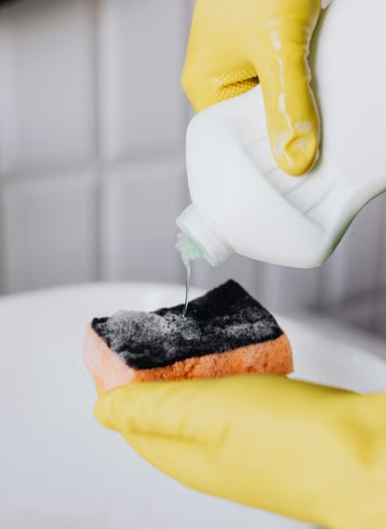
A kitchen sponge may look clean after rinsing, but its structure makes it an ideal place for moisture and food particles to collect.
Each time you wipe dishes, countertops, or sinks, tiny bits of food and grease can become trapped inside the sponge. Combined with moisture, these residues create an environment where bacteria can multiply.
Unlike hard cleaning tools that dry quickly, sponges often stay damp for hours. This prolonged moisture allows microorganisms to survive much longer than many people realize.
Using the same sponge for multiple surfaces can also spread bacteria from one area of the kitchen to another. For example, wiping a cutting board used for raw chicken and then cleaning the countertop with the same sponge may increase the risk of cross-contamination if the sponge has not been properly cleaned or replaced.
This doesn’t mean every sponge is immediately unsafe. Regular rinsing, proper drying, and routine replacement can significantly reduce the risk of bacterial buildup.
This is consistent with findings from NSF International’s household germ studies, which have repeatedly identified kitchen sponges and dishcloths as some of the most bacteria-contaminated items in the home.
In one NSF household germ study, about 75% of tested kitchen sponges and dishcloths contained coliform bacteria, a group of bacteria commonly used as an indicator of sanitation. While the presence of coliform bacteria does not necessarily mean dangerous pathogens are present, it shows how quickly a sponge can become contaminated during normal household use.
Regular cleaning and timely replacement are therefore important, even if a sponge still looks clean.
How Long Does a Kitchen Sponge Usually Last?
For most households, food safety experts generally recommend replacing a kitchen sponge every one to two weeks.
However, the ideal replacement schedule depends on how often the sponge is used.
| Usage | Recommended Replacement |
|---|---|
| Light household use | Every 2 weeks |
| Average daily cooking | Every 1–2 weeks |
| Heavy cooking or large family | Weekly or sooner |
| Used to clean raw meat spills | Replace immediately after use if contamination is significant |
Even if a sponge still looks clean, appearance alone is not a reliable indicator of cleanliness. Many bacteria are invisible and can remain inside the sponge after normal washing.
The good news is that simple maintenance—such as rinsing thoroughly after use and allowing the sponge to dry completely—can help keep it cleaner between replacements. However, these practices should not replace a regular replacement schedule.
Signs It’s Time to Replace Your Kitchen Sponge
Even if your sponge doesn’t look dirty, it may already be time for a replacement. Here are some common signs that a sponge has reached the end of its useful life.
It Has a Persistent Odor
A sour or musty smell is one of the clearest indicators that bacteria and organic residue have built up inside the sponge.
If the odor remains even after disinfecting, replacing the sponge is usually the safest option.
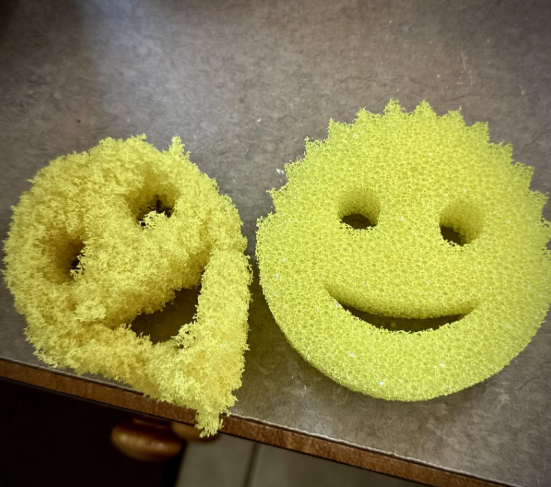
It’s Falling Apart
Over time, repeated scrubbing causes the sponge material to weaken.
If pieces begin breaking off, the scrubbing surface separates, or the sponge no longer holds its shape, it won’t clean effectively and should be replaced.
It Stays Wet Most of the Time
A sponge that never fully dries provides a favorable environment for bacterial growth.
If your kitchen is humid or the sponge is used frequently throughout the day, it may need to be replaced more often than the typical one- to two-week guideline.
You’ve Used It to Clean Raw Meat or Poultry Juices
Cleaning up spills from raw meat, poultry, or seafood can expose the sponge to harmful bacteria.
While some disinfecting methods may reduce bacterial levels, many food safety experts recommend replacing the sponge if contamination is significant rather than relying solely on disinfection.
Cleaning Up Raw Meat Spills
Whenever possible, use disposable paper towels to clean up juices from raw meat, poultry, or seafood before disinfecting the surface.
Using a disposable towel helps reduce the risk of spreading bacteria to a reusable sponge.
If a sponge has been heavily contaminated with raw meat juices, replacing it is generally safer than relying on disinfection alone.
Can You Disinfect a Kitchen Sponge?
Yes—but disinfecting has limits.
Methods such as boiling, microwaving (when appropriate), or using a dishwasher can reduce the number of bacteria on a sponge. However, none of these methods can make an old, damaged sponge “like new.”
If the sponge is worn out, smells bad, or is beginning to break apart, replacing it is usually a better choice than continuing to disinfect it.
Common Disinfecting Methods
| Method | Can Reduce Bacteria? | Important Notes |
| Dishwasher (heated drying cycle) | ✔ Yes | Follow your dishwasher manufacturer’s instructions. |
| Boiling water | ✔ Yes | Boil for several minutes using caution to avoid burns. |
| Microwave | ✔ Yes | Only for plain, non-metallic sponges. Wet the sponge thoroughly and microwave for about 1 minute on high power. Never microwave a sponge containing metal or abrasive scrub pads, as this may create a fire hazard or damage the microwave. |
| Diluted bleach solution | ✔ Yes | Follow the bleach manufacturer’s instructions for safe dilution and contact time. Never mix bleach with ammonia, vinegar, or other cleaners. |
| Soap and hot water | Limited | Removes food debris but is generally less effective as a disinfecting method. |
Disinfecting is best viewed as a way to extend the safe use of a sponge between replacements, not as a substitute for replacing it on a regular schedule.
⚠️ Important Safety Note
Never place a dry sponge in the microwave.
If you choose to use the microwave as a disinfecting method, the sponge should be thoroughly wet and must not contain any metal or metallic scrubbing material. Otherwise, it may create a fire hazard or damage the microwave.
When in doubt, use another approved disinfecting method or simply replace the sponge.
Are Kitchen Brushes More Hygienic Than Sponges?
Many people wonder whether switching to a dish brush will solve the problem of bacteria in the kitchen.
The answer is not completely—but brushes do offer some advantages.
Unlike sponges, brushes have firm bristles that trap less food residue and usually dry more quickly between uses. Because bacteria generally multiply more easily in damp environments, a brush that dries thoroughly may stay cleaner over time.
However, brushes are not maintenance-free. Food particles and grease can still collect around the base of the bristles, so they should be rinsed after each use and cleaned regularly according to the manufacturer’s instructions.
For many households, using both tools works well:
- Dish brush: Everyday washing of dishes, pots, and pans
- Kitchen sponge: Wiping countertops, sinks, and delicate surfaces
No matter which tool you choose, regular cleaning and replacement remain important.
Tips to Help Your Kitchen Sponge Last Longer
While no sponge lasts forever, a few simple habits can help keep it cleaner between replacements.
Rinse Thoroughly After Every Use
Remove as much food residue and grease as possible before putting the sponge away. Leftover food provides nutrients that allow bacteria to multiply.
Squeeze Out Excess Water
A sponge that stays soaked all day creates a better environment for bacterial growth.
After rinsing, squeeze out as much water as possible.
Let It Air Dry
Store the sponge where air can circulate freely instead of leaving it in the bottom of the sink or under a pile of wet dishes.
Allowing the sponge to dry completely between uses may help reduce bacterial growth.
Use Separate Cleaning Tools
Consider using different sponges or brushes for different tasks.
For example:
- One for washing dishes
- One for cleaning countertops
- One for tougher jobs that involve grease or food spills
This can help reduce cross-contamination between different kitchen surfaces.
Replace It Before It Becomes a Problem
Many people wait until a sponge smells bad before replacing it.
Instead, replacing it on a regular schedule—typically every one to two weeks for most households—can help prevent bacterial buildup before it becomes noticeable.
Final Recommendation
A kitchen sponge is one of the most frequently used cleaning tools in the home, but it is also one of the easiest to overlook.
For most households, replacing a sponge every one to two weeks is a practical guideline. If it develops a persistent odor, begins to fall apart, stays damp for long periods, or has been heavily contaminated by raw meat or poultry juices, replacing it sooner is the safer choice.
Disinfecting methods can reduce bacteria and help extend a sponge’s usable life, but they cannot reverse wear or guarantee that every microorganism has been eliminated.
Keeping a simple replacement routine—along with rinsing, drying, and proper storage—can help maintain a cleaner kitchen and reduce the risk of spreading bacteria during everyday food preparation.