When time is short, the goal is not to clean your entire home faster. It is to use the time you have where it will make the clearest difference.
That may mean clearing a safe path, handling food residue, making one bathroom usable, or restoring the room your household needs next. It may also mean stopping after 10 minutes even though other work remains.
A rushed cleaning session becomes exhausting when every visible problem is treated as equally urgent. Once you separate what needs attention now from what can reasonably wait, a short session becomes much easier to start—and much more useful.
This guide provides a practical triage method and plans for 5, 10, 15, and 30 minutes. It is for a home that needs a quick reset during a busy day, before a normal activity, or ahead of a visitor. It is not a deep-cleaning plan or a recovery system for a large backlog.
The short-time rule: Protect safety first, restore essential function second, and use any remaining time where the result will be most noticeable.
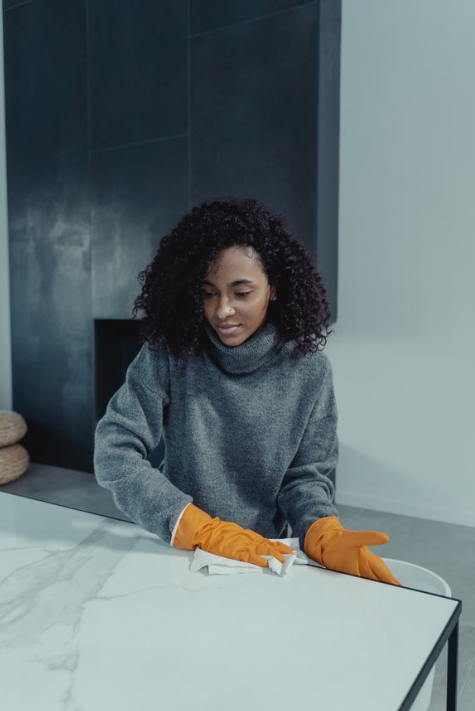
Decide What “Clean Enough” Needs to Accomplish
Before you touch anything, decide what the session is for.
“Clean the house” is too broad for a short block. A useful purpose is specific to what needs to happen next:
- prepare the kitchen so you can make dinner;
- make the bathroom ready for use;
- clear the entry and main seating area before guests arrive;
- remove a spill or pet accident;
- reset the shared space before bedtime; or
- reduce tomorrow morning’s friction.
The purpose determines the priority. If you need to cook, an empty food-preparation area matters more than a polished coffee table. If a child needs a safe place to play, objects on the floor may matter more than fingerprints on a window.
Imagine that Erin has 15 minutes before leaving for work. The living room is untidy, breakfast dishes are in the sink, and clean laundry is on a chair. Because dinner preparation will be difficult if the kitchen remains blocked, Erin uses most of the session there. The laundry can wait in its basket. The room is not fully clean, but the next essential activity is easier.
This is not lowering every household standard. It is choosing a temporary standard that matches the available time.
Use a Three-Level Triage
Scan the area once and sort what you see into three levels. Do not create a detailed inventory.
Level 1: Safety or time-sensitive hygiene
Handle conditions that could cause injury, contamination, damage, or a rapidly worsening problem. Examples include:
- a wet or slippery floor;
- broken glass or another sharp object;
- food residue likely to contaminate a preparation surface;
- raw-meat drips or leaking garbage;
- a pet accident;
- a blocked exit or unsafe walking path;
- standing water or an active leak; or
- cleaning products within a child’s or pet’s reach.
Some situations are not appropriate for a rapid routine clean. Significant mold, sewage, flooding, pest contamination, chemical exposure, or another hazardous condition may require specialized instructions or professional help.
Level 2: Essential function
Next, restore the part of the home that people need to use. This could mean:
- clearing enough counter space to prepare food;
- freeing the sink for necessary washing;
- making the toilet and handwashing area usable;
- clearing a path from the door;
- creating one usable place to sit or sleep; or
- removing items that prevent a door, appliance, or work surface from functioning.
Function is a better short-session target than visual perfection. A kitchen can be usable with a dish rack still full. A bedroom can support sleep even if clean clothes are not folded.
Level 3: Visible relief
If time remains, choose one area where a small action will make the home feel calmer or more orderly. Good targets often include:
- the entry surface;
- the dining table;
- the main section of a floor;
- the sofa or primary seating area; or
- the first bathroom surface a visitor will see.
Choose one, not all of them. Visible relief is useful, but it comes after immediate safety and basic function.
<!– IMAGE 2: Insert here. See Admin File, Image 2. –>

Follow a Fast Reset Sequence
Once you know the purpose and priority, use the same basic sequence. The sequence reduces decision-making, but it is not a rule that every step must be completed.
1. Remove immediate hazards
Address the Level 1 item first. If there is no urgent condition, move on.
2. Collect obvious waste
Use one trash bag or bin. Take only clear garbage, spoiled food, empty packaging, and other items that require no decision. Do not use a rushed session to decide whether uncertain belongings should be discarded.
3. Gather items that belong elsewhere
Place out-of-room items in one basket, box, or defined holding spot. Do not walk each item back individually unless returning it takes only a moment and will not pull you into another room.
The container is a transfer tool, not permanent storage. Put it somewhere that does not create a tripping hazard, and plan to empty it during a normal routine.
4. Restore the essential surface or fixture
Clear and clean the counter, sink, table, toilet area, walkway, or seating space connected to your purpose.
Use a method and product appropriate for the material. Cleaning usually means removing dirt and many germs with soap or detergent. Disinfection is a different step and is not automatically necessary for every rushed session.
5. Make one finishing pass
If time remains, wipe one prominent surface, sweep or vacuum the active floor zone, straighten cushions, or put the collected waste by the exit.
Then stop.
The sequence works because it moves from consequence to function to appearance. It avoids spending the first eight minutes arranging small objects while a food spill or blocked counter remains.
Choose the Plan That Fits the Time You Actually Have
Set a timer before you begin. The plans below are limits, not challenges to finish more quickly.
If you have 5 minutes
Five minutes is enough for one meaningful intervention.
- Identify the most important safety or function problem.
- Remove obvious waste or move obstructing items into one container.
- Clear and clean one small working area.
- Stop when the timer ends.
Possible outcomes:
- a clear section of kitchen counter for making lunch;
- a wiped bathroom sink and usable toilet area;
- a safe walkway through the entry;
- a pet accident handled correctly; or
- a cleared dining-table section for homework.
Do not start floors throughout the home, reorganize a cabinet, or carry a basket from room to room. A five-minute session should solve one immediate problem.
If you have 10 minutes
Use the first half to restore function and the second half to create visible relief.
- Handle any urgent spill, waste, or hazard.
- Collect obvious trash.
- Gather misplaced items into one transfer container.
- Restore one essential surface or fixture.
- Use the final minute to put products away and leave the area safe.
For example, Sam is expecting a maintenance worker in 10 minutes. Rather than cleaning every room, Sam clears the route from the front door to the utility area, removes items around the equipment, and wipes the nearby surface. Private rooms remain untouched because they are irrelevant to the visit.
If you have 15 minutes
Fifteen minutes allows one complete priority zone or two very small connected zones.
Try this division:
- 2 minutes: scan, choose the purpose, and collect supplies;
- 5 minutes: remove waste and gather misplaced items;
- 6 minutes: clean the essential surface or active floor area;
- 2 minutes: return supplies, remove the trash, and stop.
A connected pair might be the kitchen counter and dining table, or the toilet area and bathroom sink. Avoid pairing distant rooms, because walking and repeated setup consume the block.
If you have 30 minutes
Thirty minutes can restore the main functions of a small shared area, but it is still not a whole-home deep clean.
Use three bounded rounds:
- First 10 minutes—triage: hazards, food residue, garbage, and obstructed paths.
- Second 10 minutes—function: one kitchen, bathroom, entry, or shared-living target.
- Final 10 minutes—visible finish: the active floor area, a prominent surface, and safe put-away.
If the first two rounds take longer, skip the visible finish. Do not rush chemical contact times, climb unsafely, or leave a wet floor unattended to preserve the schedule.
Nadia has 30 minutes before family arrives unexpectedly. She clears the entry and living-room seating, makes the guest bathroom usable, and removes kitchen waste. She closes the bedroom doors and leaves a stack of papers for later. Her choices support the visit without pretending the entire home has been cleaned.
Prioritize by Zone, Not by the Whole House
Short sessions work better when you define a small boundary.
A zone can be:
- one counter and the nearby sink;
- the toilet, sink, and clear floor around them;
- the entry path and place for shoes;
- the sofa, coffee table, and floor immediately around them; or
- the dining table and the route to it.
Finish the useful zone before expanding. Moving rapidly through every room can create the sensation of effort without restoring any area enough to use.
When choosing between zones, ask:
- Is one creating a safety or hygiene concern?
- Which one is needed next?
- Which one affects the most people?
- Which one can improve meaningfully within the available time?
The fourth question prevents a common mistake: starting the most visually dramatic problem even when it cannot be changed much in 10 minutes.
If a spare room is severely cluttered but the kitchen needs a small reset before dinner, the kitchen is usually the stronger short-time target. The spare room may deserve a separate project, not a few rushed minutes.
Know What Can Wait
Postponing a task is reasonable when the delay does not create a safety, hygiene, damage, or basic-function problem.
During a limited session, these often can wait:
- folding clean laundry;
- detailed dusting;
- cleaning low-use rooms;
- polishing fixtures;
- matching or organizing loose items;
- washing windows;
- rearranging storage;
- cleaning behind large furniture; and
- cosmetic details that do not affect the next use of the room.
This is contextual. Laundry on a chair can wait; laundry blocking a stairway should move. Dust on a shelf may wait; a known allergen issue may change the priority. A few dishes can wait if the sink remains usable; food residue attracting pests should not.
Use a “later” list only if it helps. Keep it to two or three items. Transferring the entire visual field into a long checklist turns a short reset into a record of everything you did not complete.
Prepare for a Guest Without Cleaning for an Imaginary Inspection
An upcoming visitor often creates false urgency because the entire home suddenly feels visible.
Clean for the actual visit:
- Clear a safe route from the entrance.
- Prepare the space the guest will use.
- Make the relevant bathroom functional.
- Address odor or waste at its source.
- Stop when those needs are met.
You do not need to clean rooms the guest will not enter or begin a detailed project because someone is coming over. If belongings need to be moved quickly, use one contained holding place rather than scattering them into several hidden piles.
For a dinner guest, the kitchen’s functional surfaces and eating area may matter most. For a child’s playdate, a safe play zone and accessible bathroom may take priority. For a service appointment, the route and work area are the relevant zones.
The best result is not a home that appears untouched by ordinary life. It is a safe, usable space appropriate for the visit.
<!– IMAGE 3: Insert here. See Admin File, Image 3. –>

Avoid the Shortcuts That Create More Work
Speed is useful only when it does not produce damage, unsafe exposure, or a larger task later.
Do not mix products
Never combine household cleaning products unless the label specifically directs it. Bleach mixed with ammonia or acids can release dangerous gases. Use fresh air or ventilation as directed, wear any recommended protection, and keep products away from children and pets.
Do not use a product on an unknown surface
A strong or specialized cleaner can discolor, etch, strip, or otherwise damage a material. Check the product and surface instructions rather than using whatever is closest.
Do not spray everything by default
The CDC says regular cleaning with soap or detergent is enough in most home situations. Disinfection is more relevant when someone is sick, someone at higher risk is present, or a particular contamination event calls for it. If disinfecting is appropriate, clean visible soil first and follow the label, including the required contact time.
Do not create unsafe piles
Moving everything off a surface onto the floor, stairs, bed, or another work area may exchange one problem for another. Use one stable container and keep exits and walkways clear.
Do not let the timer override the task
A spill, broken glass, chemical exposure, or another hazard may need to be fully secured even if the timer ends. Conversely, a cosmetic task does not need to continue merely because two minutes remain.
Stop Deliberately
A short clean needs an ending routine. Reserve the final minute or two to:
- put products and tools away;
- remove or tie the trash;
- empty dirty water safely;
- leave wet surfaces or floors clearly managed;
- wash your hands when appropriate; and
- note the single next task, if one truly needs follow-up.
Do not use the finishing minute to open a new zone.
A useful stopping question is:
Is the home safer or easier to use for what happens next?
If the answer is yes, the session has worked.
There will still be visible tasks. That does not make the reset incomplete. Its purpose was to make a specific improvement within a fixed amount of time.
If the same area repeatedly requires emergency attention, the issue may be better addressed by adjusting your regular schedule or cleaning frequency. If the whole home has accumulated a substantial backlog over an extended period, a structured restart plan will be more appropriate than repeating short urgent sessions.
Decision Summary
When time is limited:
- Define what the home needs to support next.
- Handle safety and time-sensitive hygiene first.
- Restore one essential function.
- Choose one bounded zone.
- Use remaining time for visible relief.
- Put supplies away and stop.
Five minutes can solve one immediate problem. Ten or 15 minutes can restore a small functional zone. Thirty minutes can reset the most important parts of a shared area. None of those sessions needs to become an attempt to clean the entire home.
The right short clean is not the one that touches the most rooms. It is the one that removes the most important obstacle without using more time and energy than you intended to give.
FAQ
What should I clean first when I have very little time?
Start with anything that could cause injury, contamination, damage, or a rapidly worsening problem. Then restore the surface, fixture, or path needed for the household’s next activity.
Can I clean a house in 15 minutes?
You can meaningfully improve one small priority zone in 15 minutes, but most homes cannot be fully cleaned in that time. Define a narrow outcome such as a usable kitchen counter, bathroom, entry, or seating area.
Is it better to clean one room or do a little in every room?
When time is short, completing one useful zone usually produces a clearer result. Move across rooms only when the purpose requires it, such as clearing a route for a visitor or service worker.
What should I skip during a quick clean?
Detailed dusting, polishing, storage reorganization, low-use rooms, windows, and cosmetic work can often wait unless they relate to a specific safety, health, or immediate-use need.
Should I disinfect everything during a quick clean?
Usually not. CDC guidance says regular cleaning is enough in most home situations. Disinfection may be appropriate during illness, for someone at higher risk, or after a specific contamination event. Always follow the product label.
How can I clean quickly before guests arrive?
Focus on the entrance route, the space the guest will use, the relevant bathroom, and any odor or waste source. Private or unused rooms do not need attention solely because a guest is coming.
What if 30 minutes does not make a visible difference?
The chosen area may be too large or the home may have a deeper backlog. Narrow the target to one functional zone. If the problem has built up over time, use a separate restart plan rather than relying on repeated rapid resets.
Sources
- CDC – When and How to Clean and Disinfect Your Home
- CDC – Cleaning and Disinfecting
- EPA – Volatile Organic Compounds’ Impact on Indoor Air Quality
- National Capital Poison Center – Top Tips for a Safe Spring Cleaning
- National Capital Poison Center – Chlorine Gas: Get the Facts
More in This Cluster: Home Cleaning Systems
- How to Build a Weekly Cleaning Schedule That Fits Your Life
- Daily, Weekly, and Monthly Cleaning Tasks Explained
- How to Clean Your Home When You Are Short on Time (you are here)
- A Practical Room-by-Room Deep Cleaning Order
- How to Divide Cleaning Work in a Household
- Essential Cleaning Supplies: What You Actually Need
- How to Restart Cleaning After Falling Behind