Quick Summary
The new 50% duty does not apply to every product from Canada, and a 50% import duty does not guarantee a 50% retail-price increase. The key questions are whether the product’s tariff classification appears in a proclamation annex, whether the shipment enters the United States on or after 12:01 a.m. ET on August 19, 2026, and who must absorb the duty under the contract. Consumers should buy early only when the item is clearly covered, needed soon, hard to substitute, and the current price is genuinely favorable.
Why It Matters
This is a decision-support article. It distinguishes an official announcement from the downstream medical, legal, commercial, and administrative steps that determine what a reader can actually do today.
Why the August 19 date matters
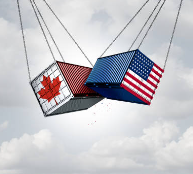
On July 20, 2026, President Donald Trump signed three proclamations under Section 338 of the Tariff Act of 1930. The measures impose an additional 50% ad valorem duty on specified Canadian goods tied to disputes over alcoholic beverages, motor vehicles, and dairy trade. The White House says the duties take effect 30 days after signing; the proclamations specify 12:01 a.m. Eastern time on August 19, 2026.[1][2]
The headline is dramatic, but the practical effect depends on classification and timing. The duty applies to goods listed in the relevant annexes, not to every Canadian product. Energy, potash, products already covered by certain Section 232 measures, and some other goods such as fish and critical minerals are excluded from these Section 338 tariffs, according to the White House fact sheet.[1]
That means country of origin alone is not enough. A Canadian flag on a package, a Canadian brand name, or a seller located in Canada does not prove that the new duty applies.
What “an additional 50% tariff” means
An ad valorem duty is calculated as a percentage of the customs value used for the import entry. The new duty is additional: it may sit on top of other applicable duties, fees, or trade remedies. The importer of record generally handles the customs entry and duty payment, but the economic cost can be shared among the importer, manufacturer, distributor, retailer, and customer.
A 50% duty therefore does not translate mechanically into a 50% shelf-price increase. A retailer might use existing U.S. inventory that entered before the effective time. A supplier might reduce its price. An importer might accept a lower margin, spread the increase across a product line, or switch sourcing. Conversely, a low-margin or special-order product could experience a large increase, particularly when the seller passes through duties under the purchase agreement.
For consumers, the useful question is not ‘Will Canadian prices rise 50%?’ It is ‘Is this exact product covered, when will newly duty-paid inventory reach the seller, and how much of the cost will the seller pass through?’
Which purchases deserve the closest look
The White House describes covered goods ranging from wine to hockey sticks to cement and identifies three dispute areas: alcoholic beverages, motor vehicles, and dairy.[1] The full legal answer is in each proclamation and its annex, where products are identified through tariff classifications. Broad category examples help with triage, but they are not a substitute for the code.
Consumers should pay closest attention to a near-term purchase that is Canadian-origin, specifically listed by the seller as imported from Canada, and within one of the covered classifications. Examples could include certain Canadian alcoholic beverages, selected dairy products, vehicles or related goods identified in the motor-vehicle annex, and additional listed goods such as sporting equipment or building materials. Do not assume that every bottle, cheese, car, hockey product, or bag of cement is covered.
Businesses face a stricter verification need. Ask the customs broker or importer for the Harmonized Tariff Schedule code, country-of-origin determination, applicable proclamation annex, entry date, and calculation of all stacked duties. A marketing description is not a customs classification.
The five facts to verify before buying early
First, verify the exact product. Record the model, package size, SKU, and country of origin. For vehicles, include the VIN and assembly information. For business inputs, obtain the proposed HTS code in writing.
Second, verify whether the code appears in an official annex. The White House fact sheet is a useful overview, but CBP implementation messages and the HTS are the operational sources for import entries. If the code is uncertain, the seller or importer should consult a licensed customs broker or trade counsel.
Third, verify inventory timing. Ask whether the quoted unit is already in U.S. inventory or will enter on or after August 19. The relevant date is generally the customs entry timing described by the proclamation, not the day you place an online order. A pre-order does not necessarily avoid a duty on a later import.
Fourth, verify the price terms. Does the quote include duties, taxes, brokerage, delivery, and possible tariff surcharges? Can the seller revise the price before shipment? Is the deposit refundable if the landed cost changes? Get answers in the contract or order confirmation.
Fifth, verify alternatives. Compare a U.S.-made product, an import from another country, a different material, a used product, or a delayed purchase. A tariff creates a reason to compare; it does not make an unnecessary purchase economical.
When buying early can make sense
Buying before the effective date may be reasonable when four conditions align: the product is clearly covered, you already intended to buy it soon, the item is difficult to substitute, and the seller confirms that the quoted unit is already in the United States or will enter before the effective time. A firm, all-in price and a normal return policy make the decision stronger.
Examples might include a contractor with a signed project that requires a specific listed Canadian input, a business replenishing a proven SKU with limited substitutes, or a consumer replacing a failed essential item. Even then, compare carrying costs, storage, spoilage, financing, and return restrictions against the possible saving.
Buying early is weaker when the product may be excluded, the tariff classification is unknown, the item is discretionary, or the seller can still add a duty surcharge. Do not finance months of excess inventory merely because a headline says 50%.
Special cautions for cars, food, alcohol, and construction materials
Vehicles are classification- and content-sensitive purchases. A Canadian-assembled vehicle can be affected by more than one trade measure, and dealer inventory may have entered under different dates and rules. Ask for an itemized out-the-door quote and whether any tariff adjustment clause remains open. Do not rely only on the assembly location shown in advertising.
Food and alcohol move through distributors with existing inventory, regulated channels, and varying margins. Price changes may appear gradually and unevenly. Perishable stock is a poor candidate for speculative buying, and alcohol purchasers should consider state rules and retailer return restrictions.
Construction materials can have long lead times and contracts that allocate duty risk. Homeowners should ask contractors whether allowances are fixed or adjustable and whether an alternative specification requires an engineer, architect, permit, or warranty approval. Small businesses should review Incoterms and tariff-change clauses before accepting a supplier’s surcharge.
How to compare the real cost instead of the headline rate
Build a simple all-in comparison. Start with the current delivered price, then add sales tax, financing cost, storage, insurance, installation, brokerage, and any nonrefundable fees. Compare that total with the seller’s post-August estimate and at least one viable substitute. For a business, include the cost of tying up cash and the risk that demand, specifications, or negotiations change before extra inventory is used.
Suppose a necessary item costs $1,000 today. A 50% additional duty on the customs value does not prove the future customer price will be $1,500. The customs value may differ from retail price, and the duty may be partly absorbed or combined with other costs. Instead of inventing a future price, ask the seller for two all-in quotes: one for identified pre-effective-date inventory and one for a later shipment. Record the assumptions and the expiration date of each quote.
Set a decision threshold before shopping. For example, a buyer might proceed only if the current all-in price is at least 10% below the confirmed alternative and the item will be used within 60 days. The numbers should reflect your budget and operating reality, not a universal rule. A threshold prevents the tariff headline from turning a marginal discount into an oversized purchase.
What Canadian sellers and U.S. small businesses should do
Canadian sellers should identify which products are actually Canadian-origin and covered, then decide whether to quote duties paid, duties unpaid, or subject to adjustment. Customer-facing language should distinguish an official duty from the seller’s own surcharge. Update refund, cancellation, and delivery terms before taking deposits.
U.S. importers should model the landed cost by SKU, not apply a blanket 50% increase to the catalog. Separate existing inventory from post-effective-date entries, confirm customs valuation, and document who approved classification. Review whether alternative sourcing changes origin, quality, regulatory compliance, warranty, or delivery risk.
Both sides should prepare for negotiations or implementation guidance to change the situation before August 19. A reversible plan—valid quotes, limited inventory commitments, and clear customer notices—is more resilient than a rushed blanket repricing.
What could still change
The measures were signed, but diplomacy, amendments, exclusions, court action, or CBP instructions could alter implementation. Businesses should monitor official proclamations, CBP’s Trade Remedies and Cargo Systems Messaging Service pages, and the current HTS. Consumers need not follow every customs message; they should ask sellers to confirm whether a price is final and duty-inclusive.
Do not treat an announced negotiation as a completed exemption. Likewise, do not treat the absence of an immediate storewide price increase as proof that a product is unaffected. Inventory turns at different speeds.
The bottom line
The new 50% Canadian duties are targeted, classification-specific, and time-sensitive. The best decision process is exact product → tariff code and annex → customs entry timing → contract cost allocation → substitute comparison.
If those facts are unavailable, waiting for a clearer all-in quote may be wiser than buying under pressure. If they are verified and the purchase was already necessary, securing pre-effective-date inventory can be reasonable. The number in the headline is the start of the calculation, not the answer.
Important Note
This article provides general consumer and business information, not customs, legal, tax, or financial advice. Import classification and duty liability should be confirmed with CBP guidance and a qualified customs professional.
FAQ
Do the new tariffs apply to everything made in Canada?
No. They apply to specified products in the proclamation annexes, with stated exclusions.
Will retail prices rise by 50%?
Not necessarily. Pass-through depends on customs value, existing inventory, margins, contracts, sourcing, and competition.
Can I avoid the tariff by ordering before August 19?
Not always. The relevant customs entry may occur after you order. Confirm where the unit is and whether the quoted price is duty-inclusive.
Does USMCA status automatically remove the new duty?
The White House says covered goods can face the Section 338 duty regardless of USMCA origin. Verify the exact code and current CBP guidance.
What should a small importer request from its broker?
The HTS code, origin analysis, applicable annex, entry date, customs value, stacked duty calculation, and documentation supporting each conclusion.
Could the tariffs change before August 19?
Yes. Negotiations or official implementation changes remain possible. Rely on signed official updates, not reports of a possible deal.
Sources
- The White House – Fact Sheet: President Donald J. Trump Imposes Additional Tariffs on Canada
- The White House – Proclamation: Additional Duties—Alcoholic Beverages
- The White House – Proclamation: Additional Duties—Motor Vehicles
- U.S. Customs and Border Protection – Trade Remedies
- U.S. International Trade Commission – Harmonized Tariff Schedule
- Reuters – U.S.-Canada Tariff Negotiations