Quick Summary
The CDC and FDA expanded their investigation on August 27, 2026, into a multistate Cyclospora outbreak linked to processed iceberg lettuce from Taylor Farms de Mexico. The official count is 11,458 illnesses, at least 495 hospitalizations, two deaths, and 20 states.
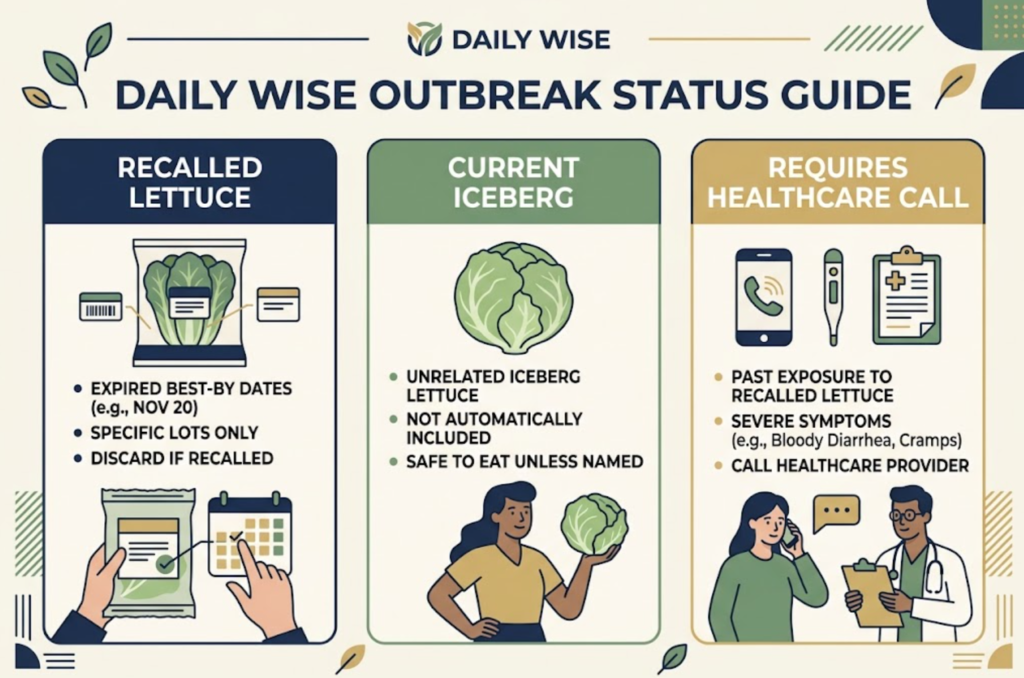
The implicated lettuce was recalled on July 17. Its best-by dates have passed, and FDA says it is confident that the recalled lettuce tied to this outbreak is off the market. This is not a warning to discard every package or head of iceberg lettuce currently sold.
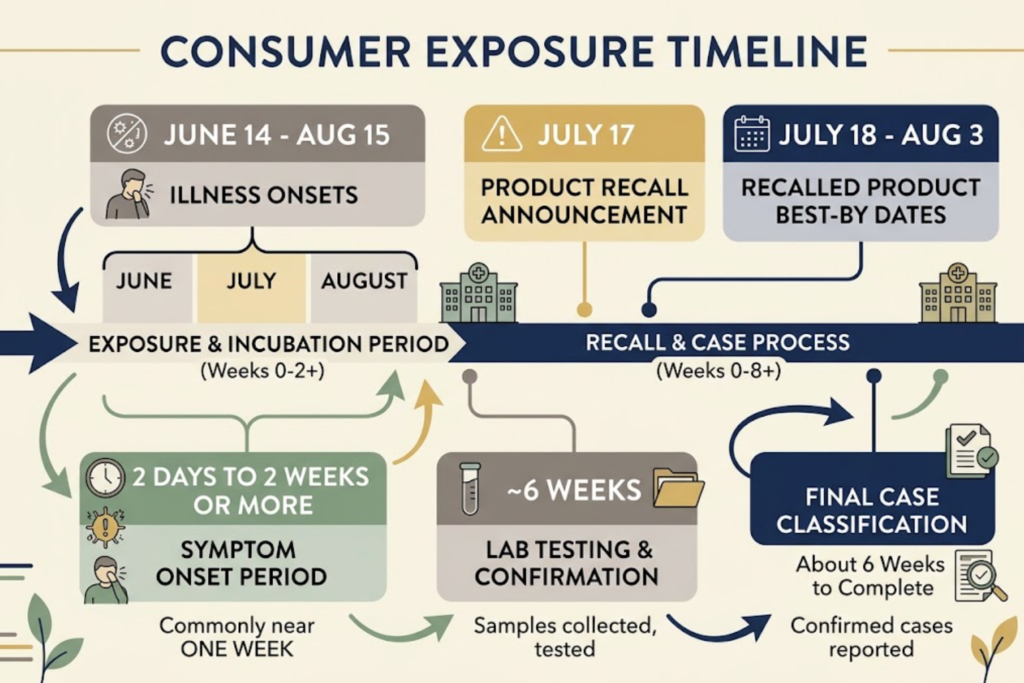
The practical concern is past exposure. Illnesses in this outbreak began from June 14 through August 15, and Cyclospora symptoms may begin roughly one week after exposure—sometimes sooner or two weeks or more later. Symptoms can persist or return.
Reader Decision
Do not identify lettuce by appearance alone. If an old package, receipt, delivery record, or restaurant history could connect you to recalled Taylor Farms de Mexico iceberg lettuce, check the official recall details. If you develop persistent watery diarrhea or compatible symptoms, contact a healthcare provider, mention the possible lettuce exposure and dates, and ask whether specific Cyclospora testing is appropriate.
What Changed on August 27
CDC added 528 illnesses and three states—Georgia, Tennessee, and Texas—since the August 20 update. The outbreak now includes cases associated with 20 states. CDC notes that this count includes some people who live elsewhere but traveled to one of those states before illness.
The rising total does not necessarily mean recalled lettuce remains on shelves. Most illnesses began before Taylor Farms de Mexico recalled the lettuce on July 17. Public-health officials may need about six weeks to interview a patient, complete testing, and determine whether a case belongs to this outbreak. Recent additions can therefore reflect delayed classification of earlier infections.
FDA inspections and sampling at growers and the processing facility in Mexico remain ongoing. The investigation could still change, but the agency’s August 27 position is that recalled lettuce related to this outbreak is off the market.
Which Lettuce Was Recalled?
Taylor Farms de Mexico removed iceberg lettuce sourced from central Mexico from the U.S. market. The recall covered products supplied through retail and food-service channels.
The consumer products specifically identified by FDA included Marketside:
- 12-ounce and 24-ounce Iceberg Salad; and
- 8-ounce and 16-ounce Shredded Lettuce,
with best-by dates from July 18 through August 3, 2026. The broader company notice contains additional food-service products, brands, package sizes, lot codes, and use-by dates.
Processed lettuce from the supplier was served or purchased at various locations. Earlier in the investigation, traceback converged on shredded iceberg lettuce supplied to Taco Bell locations where people reported eating. Taco Bell told FDA it stopped using lettuce from Taylor Farms de Mexico on July 17.
That history matters, but it does not establish that every Taco Bell visit, every salad containing iceberg lettuce, or every current Taylor Farms product was implicated. Use dates, source, brand, package information, and the official recall list together.
Should You Throw Away Iceberg Lettuce Now?
The current federal notice does not instruct consumers to discard all iceberg lettuce. The recalled products’ best-by dates have passed and they should no longer be available in stores or restaurants.
If you discover an old package that matches the recall, do not eat it. Follow the recall instructions for disposal or return. FDA also advises carefully cleaning and sanitizing surfaces or containers touched by recalled lettuce.
If a current package does not match, do not infer safety or danger from the word “iceberg” alone. Check the label, supplier information when available, date, package size, and FDA recall page. For restaurant meals, consumers may not be able to identify a farm or processor from a receipt. The meal location and date are still useful if symptoms occur.
Routine produce handling remains important. CDC advises washing hands and fresh produce thoroughly under running water before eating, cutting, or cooking. Washing can reduce some contamination but cannot guarantee Cyclospora removal. Do not use soap, bleach, or household disinfectants on food.
What Cyclospora Symptoms Look Like
Cyclospora is a microscopic parasite that causes cyclosporiasis, an intestinal illness. Watery and sometimes frequent diarrhea is the most common symptom. Other common symptoms include:
- loss of appetite and weight loss;
- stomach cramps;
- bloating and increased gas;
- nausea; and
- fatigue.
Vomiting, body aches, headache, low-grade fever, and other flu-like symptoms occur less often. Some infected people have no symptoms.
Symptoms generally begin about one week after contaminated food or water is consumed, but CDC gives a range from as soon as two days to two weeks or more. Without treatment, illness may last from a few days to more than a month. Symptoms can seem to improve and then return; fatigue may continue after gastrointestinal symptoms stop.
That delayed and relapsing pattern is why a detailed food history matters. Write down restaurant visits, packaged salads, grocery purchases, travel, and dates from the two weeks before symptoms began. If public-health officials contact you, that information can assist the investigation.
When to Contact a Healthcare Provider
CDC advises people with symptoms of Cyclospora infection to contact a healthcare provider. Persistent watery diarrhea, difficulty staying hydrated, or symptoms that improve and return should not be dismissed merely because the suspected food is no longer in the refrigerator.
Tell the provider:
- when symptoms began;
- how often diarrhea is occurring;
- whether you can keep fluids down;
- relevant medical conditions and medicines;
- whether you have a weakened immune system; and
- where and when you may have eaten processed iceberg lettuce.
Cyclospora may require a specific stool test. CDC says routine stool testing does not always screen for this parasite, and several samples collected on different days may sometimes be needed. Naming the suspected exposure helps the clinician decide what testing is appropriate.
Treatment decisions belong with a healthcare professional. CDC identifies trimethoprim-sulfamethoxazole as the usual treatment and advises people with sulfa allergies to discuss other options with their provider. Do not use leftover antibiotics or another person’s medication.
Hydration is important during diarrhea. Seek urgent care for signs of severe dehydration or another emergency, such as fainting, confusion, inability to keep fluids down, very little urination, or rapidly worsening illness. People in poor health or with weakened immune systems may face a higher risk of severe or prolonged illness.
Why the Number May Keep Rising
The 11,458 cases are laboratory-confirmed cases assigned to this outbreak by CDC and FDA. The agencies say the true number is likely higher because some people recover without care or are not tested. At the same time, state totals may differ because states can include probable cases or update on different schedules.
Two deaths were previously reported in Michigan. FDA said both individuals had significant underlying health conditions that may have been adversely affected by cyclosporiasis and dehydration. That distinction avoids claiming the parasite was the sole cause while still recognizing the seriousness of the event.
The Practical Takeaway
The investigation is large, but the consumer action is narrower than “avoid iceberg lettuce.” The recalled products are past their best-by dates and are expected to be off the market. Focus on whether a past purchase or meal fits the recall and whether symptoms fit the timing.
Keep the official recall page, exposure dates, and symptom history together. If illness is compatible, tell the healthcare provider that Cyclospora is the concern rather than asking only for a generic stomach-bug test.
This newsletter provides general food-safety and health information. It is not medical advice, diagnosis, or treatment. Product lists, case counts, distribution, and agency recommendations may change. Verify the current FDA and CDC notices, and contact a qualified healthcare professional about symptoms or individual risk.
FAQ
Is all iceberg lettuce in the United States unsafe?
No. The federal investigation concerns recalled iceberg lettuce sourced from central Mexico and processed by Taylor Farms de Mexico. FDA says the recalled products’ best-by dates have passed and it is confident that lettuce tied to this outbreak is off the market.
Can I tell whether lettuce has Cyclospora by looking or smelling?
No. Use product identity, date, package details, supplier information, and the official recall list. Appearance and smell cannot confirm whether produce contains a microscopic parasite.
I ate at Taco Bell. Does that mean I was exposed?
Not automatically. Earlier traceback linked affected lettuce to certain Taco Bell locations, and the company stopped using lettuce from the supplier on July 17. Record the location and date if compatible symptoms develop.
When do symptoms usually begin?
CDC says symptoms usually start about one week after infection, with a range from two days to two weeks or more. Symptoms may last a month or longer without treatment and can relapse.
What should I tell my healthcare provider?
Report watery diarrhea and other symptoms, dates, hydration concerns, relevant conditions, and possible processed-iceberg-lettuce exposure. Ask whether specific Cyclospora testing is appropriate because routine stool tests may not include it.
Sources
- FDA — Investigation of Multistate Outbreak of Cyclospora Illnesses: Iceberg Lettuce
- CDC — Cyclospora Outbreak Linked to Iceberg Lettuce
- CDC — Investigation Update: Cyclospora Outbreak, July 2026
- FDA — Taylor Fresh Foods Recall Notice
- CDC — About Cyclosporiasis
- CDC — Symptoms of Cyclosporiasis