From Jerome, EverydayWise Contributor
Feeding our family is complicated because four people can need different things from the same table. I gain weight easily, my wife is naturally leaner, and our growing children are often hungry. We all like carbohydrate-rich foods, but eating the same amount does not affect all of us in the same way.
I try to put meat and Korean side dishes on the table so the meal includes protein and fiber. The children do not show much interest in salad, and when we eat out they are drawn to fried foods that we rarely make at home. Drinks have become another disagreement. We sometimes pack juice or offer zero-sugar soda, while my wife would rather avoid drinks with fructose or a lot of carbonation.
The more factors I consider—growth, weight, nutrients, taste, snacks, vegetables, and drinks—the easier it is to wonder whether I am solving the right problem. Healthy food still has to be food the family will actually eat.
The passage above comes from Jerome, an EverydayWise contributor. His family does not necessarily need a clinical diet. Different appetites and preferences are normal. But his question reveals the boundary of general nutrition advice: a balanced-plate picture cannot assess a child’s growth, explain unexplained weight change, adjust medication, diagnose digestive symptoms, or determine whether restriction has become harmful.
Professional guidance becomes useful when the decision depends on information that a general article cannot safely obtain. The purpose is not to surrender everyday judgment. It is to bring the right expertise into a decision that has become medically complex, developmentally important, emotionally risky, or persistently unworkable.

General Guidance Has a Useful but Limited Job
Most people can use broad principles without individualized treatment: eat a varied pattern, include vegetables and fruit, choose suitable protein foods, use whole grains when practical, compare labels, drink water regularly, and build changes gradually.
Those principles help organize ordinary choices. They do not answer questions such as:
- Is this child following an appropriate growth pattern?
- Is fatigue related to eating, sleep, medication, anemia, or something else?
- How should carbohydrates be coordinated with insulin or another glucose-lowering medicine?
- Does kidney disease change safe amounts of sodium, potassium, phosphorus, protein, or fluid?
- Is avoiding several foods medically necessary?
- Is a supplement safe with current medicines or before surgery?
- Does repeated dieting reflect an impractical plan or an eating disorder?
The boundary is not defined by how “healthy” a food appears. It is defined by the consequence of being wrong.
First Decide How Urgent the Situation Is
Nutrition concerns do not all belong in the same appointment queue.
| Situation | Appropriate next step |
|---|---|
| Trouble breathing, throat or tongue swelling, collapse, fainting, confusion, seizure, or a suspected severe allergic reaction | Use emergency services and the person’s emergency plan immediately |
| Severe low blood glucose that the person cannot safely treat, loss of consciousness, or seizure | Emergency help; follow the prescribed glucagon plan if available and trained to do so |
| Persistent vomiting, inability to keep fluids down, signs of dehydration, blood in vomit or stool, severe abdominal pain, or rapidly worsening weakness | Urgent medical assessment |
| Unexplained or rapid weight change, ongoing difficulty swallowing, repeated dizziness, persistent diarrhea or constipation, major appetite change, or symptoms affecting daily life | Arrange a medical appointment promptly |
| A diagnosed condition, pregnancy, medication change, child growth concern, multiple food exclusions, or repeated difficulty meeting nutrient needs | Clinician assessment and, when appropriate, referral to a registered dietitian |
| General meal planning, label reading, budget, variety, or habit support without red flags | Evidence-based self-care or a routine dietitian consultation |
Anaphylaxis can be life-threatening. Do not wait for a nutrition appointment to investigate breathing difficulty or rapid swelling after food. Likewise, food is part of treating some episodes of low blood glucose, but severe hypoglycemia is a medical emergency—not a meal-planning problem.
Local emergency numbers and treatment systems differ. Follow the emergency plan provided for the person’s condition.
Start With a Medical Clinician When Symptoms Need a Diagnosis
A physician, nurse practitioner, or other qualified clinician evaluates symptoms, orders or interprets appropriate tests, diagnoses medical conditions, and coordinates treatment. Start there when the problem is new, unexplained, worsening, or potentially caused by disease or medication.
Examples include:
- weight loss or gain without a clear explanation;
- persistent abdominal pain, diarrhea, constipation, reflux, vomiting, or bloating;
- choking, pain with swallowing, or food repeatedly feeling stuck;
- unusual thirst, frequent urination, shakiness, sweating, or episodes of confusion;
- fatigue, weakness, dizziness, fainting, hair loss, feeling unusually cold, or menstrual changes;
- swelling, shortness of breath, or sudden fluid-related weight change;
- suspected food allergy;
- a child whose growth, development, energy, or intake concerns the family; and
- loss of appetite during illness or treatment.
Food changes may reduce symptoms while leaving their cause unidentified. A restrictive elimination diet can also make assessment harder and create nutrient gaps. Unless an emergency plan says otherwise, avoid removing multiple food groups before discussing persistent symptoms with a clinician.
A normal-looking diet does not rule out illness, and an imperfect diet does not prove that food caused the symptom.
What a Registered Dietitian Adds
Registered dietitians translate medical and nutrition evidence into an individualized eating plan. In the United States, RD and RDN are credentials issued through the Commission on Dietetic Registration. Titles and legal protections differ by country, state, province, and territory, so readers elsewhere should verify a professional through the applicable regulatory body or credential registry.
Medical nutrition therapy is more than receiving a list of “good” and “bad” foods. It may include:
- reviewing medical history, laboratory information, medicines, supplements, symptoms, culture, budget, access, cooking ability, and preferences;
- estimating whether energy and nutrient intake are adequate;
- identifying unnecessary restrictions;
- adapting meals to a diagnosis or treatment;
- setting measurable goals and monitoring response;
- coordinating with the prescribing clinician; and
- changing the plan when symptoms, treatment, growth, or circumstances change.
NIDDK specifically describes registered-dietitian involvement in conditions such as chronic kidney disease, diabetes, and digestive disorders because the safe plan can depend on disease stage, treatment, laboratory results, and individual tolerance.
A general wellness coach may help with routines or accountability, but should not diagnose illness, interpret medical tests outside an authorized scope, prescribe treatment, or replace qualified care. The word “nutritionist” alone does not indicate the same regulated education or accountability in every jurisdiction.
Conditions That Often Need Individual Nutrition Care
Diabetes and medicines that can lower glucose
Changing meal timing, carbohydrate intake, alcohol use, or physical activity can alter glucose patterns. People using insulin or medicines that can cause hypoglycemia should not make large restrictive changes without knowing how monitoring and medication will be handled. CDC guidance emphasizes regular meals and recognizes that low blood glucose can become severe.
Bring glucose records, medication names and doses, meal timing, activity patterns, and details of any low readings to the care team. Do not independently stop or reduce prescribed medicine because eating has changed.
Kidney, liver, heart, or gastrointestinal disease
Advice that is harmless for one person can conflict with another condition. A high-potassium food may fit a general healthy pattern yet require individualized consideration in some kidney patients. Fluid, sodium, protein, fiber, or supplements may also need adjustment.
Persistent digestive symptoms should not automatically lead to a long list of exclusions. Celiac disease, inflammatory disease, pancreatic insufficiency, swallowing problems, food intolerance, and other conditions require different evaluation and treatment.
Pregnancy, breastfeeding, older age, or recovery from illness
Nutrient needs and food-safety concerns can change across life stages. Poor appetite, dental difficulty, swallowing problems, frailty, nausea, or treatment side effects can make “eat a balanced diet” inadequate. Individual advice is valuable when intake is falling or weight and strength are changing.
Food allergy or extensive avoidance
A suspected allergy requires medical evaluation and an emergency plan when indicated. A dietitian can help maintain adequate nutrition while avoiding a confirmed allergen. Self-diagnosing several allergies from nonspecific symptoms may produce a highly restrictive pattern without resolving the problem.
Vegetarian, vegan, cultural, religious, or sensory-limited patterns
These patterns are not diseases and do not automatically require professional supervision. Guidance may help when the allowed or accepted range is narrow, a child is involved, supplementation is uncertain, or the household cannot reliably meet nutrient needs. The professional’s role is to work within the person’s values and culture—not erase them.
Children Need Growth Context, Not Adult Diet Rules
Children’s appetite can vary from meal to meal and during growth. A child who dislikes salad may still eat vegetables in soups, side dishes, sauces, roasted foods, dumplings, or familiar mixed meals. Preference alone does not establish deficiency.
Professional assessment becomes more important when there is:
- a concern about growth trajectory rather than a single weight reading;
- loss of previously accepted foods until the diet becomes very narrow;
- frequent choking, gagging, pain, vomiting, or distress with eating;
- suspected allergy, deficiency, or gastrointestinal disease;
- persistent low energy or difficulty participating in normal activities;
- intense family conflict around nearly every meal; or
- a plan to restrict calories or major food groups for weight control.
An adult’s fear of weight gain should not determine a growing child’s portion. In Jerome’s family, shared dishes can remain shared while amounts and combinations differ. The children may need more energy; an adult may choose a different rice-to-side-dish balance; another family member may simply eat according to hunger. If growth or weight is genuinely concerning, a pediatric clinician should interpret the pattern rather than the family improvising an adult diet.
Avoid commenting repeatedly on a child’s body, making one child’s food visibly punitive, or using dessert as a moral reward. Ask for guidance that protects growth, nutrition, family connection, and the child’s relationship with food.
Repeated Dieting Can Become a Mental-Health Question
Not every diet is an eating disorder, and concern about nutrition or weight is not itself a diagnosis. The threshold for help becomes lower when food rules create physical harm, loss of control, obsession, secrecy, or major interference with life.
NIMH describes eating disorders as serious illnesses that can affect people at any body size. Warning signs can include severe restriction, binge eating, self-induced vomiting, laxative use, fasting, excessive exercise, and an unhealthy fixation on weight, shape, weight loss, or food intake.
Seek qualified help if someone:
- feels unable to stop binge eating;
- compensates for eating by vomiting, fasting, medication misuse, or punishing exercise;
- becomes fearful of ordinary meals or increasingly avoids eating with others;
- experiences dizziness, fainting, weakness, menstrual changes, dehydration, or other physical effects during restriction;
- has food and body thoughts that dominate the day; or
- expresses hopelessness, self-harm, or suicidal thoughts.
Treatment may involve a medical clinician, registered dietitian with eating-disorder expertise, and mental-health professional. More discipline and tighter tracking are not substitutes for care. If there is immediate danger or a suicide crisis, use emergency or crisis services where the person lives.
Ask a Pharmacist About Food, Medicine, and Supplements
Food and supplements can affect how some medicines work, and medicines can affect appetite, digestion, glucose, hydration, or nutrient status. Pharmacists can review timing, interactions, side effects, and whether the prescriber should be contacted.
Tell the pharmacist and prescribing clinician about:
- all prescription and over-the-counter medicines;
- vitamins, minerals, herbs, powders, teas, gummies, and energy or weight-loss products;
- alcohol use;
- major dietary changes;
- upcoming surgery or laboratory testing; and
- symptoms that began after a product or dose changed.
FDA warns that supplements can interact with medicines, interfere with laboratory tests, or create risks around surgery. “Natural” does not mean interaction-free. Do not use a supplement as a replacement for prescribed treatment without professional approval.
How to Choose a Qualified Nutrition Professional
Before booking, check:
- Credential and current status. Verify registration or licensure through the official registry where you live. U.S. readers can verify RD/RDN credentials through CDR.
- Relevant scope and experience. Kidney disease, pediatrics, diabetes, gastrointestinal disorders, oncology, sports, and eating disorders may require different experience.
- Coordination. Ask whether the professional communicates with the clinician managing the condition and what consent is required.
- Approach. A sound professional should explain reasoning, risks, alternatives, and how progress will be evaluated.
- Practical fit. Confirm cost, insurance requirements, referral rules, language, accessibility, telehealth availability, and follow-up schedule.
- Conflicts of interest. Ask whether the professional earns money from supplements, tests, meal replacements, or products being recommended.
Be cautious when someone guarantees a cure, promises rapid results, relies on one unvalidated test, recommends buying an expensive product package before assessment, tells you to stop medicine, or claims one diet works for everyone.
Prepare for the Appointment
You do not need a perfect food diary. Bring enough information to make the decision visible:
- the main question in one sentence;
- symptom timeline and any urgent episodes;
- diagnoses, recent relevant test results, and family history;
- complete medication and supplement list;
- allergies and foods currently avoided;
- two or three ordinary days of meals, snacks, and drinks;
- appetite, digestion, sleep, activity, and access constraints;
- growth records for a child when available;
- cultural or religious requirements;
- budget, cooking time, equipment, and foods the household will actually eat; and
- goals you do not want the plan to sacrifice, such as family meals or avoiding obsessive tracking.
Useful questions include:
- What problem are we trying to solve?
- What information suggests this change is needed?
- Is any food restriction necessary, and for how long?
- What should replace the nutrients in excluded foods?
- How will we know whether the plan is helping?
- Which symptoms mean I should contact you sooner?
- Could medicines or supplements change the plan?
- Who else on the care team should be involved?

Keep Ownership of the Decision
Professional advice should make the next decision more understandable, not turn the reader into a passive follower. Ask what is known, what remains uncertain, what alternatives exist, and what trade-offs matter.
For Jerome’s family, professional guidance would not need to produce one perfect menu for four bodies. It might clarify whether either child’s growth needs assessment, whether juice is solving a practical lunch problem or simply becoming routine, how beverages fit the whole pattern, and how vegetables can be offered without turning dinner into a contest. It could also separate Jerome’s personal weight goal from the children’s needs.
The household would still decide what is affordable, culturally familiar, enjoyable, and sustainable. Expertise supplies context; it does not replace family judgment.
The EverydayWise Bottom Line
General nutrition guidance is appropriate for ordinary choices with low consequences. Seek professional help when symptoms need diagnosis, a medical condition or medicine changes the rules, growth or nutrient adequacy is uncertain, food restriction is expanding, or eating has become physically or emotionally unsafe.
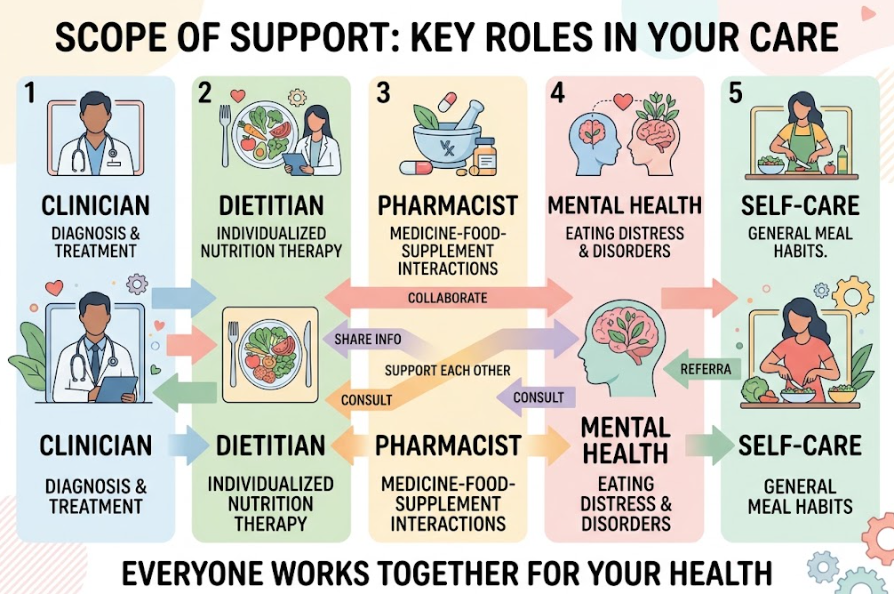
Use the right entry point: emergency care for immediate danger, a medical clinician for diagnosis and treatment, a registered dietitian for individualized nutrition therapy, a pharmacist for interaction questions, and a mental-health professional when eating distress or disorder signs appear.
Getting help is not evidence that someone failed at healthy eating. It is a way to stop guessing when the cost of guessing has become too high.
FAQ
Do I need a dietitian just to eat healthier?
Usually not. General evidence-based guidance may be enough for balanced meals, label reading, meal planning, and gradual habit changes when there are no medical or developmental concerns. A dietitian can still be useful if advice repeatedly fails in your real circumstances or you want individualized support.
What is the difference between a dietitian and a nutritionist?
It depends on location. RD/RDN is a verifiable credential in the United States, and dietitian titles are regulated in many other jurisdictions. The word “nutritionist” may be regulated in some places and unregulated in others. Verify education, registration or licensure, scope, and disciplinary status through the official local registry.
Should I see a doctor or dietitian first?
Start with a medical clinician when symptoms are unexplained, severe, worsening, or may require diagnosis, testing, or medication changes. A dietitian is appropriate for individualized food planning and medical nutrition therapy, often in coordination with that clinician.
When does a child’s picky eating need professional help?
Ask a pediatric clinician when food variety keeps narrowing, growth or energy is concerning, eating causes pain, choking, gagging or vomiting, major food groups are excluded, or meals produce persistent distress. Preference for a few familiar foods alone does not establish a disorder.
Can I change my diet while taking diabetes medicine?
Changes may be possible, but large shifts in carbohydrate amount, meal timing, alcohol, or activity can affect glucose and medication needs. Coordinate with the prescribing team, especially if insulin or another medicine can cause low blood glucose. Do not change prescribed doses independently.
Should I bring supplements to an appointment?
Yes. Bring the containers or clear photos of the labels, including ingredient amounts. Include vitamins, minerals, herbs, powders, teas, gummies, and weight-loss or performance products. A clinician or pharmacist can check for duplication, interactions, surgery concerns, and laboratory-test interference.
What if nutrition advice makes me afraid to eat?
Pause efforts to tighten the rules and seek qualified help. Fear of ordinary meals, severe restriction, bingeing, purging, fasting, compulsive exercise, secrecy, or food and body thoughts that dominate daily life can require eating-disorder-informed medical, nutrition, and mental-health care.
Reference Log
- National Institute of Diabetes and Digestive and Kidney Diseases. “Collaborate with a Registered Dietitian.” https://www.niddk.nih.gov/health-information/professionals/clinical-tools-patient-management/kidney-disease/identify-manage-patients/manage-ckd/collaborate-registered-dietitian
- NIDDK. “Healthy Eating for Adults with Chronic Kidney Disease.” https://www.niddk.nih.gov/health-information/kidney-disease/chronic-kidney-disease-ckd/healthy-eating-adults-chronic-kidney-disease
- NIDDK. “Diabetes Nutrition Counseling for the Non-RD.” https://www.niddk.nih.gov/health-information/professionals/diabetes-discoveries-practice/diabetes-nutrition-counseling
- Centers for Disease Control and Prevention. “Manage Blood Sugar.” https://www.cdc.gov/diabetes/treatment/index.html
- CDC. “Treatment of Low Blood Sugar (Hypoglycemia).” https://www.cdc.gov/diabetes/treatment/treatment-low-blood-sugar-hypoglycemia.html
- CDC. “Food Allergies in Schools.” https://www.cdc.gov/school-health-conditions/food-allergies/index.html
- National Institute of Mental Health. “Eating Disorders: What You Need to Know.” https://www.nimh.nih.gov/health/publications/eating-disorders
- U.S. Food and Drug Administration. “Questions and Answers on Dietary Supplements.” https://www.fda.gov/food/information-consumers-using-dietary-supplements/questions-and-answers-dietary-supplements
- FDA. “Drug Interactions: What You Should Know.” https://www.fda.gov/drugs/resources-drugs/drug-interactions-what-you-should-know
- FDA. “FDA Pharmacists Help You Use Medicines Safely.” https://www.fda.gov/consumers/consumer-updates/fda-pharmacists-help-you-use-medicines-safely
- Commission on Dietetic Registration. “Registered Dietitian Nutritionist (RDN).” https://www.cdrnet.org/rdn
- Commission on Dietetic Registration. “CDR Verification Systems.” https://www.cdrnet.org/verify
More in This Cluster: Healthy Eating Foundations
- How to Build a Balanced Plate for Real Family Meals
- How to Read Nutrition Labels Without Getting Misled
- Protein, Carbohydrates, and Fat: What Each One Does
- How to Plan Healthy Meals on a Realistic Budget
- Whole Foods vs Processed Foods: What Actually Matters
- How to Make Gradual Dietary Changes That Can Last
- When Nutrition Advice Needs Professional Guidance (you are here)