Quick Summary
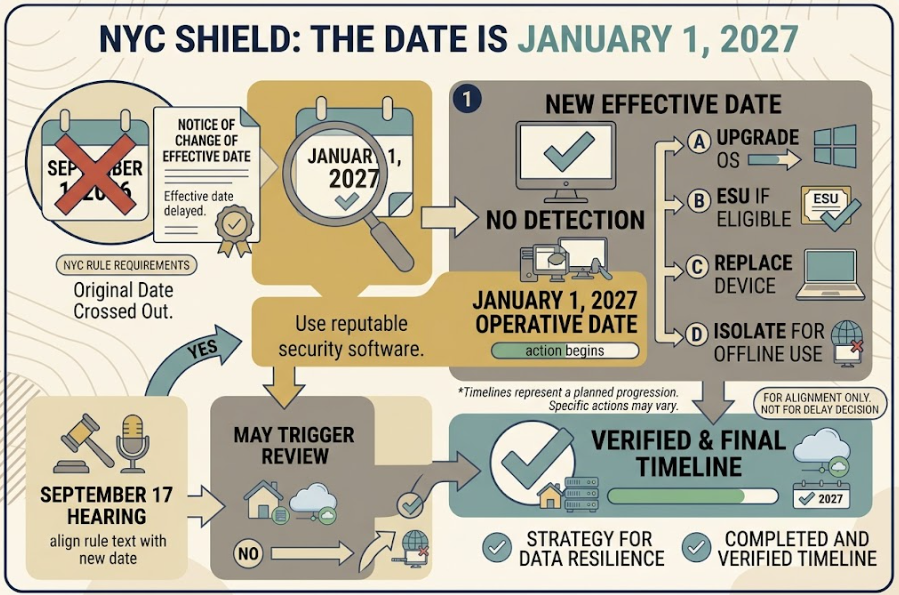
New York City has moved the effective date of its Stopping Harassment and Intimidation and Ensuring Lawful Debt Collection—or SHIELD—rule from September 1, 2026, to January 1, 2027.
The delay itself is not waiting for a September hearing. NYC’s Department of Consumer and Worker Protection says it already published a Notice of Change of Effective Date in the City Record. An additional proposed amendment and September 17 hearing concern aligning dates written inside the rule with the effective date already selected.
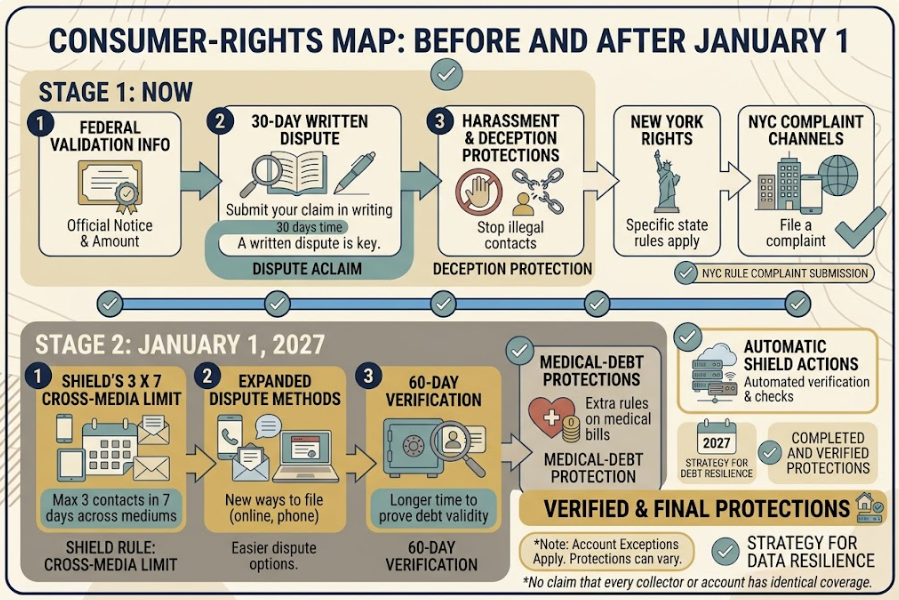
That means SHIELD’s expanded rights—including its three-communications-in-seven-days limit across covered media, broader methods and timing for disputes, 60-day verification process, and medical-debt provisions—should not be treated as September 2026 protections. DCWP’s August 4 FAQ says the rule governs covered NYC debt-collection activity beginning January 1, subject to specific account and provision exceptions.
Consumers still have rights now. Federal and New York laws restrict harassment and deception, require validation information in covered collections, and provide an important federal 30-day written-dispute process. NYC also licenses debt collection agencies and accepts complaints.
Reader Decision
If a collector contacts you before January 1, do not cite SHIELD as though it were already effective. Preserve every notice and communication, identify the federal 30-day dispute deadline, dispute inaccurate debts promptly in writing, and use existing complaint or legal-help channels. Recheck SHIELD after January 1 because some of its validation and verification provisions depend on when a notice is required and when an account was purchased.
What Was Delayed—and What Was Not
DCWP finalized the SHIELD amendments in February 2026 and initially identified September 1 as the effective date. The agency later issued a Notice of Change of Effective Date moving the rule to January 1, 2027. Its official FAQ states that date directly and explains that a follow-up amendment would be proposed solely to align the text of the rule with it.
That sequence resolves the status question. The conforming amendment replaces old September references inside validation, dispute, verification, and unverified-debt provisions; it does not leave the delay undecided.
DCWP says the additional time allows for guidance and operational changes. It has scheduled an October 5 compliance overview for debt collectors.
A related penalty schedule was separately moved from September 1 to January 1. The penalty notice, SHIELD notice, and conforming rulemaking concern connected but distinct documents.
Which SHIELD Rights Begin in January?
SHIELD changes several parts of NYC debt-collection practice. DCWP’s FAQ says covered collectors will generally be limited to three communications or attempted communications per distinct account within seven days across media, excluding mailed letters and specified categories. This “3 x 7” structure is different from the federal telephone-call presumption.
The rule requires consent for many electronic collection communications and permits revocation. It strengthens validation notices and allows disputes or verification requests orally, in writing, or electronically when the collector uses electronic communications.
For covered accounts, a first dispute or verification request can require collection to stop while the collector provides detailed verification. DCWP describes a 60-day response period; if verification cannot be completed, the collector must send a Notice of Unverified Debt. SHIELD also adds disclosures and procedures involving medical debt, old or time-barred debt, language services, and credit reporting.
The FAQ says several validation and verification requirements apply only when the validation notice is required on or after January 1. Some exclude accounts purchased earlier, and Fair Credit Billing Act procedures create exceptions. Communication limits use different coverage rules.
Rights That Apply Before SHIELD Starts
The delay does not create a four-month period without consumer protection. The federal Fair Debt Collection Practices Act and the Consumer Financial Protection Bureau’s Regulation F continue to govern covered collectors and debts.
A covered collector generally must provide validation information in an initial communication or within five days. That information helps identify the creditor, account, current amount, and how to dispute the debt. The notice should state the end of a 30-day validation period.
If the consumer disputes the debt in writing or requests certain verification within that period, the collector generally must pause collection of the disputed amount until it responds adequately. This is why a person receiving a notice now should not wait for SHIELD’s January date before acting.
Federal rules also prohibit repeated calls intended to annoy, abuse, or harass. Regulation F creates a presumption of violation when a collector places more than seven telephone calls about a particular debt in seven days, or calls within seven days after a telephone conversation about that debt, subject to exceptions. The presumption applies to calls, not every communication channel.
New York law separately restricts unreasonable contact, threats, false claims, and misleading documents. The New York Attorney General states that collectors cannot falsely claim government authority, threaten arrest for ordinary debt, or demand more than is owed. NYC consumers may also complain to DCWP about licensed collection agencies.
What to Do If a Collector Contacts You Now
First, verify the collector before paying or providing sensitive information. Ask for the company name, mailing address, original creditor, account details, and validation notice. Check whether a collection agency holds the required NYC license.
Second, save evidence. Keep the envelope, notice, emails, texts, voicemails, caller numbers, payment history, and notes showing dates, times, names, and what was said. The date validation information arrived can determine the federal dispute deadline.
Third, dispute an inaccurate or unfamiliar debt promptly in writing. State whether you dispute all or part of it and request verification. Keep a copy and use a delivery method that creates a record. Even when a collector accepts an oral or electronic request, written follow-up provides clearer evidence.
Fourth, do not make an old debt worse through an uninformed payment or admission. Statutes of limitation and the effect of payment vary. If a debt may be time-barred, obtain current legal advice before agreeing to a payment plan.
Finally, treat court papers separately. A dispute letter or government complaint does not answer a lawsuit, stop a judgment-enforcement process, or extend a court deadline. Seek legal assistance promptly if you receive a summons, notice of garnishment, account restraint, or marshal’s notice.
How January 1 Changes the Check
After the effective date, start by asking whether the activity concerns an NYC consumer account and falls within “debt collection procedures” as SHIELD defines them. Ordinary billing and customer service on accounts not yet in collection procedures are not automatically covered.
Then identify the provision. The 3 x 7 communication rule may apply based on communications occurring after January 1 even when collection began earlier. Validation and verification duties can depend on when the validation notice is required and whether the account was purchased before the effective date.
DCWP’s FAQ is detailed but educational rather than individualized legal advice. Save the version and date you consult. If a collector’s response conflicts with it, ask DCWP or a qualified attorney how the transition rule applies to that account.
Where to Get Help
NYC consumers can file a debt collection agency complaint with DCWP online or call 311 and say “Debt Collection Agency Complaint.” Include copies, not irreplaceable originals. DCWP states that it serves New Yorkers regardless of immigration status.
Complaints may also be appropriate through the Consumer Financial Protection Bureau or New York Attorney General, depending on the collector and conduct. NYC Financial Empowerment Centers provide free financial counseling. These services can help organize a response, but only a court filing or appropriate legal action addresses a judicial deadline.
The Practical Takeaway
The SHIELD delay is real: January 1, 2027, replaced September 1, 2026. The September hearing concerns conforming the written rule dates, not whether consumers must guess between two competing effective dates.
Before January, use the protections already available and preserve every deadline. After January, add SHIELD’s stronger local rules—but check the specific account and provision rather than assuming every new protection applies retroactively in the same way.
This newsletter provides general consumer information, not legal advice. Rights vary by collector, debt type, account history, litigation status, and jurisdiction. Rules and agency guidance may change. Consult DCWP, an appropriate regulator, or a qualified attorney about a specific matter.
FAQ
Is the SHIELD rule delayed to January 1, 2027?
Yes. DCWP’s official FAQ says a Notice of Change of Effective Date moved the rule from September 1, 2026, to January 1, 2027.
What is the September 17 hearing for?
It concerns a proposed amendment aligning dates written inside the rule with the already changed effective date. DCWP says the proposal makes no other substantive change.
Should I wait until January to dispute a debt?
No. Federal rights can depend on sending a written dispute within 30 days after receiving validation information.
Does SHIELD’s three-communications limit apply now?
No. DCWP describes SHIELD protections as effective January 1, 2027. Existing federal, state, and NYC rules continue before then.
Will every old account receive all SHIELD protections in January?
Not necessarily. Validation and verification provisions contain transition rules involving the notice date, purchase date, and other laws. Check the specific provision.
Does a complaint stop a court deadline?
No. Filing with DCWP, CFPB, or another regulator does not replace responding to court papers.
Sources
- NYC DCWP — Frequently Asked Questions: New Rules for Debt Collectors
- NYC DCWP — Consumer Bill of Rights: Debt Collection
- NYC DCWP — Conforming Amendment of the SHIELD Effective Date
- NYC DCWP — Notice of Change of Effective Date for the Penalty Schedule
- Consumer Financial Protection Bureau — Debt Validation Information
- Consumer Financial Protection Bureau — Debt Collector Call Frequency
- New York Attorney General — Managing Debt Overload