Quick Answer
Use the exact care and warranty instructions for the carpet, fibre, stain treatment, backing, cushion, and approved cleaner. Pretest in a hidden area. Apply only a small amount to a cloth unless the instructions say otherwise, keep blotting while material transfers, remove the cleaning residue as directed, and dry the carpet and backing promptly. Stop and seek qualified help for large spills, unknown chemicals, dye change, persistent odour, contamination, or moisture that may have reached the cushion or subfloor.
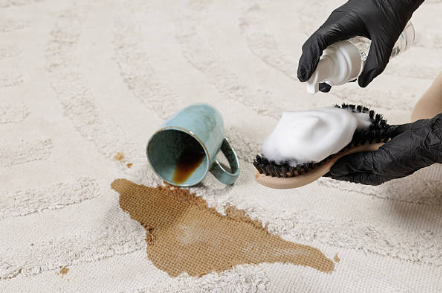
First Decide Whether This Is a Spot, a Stain, or a Water Problem
People often use “spot” and “stain” interchangeably, but the distinction is useful. A spot is foreign material that may still be removable. A stain is colour that remains after the removable material is gone. A texture change, bleached patch, dye loss, delamination, or odour from the cushion is damage or a deeper problem, not simply a dirty surface.
Before applying anything, ask:
- What was spilled—water, a coloured drink, food, oil, bodily fluid, paint, medication, cleaner, or an unknown substance?
- Is the carpet synthetic, wool or wool-rich, natural-fibre, solution-dyed, printed, hand-made, or treated under a specific warranty?
- How large is the wet area, and could liquid have reached the backing, cushion, wall edge, or subfloor?
- Has another cleaner already been used?
- Is this ordinary household soil, or does it involve sewage, floodwater, hazardous material, sharp debris, or a health concern?
The answers change the safe response. A method allowed on one solution-dyed synthetic carpet may damage wool, a specialty dye, adhesive, backing, or stain treatment. If records are missing, check the invoice, product label, leftover sample, warranty, landlord file, builder documents, or retailer. Until the material is known, physical removal with clean white absorbent material is safer than experimenting with household chemistry.
Remove Material Before Adding Cleaner
Act promptly, but do not rush into rubbing. The Carpet and Rug Institute (CRI) advises blotting liquids with a dry white absorbent cloth or plain white paper towels. Coloured or printed towels can transfer dye or ink. Lift semisolids with a rounded spoon or blunt scraper; allow safe dry debris to dry and vacuum it when appropriate.
For liquid, place the towel on the spill and press vertically. Replace it as it becomes wet, observing whether liquid or colour is still transferring. Work from the outside toward the centre so the spot does not spread. Avoid brushing or scrubbing: friction can untwist, fuzz, distort, or mat the pile even if the colour appears lighter.
Jerome learned this difference after living with dark hardwood on the main floor and carpet in the basement and upstairs. The carpet felt warm and forgiving in winter, and dents left by heavy objects often lifted again within a day or two. Spills were less forgiving. When his children dropped drinks, he used diluted detergent, covered the damp area with a towel, and repeatedly stepped on it to draw liquid out. With practice, his response became faster. Some marks from the family’s early years in the house, however, remained visible for more than five years.
That experience supports two practical lessons rather than a universal recipe: pressure with absorbent material can help recover liquid, but the wrong detergent, too much solution, incomplete rinsing, delayed treatment, or liquid in the backing may leave a lasting result. A method that seemed to work in one home should not override the installed carpet’s care instructions.
Choose the Method for the Carpet and Spill
Start with the manufacturer’s stain chart or warranty. Many guides separate water-soluble spots from oil-based residues, gum, wax, paint, pet accidents, and other materials. Follow that order rather than stacking several cleaners. If the first approved agent is still transferring soil to the towel, repeat that step patiently before escalating.
Pretest the proposed cleaner in an inconspicuous area. Apply it as the directions specify, allow the test to dry, and check for colour transfer, fading, browning, pile distortion, sticky residue, or backing change. “Carpet cleaner” on a general-purpose label does not prove compatibility with every fibre or warranty.
Wool deserves a separate boundary. WoolSafe guidance begins with scooping solids and blotting liquids without rubbing, but it also directs readers toward products approved for wool and warns against casual use of general household detergents. Do not extend a synthetic-carpet recipe to wool, silk, viscose, sisal, jute, hand-made rugs, or specialty dyes.
Avoid improvised mixtures when the identity of the carpet or prior chemicals is uncertain. Bleach can remove dye as well as colour from the spill. Laundry and automatic-dishwasher detergents may contain brighteners, bleaching agents, enzymes, or high-foaming ingredients that are unsuitable. Solvents can affect backing or adhesive and create ventilation and fire hazards. Never mix cleaning products.
Use Less Liquid Than You Think
The visible face fibre is only the top of the system. Beneath it may be primary and secondary backing, adhesive, cushion, tack strips, and a wood or concrete subfloor. A small surface mark can therefore become a larger drying problem when cleaner is poured directly onto it.
Apply the approved solution in the smallest controlled amount described by the instructions—often to a clean white cloth rather than directly to the carpet. Blot, replace the cloth, and watch the transfer. Do not grind the spot deeper with circular rubbing. Do not assume that more foam means more cleaning.
Residue matters. CRI warns that cleaning solution left in carpet can attract soil and make an area darken again. Some procedures require careful rinsing with a light mist of lukewarm water and repeated blotting; some proprietary products have different directions. Follow the governing product method. Rinsing is not permission to soak the carpet.
When a cleaned patch looks darker after a few days, ask whether it is the original stain, soil attracted by detergent residue, or material that wicked upward from deeper in the carpet while drying. Repeatedly adding stronger cleaner can enlarge the residue zone. A qualified carpet cleaner can use controlled extraction and identify whether further treatment is likely to help.
Dry the Whole Assembly, Not Just the Surface
Continue pressing with fresh white towels until little moisture transfers. Keep people and pets away while the area is damp. Increase safe air movement and use dehumidification when appropriate, but do not use intense heat unless the carpet instructions permit it. A surface that feels dry can still have a wet cushion underneath.
EPA guidance says wet or damp materials should generally be dried within 24–48 hours after a leak or spill to reduce the chance of mould growth. That is a response window, not proof that every carpet dried within it is safe or that every carpet still damp afterward has mould. Large volumes, high indoor humidity, cool basements, thick cushion, wall-edge migration, and ongoing leaks make drying harder.
Escalate promptly when the spill is larger than a manageable surface spot, the cushion squishes, moisture reappears, the area stays cool or damp, odour develops, or water reaches baseboards or an adjoining room. Water extraction, lifting carpet, drying cushion and subfloor, or replacing contaminated porous material may require trained help. Sewage, floodwater, and other contaminated water are not ordinary spot-cleaning projects.
Do Not Confuse Appearance Change With Remaining Dirt
Judge the result only after the carpet is fully dry and viewed from more than one direction. Carpet pile reflects light differently when pressed, brushed, or dried in another orientation. A temporary dark patch may be dampness; a light patch may be pile reversal or actual dye loss.
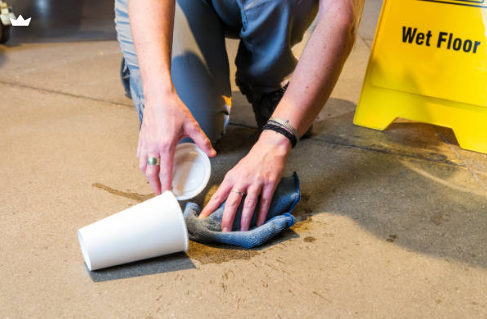
Use a clean white towel to check whether anything still transfers. Compare texture as well as colour. Photograph the area under similar lighting. Then classify the outcome:
- Material still transfers: continue only with the same approved step while progress continues.
- Sticky or fast-resoiling patch: suspect cleaner residue and consult the product’s rinse instructions.
- Spot returns from the centre as it dries: deeper material may be wicking upward.
- Colour is lighter but nothing transfers: dye may have been altered; more cleaning will not restore missing colour.
- Pile is fuzzy, untwisted, or flattened: rubbing or heat may have changed texture.
- Odour or dampness persists: investigate the backing, cushion, subfloor, or moisture source.
Old stains are not always removable. Some spills chemically alter dyes or fibres, some set with heat or time, and some migrate below the surface. A professional may improve the appearance without guaranteeing complete removal. Repeated aggressive treatment can turn a tolerable stain into permanent fibre, colour, or backing damage.
Build a Spill Response Kit Before You Need It
Keep the carpet identification and current warranty with a simple response kit: plain white absorbent cloths or paper towels, a rounded spoon, disposable gloves appropriate to the task, and the exact approved spot product if one is required. Store chemicals safely away from children and pets and retain the label.
When a spill occurs, record what it was, when it happened, what was applied, and whether liquid reached an edge or lower level. Those details help a professional avoid incompatible chemistry and judge whether the issue is surface staining or deeper moisture.
Carpet’s softness can make a home feel warmer and can hide minor pressure marks better than a hard surface. The same fibres and layers that create that comfort also hold liquid and residue out of sight. The reliable routine is simple: identify, lift, blot, use only a compatible treatment, recover the residue, dry promptly, and stop before cleaning becomes damage.
FAQ
Should I rub a carpet stain to remove it faster?
No. Rubbing can spread the spill and distort, fuzz, or untwist carpet fibres. Lift solids and blot liquids with clean white absorbent material, working from the outside toward the centre.
Can I use dish soap on every carpet stain?
No. Some published procedures use a very dilute detergent for particular carpets and spills, while wool and other products may prohibit general household detergent. Follow the installed carpet’s stain chart and warranty rather than treating one recipe as universal.
Why did the cleaned spot become dark again?
The original material may remain, detergent residue may be attracting soil, or dissolved material may be wicking upward from the backing or cushion. Stop adding products, let the area dry, review the approved rinse method, and seek qualified help if it recurs.
How do I dry carpet after a spill?
Blot or extract as much liquid as possible, use safe air movement and dehumidification, and verify that the backing and cushion—not only the pile—are drying. EPA advises drying wet materials within 24–48 hours when possible.
Can bleach remove a coloured drink stain?
Bleach may remove carpet dye and damage fibres or backing. Use only a method explicitly allowed by the carpet manufacturer for that fibre and stain, and never mix bleach with another cleaner.
When is a carpet spill too large for DIY spot cleaning?
Escalate when liquid reaches the cushion, wall edge, subfloor, or adjoining area; the carpet squishes or remains damp; odour develops; the substance is unknown or contaminated; or the carpet is valuable, delicate, or governed by professional-cleaning requirements.
Can an old carpet stain always be removed?
No. Time, heat, chemical reactions, dye loss, fibre damage, and contamination below the surface can make a mark permanent. A qualified cleaner can assess likely improvement without promising complete removal.
Sources
- Carpet and Rug Institute – Cleaning and Maintenance
- Carpet and Rug Institute – Spot Solver
- WoolSafe Organisation – The Cleaning and Maintenance of Wool Carpets
- Shaw Floors – Carpet Care & Maintenance
- EPA – Mold Course Chapter 4: Dry Quickly
- EPA – A Brief Guide to Mold, Moisture and Your Home