A budget can become complicated before it becomes useful. Rent looks fixed. Groceries look variable. Then the electricity bill changes, an annual insurance renewal arrives, a subscription increases, and a “fixed” phone plan produces an extra charge.
The categories are not failing. They are simply answering different questions.
Calling an expense fixed or variable describes how its amount behaves. It does not automatically tell you whether the expense is necessary, optional, easy to reduce, or worth tracking every day. A fixed streaming subscription may be optional. Variable medication or transportation costs may be essential. An annual property-tax bill may be predictable even though it does not appear monthly.
The practical question: If you cannot track everything at once, which expenses deserve attention first?
Start with costs that could cause immediate harm if missed. Next, find irregular costs that are predictable but easy to overlook. Then track the variable categories where better information could change a decision. Stable, automated costs usually need confirmation, not daily observation.
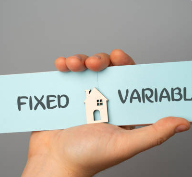
Use Four Behaviors, Not Two Perfect Boxes
The Financial Consumer Agency of Canada describes fixed expenses as costs that arise every month and remain roughly the same, and variable expenses as costs that may change from month to month.[1] That is a useful starting point. A working household budget usually needs two additional behaviors.
| Expense behavior | What it means | Common examples | Main planning need |
|---|---|---|---|
| Fixed or stable recurring | Due regularly at a similar amount | Rent, loan payment, basic subscription | Confirm amount and due date |
| Variable recurring | Occurs regularly, but the amount changes | Groceries, fuel, electricity, household supplies | Estimate and observe the range |
| Periodic or irregular | Does not occur every month, but can often be anticipated | Annual fees, maintenance, school costs, gifts | Convert into a monthly provision |
| Unexpected | Timing or amount cannot reasonably be predicted | Urgent repair, sudden travel, uninsured loss | Contingency or emergency planning |
These are planning labels, not accounting rules. Use the label that helps you decide what to do with the expense.
A utility bill illustrates the point. The CFPB defines fixed expenses as bills that generally cost the same each month, while noting that some, including utilities, may also be variable because usage changes the amount.[2] The bill is recurring and required, but its amount may move with weather, rates, household occupancy, or estimated billing.
The right response is not to debate the label. Record the due date as a recurring obligation and track the amount as a range.
Separate Cost Behavior From Importance
After identifying how an expense behaves, ask two more questions:
- How serious would it be to miss or underfund this cost?
- How much practical control does the household have over its amount or timing?
This creates a more useful map.
| Example | Behavior | Consequence if missed | Short-term control |
| Rent | Fixed | High | Usually low |
| Minimum credit payment | Fixed or formula-based | High | Low before due date |
| Groceries | Variable | High if underfunded | Moderate, within limits |
| Fuel for required work travel | Variable | High | Limited |
| Streaming service | Fixed | Low | High |
| Annual professional licence | Periodic | Potentially high | Low once required |
| Dining out | Variable | Usually low | High |
This prevents two common distortions.
First, “variable” does not mean wasteful. Food, medication, heating, childcare hours, and necessary transportation can change while remaining essential.
Second, “fixed” does not mean untouchable forever. A recurring contract may be difficult to change this month but still deserve review at renewal. A small subscription may be easy to cancel even though its amount never changes.
Use neutral language. The purpose is to locate obligations and choices, not to turn every purchase into a judgment about discipline.
What to Track First: A Four-Pass Order
When the current record is incomplete, use four passes instead of trying to reconstruct every transaction immediately.
Pass 1: Protect bills and essential commitments
List costs whose omission could threaten housing, utilities, insurance, transportation, health, care responsibilities, credit standing, or a legal obligation. Record:
- expected amount or usable range;
- due date;
- payment method;
- account used;
- whether the charge is automatic; and
- the consequence of a missed payment.
Review bank and credit-card statements rather than relying only on memory. Include minimum debt payments, insurance, childcare, required support payments, and essential digital services as applicable.
This pass comes first because a perfect grocery breakdown will not compensate for a missed insurance renewal or an automatic payment drawn from the wrong account.
Pass 2: Find periodic costs hiding outside the month
Look back far enough to capture costs that appear quarterly, seasonally, or annually. Common examples include:
- vehicle registration and maintenance;
- annual insurance or membership payments;
- school and activity costs;
- professional dues;
- tax preparation;
- gifts and holidays;
- seasonal home or yard expenses; and
- planned travel.
Consumer.gov’s budget worksheet explicitly recognizes that some bills occur less often than monthly and instructs users to include them rather than leave them outside the budget.[3]
For a predictable annual cost, divide the expected amount by the number of months available before it is due. That monthly provision is not the same as the bill’s payment schedule. It is a planning device that prevents an annual bill from appearing to be a monthly emergency.
Do not attempt to resolve every type of future expense here. The separate sinking-fund cluster will address the full method for holding and tracking planned non-monthly costs.
Pass 3: Track variable categories where information could change action
Now identify two to four categories that meet at least one of these conditions:
- actual spending is uncertain;
- the category regularly exceeds its planned amount;
- several household members spend from it;
- small transactions make the total hard to see;
- the amount changes for reasons the household could influence; or
- the category is central to a current decision.
Groceries, dining, fuel, delivery, online shopping, household supplies, and children’s incidental costs are common candidates. Your candidates may be different.
Track the selected categories for a period that covers their normal rhythm. The CFPB recommends tracking income and expenses for an entire month when preparing a cash-flow budget.[4] Moneysmart suggests at least one week, two weeks for fortnightly pay, or four weeks for monthly pay, with spending recorded consistently.[5]
An entire month is generally more informative for monthly budgeting, but a shorter period can still expose a pattern and make starting easier. Avoid treating one unusual week as a permanent average.
Pass 4: Confirm the stable remainder
Stable automated expenses do not need daily attention. Check them against statements or contracts and place them on a review schedule.
This group may include:
- rent or mortgage payments;
- instalment loans;
- standard insurance premiums;
- internet or phone plans;
- software and media subscriptions; and
- regular memberships.
Confirm that the amount, renewal date, and continued usefulness remain accurate. Then stop spending attention on them until a renewal, price change, life change, or planned review creates a reason to return.
Handle Mixed Expenses Without Creating Too Many Categories
Some expenses contain both a stable base and a variable component.
Utilities
Record the bill as recurring, then use a realistic range or seasonal estimate for the amount. If the provider offers equal billing, confirm how reconciliation works; a level monthly payment can still produce a later adjustment.
Phone and internet
The plan price may be fixed while roaming, data overages, device financing, or one-time fees vary. Split the expense only if the variable portion is material or needs a different decision.
Groceries and household supplies
One receipt may contain food, cleaning products, toiletries, and pet supplies. Separating every item can create more work than insight. Start with one category. Split it only when the combined total hides a decision you need to make.
Transportation
A vehicle payment and insurance may be stable, fuel may vary, and repairs may be periodic. Keeping these components distinct is useful because each requires a different response. That does not require recording every fuel purchase by trip unless the distinction would change a reimbursement, tax, or household decision.
Childcare and care costs
A base fee may be fixed while extra days, late fees, transportation, or activity charges vary. Preserve the stable commitment and observe the additions separately if they are large enough to affect planning.
The test is simple:
Would separating this expense change the amount we plan, the action we take, or the person responsible?
If not, keep the category broad.
Build Categories Around Decisions
A useful category has a clear job. Too few categories can hide important movement; too many can make the system difficult to maintain.
Consider three possible grocery records:
- Food
- Groceries and dining
- Groceries, household supplies, dining, delivery fees, work lunches, school lunches, coffee, snacks, pet food, and toiletries
The first may be adequate for a household that mainly wants a total. The second distinguishes food prepared at home from purchased meals. The third may be useful for a focused investigation, but it may also collapse under the work required.
Use these tests before adding a category:
- Decision test: Will this total support a different choice?
- Ownership test: Does someone need responsibility for it?
- Pattern test: Is the amount frequent or material enough to matter?
- Boundary test: Can household members classify it consistently?
- Maintenance test: Is the expected insight worth the effort?
If a category fails most of these tests, combine it with a related category. You can always split it temporarily when a new question arises.
Choose a Tracking Method You Can Sustain
The method matters less than obtaining a sufficiently complete record.
Statement review
Bank and credit-card statements reduce manual entry. They may not show what was bought within a mixed retailer, and cash spending can disappear.
Spending diary
A note, spreadsheet, or paper log captures context at the moment of purchase. It requires consistent entry. Moneysmart advises recording spending promptly rather than changing behavior during the observation period.[5]
Budget app or bank tool
Automatic categorization can save time, but categories may be wrong or incomplete. Review the tool’s privacy, security, fees, data connections, and export options before linking accounts.
Receipt collection
Receipts help separate mixed purchases and cash transactions. A weekly processing time is usually more sustainable than allowing them to accumulate indefinitely.
Hybrid method
Many households need only a statement review plus manual notes for cash and selected mixed purchases.
Whichever method you choose, prevent double counting. A credit-card purchase belongs to the spending category when the purchase occurs; the later card payment is normally a transfer or debt payment, not a second grocery or fuel expense.

Use Ranges When Precision Would Be False
Not every variable expense deserves one exact monthly target.
Suppose six months of electricity bills were $110, $125, $132, $168, $190, and $145. The average is $145. That number is informative, but it does not guarantee a $145 bill next month.
A household might instead record:
- ordinary working range: approximately $125–$170;
- higher observed month: $190;
- known seasonal risk: winter or summer use; and
- current planning amount: selected according to season and available cushion.
Similarly, groceries may move with household size, dietary needs, hosting, school schedules, and prices. A range can show whether spending remains explainable without pretending every month should be identical.
Ranges should not become an excuse to avoid limits where limits are necessary. They are useful when natural variation is real and the household has a plan for the upper end.
Know When Tracking Will Not Solve the Problem
Tracking reveals where money went. It cannot, by itself, lower rent, create income, remove a required medical cost, or make an inadequate budget balance.
If essential commitments consume more than available income, focus on the size and timing of the structural gap. Possible responses depend on the situation and may include changing a major commitment, negotiating a payment arrangement, checking eligibility for assistance, increasing reliable income, or obtaining qualified local advice.
Do not keep dividing essential spending into smaller categories as though greater detail will create money. Information is useful only when it leads to an available decision or makes the constraint clear.
A Practical First-Month Setup
If your current records are incomplete, begin with this sequence:
- Export or collect the last one to three months of bank and credit-card activity.
- List essential commitments, due dates, and automatic payments.
- Scan a longer period for periodic costs and renewals.
- Choose two to four uncertain or adjustable variable categories.
- Track those categories through a normal spending cycle.
- Record cash and review automatic classifications.
- Use broad categories first; split only when a decision requires it.
- Mark mixed or seasonal expenses with a range or note.
- Keep unexpected events separate from ordinary variable spending.
- Preserve the resulting record for the next budget review.
The final step matters. This article determines what to observe and how to classify it. The next article will use that evidence to compare planned and actual amounts without rebuilding the entire budget.
Decision Summary
Track expenses in this order:
- first, obligations where a miss could cause serious harm;
- second, predictable costs that sit outside the monthly view;
- third, variable categories where better information could change action; and
- fourth, stable recurring expenses that need periodic confirmation rather than daily attention.
Treat fixed versus variable as one dimension, not a verdict. Also consider consequence, control, timing, and decision value.
The best system is not the one with the most categories. It is the smallest system that shows what must be protected, what must be prepared for, and where the household still has a meaningful choice.
FAQ
What is the difference between fixed and variable expenses?
Fixed expenses recur at roughly the same amount, while variable expenses change from period to period. Some costs, such as utilities, are recurring obligations with variable amounts, so the labels can overlap.
What expenses should I track first?
Start with essential commitments and payments where a miss could cause serious harm. Next identify predictable non-monthly costs, then track uncertain or adjustable variable categories where better information could change a decision.
Are groceries a fixed or variable expense?
Groceries are generally variable because the total changes. They can still be essential, and the household’s practical ability to reduce them may be limited by family size, health needs, prices, and access.
Are utility bills fixed or variable?
Utilities are recurring, but their amounts may change with usage, season, rates, or billing adjustments. Record the due date as recurring and plan the amount with a realistic estimate or range.
How long should I track spending?
A full month usually provides a useful monthly-budget record. A shorter period can help you begin, but it may not capture bills, pay cycles, or unusual timing. Longer history is needed for seasonal and annual costs.
Do I need to categorize every purchase?
No. Use categories that support an actual decision, reveal a meaningful pattern, or assign responsibility. Keep categories broad when further detail would not change the plan.
References
- Financial Basics Workshop – Participant Handbook, Financial Consumer Agency of Canada.
- Financial Terms Glossary, U.S. Consumer Financial Protection Bureau.
- Make a Budget Worksheet, Consumer.gov, U.S. Federal Trade Commission.
- Your Money, Your Goals: A Financial Empowerment Toolkit, U.S. Consumer Financial Protection Bureau.
- Managing Your Money, Moneysmart, Australian Securities and Investments Commission.
This article provides general educational information and does not constitute individualized financial, tax, legal, credit, or debt advice. Rules, protections, support services, and appropriate priorities differ by country and personal circumstances. Consider qualified local assistance when income does not cover essential expenses or required payments.
More in This Cluster: Budgeting Foundations
- How to Build a Monthly Budget That Reflects Real Life
- 50/30/20 Budget: When It Works and When It Does Not
- Zero-Based Budgeting for Variable Expenses
- How to Budget When Your Income Changes Each Month
- Fixed vs Variable Expenses: What to Track First (you are here)
- How to Review a Budget Without Starting Over
- The Most Common Budgeting Mistakes and How to Correct Them