Quick Summary
The U.S. Federal Trade Commission has released a proposed enforcement policy statement addressing personalized pricing—the use of personal data to estimate what a particular consumer may be willing to pay.
The proposal does not ban personalized pricing, establish a final rule, or prove that a different price shown online was based on your personal data. It says that businesses may violate existing consumer-protection law when they use personal information to personalize prices without clear disclosure.
Public comments are currently due September 18, 2026, under docket FTC-2026-1057.
Reader Decision
If a purchase is expensive, time-sensitive, or repeated often, compare the same offer under controlled conditions before buying. A price difference is worth investigating, but it is not by itself proof of surveillance pricing.
Why It Matters
Online prices already change for many ordinary reasons: demand, inventory, time, location, taxes, delivery method, membership status, and promotions. Consumers may reasonably expect those differences when they are visible.
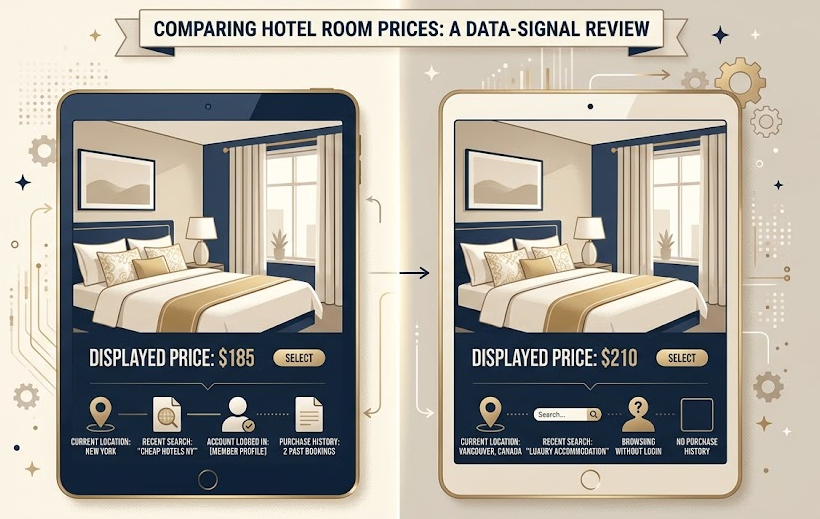
The FTC proposal focuses on a narrower concern. A company may use browsing history, location, purchase habits, household characteristics, or other personal data to estimate an individual’s willingness or need to pay—without telling that person that the displayed price was personalized.
That distinction matters because a shopper cannot make a meaningful comparison if the reason for the difference is hidden. The issue may arise in online retail, grocery delivery, hotels, travel booking, and other digital markets where prices and personal data can be combined quickly.
Key Verified Facts
- On August 19, 2026, the FTC voted 2–0 to release a proposed enforcement policy statement for public comment.
- The FTC describes personalized pricing as using personal data to set prices according to what a company believes an individual consumer is willing to spend.
- The draft says undisclosed collection or use of personal data for personalized pricing may violate Section 5 of the FTC Act, which prohibits unfair or deceptive acts or practices.
- The FTC has acknowledged that it does not have authority to prohibit personalized pricing in every circumstance.
- The agency is not currently taking a final position on whether a personalized price remains unfair when the practice has been fully disclosed.
- A policy statement explains how an agency intends to apply existing law. It is different from a new statute or a final regulation imposing a universal pricing rule.
Dynamic Pricing and Personalized Pricing Are Not the Same
Suppose a hotel raises its room rate for everyone after demand increases. That is dynamic pricing based on market conditions.
Now suppose the hotel shows one traveler a higher rate because personal data suggests the trip involves a funeral and the traveler has little flexibility. That is the type of individualized, data-based scenario the FTC proposal raises.
Other price differences may be legitimate and visible: a loyalty discount, a student rate, a location-based tax, or a delivery charge tied to distance. The disclosure question becomes important when the displayed amount depends on personal data that the shopper would not reasonably know was being used.
How to Compare a Price Without Jumping to a Conclusion
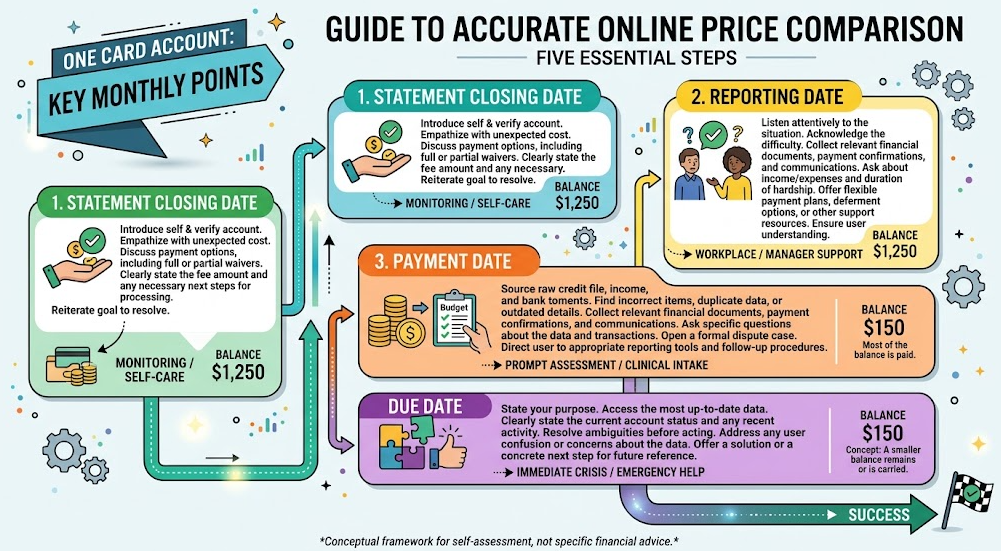
1. Hold the transaction details steady
Compare the same product, seller, quantity, date, location, currency, delivery method, cancellation terms, and checkout stage. A hotel room with free cancellation is not the same offer as a nonrefundable room, even when the room description looks identical.
2. Check before and after signing in
Compare the public price with the price shown in your account or loyalty program. A lower member price may be an advertised benefit; a different base price may require closer reading.
3. Compare the app, browser, and final checkout
Record the item price, mandatory fees, taxes, delivery charge, and total. A difference caused by a promotion or fee is not necessarily personalized pricing, but it still affects the purchase decision.
4. Use a close time window
Prices can change while you compare them. Taking screenshots with timestamps reduces uncertainty, although it cannot reveal the pricing algorithm.
5. Read the disclosure and privacy language
Look for statements saying that prices or offers may depend on account activity, location, device information, browsing behavior, or other data. Save the language visible when the purchase was made.
Private browsing, deleting cookies, switching devices, or using a VPN may change some data available to a seller. None of these methods guarantees the same price. A business may use account history, an app identifier, location, inventory changes, or other signals that the comparison does not control.
What to Do If the Difference Looks Meaningful
First, decide whether the purchase can wait. For a hotel, flight, appliance, or recurring grocery order, another seller’s transparent total price may be more useful than trying to reverse-engineer the first seller’s system.
If you want an explanation, contact the business with the product details, timestamps, screenshots, account status, and total prices. Ask whether personal data affected the price and what factor explains the difference.
If the answer appears misleading—or no explanation is given—preserve your records. U.S. consumers can report suspected unfair or deceptive practices through the FTC’s official reporting system and may also have state consumer-protection options.
Consumers and businesses who want to address the draft policy itself may submit comments to docket FTC-2026-1057 by the stated deadline. A useful comment should describe a concrete experience or operational concern and explain what disclosure would have changed the decision.
What Remains Uncertain
The proposal may be revised, finalized, delayed, challenged, or withdrawn after the comment period. The final wording and enforcement approach are not yet known.
The extent of personalized pricing across online markets also remains difficult to measure. Seeing two prices does not reveal which data was used, whether the offers were truly identical, or whether the difference resulted from ordinary dynamic pricing.
Even if the statement is finalized, disclosure would not necessarily make every personalized price illegal or create an automatic refund right. State laws may impose separate requirements, and those rules can differ from the FTC’s federal approach.
The Practical Takeaway
Do not assume every changing online price is aimed specifically at you. Also, do not assume that a price displayed on your screen is necessarily the same offer shown to everyone else.
For an important purchase, compare the complete transaction under consistent conditions and save the evidence that affected your decision. The FTC proposal is fundamentally about whether consumers should be told when personal data—not only market conditions—helps determine the price they see.
This newsletter provides general consumer information, not legal advice. The FTC statement is a proposal under public review as of August 22, 2026. Verify the current docket, deadline, and final agency action before relying on it.
FAQ
Is personalized pricing now illegal in the United States?
No universal ban took effect through this announcement. The FTC released a proposed enforcement policy explaining when undisclosed data-based pricing may violate existing law.
Does a different price prove that my data was used?
No. Inventory, time, location, taxes, fulfillment, promotions, membership terms, and other factors can produce different prices.
Will clearing cookies always produce a lower price?
No. It may change some signals, but it cannot control account history, app data, location, rapid market changes, or every other input used by a seller.
When does the comment period close?
The currently listed deadline is September 18, 2026. Confirm the date on the official FTC or Regulations.gov docket before submitting.
Sources
- FTC — Proposed Enforcement Policy Statement Regarding Personalized Pricing
- Regulations.gov — Docket FTC-2026-1057
- Reuters — U.S. FTC considers requiring disclosure of personalized pricing