Quick Summary
Federal health officials have ended the outbreak investigation into infant botulism associated with Nara Organics Whole Milk Organic Powdered Infant Formula. That does not make recalled cans safe to use.
The June recall covered all lots of the Nara product that were on the market, in both 400-gram and 700-gram cans. FDA says recalled cans have “Best By” dates ending in 2027, so formula bought months ago may still be stored in a pantry, diaper bag, relative’s home, or emergency supply.
Four infants in California, Pennsylvania, and Washington were confirmed ill after consuming the formula. All four were hospitalized; no deaths were reported. On August 27, 2026, FDA said genetic testing connected a patient sample from this outbreak to samples from the 2025 ByHeart outbreak. The two events also shared parts of a supply chain, but investigators have not determined exactly where contamination occurred.
Reader Decision
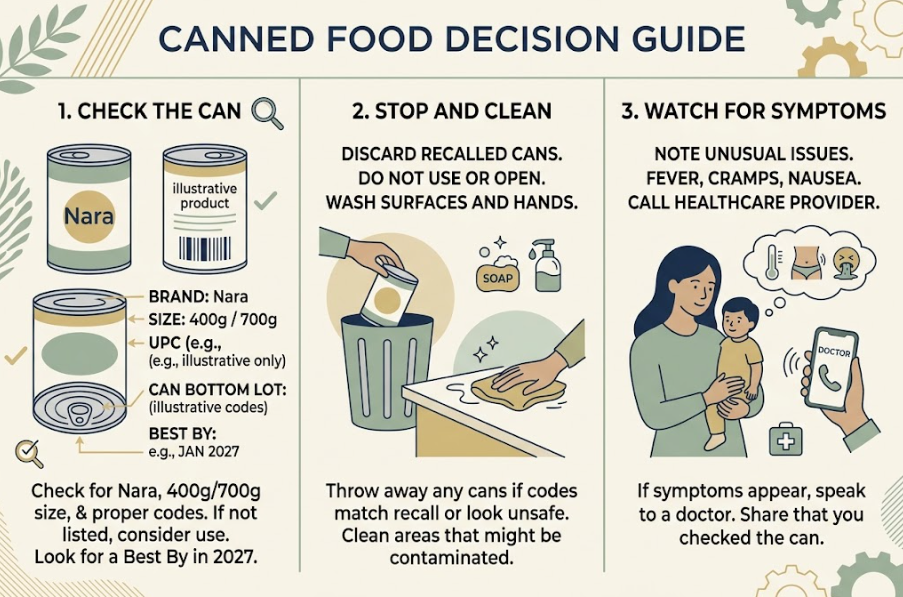
If you have Nara Organics Whole Milk Organic Powdered Infant Formula, do not rely on the outbreak’s closure or the can’s future Best By date. Check the brand, product, size, UPC, and lot code against the recall. Stop using recalled formula, discard it as FDA directs, clean items and surfaces that touched it, and seek immediate medical care if an infant develops possible botulism symptoms.
What Changed on August 27
CDC declared the outbreak over after no new cases had been added since July 3. The final investigation includes four confirmed cases, with illnesses beginning in April and May 2026. The last illness onset was May 31.
“Outbreak over” describes the case investigation. It does not cancel the June 13 recall, certify remaining cans as safe, or mean every recalled product has left private homes. FDA specifically tells families to look again because the product’s Best By dates extend into 2027.
Whole-genome sequencing found that one clinical sample from the Nara outbreak genetically matched a clinical sample, a formula-base sample, and four unopened formula-can samples connected with the 2025 ByHeart outbreak.
FDA also found that Nara lots linked to illness used milk supplied by Organic West Milk and spray-dried by Dairy Farmers of America, the same suppliers of organic whole milk and organic whole milk powder identified in the earlier ByHeart investigation. FDA says these findings indicate a common source of contamination between the outbreaks.
That is not the same as identifying the precise failure. The agency says evidence is still insufficient to determine whether the milk was contaminated before drying or during the drying process. Its root-cause and post-incident work continues.
Which Nara Formula Is Recalled?
The recall applies to Nara Organics Whole Milk Organic Powdered Infant Formula distributed in the United States through Target stores, Target.com, and Nara.com from July 2025 through June 2026. FDA says Nara formula was not distributed outside the United States.
The two recalled package sizes are:
- 700 g, UPC 860013251901; and
- 400 g, UPC 860013251918.
All lots that were on the market were included. The lot code is printed on the bottom of the can. FDA’s recall notice lists 16 codes, so the safest verification method is to compare the can directly with the current official list rather than copying a code from a social-media post.
Check secondary storage: a grandparent’s kitchen, childcare bag, travel kit, basement shelf, donation box, or emergency supply. An unopened can is not excluded. A future Best By date is not a safety clearance.
Do not broaden the recall to every powdered formula or every organic whole-milk formula. Product identity matters. At the same time, do not narrow an all-lot Nara recall to only the three lots initially associated with the first reported infants.
What to Do With a Recalled Can
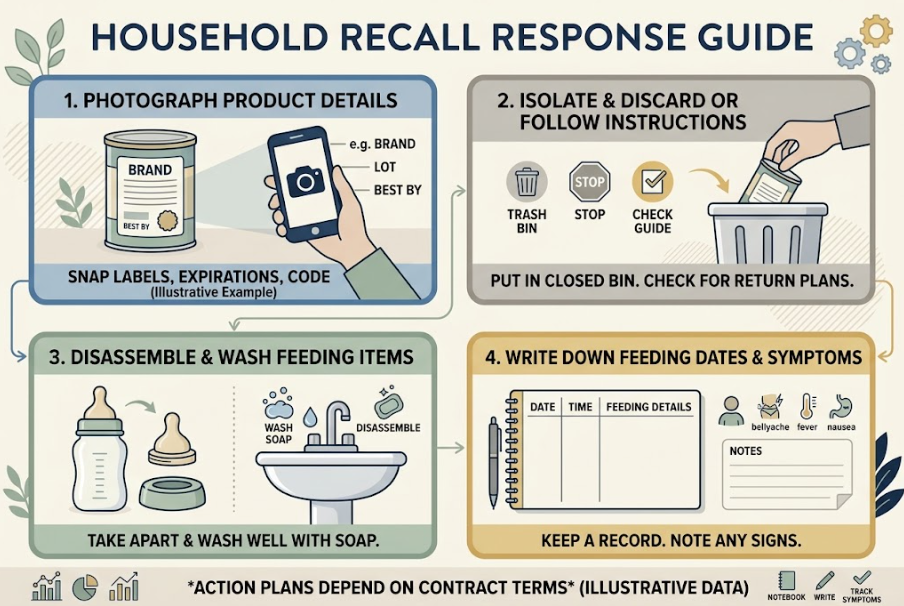
Stop feeding the recalled product immediately. FDA’s current outbreak page tells consumers to discard remaining recalled formula. Before disposal, photograph the front, bottom, UPC, lot code, and Best By date if you need a record for a return, refund, medical conversation, or adverse-event report.
The company notice says customers who bought from Nara.com in May or June 2026 were to receive automatic refunds. Other customers with unused product could use Nara’s refund form after photographing the bottom of each can; Target customers could return product to a store or follow online return instructions. Verify those channels before depending on them because company procedures can change.
Do not donate, resell, or retain the formula as a backup. If a health department or clinician requests a sample after an illness, follow that instruction before disposal.
Clean What the Formula Touched
FDA advises washing bottles, counters, formula dispensers, and other items or surfaces that may have contacted the recalled powder with hot soapy water or in a dishwasher.
For feeding items, CDC advises taking bottles apart so nipples, caps, rings, valves, and other components can be cleaned. Dishwasher-safe items can go through a hot-water cycle with heated drying or a sanitizing setting. For handwashing, use a clean basin reserved for feeding items, hot water and soap, a dedicated clean brush, and thorough air-drying. Do not place bottle parts directly in a potentially contaminated sink or dry them by rubbing with a kitchen towel.
Cleaning is an additional step after stopping use; it does not make recalled powder usable. If a formula-mixing machine or dispenser has internal parts that contacted the powder, consult its manufacturer’s cleaning instructions and make sure no recalled powder remains in a hopper or channel.
Symptoms That Require Immediate Attention
Infant botulism is rare but serious. Spores can colonize an infant’s intestine and produce a neurotoxin that affects nerves and muscles. Symptoms may begin with constipation, poor feeding, loss of head control, difficulty sucking or swallowing, drooping eyelids, sluggish pupils, reduced facial expression, or a weak or altered cry. Weakness can progress to breathing difficulty or respiratory arrest.
FDA says symptoms following formula ingestion can take as long as several weeks to develop. A baby who appears well immediately after a feeding is not proof that no illness will develop.
If an infant who consumed recalled formula develops possible symptoms, seek immediate healthcare. Do not wait for several symptoms to appear or for a laboratory result before calling. Tell the clinician the exact product, feeding dates, lot and Best By information if available, and that infant botulism is the concern. Call emergency services for breathing difficulty, severe weakness, unresponsiveness, or another medical emergency.
Clinical decisions belong with qualified professionals. CDC tells clinicians that initial diagnosis is based on symptoms and that treatment should not wait for laboratory confirmation when consultation supports the diagnosis.
What the ByHeart Link Does—and Does Not—Mean
The genetic match and shared suppliers indicate a common contamination source between the Nara and 2025 ByHeart outbreaks.
It does not mean the August 27 Nara update announced a new ByHeart recall. It also does not establish that every product made with milk from a named supplier is contaminated. FDA is continuing ingredient-focused surveillance, prevention, and compliance work and says the exact point of contamination is unresolved.
For families, the immediate decision remains product-specific: find and remove recalled Nara formula, clean contacted equipment, and act quickly if symptoms appear. For regulators and manufacturers, the broader question—how contamination entered the shared production chain—remains open.
The Practical Takeaway
An investigation can close while a household safety task remains unfinished. Search wherever formula could have been stored, compare any Nara can with the official recall, and remove recalled product from use.
Keep a photo or written record of the product and the dates it was fed. That small record can support a refund, an FDA report, or a faster medical conversation. The goal is neither panic about all infant formula nor reassurance based only on an ended outbreak. It is a precise check of the product still within reach of a child.
This newsletter provides general product-safety and health information. It is not medical advice, diagnosis, or treatment. Recall details, refund procedures, and agency findings may change. Verify the current FDA and CDC notices and contact a qualified healthcare professional about exposure, symptoms, or an infant’s individual needs.
FAQ
Does the ended investigation mean my Nara formula is safe now?
No. The recall remains relevant. FDA says recalled cans have Best By dates ending in 2027 and tells consumers to check their homes and discard remaining recalled product.
Are only certain Nara lots recalled?
The June announcement recalled all lots of Nara Organics Whole Milk Organic Powdered Infant Formula then on the market, in 400 g and 700 g cans. Compare the can with FDA’s current notice.
Was ByHeart recalled again on August 27?
No new ByHeart recall was announced in this Nara update. FDA reported a genetic match and supply-chain commonalities between the two outbreaks while continuing its root-cause work.
What if my baby drank the formula but has no symptoms?
Keep the product details and feeding dates, stop using recalled formula, and contact the child’s healthcare professional for individualized guidance. FDA says symptoms can take several weeks to develop.
Can I wash the powder or prepare it differently to make it safe?
No. Cleaning applies to bottles, dispensers, counters, and other contacted items. It does not make recalled formula safe to feed.
Where was Nara formula sold?
FDA says it was distributed nationwide in the United States through Target stores, Target.com, and Nara.com from July 2025 through June 2026, and was not distributed outside the United States.
Sources
- FDA — Outbreak Investigation of Infant Botulism: Powdered Infant Formula
- FDA — Nara Organics Recalls All Lots of Nara Infant Formula
- FDA — Post-Outbreak Response Activities: Clostridium botulinum and Powdered Infant Formula
- CDC — Clinical Overview of Infant Botulism
- CDC — Cleaning, Sanitizing, and Storing Infant Feeding Items