A small shirt can stop a decluttering session more completely than a large piece of furniture. The shirt may no longer fit anyone, yet it can make a much earlier version of a child—and of the household—feel immediately present.
Jerome still finds clothes and toys from when his now-middle-school child was three or four. When one appears, he sometimes pauses in the memory it brings back. The object is not useful in the ordinary sense, but that does not make its effect imaginary. It connects a physical thing with a period of family life that cannot be repeated.
The difficulty begins when every object connected to that period is asked to carry the whole memory. One shirt, a box of clothes, several toys, photographs, school papers, and gifts may all point to the same years. Keeping everything can make the meaningful items harder to find and care for. Releasing everything can remove objects whose presence still matters.
A practical framework does not decide whether sentiment is reasonable. It helps determine which objects deserve physical space, which memories can be documented or shared another way, and which decisions should wait.
Quick decision: Identify the memory, person, event, or value the item represents. Confirm ownership and family significance. Decide whether this particular original adds something that a photograph, story, scan, shared copy, or representative item cannot. Choose a physical limit for the collection, preserve selected items properly, and defer decisions connected to recent loss, disputed ownership, or missing family information.
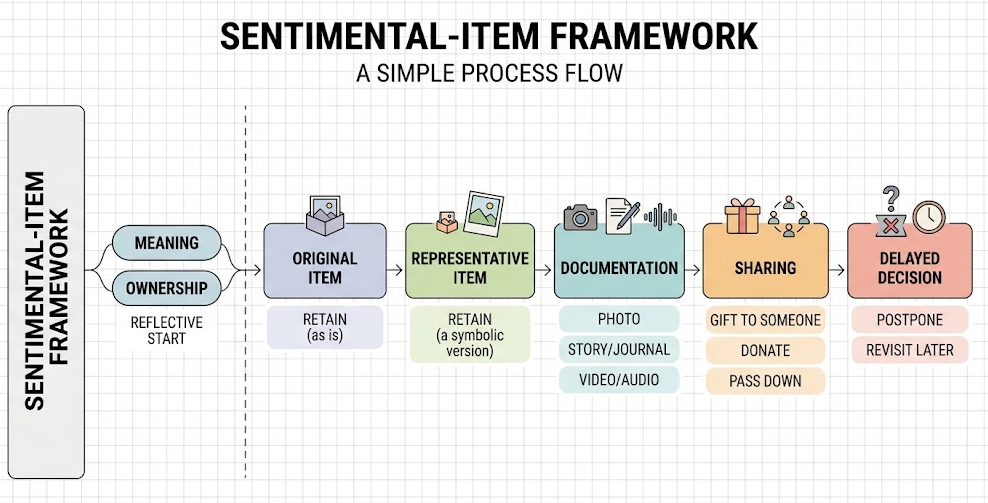
Name What the Item Represents
“Sentimental” is a broad label. A more precise description makes the decision easier.
The item may represent:
- a person or relationship;
- a period of childhood or family life;
- migration, a move, or a former home;
- achievement, work, service, or education;
- a tradition, culture, faith, or community;
- a difficult period survived;
- a deceased person;
- a craft or skill practiced by someone;
- evidence of family history; or
- the person the owner once expected to become.
Write one sentence: “This reminds me of…” or “This matters because…” If the answer is mainly guilt—someone gave it, it cost money, or discarding it feels disloyal—separate that obligation from the memory itself. The giver’s importance does not necessarily require permanent custody of every gift.
If the meaning cannot yet be named, that is useful information. Place the item in a limited review group rather than forcing an immediate answer or letting it return anonymously to storage.
Confirm Ownership and Shared History
A family object can carry meaning for several people while still belonging to one person or an estate. Do not donate, alter, divide, digitize and destroy, or claim an inherited object until ownership and relevant family interests are understood.
Ask:
- Who owns the item?
- Was it promised to someone?
- Is it part of an estate, separation, cultural collection, or family agreement?
- Does another person know its history better?
- Would relatives want a chance to see, copy, receive, or discuss it?
- Does it contain private information about living people?
Sentimental value does not erase legal or ethical boundaries. Ownership, estates, cultural property, privacy, and family law vary by jurisdiction. When the answer affects rights or a disputed inheritance, preserve the item and seek appropriate advice.
For children’s belongings, include the child in a way that fits their age and understanding. A parent may remember the toddler who wore a shirt; the child may experience it as an object from a life they barely remember. Both perspectives can be real without requiring the same decision.
Ask Whether the Original Is Doing Unique Work
Some originals matter because of texture, handwriting, wear, craftsmanship, scale, provenance, or direct connection. A photograph of a handwritten recipe does not reproduce the paper a grandparent touched. A scan of a child’s drawing may preserve the image while losing size, marks on the back, and the context of the folder.
Other objects mainly prompt a story that can survive through documentation. Test the original:
- Does physical contact or material matter?
- Is it unique, or one of many similar examples?
- Does it contain information not captured elsewhere?
- Can it be displayed, handled, or shared safely?
- Is its condition stable enough to preserve?
- Would a photograph plus the story preserve what the family values?
- Is another family member a better custodian?
Digitization is an option, not an instruction to destroy the original. Make that second decision separately after checking image quality, labels, backups, ownership, and whether the physical item has independent importance.
Choose a Representative Item
A representative item can carry a larger chapter without requiring every object from that chapter to stay.
For childhood clothing, the representative might be one garment connected to a clear memory rather than every size. For a hobby, it might be the first completed piece or the tool used most often. For school years, it might be a small set showing change over time rather than every worksheet.
Compare candidates:
- Which item prompts the clearest story?
- Which one is most distinctive?
- Which has the best provenance or identifying information?
- Which is in a condition the household can preserve?
- Which would another person recognize and value?
- Are several objects repeating the same meaning?
Representation is not a rule that one object must replace an entire life. Some collections have research, cultural, artistic, or family significance as a group. The point is to decide at the correct scale rather than letting each object make an isolated claim on space.
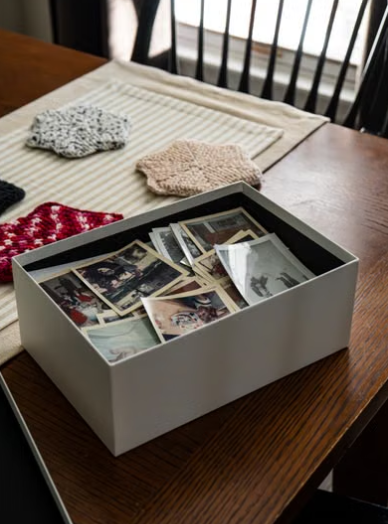
Use Four Preservation Paths
An item does not face only “keep” or “discard.” Consider four paths.
Keep the original
Choose this when its physical presence, uniqueness, information, or family role justifies the space and care. Record what it is, whose it was, why it matters, and any date or context known.
Document the item
Photograph or scan it and record the story, dimensions, markings, creator, owner, and date where known. Include the back, label, signature, or construction detail when relevant.
Share or transfer stewardship
Another family member, community archive, cultural organization, school, museum, or specialist institution may have a stronger connection or better context. Ask first. Do not assume an institution wants an item, and do not transfer culturally sensitive or legally restricted material without appropriate authority.
Release after recording
When the story has been preserved and the original is no longer needed, choose the responsible donation, recycling, or disposal route described in Article”What-to-Donate-Sell-Recycle-or-Discard”. A memory item is not automatically safe or suitable to donate.
These paths can combine. Keep one original, digitize several related papers, give a copy to relatives, and release duplicates. The decision should match what the household is trying to preserve.
Give the Collection a Deliberate Limit
Without a boundary, sentimental storage can expand by default. Use a limit that respects the collection and the home:
- one box per person or life period;
- one shelf for displayed objects;
- a portfolio for selected artwork;
- a defined number of garments or toys;
- one archive area with known environmental conditions; or
- a project deadline for sorting a specific inherited collection.
The limit is a decision tool, not a measure of love. A small home, frequent moves, disability, disaster exposure, and storage cost may require a different physical collection from a large stable home. Digital files also need limits, organization, and maintenance; unlimited duplicates do not automatically create a useful archive.
When the container is full, compare items within the same meaning group. Which objects add new information or a distinct story? Which are weaker duplicates? This is usually more workable than asking whether each object is “special” in isolation.
Preserve the Items You Choose
Keeping an item creates a care obligation. A cardboard box in a damp basement or hot attic may preserve the decision but not the object.
US National Archives guidance recommends protecting family papers and photographs from high temperature, humidity, water, insects, rodents, damp basements, and hot attics. Conditions suitable for one material may not suit another, and valuable or deteriorating objects may need a conservator.
For textiles, National Archives guidance notes that light can fade and weaken fibres and that damp conditions can attract pests. Do not wash, tape, glue, fold sharply, or apply a household treatment to a fragile heirloom without material-specific guidance.
Label the housing rather than writing on the object when possible. Record the story while someone still knows it. Storage products marketed as “archival” are not automatically suitable for every material; verify the material and preservation guidance before buying supplies.
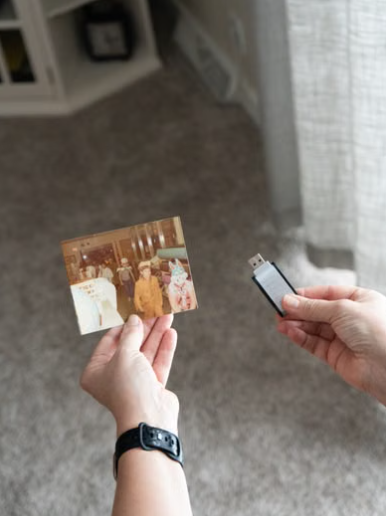
Treat Digital Copies as an Archive, Not a Disposal Receipt
A photograph on one phone is not a durable family record. If documentation will carry the memory, organize and protect it.
The Library of Congress recommends identifying what to save, organizing selected files, keeping copies on at least two different storage media in separate locations, and migrating copies to current media over time.
For each file, include enough context to make it understandable later:
- person or people;
- item or event;
- approximate date and place where known;
- why it mattered;
- original owner or creator; and
- who supplied the information.
Use filenames and folders that can survive outside one app. Check copies periodically and include the archive in account, estate, and device-transition planning. Cloud storage, external drives, printed copies, and family sharing each have different privacy, access, cost, and failure risks.
Slow Down After Loss or Major Change
Bereavement, separation, migration, disaster, illness, downsizing, and a move into care can force decisions before a person has the time or authority to make them well.
Separate urgent work from irreversible work. Urgent work may include securing property, preventing water or pest damage, meeting a lawful deadline, identifying essential records, or making a room safe. Irreversible donation, sale, division, or disposal can often wait until ownership and immediate pressure are clearer.
Use a protected holding area with an inventory and review date. If housing, cost, or legal deadlines prevent delay, photograph groups, label boxes, involve relevant owners, and obtain qualified advice. Do not promise that every decision can wait indefinitely, but do not use an arbitrary decluttering rule to rush grief or an estate.
If handling objects produces distress that makes daily life or necessary decisions difficult, appropriate grief, mental-health, legal, estate, cultural, or community support may be more useful than a stricter sorting method.
Tell the Story While the Item Is Still Present
The most valuable part of a keepsake may be information that exists only in someone’s memory. Ask:
- Who made, used, wore, or gave this?
- What happened around it?
- Why was it saved?
- Is there a name, place, language, recipe, technique, or tradition connected to it?
- Who else should know?
Record audio, video, or a short written note with consent. A simple account can make one selected object more meaningful than an unlabelled box of similar things.
Jerome does not need to keep every childhood item for the memories to be true, and he does not need to release all of them to have an organized home. The practical decision is which objects, images, and stories will let the family encounter that earlier time again—and which they can realistically preserve.
FAQ
How do I decide whether a sentimental item is worth keeping?
Name what it represents, confirm ownership, and ask whether the original carries unique material, information, or family meaning. Compare it with similar objects and choose what the household can preserve and retrieve.
Is taking a photo enough?
Sometimes. A photo can preserve appearance and prompt a story, but it may not preserve handwriting, texture, scale, construction, provenance, or the value of the original. Decide about digitization and release separately.
How many sentimental items should I keep?
There is no universal number. Choose a physical boundary that fits the collection, home, mobility, cost, and ability to care for it. Compare objects within the same story rather than judging each alone.
What should I do with my children’s old clothes and toys?
Include the child appropriately, identify items with distinct stories, consider a representative selection, and document others if useful. Confirm ownership and do not assume every old child product is safe or suitable to donate.
Should I keep gifts out of respect for the giver?
The relationship and the object are not identical. Consider whether the item still represents something worth preserving and whether another form—story, photograph, use, or transfer—would honour that meaning more realistically.
How should I handle inherited items that relatives may want?
Pause disposal, identify ownership and estate requirements, inventory the items, and invite relevant people into a documented process. Seek local legal or estate advice when rights or disputes are involved.
Where should family photographs and papers be stored?
Protect them from heat, high humidity, water, pests, and damaging light. Avoid damp basements and hot attics. Material-specific or valuable collections may need archival guidance or a conservator.
What if I am not ready to decide?
Use one bounded, labelled holding area with the missing question and a review date. Delay is reasonable after loss or when ownership is unclear, but the item still needs safe storage and a defined return point.
Sources
- How to Preserve Family Archives — US National Archives
- Preserving Textiles — US National Archives
- Reformatting, Digitizing, and Digital Preservation — Library of Congress
More in This Cluster: Decluttering
- How to Declutter Without Making a Bigger Mess
- Room-by-Room Decluttering Plan
- What to Donate, Sell, Recycle, or Discard
- Decluttering When You Share a Home
- How to Avoid Rebuying What You Removed
- Sentimental Items: A Practical Decision Framework (you are here)
- How to Maintain a Decluttered Home