A decluttered home is not a home that has stopped changing. Groceries arrive, children move into new sizes and interests, winter equipment gets used hard, projects begin, gifts enter, repairs wait, and ordinary days leave things between where they were used and where they belong.
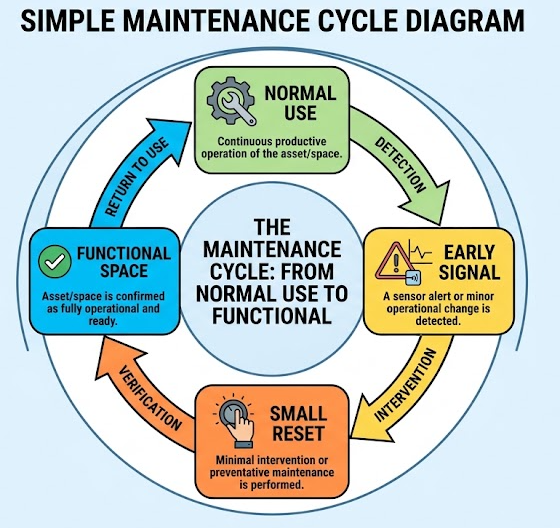
Maintenance begins by expecting that movement. The question is not whether every room can remain in its finished state. It is whether the household can notice when a space is becoming harder to use and return it to function before another full cleanout is required.
Jerome’s household has developed a natural version of this rhythm in Canada. In late fall before winter and again in spring after it, they bring out seasonal items and review what is worn, in poor condition, or rarely used. Even though they do this once or twice most years, unwanted items can still fill the back of his pickup truck. That recurring volume does not mean the previous work accomplished nothing. It shows that a changing household produces new decisions and that a twice-yearly reset may need smaller support between seasons.
A durable system uses a few visible standards, catches early signs of drift, completes outgoing routes, and provides a simple recovery plan when maintenance pauses.
Quick decision: Define what each important space must allow people to do. Choose a few drift signals, such as a blocked surface, overflowing category, lost-item rebuy, or full outgoing area. Attach small resets to existing routines, schedule larger reviews around real seasonal or household transitions, and keep one bounded outgoing station. When several signals persist, return to one small zone rather than restarting the entire house.
Maintain Function, Not a Permanent Photograph
The most useful baseline describes what the room supports:
- the entry door opens fully and current outdoor gear is retrievable;
- the kitchen has enough preparation space for the household’s cooking;
- the dining table supports its agreed meal, work, or project uses;
- beds and necessary seating remain available;
- clothes fit within their assigned storage and can be found;
- the bathroom and laundry fixtures are accessible;
- stairs, exits, utility panels, heat sources, and mobility routes remain clear; and
- the outgoing station stays within its boundary.
This baseline allows ordinary evidence of life. A school project can occupy the table while it is active. Winter boots can be near the door in winter. Laundry can be in process. The maintenance question is whether the use has a location and return point, not whether the room looks untouched.
Take a simple baseline photo or write a one-sentence finish line after a successful decluttering project. Use it to remember function, not to demand a visual match every day.
Choose Drift Signals Before the Room Feels Unmanageable
Clutter often returns gradually. A signal should appear early enough to prompt a small action.
Possible signals include:
- a door, drawer, or cabinet no longer opens fully;
- an assigned surface cannot perform its main function;
- items begin living on the floor or stairs;
- the household buys a duplicate because the original cannot be found;
- the category no longer fits its container or rail;
- a donation or recycling container reaches capacity;
- an item waits for repair beyond its deadline;
- a temporary project loses its next action;
- seasonal items remain out after the transition; or
- one room becomes the default destination for decisions postponed elsewhere.
Use only a few signals that matter in the home. Monitoring every shelf can create more work than it prevents. Prioritize safety, daily function, expensive duplication, and the categories that repeatedly produce large exits.
Safety signals require immediate action. US Fire Administration guidance says doors and windows used for escape should not be blocked. Its basement and garage guidance also calls for clear stairs and separation from heat-generating equipment. Do not wait for the next scheduled reset when exits, stairs, cooking areas, heaters, electrical panels, alarms, or essential equipment are obstructed.
Attach Small Resets to Existing Transitions
A maintenance task is easier to remember when it follows something that already happens.
Examples:
- after bringing in mail, route papers rather than leaving them at the entry;
- after laundry, return outgrown or damaged clothing to a labelled review container;
- after grocery shopping, rotate supplies and note overstock;
- after completing a project, return tools and release unused material;
- before waste or recycling collection, check the outgoing station;
- when changing sheets, clear only what interferes with the bedside function;
- when a child changes clothing size, review the previous size as one category; or
- after a trip, return travel items to their assigned home before the luggage becomes storage.
The reset should match the transition. It does not need to become a daily whole-house inspection. If a task routinely exceeds the available time, reduce its scope or schedule it separately rather than allowing a “quick reset” to become an unplanned cleanout.
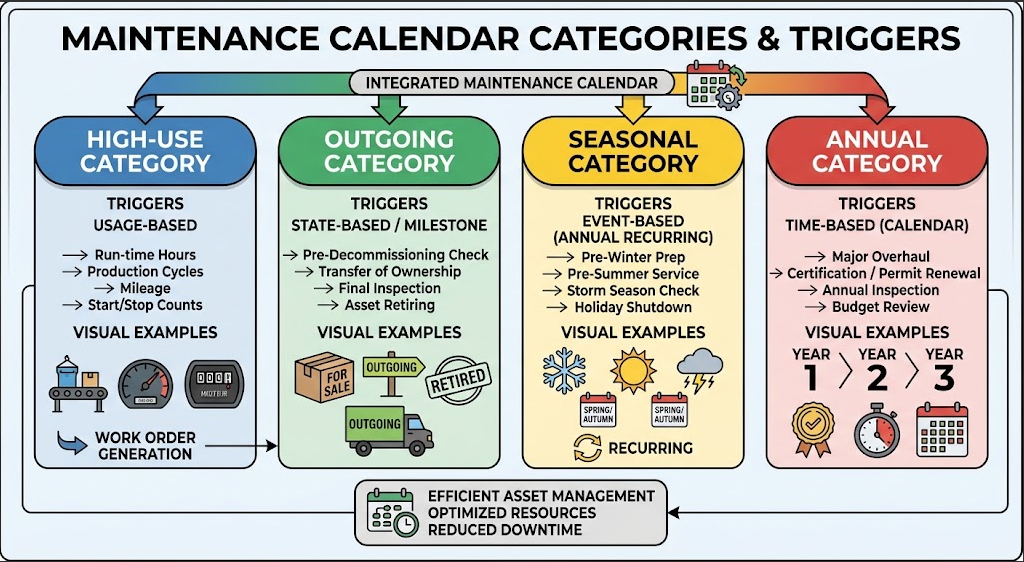
Use Different Cadences for Different Kinds of Drift
Not every category needs weekly attention. Match the review to how quickly the category changes.
Frequent reset
Use for high-traffic landing points: entry surfaces, kitchen counters, dining table, current paperwork, laundry transfer, and active project areas. The aim is to restore function, not make detailed keep-or-release decisions.
Capacity-triggered reset
Use for donations, recycling, repair items, outgrown clothes, returns, and “belongs elsewhere” containers. The container becoming full triggers removal or decisions.
Monthly or event-based review
Use for subscriptions, automatic deliveries, pantry reserves, children’s current school materials, and open repair projects. A billing date, school term, or project milestone may be a better trigger than the first day of the month.
Seasonal review
Use for clothing, sports equipment, outdoor tools, decorations, weather gear, and home systems affected by climate. Review when the category comes out and again before it returns to storage.
Annual or major-transition review
Use for records, emergency supplies, warranties, insurance inventories, digital devices, family archives, and spaces affected by moving, work changes, caregiving, or accessibility needs. Follow authoritative retention, safety, and product instructions rather than discarding by calendar alone.
Make the Outgoing Station a Throughput System
An outgoing station is useful only when items move through it. Use one safe, bounded location for authorized donations, sales, recycling, returns, repairs, handoffs, and special disposal.
Every item or container needs:
- route;
- destination;
- owner or responsible person;
- next action; and
- date.
“Donate” is incomplete. “Confirm shop acceptance Friday; drop off Saturday” can be completed. “Sell” is incomplete. “List by June 10; donate if unsold by June 30” has an end.
Separate batteries, electronics, chemicals, medicines, sharps, data-bearing devices, recalled products, and other special materials from ordinary bags. Article”What-to-Donate-Sell-Recycle-or-Discard-admin” covers responsible routing; maintenance simply keeps those items visible and safely contained until the verified route occurs.
Do not place the station where it blocks a doorway, stair, vehicle, heater, electrical panel, or daily movement. When it reaches capacity, pause new decluttering and complete exits. A second outgoing station usually hides a throughput problem.
Review Category Capacity When Life Changes
A fixed container can expose drift, but capacity should not remain fixed when the household’s needs change.
Review the boundary when:
- a child grows;
- a person begins school, work, caregiving, treatment, or a sustained activity;
- mobility or accessibility needs change;
- seasons change;
- the household gains or loses members;
- the home or storage access changes;
- supply reliability changes; or
- a repeated overflow shows that the original estimate was unrealistic.
The response might be reduction, a different location, more capacity, less capacity, or a new category. Do not treat every overflow as proof that someone owns too much. First ask whether the function or household changed.
If the need did not change, use the inflow rule from Article”How-to-Avoid-Rebuying-What-You-Removed”: check why the category grew and place one friction point before the next entry.
Use Seasonal Reviews as a Two-Way Exchange
Jerome’s late-fall and spring cleanouts are effective maintenance anchors because seasonal items are already moving. The review can happen in both directions.
When a category comes out:
- check condition, fit, completeness, safety, and current need;
- identify anything that requires repair before use;
- make the most-used items accessible; and
- avoid returning unrelated stored items to the active area.
When it goes back:
- note what was never used and why;
- clean and prepare items according to manufacturer instructions;
- separate damaged, expired, recalled, or unsafe items;
- record replacements needed before the next season; and
- store the category so it can be retrieved without unloading another area.
Seasonal review is not limited to four-season climates. Rainy and dry periods, school terms, religious or cultural calendars, travel seasons, agricultural cycles, and work schedules can create more meaningful transitions.
Keep a Short Household Maintenance Record
Record only information that changes future decisions:
- category that overflowed;
- reason it grew;
- item repeatedly lost or duplicated;
- outgoing route that stalled;
- storage location that failed;
- seasonal repair or replacement need;
- household agreement that needs review; and
- next reset date.
This record prevents the household from solving the same problem as if it were new. If donation bags repeatedly wait for months, the answer may be a different route or smaller sessions. If gloves are rebought every winter, the entry storage may need better visibility. If a repair box never empties, its deadline or repair standard may be unrealistic.
The record is not a scorecard for family members. Track the category and system, not who should be blamed.
Recover After Maintenance Stops
Illness, travel, caregiving, busy work periods, school transitions, grief, disability, financial strain, and ordinary exhaustion can interrupt routines. Recovery should not require paying back every missed reset.
Use this order:
- Restore safety: clear exits, stairs, cooking areas, heat sources, utilities, and necessary equipment.
- Restore one daily function: a bed, bathroom, food-preparation area, medication station, work surface, or route.
- Stop inflow temporarily: pause nonessential automatic deliveries, new project materials, or category additions where appropriate.
- Empty the outgoing station: complete existing routes before producing more bags.
- Choose one bounded zone: use the Article”How to Declutter Without Making a Bigger Mess” session method rather than opening the entire room.
- Identify the failure signal: capacity, location, route, schedule, or changed need.
- Restart one maintenance trigger: the smallest one that protects the restored function.
Do not begin by purchasing organizers or building a detailed new system for every room. First recover access and see what remains. If conditions include infestation, biohazards, structural damage, fire risk, severe unsafe accumulation, or distress beyond ordinary household work, seek appropriate professional or local support.
Share the Work Without Making One Person the Monitor
Maintenance tasks should be visible enough that the household does not depend on one person noticing and assigning everything.
Agree on:
- what function each shared space must maintain;
- which signals trigger action;
- who owns routine categories or routes;
- which tasks children can perform appropriately;
- how absent or shared owners are contacted; and
- when the system itself will be reviewed.
Assign complete responsibilities where practical: one person manages the donation appointment from confirmation through removal, rather than several people each moving the bag. Rotate work when needed and account for time, ability, age, transport, and caregiving load.
Shared maintenance does not authorize discarding another person’s belongings. Article”Decluttering-When-You-Share-a-Home”‘s ownership and consent rules continue to apply during a reset.
A Simple 30-Day Maintenance Setup
During the next month:
- Write functional finish lines for three high-use spaces.
- Choose one early drift signal for each.
- Create or reset one bounded outgoing station.
- Attach one small reset to an existing household transition.
- Select the next real seasonal or event-based review.
- Record one category that repeatedly overflows or becomes lost.
- Practice the recovery sequence on one small zone rather than waiting for a crisis.
At the end of 30 days, review what actually happened. A reset that no one remembered needs a better trigger. A container that filled immediately may have the wrong capacity or route. A room that stayed functional without attention may not need a scheduled task.
The system succeeds when the household can recover function with proportionate effort. Jerome may still have a truckload during a future seasonal cleanout. The difference is that earlier signals, completed exits, and smaller resets can keep that cleanout from being the only moment when the home catches up with its changing life.
FAQ
How often should I declutter my home?
Use different triggers for different categories. High-use surfaces may need frequent resets, outgoing containers work by capacity, and seasonal goods fit transition-based reviews. A universal whole-home schedule is usually unnecessary.
Does a decluttered home need daily tidying?
Not necessarily. Maintain the functions that matter and attach small resets to natural transitions. Some spaces can remain functional with little attention, while high-traffic landing points may change quickly.
What is the first sign that clutter is returning?
Useful early signals include a blocked function, overflowing category, lost-item duplicate, full outgoing station, stalled repair, or temporary project without a next action. Choose signals specific to the household.
Where should I keep donation and recycling items?
Use one bounded, safe outgoing station that does not block exits, stairs, vehicles, utilities, heaters, or movement. Label every container with its route, destination, responsible person, action, and date.
What if my storage container keeps overflowing?
Check whether the household need changed, the category is poorly defined, the location is difficult to use, or inflow exceeds actual use. The right response may be different capacity, relocation, reduction, or a new entry rule.
How do I restart after months without maintenance?
Restore safety and one daily function first, complete existing exits, and choose one bounded zone. Do not attempt to repay every missed routine or reopen the whole house at once.
How can family members share maintenance fairly?
Agree on functions, triggers, full task ownership, and consent boundaries. Account for age, ability, time, transport, work, and caregiving rather than assuming identical tasks are always equitable.
When is ordinary decluttering guidance not enough?
Seek appropriate help when there are blocked emergency routes, infestation, biohazards, structural damage, unsafe accumulation, coercion, legal disputes, or distress and impairment beyond an ordinary household reset.
Sources
- Home Fire Escape Plans — US Fire Administration
- Basement and Garage Fire Safety — US Fire Administration
- What You Can Do — US Environmental Protection Agency