Virtual care can remove a long drive, reduce time away from work, connect someone in a remote community with a specialist, or make a follow-up possible when mobility, caregiving, illness, or transportation would otherwise create a barrier. It can also be the wrong setting for a concern that requires a hands-on examination, an immediate test, a procedure, or urgent treatment.
The useful question is not whether virtual care is generally good or bad. It is whether a phone, video, secure message, or remote-monitoring visit can safely accomplish the purpose of this encounter.
A virtual appointment is more likely to fit when the clinician can make the next decision mainly from conversation, existing records, visible findings, or reliable home measurements. In-person care is more likely to fit when the decision depends on touching or closely examining the body, obtaining vital signs that cannot be measured reliably at home, collecting a sample, performing imaging, completing a procedure, or responding immediately if the person becomes unstable.
The answer may also change during the visit. A clinician may begin virtually, gather the history, and then arrange an examination or testing. That is not a failed virtual visit. It is a safe transition from one part of care to the next.
Before choosing, ask five questions:
- What decision or task needs to be completed?
- Does it require a hands-on examination, test, imaging, or procedure?
- Are the symptoms stable enough to wait for the scheduled format?
- Can the clinician access the records and arrange in-person follow-up if needed?
- Do I have sufficient technology, communication support, and privacy to participate safely?
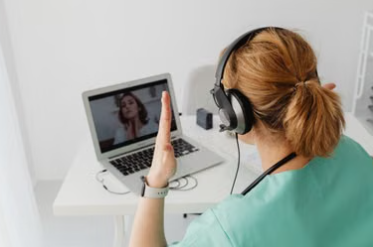
Start with the purpose of the visit
The same health condition can require different formats at different moments. A routine discussion about how a stable treatment is working may fit virtually. New or worsening symptoms related to that condition may require examination or testing. A rash may be visible on video, but poor lighting, image quality, its location, associated symptoms, or the need to feel the skin may make an in-person assessment necessary.
Define the job of the appointment before deciding how it should occur. Common jobs include:
- discussing a stable condition or previously agreed plan;
- reviewing how a medicine is working or whether side effects are occurring;
- explaining results that have already been clinically reviewed;
- providing counselling, education, or some forms of mental health care;
- deciding whether a new symptom needs an examination or test;
- performing a screening or physical examination;
- collecting blood, urine, swab, or another sample;
- completing a vaccination, dressing change, injection, procedure, or treatment; or
- assessing a potentially urgent change.
The first four may often be possible remotely, depending on the person and clinical context. The remaining tasks usually require a physical location or may require rapid escalation. A virtual encounter can still help clarify where and how soon to go, but it should not become an avoidable extra step when the need for physical assessment is already clear.
When booking, describe the goal rather than requesting a format based only on convenience: “I need to discuss a new symptom and may need an examination,” or “This is a follow-up to review a stable plan; no procedure was mentioned.” Clinic staff may use that information to select an appropriate appointment type.
Situations that often work well virtually
Virtual care is commonly useful when the main clinical work is conversation, observation that can be done adequately by video, review of existing information, or monitoring with suitable home equipment. Examples may include:
- follow-up for some stable long-term conditions;
- review of a treatment response or possible medicine effects;
- discussion of completed test results and the next step;
- some mental health, counselling, rehabilitation, nutrition, or education visits;
- specialist follow-up that does not require a new physical examination;
- an initial discussion to determine whether and where an in-person assessment is needed;
- care planning involving a patient, caregiver, and several professionals in different locations; and
- remote monitoring when the care team has provided or approved the device and explained what readings mean.
This is not a promise that every such appointment can remain remote. A medicine review may reveal a side effect that needs vital signs or an examination. A counselling visit may identify an immediate safety concern. A stable-condition follow-up may show that laboratory monitoring is overdue. The format is suitable only while it still supports a safe decision.
Continuity matters. A virtual visit with a clinician who knows your history and can see prior notes, current medicines, allergies, and results may accomplish more than an isolated visit with someone who lacks those records. When using an on-demand service, ask whether its note, prescriptions, referrals, and follow-up plan will be shared with your regular clinician and how you can obtain a copy.
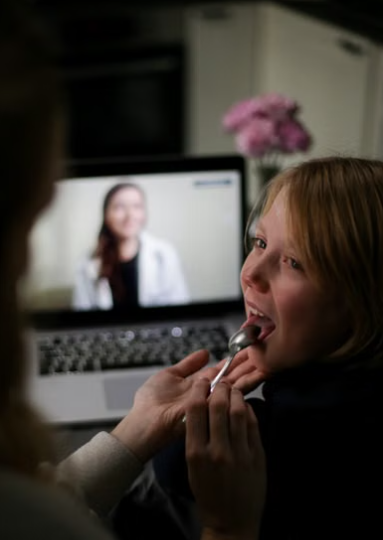
When in-person care is more likely to be the better starting point
Choose or request in-person care when the purpose clearly depends on physical capabilities that a remote visit cannot provide. Examples include situations where a clinician may need to:
- listen directly to the heart, lungs, or abdomen;
- feel an area for tenderness, swelling, temperature, a pulse, a mass, or joint stability;
- examine the ears, throat, eyes, mouth, skin, nerves, strength, balance, or circulation more closely than video allows;
- obtain reliable vital signs when home measurements are unavailable or questionable;
- collect a specimen or perform bloodwork, imaging, or another diagnostic test;
- examine a new injury or assess whether imaging, immobilization, wound care, or another intervention is needed;
- complete a preventive physical examination or screening procedure;
- provide a vaccine, injection, treatment, dressing, device fitting, or minor procedure; or
- respond immediately if the assessment uncovers instability.
New symptoms are not automatically unsuitable for virtual care, and familiar symptoms are not automatically safe to manage remotely. What matters is the information and action required. A video view may add useful information, but it cannot reproduce every element of an in-person examination. Home devices can help only when they are appropriate, working, used correctly, and interpreted in context.
If you already know a test or procedure is due, ask whether it can be coordinated with the appointment rather than completing a virtual discussion and then making a second trip unnecessarily. Conversely, when travel is difficult, ask whether history-taking can occur virtually before a shorter, focused physical visit.
Do not use a scheduled virtual visit as an emergency waiting room
Virtual primary care is generally designed for non-emergency concerns. If symptoms may be severe or rapidly dangerous, use local emergency guidance rather than waiting for a video link, portal response, or routine callback.
Examples that may require emergency assessment include severe difficulty breathing, signs of stroke, severe or persistent chest pain, major bleeding, loss of consciousness, a severe allergic reaction, serious injury, or another rapid change that appears life-threatening. Mental health or substance-use crises with immediate danger also require the appropriate local crisis or emergency response.
This list cannot identify every emergency or determine the seriousness of an individual case. Follow instructions previously given by your care team and use local emergency services when needed. If you are uncertain and the situation is not obviously life-threatening, a licensed health advice line may help identify the appropriate level of care where that service exists.
If a person becomes acutely unwell during a virtual visit, the clinician needs to know the person’s physical location and how to reach local help. Confirm your location and callback number at the beginning, especially if you are travelling or are not at your usual address.
Understand what phone, video, messaging, and monitoring can each do
“Virtual care” includes several different tools. They are not interchangeable.
| Format | Useful for | Important limitation |
|---|---|---|
| Phone | Conversation, follow-up, counselling, triage | No visual information; harder to demonstrate movement or a visible finding |
| Video | Conversation plus appearance, movement, environment, or a visible concern | Image, lighting, angle, connection, and privacy can limit assessment |
| Secure messaging or portal | Nonurgent updates, simple questions, instructions, documents | Delayed response; limited back-and-forth; not suitable for emergencies |
| Remote monitoring | Trends in approved home measurements | Device accuracy, technique, transmission, and clinical context matter |
A video appointment may be preferable when observation matters. A phone call may be more accessible when bandwidth is poor, video creates disability-related barriers, or the topic does not require visual information. Secure messaging can document a straightforward nonurgent question but should not be assumed to receive immediate clinical review.
Ask what to do if the connection fails. A clinic may switch to telephone, reconnect, reschedule, or direct you to physical care depending on what the visit must accomplish. A technical failure should not silently end an urgent assessment.
Check whether the virtual service connects to real follow-up
Convenient access is more useful when it leads to a complete care pathway. Before using a service—especially one outside your usual clinic—consider:
- Is the professional licensed or otherwise authorized to provide care where I am physically located?
- Can the clinician see relevant records, or can I provide them securely?
- Will I receive a visit summary and clear next step?
- Can the service order locally usable tests, imaging, prescriptions, or referrals when appropriate?
- How will the note reach my regular care team?
- If I need an examination, does the service have a practical pathway to nearby in-person care?
- What fees, coverage limits, or geographic restrictions apply?
Licensing, insurance coverage, prescribing, and referral rules differ by country, state, province, territory, health plan, and service. Do not assume that a clinician who can appear on your screen can necessarily prescribe, order, or refer where you are located. Confirm before paying or relying on the visit for a time-sensitive need.
In Alberta, for example, the College of Physicians & Surgeons of Alberta requires physicians providing virtual care to meet the same standard as in-person care and to have a way to arrange physical assessment when necessary. Other jurisdictions set their own requirements. Treat local rules as local, not universal.
Make sure access is genuinely accessible
Virtual care can reduce transportation, distance, mobility, infection-exposure, work, and caregiving barriers. It can also create new ones. A smartphone and appointment link do not guarantee meaningful access.
Consider whether you have:
- a reliable device, power source, connection, camera, microphone, and speaker;
- a private enough place to discuss health information;
- captions, screen-reader compatibility, relay service, sign-language interpretation, or other disability support if needed;
- a qualified medical interpreter or preferred-language support;
- enough comfort with the platform to join and communicate;
- a way to show a movement or body area safely if requested; and
- help using the technology without surrendering control of the conversation.
Ask the clinic for an alternative if the platform is inaccessible. Telephone, an accessible platform, an interpreter, caregiver participation with consent, a community access point, or an in-person visit may be more appropriate. Difficulty using technology is not evidence that the patient is uncooperative or that the health concern matters less.
Video is not always superior to phone. It adds visual information but may demand more bandwidth, technology skill, and privacy. The right tool is the least burdensome one that still permits safe care.
Protect privacy without making perfection a condition of care
Use the clinic’s approved platform or contact route when possible. Avoid public Wi-Fi for sensitive discussions if a safer connection is available, use device security, and do not post appointment links publicly. Headphones can reduce who overhears the clinician, though they do not prevent people nearby from hearing you.
At the beginning, confirm who is present on both sides. If you want a family member, caregiver, or interpreter involved, state their role and consent to their participation. If someone may be listening without your agreement, tell the clinician when it is safe to do so. You can ask to pause, switch formats, or reschedule if privacy is inadequate for the topic.
Perfect privacy is not available to everyone. A person in crowded housing, at work, in an institution, or experiencing coercion may not be able to create a private room. The solution should be practical and safety-aware, not blame. The clinic may be able to arrange an in-person space, a different time, a shorter neutral conversation followed by a safer contact, or another approved option.
Do not record a virtual visit unless the clinician and everyone involved agree and local law and policy permit it. If you want an accurate record, ask instead for a visit summary, written instructions, or permission to take notes.
Prepare only what the format needs
Virtual care does not require turning your home into a clinic. Use home devices only if the care team requests or accepts them and you know how to use them. A blood-pressure cuff, thermometer, scale, glucose meter, pulse oximeter, or other device may provide useful information in some situations, but consumer devices vary and a number without context can mislead.
For a video visit:
- join early enough to solve connection problems;
- place the device on a stable surface where your face and any requested movement can be seen;
- use adequate light and avoid bright light behind you;
- keep the clinic’s phone number available if the link fails;
- have your current location and callback number ready;
- keep relevant medicine containers, measurements, or documents nearby; and
- avoid driving or doing another task during the appointment.
If the clinician asks you to press on an area, move a joint, walk, or show a visible concern, stop if it causes significant pain, dizziness, instability, or risk of falling. Do not perform a home examination that feels unsafe. Say what you cannot do or what the camera cannot show.
Know when to convert the visit to in-person care
During a virtual appointment, a transition is reasonable when:
- the clinician cannot obtain the information needed for a safe decision;
- the picture, sound, connection, language support, or environment is inadequate;
- findings need hands-on confirmation;
- vital signs or home readings are unavailable, inconsistent, or concerning;
- testing, imaging, a sample, treatment, or a procedure is needed;
- symptoms are more severe or progressing faster than expected;
- the diagnosis or treatment remains too uncertain for remote management; or
- either the clinician or patient identifies a safety or privacy concern that the format cannot resolve.
Before ending, clarify:
- Where should I go?
- How soon should I be seen?
- What should make me seek more urgent help?
- Will the virtual note or referral be sent there?
- Who remains responsible for follow-up?
An instruction to “get checked in person” is incomplete without urgency and destination. The appropriate next step might be the clinician’s office, a laboratory, imaging service, another primary care setting, urgent care, or an emergency department. The choice depends on the clinical situation and local system.

Use a simple decision pattern
When the choice is unclear, use this sequence:
Choose virtual care first when the problem is non-emergency, the visit is mainly conversational or follow-up based, needed records are available, and the service can arrange physical care if the remote assessment reaches its limit.
Choose in-person care first when a hands-on examination, reliable measurement, test, sample, imaging, procedure, or immediate treatment is predictably part of the visit.
Use urgent or emergency care when symptoms are severe, rapidly worsening, or potentially life-threatening, according to local guidance.
Ask the clinic to help choose when you cannot tell. Describe what is new, how quickly it changed, what the appointment needs to accomplish, and any access barriers. The format can then be matched to the task rather than selected by habit.
Decision Summary
Virtual care is a healthcare setting, not a lesser version of care and not a replacement for every physical visit. It works best when the next decision can be made from conversation, existing information, appropriate visual observation, or reliable remote measurements—and when there is a clear path to in-person care if needed.
In-person care is usually the stronger starting point when the visit predictably requires a hands-on examination, dependable vital signs, laboratory work, imaging, specimen collection, a procedure, or immediate treatment. Severe or rapidly worsening symptoms should not wait for a routine virtual appointment.
Also judge the service, not just the screen. Useful virtual care should connect with records, prescriptions, tests, referrals, and follow-up. It should fit the patient’s language, disability, technology, and privacy needs rather than creating a new barrier.
If a virtual visit leads to a physical assessment, that transition is part of good care. The goal is not to keep every encounter online or to make every patient travel. It is to use the format that can safely complete the next healthcare decision.
FAQ
Can a clinician diagnose a new problem through virtual care?
Sometimes. A detailed history and suitable visual information may be enough to form an assessment or begin a plan. Other problems require a physical examination or testing before a safe diagnosis or treatment decision can be made. Ask what remains uncertain and whether in-person follow-up is needed.
Is video always better than a telephone appointment?
No. Video can help when appearance, movement, or a visible finding matters. Telephone may be sufficient or more accessible when the visit is mainly conversational, bandwidth is limited, or video creates disability or privacy barriers. The best format is the one that supplies the necessary clinical information safely.
What if the clinician tells me to come in after a virtual visit?
That does not mean the visit was wasted. The virtual portion may have clarified the concern and next destination. Confirm where to go, how soon, what warning signs require faster action, whether the note will be transferred, and who will follow up.
Can I use virtual care while travelling?
Possibly, but licensing, prescribing, coverage, and emergency arrangements often depend on where you are physically located. Tell the service your location before the visit and confirm that the clinician can legally and practically provide the care you need there.
Are home-device readings as reliable as measurements in a clinic?
Not automatically. Reliability depends on the device, fit, technique, maintenance, timing, and clinical context. Use devices the care team considers appropriate, follow instructions, and report when a reading seems inconsistent with how you feel or with repeated measurements.
What if I do not have private space or reliable internet?
Tell the clinic. It may offer telephone care, an accessible platform, a different time or location, interpreter or disability support, or an in-person appointment. Virtual care should not become the only route when the technology or environment prevents meaningful participation.
Health Disclaimer
This article provides general educational information and does not determine whether virtual, in-person, urgent, or emergency care is appropriate for any individual symptom or condition. Availability, licensing, coverage, privacy, prescribing, referral, and technology rules vary by jurisdiction and service. Follow instructions from qualified healthcare professionals and local health authorities. Do not delay emergency assessment for severe, rapidly worsening, or potentially life-threatening symptoms while waiting for a virtual appointment or online reply.
References
- HealthLink BC. “Understanding Virtual Care (Telemedicine).” https://www.healthlinkbc.ca/healthwise/understanding-virtual-care-telemedicine
- MedlinePlus, U.S. National Library of Medicine. “Telehealth.” https://medlineplus.gov/telehealth.html
- U.S. Department of Health and Human Services, Telehealth.HHS.gov. “What Should I Know Before My Telehealth Visit?” https://telehealth.hhs.gov/patients/what-should-i-know-before-my-telehealth-visit
- Health Canada. “Enhancing Equitable Access to Virtual Care in Canada: Principle-Based Recommendations for Equity.” https://www.canada.ca/en/health-canada/corporate/transparency/health-agreements/bilateral-agreement-pan-canadian-virtual-care-priorities-covid-19/enhancing-access-principle-based-recommendations-equity.html
- College of Physicians & Surgeons of Alberta. “Virtual Care.” https://cpsa.ca/physicians/standards-of-practice/virtual-care/
- Canadian Medical Protective Association. “Providing Safe Care—Virtually and in Person.” https://www.cmpa-acpm.ca/en/advice-publications/browse-articles/2021/providing-safe-care-virtually-and-in-person
- Canadian Medical Protective Association. “Providing Safe Virtual Care.” https://www.cmpa-acpm.ca/en/education-events/cmpa-webinars/providing-safe-virtual-care
- MedlinePlus, U.S. National Library of Medicine. “When to Use the Emergency Room—Adult.” https://medlineplus.gov/ency/patientinstructions/000593.htm
More in This Cluster: Primary Care Navigation
- Family Doctor vs Walk-In Clinic vs Urgent Care: Where Should You Go?
- How to Prepare for a Doctor Appointment Without Overloading the Visit
- What Symptoms and Medications Should You Record Before a Healthcare Visit?
- How Can You Ask for Clarification During a Healthcare Visit?
- When Should You Consider a Second Medical Opinion?
- How Should You Follow Up on Medical Test Results?
- When Is Virtual Care a Good Fit—and When Is It Not? (you are here)