Bonds are one of the most common building blocks of a diversified portfolio, yet many beginner investors skip learning about them because stocks tend to get more attention. Understanding what a bond actually is — and how US and Canadian government bonds differ slightly in structure — makes it much easier to decide whether and how they might fit into a broader financial plan.
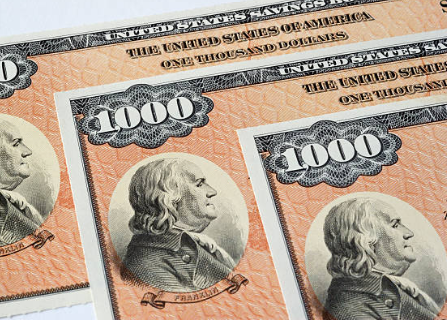
What a Bond Actually Is
At its core, a bond is a loan. When you buy a bond, you’re lending money to the issuer — a government, municipality, or corporation — in exchange for regular interest payments (called the “coupon”) and the return of your original investment (the “principal” or “face value”) at a set future date (the “maturity date”).
Government bonds specifically are loans made to a national government, generally considered among the lowest-risk types of bonds available, since they’re backed by the government’s ability to tax and control its own currency.
Key Bond Terms Explained Simply
- Face value (par value): The amount you’ll be repaid at maturity, and the amount interest payments are calculated from
- Coupon rate: The interest rate the bond pays, usually as a percentage of face value, typically paid semi-annually
- Maturity date: When the bond issuer repays the full face value back to the bondholder
- Yield: The actual return an investor earns, which can differ from the coupon rate depending on whether the bond was bought above or below face value

US Government Bonds: Treasuries
In the United States, government debt is issued as what’s collectively called “Treasuries,” divided by how long until maturity:
- Treasury Bills (T-Bills): Short-term, maturing in a year or less
- Treasury Notes (T-Notes): Medium-term, typically 2–10 years
- Treasury Bonds (T-Bonds): Long-term, typically 20–30 years
These can generally be purchased directly through TreasuryDirect (the US government’s own platform) or through a brokerage account, and interest earned is subject to federal tax but generally exempt from state and local taxes.
Canadian Government Bonds
In Canada, the equivalent government debt is issued by the federal government and is commonly available in a few forms:
- Government of Canada Bonds: Similar structure to US Treasury Notes/Bonds, with a range of maturities
- Treasury Bills: Short-term equivalents to US T-Bills
- Guaranteed Investment Certificates (GICs): Not technically government bonds, but a commonly compared low-risk fixed-income option offered through banks, often confused with bonds by beginner investors since both offer a fixed return over a set term
Canadian government bonds are generally purchased through a brokerage account rather than a direct-to-government platform, and interest income is taxed as regular income.

Why Bond Prices Move Inversely to Interest Rates
This is one of the most confusing concepts for beginners: when interest rates rise, existing bond prices generally fall, and vice versa. This happens because a bond’s fixed coupon rate becomes less attractive compared to new bonds issued at higher rates, so the market price of the older, lower-rate bond adjusts downward to remain competitive. This relationship is why bonds aren’t automatically “safe” from all forms of loss — they carry interest rate risk, even though they don’t carry the same type of risk as stocks.
How Bonds Are Commonly Used in a Portfolio
Bonds are often included in a portfolio for a few structural reasons:
- Lower volatility relative to stocks, particularly government bonds
- Regular income through coupon payments
- Diversification, since bonds and stocks don’t always move in the same direction
- Capital preservation, particularly for investors closer to needing the money (like near retirement)
What NOT to Do
- Don’t assume “government bond” automatically means “zero risk” — interest rate risk and inflation risk still apply
- Don’t confuse a GIC/CD with a government bond — they’re structured differently even though both are often grouped as “low-risk fixed income”
- Don’t buy individual bonds without understanding the maturity date and what happens if you need to sell before then (selling early means accepting the current market price, which may be less than face value)
- Don’t treat this article as guidance on which specific bonds or bond funds to buy
FAQ Section
Are government bonds completely risk-free? Not entirely — while government bonds (especially US Treasuries and Government of Canada bonds) are considered very low credit risk, they still carry interest rate risk (price changes based on rate movements) and inflation risk (fixed payments losing purchasing power over time).
What’s the difference between a bond and a bond fund/ETF? An individual bond has a specific maturity date and face value. A bond fund or ETF holds many bonds together and doesn’t have a single maturity date, meaning its price fluctuates continuously based on the underlying bonds’ values rather than being repaid at a fixed date.
Is a GIC the same as a government bond in Canada? No — a GIC (Guaranteed Investment Certificate) is a deposit product offered by banks and credit unions, not a government-issued bond, though both are often grouped together as low-risk, fixed-return options by beginner investors.
How do I actually buy government bonds as a beginner? In the US, TreasuryDirect allows direct purchase of Treasuries; a standard brokerage account also offers access to Treasuries and bond funds. In Canada, Government of Canada bonds are typically purchased through a brokerage account rather than directly from the government.
This article is for general informational and educational purposes only and does not constitute financial or investment advice. Bond values and yields fluctuate, and all investments carry risk, including potential loss of principal. Please consult a licensed financial advisor for guidance specific to your situation.