A crowded cleaning cabinet can create the impression that every surface needs its own bottle. In many homes, a small group of dependable tools and products covers ordinary messes, with specialty items reserved for surfaces and problems that actually require them.
The goal is not to own the fewest possible supplies. It is to have enough to clean effectively without buying duplicates, using the wrong product, or storing chemicals you rarely understand or need.
This article helps you build that practical kit. It does not set a cleaning schedule, assign household work, teach a whole-home deep-cleaning order, or provide a recovery plan for a home that has fallen behind.
The practical rule: Start with the jobs and surfaces in your home—not the cleaning aisle.
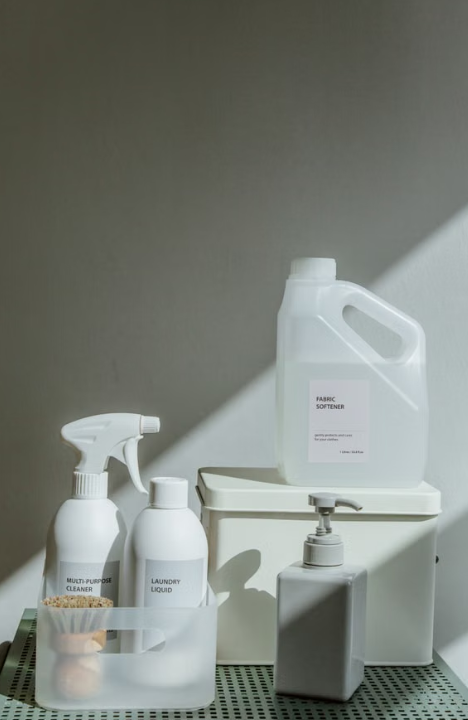
Begin With Surfaces, Messes, and Constraints
Before buying anything, make a short inventory of what changes the kind of cleaning you must do.
Note the major surfaces
Look for:
- sealed or unsealed stone;
- laminate, quartz, tile, or solid-surface counters;
- stainless steel or other appliance finishes;
- hardwood, luxury vinyl, laminate, tile, or carpeted floors;
- painted, glass, acrylic, fiberglass, porcelain, or natural-stone bathroom surfaces;
- leather, wood, or fabric furniture; and
- manufacturer-treated surfaces such as screens, cooktops, and specialty flooring.
The material matters because a product may dull, discolor, etch, swell, or strip an incompatible surface. “Natural,” “heavy duty,” and “multipurpose” are not guarantees of compatibility.
Identify recurring messes
Most homes regularly deal with some combination of:
- loose dust, hair, and crumbs;
- grease and food residue;
- soap film and mineral deposits;
- tracked-in soil;
- spills and sticky residue;
- pet hair or accidents; and
- germs during illness or a higher-risk situation.
Buy for recurring problems first. A specialty bottle for a hypothetical stain is less useful than a washable cloth you will use several times a week.
Account for the people and space
Consider fragrance sensitivity, asthma, allergies, pets, children, storage security, ventilation, physical reach, grip strength, and the weight of tools. A large bulk container may cost less per ounce but be difficult to lift, pour, store safely, or finish before the household’s needs change.
Nora’s apartment has sealed counters, vinyl flooring, a glass shower door, and no pets. She does not need wood polish, carpet shampoo, stone cleaner, or several floor formulas. Her inventory points toward a compact kit. Marcus has hardwood, a wool rug, a dog, and a stone vanity; he has legitimate surface-specific needs that Nora does not.
The right kit is determined by the home. It is not a universal shopping haul.
Build a Small Core Tool Kit
Tools remove soil and reduce the amount of product required. A useful basic set can remain modest.
Washable cloths
Keep several washable microfiber or soft cotton cloths for dusting, wiping, and drying. Color coding is optional, but separating bathroom cloths from kitchen or general-use cloths can make handling clearer.
Choose cloths that can be laundered according to their care instructions. Retire one when it remains greasy, holds odor after washing, frays enough to leave debris, or develops embedded grit that could scratch.
A non-scratch scrubber and a detail brush
A soft sponge or non-scratch scrub pad adds friction for stuck residue. A small brush can reach grout lines, faucet bases, tracks, and other narrow areas. Check the surface instructions before using an abrasive side or stiff bristle; “scrub” does not need to mean “scratch.”
A floor tool matched to the home
Choose one primary dry-soil tool based on the floor area and household:
- a vacuum for substantial carpet, rugs, pet hair, or mixed flooring;
- a broom and dustpan for mostly hard floors and simple debris; or
- a dry mop for open hard-floor areas where fine dust is the main problem.
Some homes reasonably need both a vacuum and a broom if each solves a recurring problem. Several nearly identical sweepers may be unnecessary.
For damp cleaning, use a mop or reusable floor pad compatible with the flooring manufacturer’s guidance. More water is not always better, especially on wood and some laminate floors.
A bucket or portable caddy
A bucket can hold cleaning water but should never be left with liquid where a young child could reach it. A caddy can make the kit easier to return to secure storage. You may need one or the other, not necessarily both.
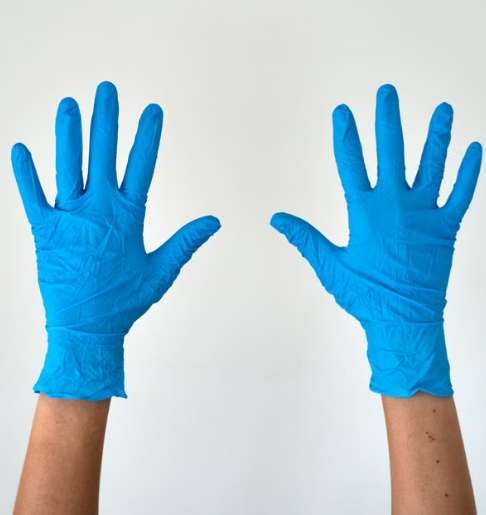
Protective equipment required by the product
Keep the gloves, eye protection, or other equipment that the labels of your chosen products call for. Do not assume one thin disposable glove is appropriate for every chemical or task. Product instructions—not habit—should determine protection and ventilation.
Choose a Core Product Set
A starting product set can be built around a few functions rather than a bottle for every room.
A general cleaner
A general-purpose cleaner can cover many washable, compatible hard surfaces. Read the label for permitted surfaces, dilution, rinsing, protective equipment, and ventilation. “Multipurpose” does not mean it is safe for every material in the home.
If one product works on the household’s routine counters, sealed fixtures, cabinet exteriors, and other washable surfaces, separate kitchen and living-room sprays may be redundant.
Dish soap or another mild detergent
A small amount of dishwashing liquid and water can clean many forms of grease and ordinary residue when the surface manufacturer and product directions permit it. It should not automatically be treated as a universal formula, and adding other chemicals does not make it safer or more effective.
Using dish soap for compatible occasional cleaning can prevent another purchase. Keep it in its labeled container and avoid an unlabeled premixed bottle that others could misuse.
A toilet-bowl product
The toilet bowl is one case where a dedicated product and tool may be practical. Use the product only as labeled, and never add another cleaner while residue from a different chemical may remain.
A floor-cleaning product, if the floor requires one
Do not select floor cleaner by fragrance or a generic “hard floor” claim alone. Check the flooring manufacturer’s maintenance directions and the cleaner label. The correct product may be a specific compatible solution, a very limited amount of moisture, or a method that does not require a separate chemical at all.
Laundry detergent
Use laundry detergent according to the washer and product directions rather than assuming more produces cleaner fabric. Store it—especially single-load packets—securely in its original container.
This is a starting point, not a mandatory five-product list. A studio may require less; a home with delicate materials may need carefully chosen additions.
Add Specialty Products Only for a Defined Reason
A specialty product earns space when it solves a recurring problem that the core kit cannot handle safely or adequately.
Use a three-question test:
- What exact surface or soil requires this?
- Why is the current product unsuitable?
- Will the product be used often enough to store and manage safely?
Reasonable additions may include:
- a manufacturer-approved cleaner for natural stone;
- a cleaner specified for a particular wood finish;
- a carpet or upholstery spot product compatible with the material;
- an enzyme-based product for recurring pet accidents;
- a product intended for mineral deposits where the surface permits it;
- a cooktop cleaner required for a specialty surface; or
- a disinfectant for situations in which disinfection is actually warranted.
Do not assume vinegar, baking soda, bleach, alcohol, peroxide, or another familiar substance is automatically safe. Acids can harm stone and finishes, abrasives can scratch, and combining substances can create hazards.
Elena considers buying a stainless-steel spray after seeing streaks on her refrigerator. The manufacturer’s instructions allow a soft cloth with a mild detergent solution for routine cleaning. She tries that first and decides a separate polish would add storage without solving a remaining problem. Later, she buys an enzyme product because ordinary cleaning does not fully address repeated pet accidents. One specialty purchase passes the test; the other does not.
Separate Cleaning From Disinfecting
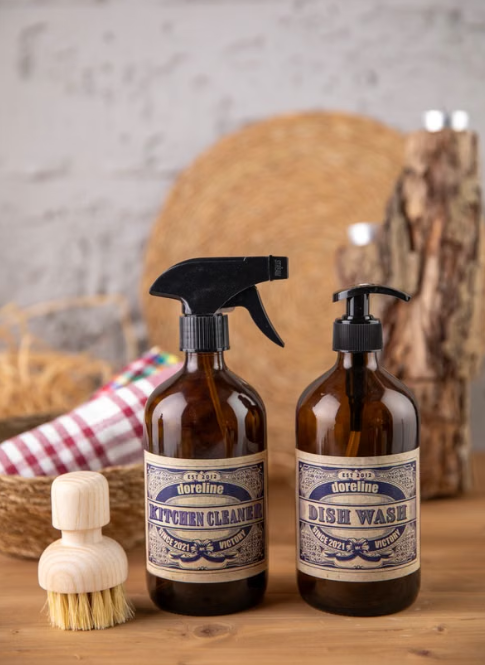
Cleaning and disinfecting are not interchangeable.
Cleaning removes dirt and many germs from surfaces with soap or detergent and water. The CDC states that regular cleaning is enough in most situations. Disinfection may be appropriate when someone is sick or when a person at higher risk of severe illness has recently been in the home.
That distinction matters when choosing supplies. A disinfectant need not become the default for ordinary wiping. If you keep one, verify its surface and target use, clean first when directed, observe the required contact time, and follow ventilation and protection instructions.
In the United States, surface disinfectants are regulated antimicrobial pesticides. An EPA registration number shows that the product is registered; it does not mean every registered product is appropriate for every surface, organism, household, or use method. The label defines those limits.
EPA’s Safer Choice label identifies cleaning products whose ingredients meet program criteria. EPA uses a separate Design for the Environment label for qualifying antimicrobial products. Neither replaces surface or safe-use directions.
Theo routinely uses a general cleaner on compatible household surfaces. When a family member develops a contagious illness, he checks current public-health guidance and the disinfectant label rather than spraying every object indiscriminately. He uses the product only on listed surfaces, follows its contact time, and returns to ordinary cleaning when the higher-risk situation passes.
Let the Label Set the Rules
The front of a bottle is marketing and summary information. The complete label tells you how the product is meant to be used.
Before buying, check:
- intended surfaces and prohibited surfaces;
- whether the product is concentrated or ready to use;
- dilution and application instructions;
- required contact or dwell time;
- whether rinsing is required, especially on food-contact surfaces;
- ventilation and protective-equipment directions;
- storage and disposal instructions; and
- relevant warnings.
If the label cannot be read before purchase, look for the manufacturer’s official label. A social-media recipe or retailer summary is not a substitute.
Before broad use, test a product in a small, inconspicuous area when the surface guidance permits it. A spot test cannot prove long-term compatibility, but it may reveal immediate discoloration, dulling, texture change, or finish damage.
Never mix cleaning products unless the label explicitly instructs you to do so. In particular, bleach must not be mixed with ammonia, acids, or other cleaners. Dangerous gases can result. Even two individually familiar products may be unsafe together.
When changing products on a surface, remove prior residue as directed. Do not layer products for “extra strength.”
Store a Small Kit Safely
Reducing the number of products makes safe storage easier, but a small kit still needs controls.
- Keep cleaners in their original labeled containers.
- Secure chemicals out of children’s reach; CPSC recommends a locked cabinet or box.
- Keep products away from food and medication.
- Close child-resistant packaging correctly after every use.
- Store products within temperature and position limits on their labels.
- Keep cloths and brushes dry enough to avoid persistent odor and deterioration.
- Do not leave a bucket containing water unattended around a young child.
- Keep incompatible products separated if their labels require it.
Avoid pouring cleaner into a decorative bottle or drink container. The new container may lack the original warnings, ingredient information, directions, and child-resistant closure, and another person may mistake its contents.
Storage location should also be usable. If a person must balance on a chair to reach a frequently used product, or if a heavy bottle sits above eye level, the arrangement creates another risk. Secure does not have to mean inaccessible to the adults who use the kit.
Prevent Duplicate Purchases
Before adding a product, compare its function with what you already own.
Create a short inventory with four fields:
| Item | Primary job | Compatible surfaces | Replace or review when |
|---|---|---|---|
| General cleaner | Routine washable surfaces | As listed on label | Empty, expired if dated, or label unreadable |
| Mild detergent | Grease and ordinary residue | Where product and surface directions permit | Empty or product condition changes |
| Toilet product | Toilet-bowl cleaning | As listed on label | Empty or no longer usable |
| Floor product | Damp floor cleaning | Specific installed flooring | Empty or flooring guidance changes |
| Specialty item | One defined recurring need | Specific surface or material | Need ends, product expires, or label is unreadable |
The “primary job” field exposes overlap. If three sprays all claim routine cleaning of the same compatible surfaces, finish the safest suitable one before replacing it. Do not combine leftovers to save space.
Use a one-in, one-out rule for ordinary duplicates: replace a functioning category only when the current item is nearly finished, unsuitable, damaged, recalled, or no longer safely identifiable. Specialty products should be reviewed when the surface, appliance, pet situation, or household need changes.
Concentrates or bulk sizes may reduce unit cost, but only if you can dilute, label, store, and use them correctly. A smaller ready-to-use product may be better when use is infrequent or simpler handling matters.
Samira photographs the front and back labels of the products already under her sink and notes each primary job. She discovers two unopened bathroom sprays with nearly identical uses and a stone cleaner left from a previous apartment that has no stone. She keeps one compatible bathroom product, does not repurchase it until needed, and disposes of the unwanted cleaner according to local requirements and its label.
Know When Tools and Products Need Attention
Replacement should be based on condition, performance, safety information, and manufacturer directions—not a universal calendar.
Replace or stop using an item when:
- a bottle leaks or its closure no longer works;
- the label is missing or cannot be read;
- a product has passed a stated expiration date;
- its color, odor, separation, or consistency changes in a way the manufacturer does not identify as normal;
- a brush, pad, or cloth has embedded grit or causes surface damage;
- a vacuum filter, mop pad, or other component has reached its specified service limit;
- the product has been recalled; or
- the relevant surface manufacturer no longer recommends it.
For unwanted chemicals, follow the label and local household hazardous-waste rules. Do not pour products together, improvise disposal, or assume that every cleaner belongs in a drain or household trash. Local requirements vary.
A Practical Starter Decision
If you are building a kit from almost nothing, make the first purchase round deliberately small:
- Identify the home’s main surfaces and recurring messes.
- Choose washable cloths, a non-scratch scrubber, a detail brush, and the floor tool you will actually use.
- Add a compatible general cleaner or mild detergent approach for routine soil.
- Add only the dedicated toilet and floor products the home needs.
- Keep required protective equipment with the products.
- Add a specialty product only after naming the unsolved surface or mess.
- Store everything in original containers in a secure, workable location.
Use the kit before expanding it. The first few cleaning sessions will show whether a tool is uncomfortable, a surface needs different care, or a recurring problem remains unsolved. That evidence is more useful than trying to anticipate every possible stain in one shopping trip.
Decision Summary
An essential cleaning kit is specific to the home, not the size of a store display.
- Inventory surfaces, recurring messes, sensitivities, and storage limits before shopping.
- Start with washable cloths, gentle scrubbing tools, an appropriate floor tool, and only the protection required by product labels.
- Choose products by function and compatibility rather than by room-themed packaging.
- Add specialty products only for a defined, recurring need the core kit cannot solve safely.
- Treat cleaning as the routine default and reserve disinfectants for appropriate situations.
- Read complete labels, test compatibility where appropriate, and never mix products unless expressly directed.
- Store chemicals securely in their original containers.
- Track each item’s primary job so duplicates are visible.
- Replace supplies based on condition, instructions, expiration, recall, and actual need.
The best kit is not necessarily the smallest or most powerful. It is the one household members can understand, store safely, and use on the home’s real surfaces without unnecessary complexity.
FAQ
How many cleaning products does an average home need?
There is no reliable universal number. Many homes can cover routine work with a general cleaner or mild detergent, a toilet product, an appropriate floor method, and a few tools. Specialty surfaces, pets, stains, or disinfection needs may justify additions.
Do I need a different cleaner for every room?
Usually not. Choose products by soil and surface compatibility. One properly labeled general cleaner may work across several rooms, while a specialty surface may need its own product.
Is vinegar a safe all-purpose cleaner?
No substance is safe for every surface. Acidic products can damage some stone, grout, finishes, and appliance components. Follow the surface manufacturer’s guidance and never mix vinegar with bleach or other cleaners.
Do I need disinfectant for normal household cleaning?
The CDC says regular cleaning is enough in most situations. Disinfection may be useful during illness or when someone at higher risk has recently been present. Follow current guidance and the registered product label.
Are EPA Safer Choice products disinfectants?
Safer Choice generally identifies qualifying cleaners and related products made with ingredients meeting EPA criteria. Antimicrobial disinfectants use a separate EPA registration framework, and qualifying products may carry the Design for the Environment label.
Should I buy cleaning products in bulk?
Only when the unit savings outweigh the handling and storage burden. Bulk or concentrated products require secure space, readable labels, correct dilution, and enough use to avoid keeping unnecessary chemicals for a long time.
When should I replace reusable cleaning tools?
Use condition and manufacturer instructions. Replace tools that remain contaminated or odorous after proper washing, contain scratching debris, have damaged working surfaces, or no longer perform safely.
Sources
- CDC – When and How to Clean and Disinfect Your Home
- EPA – Safer Choice
- EPA – Identifying Greener Cleaning Products
- EPA – Selected EPA-Registered Disinfectants
- CPSC – Poison Prevention Information Center
- Washington State Department of Health – Dangers of Mixing Bleach with Cleaners
More in This Cluster: Home Cleaning Systems
- How to Build a Weekly Cleaning Schedule That Fits Your Life
- Daily, Weekly, and Monthly Cleaning Tasks Explained
- How to Clean Your Home When You Are Short on Time
- A Practical Room-by-Room Deep Cleaning Order
- How to Divide Cleaning Work in a Household
- Essential Cleaning Supplies: What You Actually Need (you are here)
- How to Restart Cleaning After Falling Behind