A snack station can reduce repeated questions and make everyday food easier to find. It can also place choking hazards within a young child’s reach, separate an allergen label from its package, or turn a pantry shelf into an unlimited grazing area. The useful version is not simply a basket labelled “snacks.” It is a small household system with boundaries for access, preparation, storage, and replenishment.
Quick decision: Design the station for the person who will use it. Divide food into Self-Serve, Ask First, and Adult-Prepared groups based on developmental ability, allergies, refrigeration, package instructions, household routines, and supervision needs. Keep original labels available, protect allergen controls, use child-safe placement, and stock only what the household can rotate before quality or safety becomes uncertain.
Define the Problem the Station Should Solve
Begin with a specific friction point rather than a storage product.
The household may need to:
- help an older child prepare a school snack independently;
- reduce interruptions while a parent works or cooks;
- give an adult with limited reach easier access;
- prevent several open packages of the same food;
- make refrigerated options as visible as shelf-stable ones;
- distinguish everyday choices from occasional items;
- keep allergen-controlled foods identifiable; or
- create a predictable snack time without continuous grazing.
These goals lead to different setups. A station for packing lunches may sit near reusable containers and the refrigerator. A station for a teenager after sports may need larger portions and foods that require refrigeration. A young child’s feeding routine may require every snack to remain adult-prepared even if cups and napkins are accessible.
Write one sentence before moving anything: “This station will help ___ do ___ at ___.” If the sentence has no person, action, or moment, the project is still decoration rather than a working plan.
Assign Access by Ability, Not by Age Alone
Age can inform food guidance, but it cannot establish that every child of that age can safely select, open, prepare, and eat a snack alone. Chewing skill, swallowing, allergies, developmental stage, impulse control, mobility, communication, and the need for supervision differ.
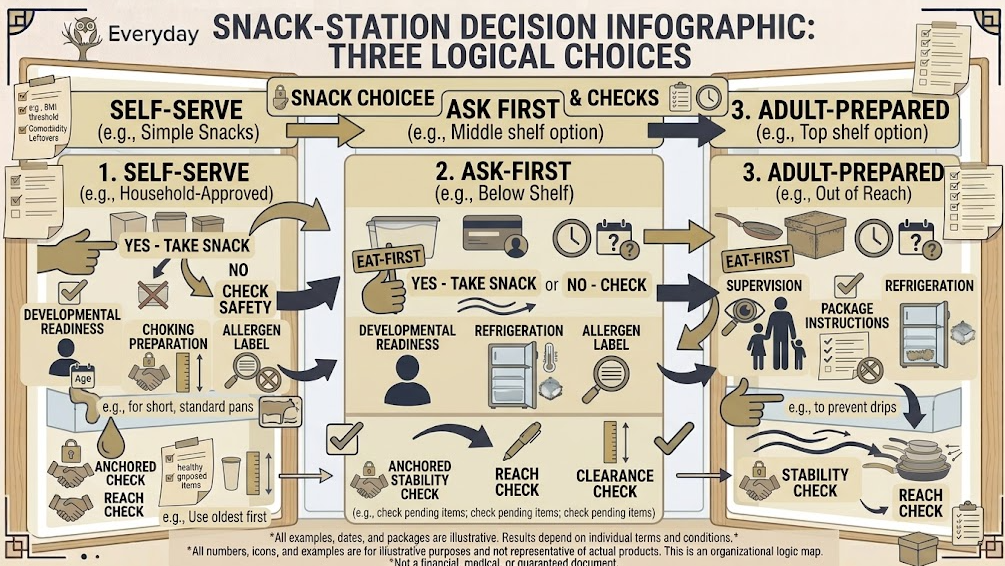
Use three access levels.
Self-Serve
These are foods and supplies the specific user can safely identify, retrieve, open or prepare, and consume under the household’s agreed conditions. The category may also include a water cup, napkin, or reusable container.
Self-serve does not necessarily mean unsupervised. A young child may choose between two adult-prepared options while seated and watched. An older child may independently assemble an approved snack after checking with an adult. Define the actual rule rather than relying on the label.
Ask First
Use this level for foods that depend on timing, meal plans, portioning, allergy verification, refrigeration, opening assistance, or another household decision. The food remains visible, but access requires a check.
An ask-first bin can be especially useful when several household members share snacks but have different needs. It avoids making every item forbidden while preventing accidental use of a lunch ingredient or a product that needs label review.
Adult-Prepared
Place foods here when they need cutting, heating, measuring, thawing, decanting, medical-plan verification, or direct supervision. Choking hazards, sharp tools, glass containers, boiling water, and appliances should never become self-serve merely because the station is intended to promote independence.
Reassess access after changes in development, health, allergy instructions, medication, household visitors, or product packaging. Independence can expand gradually; it can also narrow temporarily after a new diagnosis or safety concern.
Treat Choking Prevention as Part of Storage
The location of a food affects whether a child can take it before an adult prepares it safely.
CDC identifies many potential choking hazards for young children, including whole or uncut grapes and cherry tomatoes, hard raw fruit or vegetables, whole nuts and nut pieces, spoonfuls of nut butter, popcorn, hard or gummy candy, hot dogs and sausages, chunks of meat or cheese, and other hard, round, sticky, or difficult-to-chew foods. The exact preparation must match the child’s development.
For infants and toddlers:
- choose textures and shapes appropriate for the child;
- prepare food in the form current pediatric guidance recommends;
- have the child sit while eating;
- encourage slow eating and small bites; and
- watch the child rather than treating the station as a substitute for supervision.
Do not pre-cut more perishable food than the household can store safely. Refrigerate cut produce and other perishable items promptly in suitable containers. A picture label showing grapes does not make a container of whole grapes appropriate for independent access.
Small nonfood items also matter. Bag clips, magnets, twist ties, detachable labels, reusable picks, and broken container parts may be accessible in a low station. Keep them away from children who may put them in their mouths.
If caregivers are responsible for young children, they should know the household’s emergency plan and obtain appropriate first-aid and choking-response training from a qualified provider. This article does not replace that training.
Preserve Allergen Information and Controls
If anyone in the home has a diagnosed food allergy, build the station around that person’s clinician-directed management and emergency plan. A generic color system cannot declare a food safe.
FDA requires major allergens in most packaged foods it regulates to be identified on U.S. labels. Canadian rules identify priority allergens, gluten sources, and added sulphites under their applicable requirements. The allergen lists and regulatory coverage are not identical across countries.
Labels also change. CFIA advises consumers buying for someone with a food allergy to check the label before purchase, when putting groceries away, and before serving or eating. Keep the complete current package with the food whenever possible.
If snacks are transferred to a reusable container:
- retain the ingredient and allergen label or a reliable link to the exact current package;
- record the product name and, when relevant, lot or date information;
- clean and dry the container appropriately before refilling;
- do not top up an old product with a new package before checking both labels; and
- never mix similar-looking foods from different products.
Separate storage may reduce mistakes but does not eliminate cross-contact. Shared hands, scoops, counters, crumbs, containers, and preparation tools can transfer allergens. A household with a serious allergy may need dedicated equipment, storage, cleaning practices, and rules established with appropriate medical guidance.
Do not describe a station as “allergy-free” unless the household has a valid basis for that claim. “Contains” and precautionary statements must be read as the applicable authority and medical plan direct. When a label is missing, unclear, or inconsistent with the known product, do not guess.
Include the Refrigerator in the Station
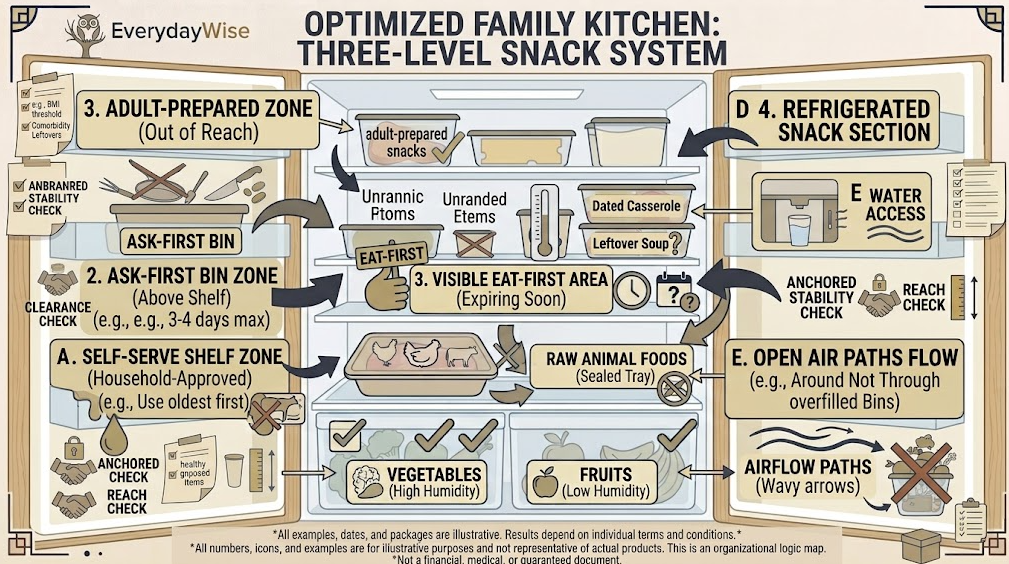
A pantry-only snack station can make shelf-stable packaged foods easiest to see while fruit, vegetables, yogurt, cheese, or prepared foods remain hidden. Create a small matching refrigerator area when suitable options require cold storage.
Apply the principles from Article”Refrigerator Organization for Food Safety”:
- keep the refrigerator at 4°C (40°F) or below;
- protect ready-to-eat snacks from raw animal-food juices;
- date prepared or opened foods;
- leave room for cold air to circulate;
- follow product labels and official storage times; and
- return perishable food promptly rather than leaving it at the station.
The refrigerator section should not sit beneath leaking raw food. Use clean, covered containers and a location the intended user can reach without climbing, disturbing glass, or pulling down heavy items.
A cold pack and insulated lunch bag are transport tools, not permanent refrigeration. Follow current food-safety guidance for packed lunches and time out of temperature control.
Make Water Easy Without Creating a Spill Hazard
Sometimes the repeated request is for a drink rather than food. A reachable water cup or bottle may be part of the solution.
Choose a setup the user can handle without climbing or carrying an overly full container. Keep water away from electrical outlets, appliance cords, hot surfaces, medicines, cleaning products, and slippery walking routes. A dispenser should be stable, suitable for its intended use, and cleaned according to instructions.
Do not place hot-water appliances, kettles, or glass drink containers in a young child’s self-serve station. Milk, juice, formula, smoothies, and other perishable drinks require their own nutritional, storage, and age-specific guidance; they are not interchangeable with water because they appear in the same bottle format.
Choose Containers After the Rules Are Clear
Containers should preserve identity, access, cleanliness, and stock visibility. They should not erase necessary information.
Useful features may include:
- a size that holds one realistic replenishment cycle;
- a stable base and easy grip;
- a lid the intended user can operate safely;
- smooth, cleanable surfaces;
- visibility without exposing food to unsuitable light or air;
- enough space for the original package; and
- labels large enough for the household to understand.
Avoid deep community bins in which several products become loose and indistinguishable. Do not remove individually wrapped foods from a box if the individual wrapper lacks information the user needs. Keep expiry, best-before, ingredient, allergen, preparation, and storage instructions connected to the product.
Low placement should be reserved for items safe for the people and pets who can reach it. A child-resistant latch can be one layer where appropriate, but it does not convert hazardous food, medicine, alcohol, cannabis products, supplements, cleaning pods, or sharp tools into snack-station contents.
Anchor freestanding furniture when required by the product instructions and household conditions. Do not overload door organizers, rolling carts, shelves, hooks, or drawers.
Set a Replenishment Limit
A snack station can hide overbuying because an open basket makes space appear to be demand. Decide how much the station should hold before shopping.
Use a simple calculation:
people using the station × planned snack occasions × days until the next reset
This is a purchasing estimate, not a nutrition prescription. Appetite and needs vary, and children should not be required to eat a fixed allotment. The calculation only prevents a two-week station from receiving a two-month supply without a storage plan.
Keep reserve stock separate from active stock. Refill only after checking:
- what is already open;
- the product and allergen label;
- package condition;
- date and storage requirements;
- whether preferences or household needs changed; and
- whether the last refill was actually used.
Rotate suitable foods so older stock is visible first, but do not rely on physical order alone. Products with shorter dates, opened-package rules, or special storage instructions may need priority even if purchased later.
Build Choice Without Turning Food Into a Moral Score
The station can offer structure without labelling foods as “good,” “bad,” “clean,” or “guilty.” Those labels do not explain allergies, nutrition, choking preparation, dental needs, medical diets, or family routines.
Instead, organize around use:
- ready now under the household rule;
- pair with another item;
- save for school or an activity;
- ask first; and
- adult prepares.
For general variety, current CDC infant-and-toddler guidance encourages developmentally appropriate vegetables, fruits, protein foods, dairy without added sugars, healthy fats, and whole grains. Older children, adults, and people with medical or sensory needs require advice appropriate to them. The snack station should implement the household’s food plan, not create one based on bin labels.
Regular meal and snack times may help young children develop a feeding routine; CDC cautions against continuous eating and drinking throughout the day for infants and toddlers. A visible station does not have to remain open at every moment. A clock symbol, closed bin, or household check-in can make timing understandable without using food as punishment or reward.
Design for School, Guests, and Shared Households
The home station does not override school, daycare, sports, workplace, or host rules. A product acceptable at home may be restricted elsewhere because of allergens, refrigeration, packaging, or supervision.
Create a separate “packable” section only after confirming the destination’s current requirements. Keep cold foods cold with appropriate equipment and follow official food-safety guidance. Do not use another child’s allergy diagnosis as a guess about what the institution allows.
For guests, especially children, ask the responsible adult about allergies, dietary restrictions, developmental needs, and permitted foods before offering self-service. Keep package labels available. A visiting child should not be assumed to understand the household’s colors or symbols.
In a shared adult household, names or zones may prevent reserved work lunches and medical-diet foods from disappearing. The same access framework works without making the station childish.
A 20-Minute Snack-Station Test
Do not purchase containers yet.
- Name the user and the snack moment.
- Select only five to seven existing items.
- Assign each to Self-Serve, Ask First, or Adult-Prepared.
- Check choking, allergen, refrigeration, label, and package requirements.
- Keep foods in their original packaging for the test.
- Mark one small pantry area and, if needed, one refrigerator area.
- Add water access only if it can be used safely.
- Use the system for one normal shopping cycle.
Watch what fails. Are wrappers too difficult? Does the cold food return to the refrigerator? Does the intended user understand “ask first”? Does one option disappear immediately while another expires? Are crumbs or allergen cross-contact appearing? Does the station encourage constant eating rather than the intended routine?
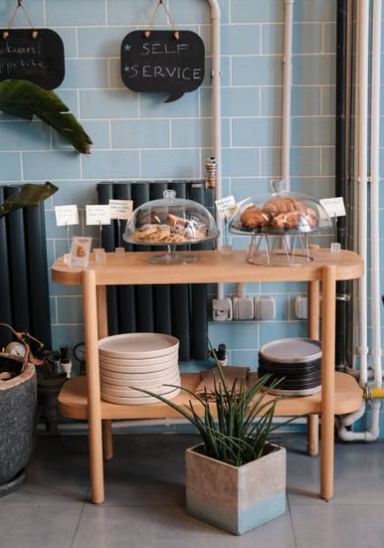
Revise the rule before buying a bin. A successful station makes the next safe action obvious: choose, ask, or wait for preparation. It stays small enough to clean, review, and replenish without allowing labels, dates, or individual needs to disappear.
FAQ
What age can a child use a snack station independently?
There is no universal age. Consider developmental ability, chewing and swallowing, allergies, package opening, food preparation, impulse control, and supervision. “Self-serve” may still mean choosing from adult-prepared options while seated and watched.
What foods should go in a toddler snack station?
Use foods approved for that child and prepared in developmentally appropriate textures and shapes. CDC lists many choking hazards that require avoidance or modification. A toddler station should not replace seated eating and active supervision.
Should I remove snacks from their original packaging?
Only when identity, ingredients, allergens, dates, lot information, preparation, and storage instructions remain reliably connected to the food. Keeping the original package is often the simplest option.
How should I handle food allergies in a shared station?
Follow the allergic person’s clinician-directed plan, read the current label every time, prevent cross-contact, and use separation or dedicated equipment when the plan requires it. Color coding alone cannot establish safety.
Can refrigerated snacks be self-serve?
They can be for a user who can retrieve and return them safely within the household’s rules. Keep the refrigerator at 4°C (40°F) or below, protect snacks from raw-food juices, and follow storage and time limits.
How much food should the station hold?
Stock one normal replenishment cycle based on the number of users, planned occasions, and days until reset. Keep reserve stock separate and adjust after observing actual use.
Does a snack station encourage children to eat all day?
It can if access and timing are undefined. Use an agreed snack routine, Ask First category, or visible open/closed cue. CDC recommends regular meal and snack times for infants and toddlers rather than continuous eating or drinking.
Sources
- CDC — Choking Hazards
- CDC — How Much and How Often to Feed
- CDC — Foods and Drinks to Encourage
- FDA — Food Allergies
- Canadian Food Inspection Agency — Tips for Reading Food Labels
- Health Canada — Common Food Allergens
- Health Canada — Safe Food Storage