When someone is sick, “drink plenty of fluids” sounds simple. In practice, it leaves several decisions unanswered. How much is plenty? Does tea count? Is an electrolyte drink better than water? What if every sip triggers nausea? And how can you tell whether reduced drinking has become dehydration?
Illness can upset the balance from both directions. Fever and faster breathing may increase fluid loss. A sore throat, congestion, fatigue, nausea, vomiting, or diarrhea may reduce intake. Babies, young children, older adults, and people with certain medical conditions may have less room for error.
The useful goal is not to force a universal number of glasses. It is to replace what is being lost, use a drink the person can keep down, and watch whether hydration and function are improving.
Quick decision: Ask four questions: Is the person losing extra fluid? Are they taking in less than usual? Are urine, alertness, mouth moisture, and thirst changing? Can they keep small amounts down? The answers help you choose ordinary fluids, an oral rehydration solution, a clinician call, or urgent care.
Hydration Is a Balance, Not a Quota
Dehydration develops when the body loses more fluid than it takes in. During a respiratory illness, reduced appetite and drinking may be more important than dramatic fluid loss. Vomiting and diarrhea can change the picture quickly because the body loses water and electrolytes together.
There is no single sick-day volume that is right for every adult and child. Body size, age, pregnancy, fever, sweating, vomiting, diarrhea, food intake, climate, medications, kidney function, and heart function all matter. Foods such as soup, fruit, yogurt, and gelatin also contribute fluid.
Instead of chasing a fixed total, compare the person with their normal pattern:
- Are they drinking at reasonable intervals?
- Are they urinating less often or producing much darker urine?
- Is their mouth unusually dry?
- Are they alert and able to sit, stand, and interact as expected?
- Are losses from vomiting, diarrhea, fever, or sweating continuing?
- Is the trend improving after fluids, or getting worse?
Urine color can be a useful clue, but not a diagnosis. Vitamins, medicines, foods, and some medical conditions can change it. Look at frequency, amount, other symptoms, and the direction of change rather than relying on one bathroom visit.
Choose the Drink for the Kind of Loss
For a mild cold, flu, COVID-19, or RSV illness without vomiting or diarrhea, ordinary fluids are usually a practical starting point. Water is inexpensive and effective. Warm tea, broth, milk, ice chips, frozen fruit bars, and other tolerated drinks may make it easier to keep sipping. A warm drink can feel soothing, but it does not cure the infection.
The best option is often the one the person will actually take—within any medical or age-related limits.
| Situation | Practical starting choice | Important caution |
|---|---|---|
| Respiratory illness; drinking reasonably; no major gastrointestinal losses | Water and other familiar fluids; soups and fluid-rich foods | An electrolyte product is not automatically necessary |
| Sore throat, congestion, or low appetite | Cool or warm tolerated fluids, ice chips, broth, or soft fluid-rich foods | Avoid calling comfort a treatment for the infection |
| Repeated vomiting or significant diarrhea | Commercial oral rehydration solution (ORS), given in small frequent amounts | Sports drinks, soda, and juice are not nutritionally equivalent to ORS |
| Breastfed infant | Continue breastfeeding more frequently if tolerated and follow pediatric advice | Do not substitute plain water for breast milk or formula in a young infant |
| Person with a prescribed fluid restriction | Follow the existing heart, kidney, dialysis, or clinical plan and contact the care team for sick-day instructions | “Drink more” can be unsafe for some people |
When an oral rehydration solution makes sense
An ORS is designed with specific proportions of water, sugar, and salts to support absorption and replace gastrointestinal losses. It can be especially useful for vomiting or diarrhea, including in children. Use a commercially prepared product or mix a packet exactly according to its label. Adding too little or too much water changes the concentration.
ORS does not stop diarrhea or cure the infection. Its job is rehydration.
Sports drinks are made for exercise, not medical rehydration. They may help some otherwise healthy adults with mild losses, but they can contain more sugar and a different electrolyte balance than ORS. In children with vomiting or diarrhea, use pediatric guidance rather than assuming a sports drink is an equal substitute. Do not improvise a salt-and-sugar recipe when a regulated product or professional instruction is available; mixing errors can be dangerous.
When Nausea or Vomiting Makes Drinking Difficult
A large glass can overwhelm a nauseated stomach. Small, repeated amounts are often easier to tolerate.
Try this sequence:
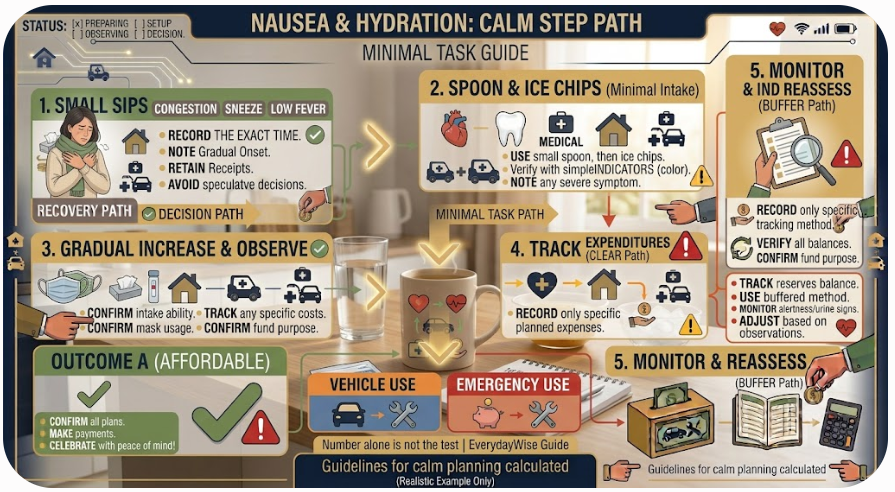
- Start small. Offer a spoonful, a small sip, an ice chip, or an age-appropriate frozen ORS product.
- Repeat frequently. If it stays down, continue at short intervals rather than immediately increasing to a full cup.
- Increase gradually. Build the amount as nausea settles and the person asks for more.
- Replace continuing losses. Vomiting or diarrhea that continues changes the need; ORS may be more appropriate than plain water alone.
- Reassess the person. Look for more urination, improved alertness, less dry mouth, and better ability to drink—not merely completion of a bottle.
For infants and young children, continue age-appropriate feeding as advised. Breastfeeding should generally continue. Do not withhold all food for a prolonged period solely because of diarrhea; normal nutrition can usually resume as hydration improves and food is tolerated.
If every attempt comes back up, the person is too sleepy or weak to drink safely, or losses are outpacing intake, home sipping is no longer an adequate plan.
Watch for a Pattern of Dehydration
No single sign measures dehydration perfectly at home. A cluster of changes is more useful.
In adults and older children
Watch for:
- strong thirst;
- a dry or sticky mouth;
- urinating less than usual;
- dark urine;
- unusual fatigue or weakness;
- dizziness or lightheadedness, especially when standing; and
- worsening difficulty taking or keeping down fluids.
In babies and young children
Watch for:
- fewer wet diapers or much less urination than usual;
- a dry mouth or tongue;
- few or no tears when crying;
- sunken-looking eyes;
- unusual sleepiness, low energy, irritability, or poor responsiveness;
- refusing breast, bottle, or other fluids; and
- a sunken soft spot in an infant.
Parents often know the child’s normal wet-diaper and behavior pattern better than a generic number does. A meaningful drop, especially with dry mouth, absent tears, or unusual drowsiness, deserves attention.
Older adults may not feel or report thirst as clearly. Someone who lives alone, has memory problems, needs help reaching the bathroom, or takes medicines that affect fluid balance may need active check-ins rather than a pitcher placed nearby.
Decide When Home Care Is No Longer Enough
Contact a clinician promptly when an infant or young child shows dehydration signs, when a person cannot keep fluids down, when vomiting or diarrhea is persistent or substantial, or when reduced intake is occurring in someone at higher risk. Ask earlier for guidance for a baby, an older or frail adult, a pregnant person, or someone with diabetes, kidney disease, heart disease, immune suppression, or a complex medication plan.
Seek urgent or emergency care when the person:
- is confused, difficult to wake, faints, or is markedly less responsive;
- has little or no urination together with worsening illness;
- cannot drink safely or repeatedly vomits everything offered;
- has severe weakness, collapse, or signs of poor circulation;
- has blood in vomit or stool, severe abdominal pain, or another serious new symptom; or
- has trouble breathing, blue or gray lips or face, or visible breathing struggle.
Breathing danger is not something to solve by pushing more fluids. EW-H-0027 provides the full respiratory urgent-care framework. If emergency signs are present, seek help rather than delaying to complete a hydration test at home.
Special Cases: More Is Not Always Better
Some people have been told to limit fluid because of heart failure, kidney failure, dialysis, low sodium, or another medical condition. Illness does not automatically cancel that plan. Contact the care team for individualized instructions about intake, electrolytes, and medicines.
Do not force large volumes quickly simply because someone is sick. Drinking far beyond need—especially plain water in a short period—can disturb electrolyte balance. The safe target is adequate replacement and a favorable trend, not the largest possible intake.
Also check what is in the drink. Caffeine may worsen jitteriness or sleep for some people, alcohol can contribute to dehydration and impaired judgment, and highly sugary drinks can worsen diarrhea. Broths, electrolyte products, and sports drinks may contain substantial sodium or potassium, which matters for some heart and kidney plans.
A Simple Sick-Day Hydration Log
You do not need precise medical accounting for a mild illness. A short log becomes useful when intake is poor, a child is being monitored, several caregivers are taking turns, or a clinician may need an update.
Record:
- approximate drinks or feeds and when they were taken;
- vomiting or diarrhea episodes;
- urination or wet diapers;
- fever and relevant medicines;
- alertness and ability to stand, walk, play, or interact; and
- what changed after fluids.
The log should support a decision, not become a reason to delay one. If the person is clearly worsening, call for help.
Decision Summary
Hydration during illness is a continuing balance check.
- Start with familiar fluids when the illness is mild and there are no major gastrointestinal losses.
- Use small, frequent amounts when nausea makes larger drinks difficult.
- Consider a properly prepared ORS when vomiting or diarrhea causes water-and-electrolyte loss.
- Do not treat sports drinks as automatic substitutes for pediatric ORS.
- Watch urine, mouth moisture, thirst, alertness, function, losses, and the direction of change.
- Call sooner for babies, young children, older or frail adults, high-risk people, and anyone who cannot keep fluids down.
- Follow existing fluid restrictions rather than overriding them with generic advice.
- Treat confusion, fainting, inability to drink, severe weakness, little or no urination with worsening illness, or serious breathing changes as urgent.
The useful question is not “Did they finish eight glasses?” It is: “Are intake and losses moving back toward balance, and is the person functioning better—or do they need help?”
This article provides general health information, not diagnosis or an individualized fluid prescription. Follow instructions from your clinician and product labels. Seek urgent care for severe or rapidly worsening symptoms.
FAQ
Does tea count as fluid when I am sick?
Yes. Water, tea, broth, milk, and many other drinks and foods contribute fluid. Choose something tolerated and appropriate for the person’s age and medical plan. A warm drink may soothe, but it does not treat the infection itself.
Do I need an electrolyte drink for a cold or fever?
Not automatically. Ordinary fluids are often sufficient for a mild respiratory illness when the person is drinking and not losing much through vomiting or diarrhea. Electrolyte replacement becomes more relevant with significant gastrointestinal losses or professional advice.
Is a sports drink the same as oral rehydration solution?
No. ORS is formulated in specific proportions for medical rehydration. Sports drinks can have more sugar and a different electrolyte balance. This distinction is especially important for children with vomiting or diarrhea.
What if drinking makes me nauseated?
Try very small, frequent sips, spoonfuls, or ice chips and increase gradually if they stay down. Contact a clinician if you cannot keep fluids down or dehydration signs are developing.
How can I tell whether a child is dehydrated?
Look for a meaningful decrease in wet diapers or urination, dry mouth or tongue, few tears, sunken eyes, unusual sleepiness or irritability, poor drinking, and worsening function. A cluster of signs matters more than one clue.
Should I wake a sick child to drink?
Follow the child’s pediatric plan. A child sleeping comfortably may not need constant waking, but unusual difficulty waking, markedly reduced intake, or dehydration signs require prompt advice rather than simply offering another drink.
Can someone with heart or kidney disease follow this advice?
Only within their established clinical plan. Some people need fluid, sodium, or potassium limits. Contact the care team for sick-day instructions instead of independently increasing fluids or electrolyte products.
Sources
- MedlinePlus – Dehydration
- CDC – About Norovirus
- AAP / HealthyChildren.org – Drinks to Prevent Dehydration When Your Child Is Vomiting
- AAP / HealthyChildren.org – Treating Dehydration with Electrolyte Solution
- American Heart Association – Lifestyle Changes for Heart Failure
- MedlinePlus – Fluid and Electrolyte Balance
More in This Cluster: Cold, Flu, and Respiratory Illness
- Cold, Flu, COVID-19, or RSV? What Your Symptoms Can—and Cannot—Tell You
- When Should You Stay Home from Work or School With a Respiratory Illness?
- Fever Basics for Adults and Children: What the Number Really Means
- Hydration During Illness: What to Drink and When to Get Help (you are here)
- How to Reduce the Spread of Respiratory Illness at Home
- When Breathing Symptoms Need Urgent Care
- Building a Practical Sick-Day Supply Kit