A scratchy throat becomes a runny nose. A cough follows. By evening, you feel tired and achy. Is it a cold, the flu, COVID-19, RSV, bronchitis, allergies—or something else?
The honest answer is often: you cannot know from symptoms alone. Many respiratory illnesses share the same short list of symptoms, and the same infection can look different from one person to another. A symptom pattern can make one explanation more plausible, but it rarely proves the cause.
That does not make symptoms useless. They help you decide what matters next: whether you need urgent assessment, whether testing could change treatment or precautions, and whether you should contact a clinician early rather than waiting for the illness to declare itself.
Quick decision: Do not ask only, “Which virus does this feel like?” First ask: “Am I breathing safely, could early testing or treatment matter for me, and how should I act while the cause is uncertain?”
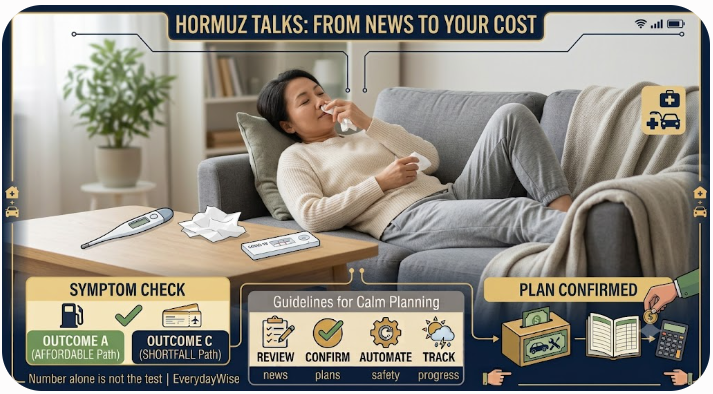
Why Symptom Guessing Is So Unreliable
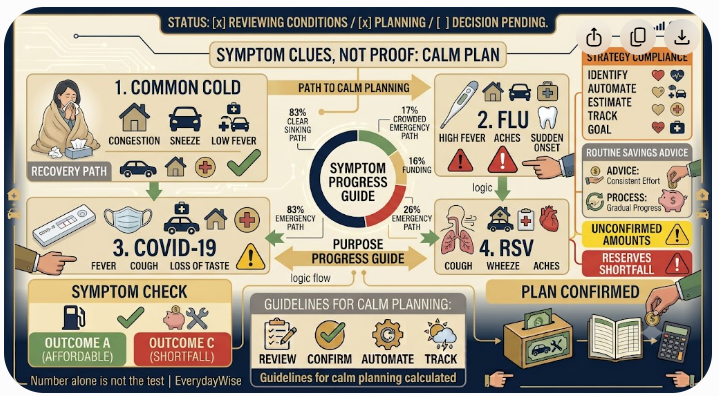
“Cold” is not one specific virus. Many viruses can cause a cold-like illness. Influenza, SARS-CoV-2, and respiratory syncytial virus (RSV) are different viruses, but all may cause combinations of cough, congestion, sore throat, fever, fatigue, headache, and body aches.
Even familiar rules have exceptions:
- Flu often begins suddenly and can cause marked aches and exhaustion, but not everyone with flu has a fever.
- A common cold often centers on the nose and throat, but cough and fatigue can still be significant.
- COVID-19 may look like a cold or flu, and currently circulating variants can produce symptoms such as fever, chills, and sore throat.
- RSV often causes mild, cold-like symptoms in adults, while infants, some older adults, and people with certain risk factors can become much sicker.
- Allergies can cause sneezing, congestion, and an irritated throat, but a person with allergies can also acquire a viral infection at the same time.
CDC guidance is explicit that flu and COVID-19 cannot be reliably distinguished by symptoms alone. Testing may be needed when identifying the cause would affect treatment, infection-control decisions, or care.
Use Patterns as Clues, Not Diagnoses
The following comparison can organize your observations. It is not a diagnostic scorecard.
| Pattern | What it may suggest | Why it is not conclusive |
|---|---|---|
| Gradual onset with runny or stuffy nose, sneezing, and sore throat | Often consistent with a common cold | COVID-19, RSV, flu, and allergies can overlap |
| Sudden feverishness, chills, strong body aches, headache, and fatigue | Often consistent with flu | Flu may occur without fever; COVID-19 can look similar |
| New respiratory symptoms after a known COVID-19 exposure | Raises the practical value of COVID-19 testing | Exposure history does not prove infection, and another virus may be present |
| Wheezing or progressively harder breathing, especially in an infant or vulnerable adult | Can occur with RSV or another lower-airway illness | The sound or symptom does not identify the virus; breathing difficulty needs severity-based assessment |
| Itchy eyes, repeated sneezing, and symptoms tied to pollen or another trigger | Often consistent with allergies | Allergies and infection can occur together; fever or systemic illness points beyond uncomplicated allergy |
| Cough with chest discomfort after an upper-respiratory illness | May be acute bronchitis or another complication | Pneumonia, asthma exacerbation, flu, COVID-19, and other conditions can resemble it |
The most useful information is often not one symptom but the timeline: when symptoms began, whether onset was sudden or gradual, what is improving or worsening, known exposures, measured temperature, breathing changes, and relevant health risks.
Jerome’s Experience: A Familiar Pattern Can Still Mislead
Jerome looks healthy and generally considers himself healthy, but he has lived with chronic sinus trouble and seasonal pollen allergies since childhood. He has also been told during health examinations that his lung capacity is naturally low. Most of the time, that background does not stop him from living normally. When a respiratory illness reaches his chest, however, he can hear a metallic quality in his breathing and find running or climbing stairs unusually difficult.
His household also sees frequent colds, so the family keeps medicines, allergy tablets, tea, honey, and ginger on hand. When Jerome feels an illness beginning, his instinct is to take medicine, get under a blanket, and try to protect the rest of the household. Warm drinks soothe his throat and feel comforting.
The mistake would be to let that familiar routine answer a question it cannot answer. A history of sinus symptoms or allergies does not identify a new infection. Looking fit does not show how severely a respiratory illness may affect someone. A warm drink may soothe the throat, but it does not diagnose or treat influenza, COVID-19, pneumonia, or another serious cause. And “this feels like the bronchitis I had before” is not proof that the same process is happening again.
The practical consequence is that Jerome needs to compare the current illness with his normal baseline, not merely with other people. New breathlessness on stairs, an unfamiliar breathing sound, or a clear decline in what he can normally do deserves more attention than his outward appearance suggests. His experience is a reason to observe more carefully—not a diagnosis.
The Three Decisions That Matter More Than the Label
1. Is there an immediate breathing or safety concern?
Difficulty breathing, persistent chest pain or pressure, bluish or gray discoloration, confusion, inability to stay awake, or a rapidly worsening condition should not wait for a home diagnosis. Infants, young children, older adults, pregnant people, immunocompromised people, and those with chronic heart or lung conditions may need a lower threshold for professional advice.
This article does not provide a complete emergency checklist. If a symptom is severe, frightening, or clearly outside the person’s normal baseline, seek urgent medical guidance. The later cluster article When Breathing Symptoms Need Urgent Care will own the full decision framework.
2. Could testing or early treatment change what you do?
Testing is most useful when the result has a consequence. It may help a clinician distinguish flu, COVID-19, and RSV; guide antiviral treatment; inform precautions around a vulnerable person; or clarify an outbreak in a household, school, or workplace.
Timing matters. CDC states that flu antivirals work best when started within one to two days after symptoms begin. People at higher risk of flu complications, people who are very sick, and people whose illness is worsening should contact a clinician early rather than waiting several days for certainty. Treatment decisions are individualized; a positive test is not always required before a clinician starts treatment when flu or COVID-19 is strongly suspected.
At-home antigen tests can give rapid results, but a negative result does not always rule out infection. Follow the test instructions, including repeat-testing directions where applicable. If the result conflicts with symptoms, exposure, or risk level, ask a clinician whether repeat or molecular testing would change care.
3. What should you do while the cause is uncertain?
Until you know more, treat a new respiratory illness as potentially contagious. Reduce close contact, especially with people at higher risk; cover coughs and sneezes; clean your hands; and improve ventilation where practical. Your local public-health guidance, workplace rules, school policies, and the needs of vulnerable household members may affect the details.
The next cluster article, When to Stay Home from Work or School, will address return timing and institutional decisions. How to Reduce Household Spread will cover the full home strategy. Here, the important boundary is simple: uncertainty about the exact virus is not a reason to ignore transmission risk.
A Practical First-Day Check
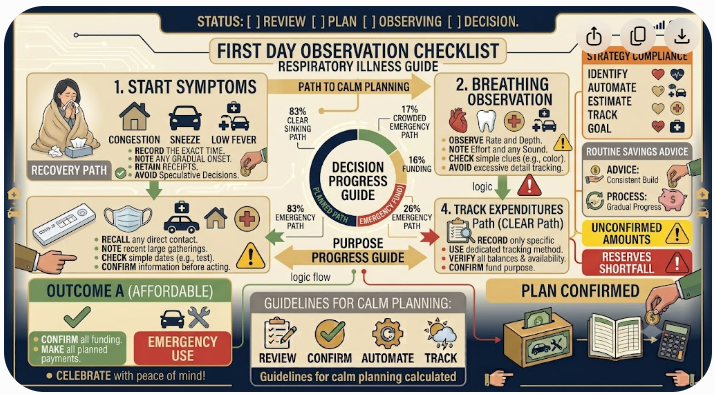
When symptoms begin, record the smallest set of information that could change a decision:
- Start time: When did the first symptom appear? Was onset sudden or gradual?
- Main symptoms: Note cough, sore throat, congestion, feverishness, measured temperature, aches, fatigue, vomiting or diarrhea, wheezing, or breathlessness.
- Direction: Are symptoms stable, improving, or worsening?
- Breathing and function: Can the person speak, walk, drink, urinate, and stay alert as usual?
- Exposure: Was there recent contact with someone who was ill or tested positive?
- Risk factors: Consider age, pregnancy, immune status, and chronic heart, lung, kidney, or metabolic conditions.
- Action deadline: Would a same-day call matter because the person is high-risk or early antiviral treatment may be appropriate?
This is not a requirement to build a detailed health diary. It is a short decision record. It helps you describe the illness accurately if you call a clinician and reduces reliance on impressions such as “it feels like the flu.”
Common Mistakes That Delay the Right Next Step
“No fever means it cannot be flu.”
False. Some people with influenza do not have a fever. Fever can be an important clue, but its absence does not exclude flu or another significant infection.
“Green mucus means I need antibiotics.”
Mucus can turn white, yellow, or green during a viral cold. Color alone does not prove a bacterial infection or show that antibiotics are needed. Antibiotics do not treat colds, flu, COVID-19, or most cases of acute bronchitis.
“I am healthy, so I can wait no matter what.”
General fitness does not cancel a serious new symptom. Severity, breathing, rate of change, and individual risk matter more than whether someone usually appears healthy.
“A negative rapid test settles it.”
A negative antigen test may miss an infection, particularly depending on timing and sample collection. Use the manufacturer’s repeat-testing instructions and seek advice when the result would affect treatment or protection of a vulnerable person.
“If one family member has a cold, everyone has the same thing.”
Household timing makes a shared infection plausible, but it does not prove that every person has the same virus or the same level of risk. Coinfections and unrelated illnesses can occur, and symptoms may differ by age and health status.
Comfort Measures Have a Place—But Know Their Job
Rest, fluids, warm drinks, saline nasal products, or a clean humidifier may make some people more comfortable. Over-the-counter products may temporarily relieve symptoms when they are appropriate for the person’s age, conditions, and other medicines.
Comfort is not the same as cure. Read labels, avoid combining products with duplicate active ingredients, and ask a pharmacist or clinician when you are unsure—especially for children, pregnancy, chronic conditions, or multiple medications. Do not use leftover antibiotics or someone else’s prescription.
Detailed fever management, hydration, medication use, and supply-kit planning belong to later articles in this cluster. The current decision is narrower: use comfort measures without allowing them to delay testing, clinical advice, or urgent assessment when those are needed.
Decision Summary
You usually cannot diagnose a cold, flu, COVID-19, RSV, or another respiratory illness from symptoms alone. Patterns can help you organize possibilities, but they should not create false certainty.
Your next step should be driven by:
- breathing and overall severity;
- whether the person is at higher risk;
- whether symptoms are worsening or outside the person’s normal baseline;
- whether testing could change treatment or precautions; and
- whether early contact with a clinician matters.
For Jerome, the useful lesson is not that every respiratory illness is dangerous. It is that his familiar sinus and allergy history, outwardly healthy appearance, and home comfort routine cannot identify what is happening in his lungs today. The better question is: What is different from normal, and what decision does that difference require?
This article provides general health information and is not a diagnosis or a substitute for individualized medical advice. Follow local public-health guidance and seek professional care for severe, worsening, or concerning symptoms.
FAQ
Can I tell a cold from the flu by how suddenly it starts?
Sudden onset with marked aches and fatigue is more typical of flu, while colds often develop gradually. That pattern is a clue, not proof; testing or clinical assessment may be needed when the distinction changes care.
Does flu always cause a fever?
No. Many people have fever or feel feverish, but influenza can occur without a measured fever.
Can allergies and a respiratory infection happen together?
Yes. A person with seasonal allergies can also acquire a viral or bacterial infection. New feverishness, body aches, worsening cough, or symptoms outside the usual allergy pattern warrant a fresh assessment.
When is a respiratory test worth taking?
Testing is especially useful when a result could affect antiviral treatment, protection of a high-risk person, work or school decisions, or a clinician’s management. Availability and recommendations vary by location.
Does a negative home test rule out COVID-19 or flu?
Not always. Antigen tests can produce false-negative results. Follow the product’s timing and repeat-testing instructions, and seek medical advice when the result conflicts with the person’s symptoms or risk.
Is bronchitis the same as flu?
No. Acute bronchitis describes inflammation of the airways and is commonly caused by a virus. Influenza is one specific viral infection and can be one of several causes of respiratory symptoms.
Can tea, honey, or ginger treat a respiratory infection?
Warm drinks may soothe the throat, and honey may help some people with cough, but these measures do not identify or eliminate the underlying virus. Never give honey to a child younger than 12 months.
Sources
- CDC – Similarities and Differences between Flu and COVID-19
- CDC – Testing and Respiratory Viruses
- CDC – Treating Flu with Antiviral Drugs
- CDC – Chest Cold (Acute Bronchitis) Basics
- CDC – Healthy Habits: Antibiotic Do’s and Don’ts
- FDA – At-Home OTC COVID-19 Diagnostic Tests
More in This Cluster: Cold, Flu, and Respiratory Illness
- Cold, Flu, COVID-19, or RSV? What Your Symptoms Can—and Cannot—Tell You (you are here)
- When Should You Stay Home from Work or School With a Respiratory Illness?
- Fever Basics for Adults and Children: What the Number Really Means
- Hydration During Illness: What to Drink and When to Get Help
- How to Reduce the Spread of Respiratory Illness at Home
- When Breathing Symptoms Need Urgent Care
- Building a Practical Sick-Day Supply Kit