A kitchen can look orderly while one contaminated hand, towel, knife, or phone quietly connects several surfaces. The problem is rarely that someone did no cleaning. More often, cleaning happened in the wrong sequence, with the wrong tool, or after contamination had already moved from raw food to something that would not be cooked.
EverydayWise founder Jerome has described years of frequent home cooking and packed lunches in a two-income household with two children. He and his wife later made cooking and dishwashing responsibilities clearer, which made the workload more manageable. His experience does not include a known foodborne illness or a documented cross-contamination event. It does show why a food-safety routine must survive a busy evening: safety cannot depend on one person remembering every surface after the meal.
The practical goal is not a permanently sterile kitchen. It is to identify where contamination begins, protect ready-to-eat food, interrupt hand and tool contact at the right moments, and leave the kitchen in a safe state for the next person.
Practical rule: Treat cross-contamination as a route, not a stain. Separate raw-food work, wash hands at transition points, replace or clean contaminated tools before reuse, and protect anything that will not receive a later cooking step.
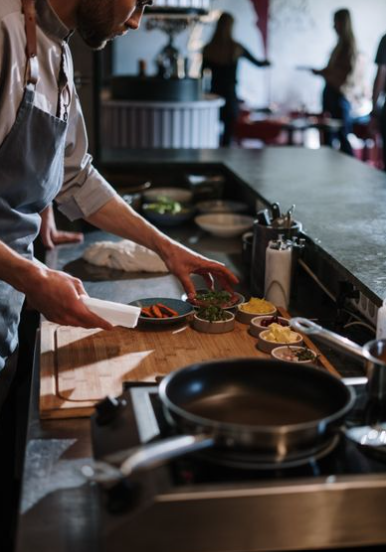
What Cross-Contamination Actually Looks Like
Cross-contamination is the transfer of harmful microorganisms from a food, hand, utensil, surface, or other item to another food or contact point. The final destination matters. A bacterium transferred to food that will be thoroughly cooked may encounter a later control step. The same transfer to salad, bread, fruit, a cooked meal, or a child’s lunch may not.
The route can be short:
- raw chicken on a cutting board, followed by sliced cucumber on the same unwashed board;
- a raw-meat plate used again for cooked meat;
- a knife used on raw food and then used to cut a cooked item;
- a dishcloth used on a raw spill and then across the dining table; or
- hands touching raw packaging and then a refrigerator handle.
It can also be indirect. A person checks a recipe on a phone, handles raw food, touches the phone again, washes their hands, and then returns to the contaminated device. The phone did not create the hazard, but it became a bridge.
Health Canada and the US Food and Drug Administration both organize home food safety around cleaning and separation: wash hands, clean food-contact equipment between tasks, keep raw animal foods away from ready-to-eat foods, and do not place cooked food on an unwashed plate that held raw food.[1][2] Those principles are more reliable than trying to remember every possible germ.
Mistake 1: Washing Hands Only at the Beginning
Starting with clean hands is necessary, but cross-contamination is controlled at transitions.
Wash with soap and warm running water for at least 20 seconds before food preparation and after handling raw meat, poultry, seafood, or eggs. Also wash after using the washroom, changing diapers, handling garbage, touching pets or pet supplies, coughing or sneezing into your hands, and whenever you move from a contaminated task to a clean one.[1][2]
Useful transition points include:
- after opening or discarding raw-food packaging;
- before touching salad ingredients, bread, garnishes, cooked food, or clean dishes;
- before reaching into a spice container or shared drawer;
- after wiping a raw spill; and
- after touching a device that was used during raw-food preparation.
Gloves do not remove this logic. A glove can contaminate a faucet, drawer pull, or phone as easily as a bare hand. Use gloves only when they serve a clear purpose, replace them between incompatible tasks, and wash hands as required before putting them on and after removing them. Do not wash disposable gloves for reuse.
A practical setup reduces unnecessary contact. Before opening raw food, place the needed utensil, clean plate, waste container, and measured seasonings within reach. If a seasoning container is touched with contaminated hands, treat its exterior as contaminated and clean it appropriately rather than returning it unnoticed to the cabinet.
Mistake 2: Using One Board, Knife, or Plate Through the Whole Meal
Separate equipment is the clearest option when raw animal food and ready-to-eat food are both being prepared. Health Canada recommends one cutting board for produce and another for raw meat, poultry, fish, and seafood.[1] Colour can help, but colour is only a memory aid; a board is safe because of its condition and handling, not its colour.
If only one suitable board is available, change the order:
- Prepare washed produce and other ready-to-eat items first.
- Move them to a clean container and out of the raw-food zone.
- Wash the board, knife, utensils, and surrounding food-contact surface with hot or warm soapy water as their material instructions permit.
- Prepare the raw food last.
- Clean and, where official guidance and product instructions call for it, sanitize the food-contact equipment before its next use.
Do not merely flip a board over if raw juices can reach the edge, counter, handhold, or opposite side. Replace boards with deep grooves, cracks, separated layers, persistent odour, or damage that prevents reliable cleaning.
The clean-plate rule is equally important. Never return cooked meat, poultry, seafood, or eggs to the unwashed plate or tray that held them raw.[2] Set out the clean serving plate before cooking begins, or deliberately retrieve one with clean hands.
Marinade that contacted raw animal food should not be brushed onto cooked food unless it has been handled according to authoritative instructions, such as bringing it to a boil where that guidance applies.[2] The simpler household choice is to reserve a clean portion before raw food enters the mixture.
Mistake 3: Washing Raw Poultry or Meat in the Sink
Rinsing raw poultry does not make it safe; cooking to a safe internal temperature is the relevant control. Water striking the food can spread contaminated droplets around the sink, faucet, counter, nearby dishes, and ready-to-eat ingredients. FDA holiday food-safety guidance specifically advises against rinsing raw meat and poultry because washing increases spread around the sink and countertops.[3]
Move raw food from its package to the preparation or cooking vessel with as few stops as possible. Contain packaging and absorbent pads without setting them on clean food-contact areas. Wash hands after disposal.
If raw liquid spills, move exposed ready-to-eat food away, use a dedicated disposable or immediately washable method to remove the soil, clean the affected area, and complete any compatible sanitizing step required by current public-health guidance and the product label. Do not carry a contaminated cloth across the kitchen to continue wiping.
This article does not repeat the material-specific countertop methods in EW-L-0013 or the sink and drain procedures in EW-L-0012. The cross-contamination decision is simpler: contain the spill, retire the contaminated tool, clean the affected route, and protect food that will not be cooked.
Mistake 4: Letting Cloths, Towels, and Sponges Connect Every Zone
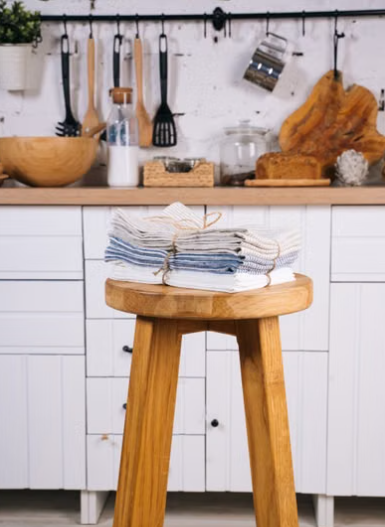
A reusable cleaning tool can either stop contamination or distribute it. Risk increases when the same damp item wipes raw-food residue, dries hands, polishes a clean dish, and then rests beside the sink.
Health Canada advises using paper towels on kitchen surfaces or changing dishcloths daily, and it cautions that sponges are harder to keep free of bacteria.[1] That national advice should take priority over a viral deodorizing or microwave shortcut. A separate EverydayWise article addresses sponge replacement timing; the decision here is whether a tool has crossed into a new role and must leave service now.
Assign clear roles:
- Hand towel: for clean, washed hands only.
- Dish-drying towel: for clean items only; air-drying is preferable where practical.
- Routine cleaning cloth: for a defined surface zone, not hands or dishes.
- Raw-spill tool: disposable or moved directly into controlled laundering after use.
- Floor cloth or mop: never returned to food-contact surfaces.
Use enough clean cloth faces to move from cleaner areas toward dirtier ones. Folding a cloth can create temporary clean faces, but once liquid has soaked through or the tool has contacted a high-risk spill, folding is not a reset.
Launder reusable towels and cloths with detergent using an appropriate cycle, dry them thoroughly, and store clean items away from splash and soil. Do not leave a wet bundle in the sink. Follow the item’s care label and local health guidance, especially in a household with illness or a person at higher risk of severe foodborne disease.
Mistake 5: Cleaning in a Route That Recontaminates Finished Work
Random wiping creates backtracking. A cloth may begin on a clean table, move through the sink rim, touch a garbage-cabinet handle, and return to the counter.
Instead, separate food preparation cleanup from general kitchen cleaning:
- Put away or protect ready-to-eat food.
- Contain raw-food packaging and spills.
- Move dirty utensils and boards into a controlled wash area.
- Wash hands.
- Clean food-contact surfaces with clean tools, moving from lower-risk to higher-risk sections.
- Address touchpoints contaminated during preparation—such as the faucet, appliance handle, drawer pull, or phone—using a method compatible with each item.
- Retire used cloths and empty waste.
- Finish with clean hands and a clean hand towel.
The sequence does not mean spraying every handle with disinfectant every day. In most ordinary household situations, cleaning is sufficient; a disinfecting step is more relevant when illness or a specified contamination risk calls for it.[4] Electronics, natural stone, wood, appliance controls, and coated surfaces may also be damaged by a product that is safe elsewhere. Use manufacturer directions and product labels.
High-touch items matter when the route indicates they were touched. A phone kept outside the raw-food workflow does not need ritual cleaning after every meal. A phone handled repeatedly between raw food and washed hands does need to be removed from that route and cleaned in a device-compatible way.
Mistake 6: Bringing Shopping and Pet-Care Routes Into the Food Zone
Raw foods should remain separated from other groceries in the cart, bags, and refrigerator.[2] Use intact packaging or an additional leak-resistant bag where appropriate, and place raw animal foods so they cannot drip onto ready-to-eat items. After unpacking, clean any reusable bag when leakage or soil occurred and follow its care instructions.
Do not place a visibly dirty grocery bag, delivery tote, purse, backpack, mail parcel, or floor-level pet item on an active food-preparation surface. This is not a claim that every package needs disinfection. It is a zoning decision: a food-contact counter should not double as the landing place for items with uncontrolled contact histories.
Pet food and supplies need their own route. The CDC notes that pet food and treats can carry germs and advises using a tub and brush or sponge dedicated to pet items. If the kitchen sink is the only practical washing place, remove human food items and clean and disinfect the sink and surrounding area afterward as directed.[5] Keep pet-item tools separate from human dishes, and wash hands after handling pet food, bowls, waste, or related supplies.
Mistake 7: Treating Cleaning, Sanitizing, and Disinfecting as the Same Action
Cleaning removes soil and reduces many germs through detergent, water, and physical action. Sanitizing and disinfecting are label-controlled chemical or heat processes used for defined purposes. Applying sanitizer over grease or food residue can prevent the product from working as intended. Wiping it off before the required wet contact time can also invalidate the claim.
The right order is generally:
- remove food and visible soil;
- wash with a compatible detergent;
- rinse if the method requires it;
- apply a compatible food-contact sanitizer or disinfectant only when the situation calls for it;
- keep the surface wet for the label’s full contact time; and
- rinse, air-dry, or otherwise finish exactly as directed.
Never mix bleach with ammonia, vinegar, acids, or other cleaners. Never assume that “natural,” “antibacterial,” or a strong smell proves effectiveness. In Canada, follow Health Canada authorization and label directions; in the United States, use the applicable EPA-registered product for a disinfecting claim.[4][6] EW-L-0013 provides the detailed countertop compatibility decision.
Build a Two-Transition Kitchen Routine
A manageable system can be built around two transitions rather than dozens of warnings.
Transition 1: Before raw food enters the work area
- Prepare salad, fruit, bread, garnishes, and lunch components first.
- Move ready-to-eat food to clean covered containers.
- Set out a raw-food board, knife, waste route, and clean serving plate.
- Move the phone or use hands-free recipe access.
- Start with clean hands and a clean hand towel.
Transition 2: Before cooked or ready-to-eat food returns
- Contain raw packaging and retire contaminated tools.
- Wash hands for at least 20 seconds.
- Wash equipment and clean affected surfaces.
- Sanitize only where the risk, official guidance, material instructions, and product label require it.
- Bring in the clean plate, utensils, and ready-to-eat foods.
Close the kitchen by moving used cloths to laundering, leaving tools able to dry, checking that raw food is contained in the refrigerator, and putting a clean towel into service. In a shared household, assign the transitions rather than vaguely assigning “the kitchen.” One person may complete raw-food containment and surface reset while another handles clean dishes and storage. The exact division can vary; the routes must not cross.
This is where Jerome’s experience is relevant without becoming evidence. Clearer cooking and dishwashing roles helped his household make a recurring workload more manageable. A cross-contamination routine can use the same operational insight: define who completes the safety transition, but base the method itself on verified food-safety guidance.
When Ordinary Cleanup Is Not Enough
Seek incident-specific advice when the kitchen has been affected by sewage, floodwater, pest contamination, a chemical spill, a food recall, suspected botulism, broken glass in inaccessible areas, or another hazard that ordinary cleaning cannot reliably control. Follow public-health or recall instructions after a diagnosed or suspected foodborne illness, especially if a pregnant person, young child, older adult, or immunocompromised person may have been exposed.
For possible poisoning or dangerous cleaner exposure, contact the local poison centre. For severe or rapidly worsening symptoms, contact emergency services. Do not try to neutralize one chemical with another.
Decision Summary
- Think in contamination routes, not simply visible dirt.
- Wash hands at task transitions, not only before cooking.
- Protect ready-to-eat food before raw food enters the work zone.
- Use separate boards and plates where possible; otherwise prepare clean foods first and wash equipment before reuse.
- Do not wash raw meat or poultry in the sink.
- Give towels, cloths, sponges, and pet-care tools defined roles; retire them when they cross into a contaminated task.
- Clean from lower-risk areas toward higher-risk areas and revisit touchpoints only when the route indicates exposure.
- Clean before sanitizing or disinfecting, and follow material and product-label instructions.
- Build the routine around two transitions: before raw-food work and before cooked or ready-to-eat food returns.
- Escalate unusual contamination, chemical exposure, recalls, or illness to the appropriate authority.
FAQ
Do I need separate cutting boards for raw meat and vegetables?
Separate boards are the clearest approach. If only one suitable board is available, prepare ready-to-eat produce first, move it away, then wash the board and utensils thoroughly before and after raw-food use.
Should I disinfect every kitchen handle after cooking?
Usually not. Trace the actual route and clean items touched by contaminated hands. Disinfection is more relevant during illness or after a defined higher-risk event, and must be compatible with the item.
Is a kitchen sponge safe if it does not smell?
Odour is not a reliable safety test. Health Canada advises avoiding sponges because they are harder to keep bacteria-free. EW-A-0021 owns replacement timing; this article advises immediate retirement from service after incompatible contamination.
Can I rinse raw chicken if I clean the sink afterward?
No routine rinse is recommended. Splash can spread contamination beyond the sink before cleanup begins. Safe handling and adequate cooking are the relevant controls.
Are disposable gloves safer than handwashing?
Not by themselves. Gloves can move contamination between surfaces. Replace them between incompatible tasks and wash hands before and after use as required.
What if raw-meat juice contacts ready-to-eat food?
Isolate it. Food that will not receive an adequate cooking step may need disposal. Consult current public-health guidance if the safe disposition is uncertain, especially for high-risk household members.
References
[1] Health Canada. “Food Safety and You.” https://www.canada.ca/en/health-canada/services/general-food-safety-tips/food-safety-you.html
[2] US Food and Drug Administration. “Safe Food Handling.” https://www.fda.gov/food/buy-store-serve-safe-food/safe-food-handling
[3] US Food and Drug Administration. “Food Safety Tips for Healthy Holidays.” https://www.fda.gov/consumers/consumer-updates/food-safety-tips-healthy-holidays
[4] Centers for Disease Control and Prevention. “Cleaning and Disinfecting.” https://www.cdc.gov/hygiene/cleaning-disinfecting/index.html
[5] Centers for Disease Control and Prevention. “About Cleaning and Disinfecting Pet Supplies.” https://www.cdc.gov/healthy-pets/about/cleaning-and-disinfecting-pet-supplies.html
[6] US Environmental Protection Agency. “Selected EPA-Registered Disinfectants.” https://www.epa.gov/pesticide-registration/selected-epa-registered-disinfectants
This article provides general household food-safety and cleaning information. Food risks, products, materials, public-health instructions, and the needs of higher-risk household members vary. Follow current national and local food-safety guidance, appliance and surface instructions, and every cleaner or sanitizer label. For suspected foodborne illness, a recall, sewage or flood exposure, pest contamination, hazardous chemicals, or severe symptoms, contact the appropriate public-health authority, poison centre, healthcare professional, or emergency service.
More in This Cluster: Kitchen Cleaning
- How to Degrease Kitchen Cabinets Without Damaging Them
- How to Clean an Oven Safely Without Damaging It
- How to Clean and Maintain a Dishwasher Properly
- How to Clean a Refrigerator Properly and Reset What You Store
- How to Remove Kitchen Sink Odours by Finding the Source
- How to Clean Kitchen Countertops Safely by Surface
- Kitchen Cleaning Mistakes That Spread Germs—and How to Stop Them (you are here)