A cough, stuffy nose, or mild wheeze can be uncomfortable without being an emergency. But breathing problems can also worsen quickly, and people do not always describe them clearly. A child may become quiet rather than say, “I cannot breathe.” An older adult may simply stop walking to the kitchen. Someone using a pulse oximeter may focus on the number while missing that speaking now takes several breaths.
The safest question is not, “Which infection is this?” It is: “How hard is this person working to breathe, what can they still do, and is the pattern worsening?”
Quick decision: Call emergency services now for severe breathing difficulty, inability to speak or walk normally because of breathlessness, blue or gray lips or skin, severe chest pain or pressure, confusion, inability to wake, pauses in breathing, or rapid deterioration. For new or worsening breathing symptoms without those danger signs, contact a clinician promptly—especially for infants, older adults, pregnant people, and anyone with chronic lung, heart, or immune conditions.

Breathing Trouble Is More Than a Feeling
People use “short of breath” to mean different things: a blocked nose, chest tightness, faster breathing, air hunger, fatigue on stairs, or panic. The label alone cannot establish severity or cause. Look for changes you can observe and compare with the person’s normal state.
Use five checks:
- Look: Is the chest moving normally, or are the ribs, neck, or belly working unusually hard?
- Listen: Is there wheezing, grunting, harsh noisy breathing, gasping, or long pauses?
- Function: Can the person speak, walk, drink, feed, and stay awake as usual?
- Trend: Is breathing stable, improving, or getting worse over minutes or hours?
- Act: Does the pattern call for emergency help, prompt clinical advice, or close observation?
This framework does not diagnose asthma, pneumonia, RSV, COVID-19, or another condition. Different illnesses can produce similar signs, and more than one problem can occur at once.
Call Emergency Services for Danger Signs
Do not wait for a thermometer, home test, pulse oximeter, or callback when the person has a life-threatening pattern. Call the local emergency number if any of the following occurs:
- severe difficulty breathing, gasping, choking, or pauses in breathing;
- inability to speak more than a few words, walk normally, or perform a usual small activity because of breathlessness;
- blue, gray, or unusually pale lips, face, tongue, or skin;
- severe or persistent chest pain or pressure;
- new confusion, collapse, extreme drowsiness, or difficulty waking;
- a seizure associated with the illness;
- rapidly worsening breathing or a strong sense that the person is failing;
- a known severe allergic reaction with breathing trouble, throat or tongue swelling, or faintness.
Skin-color changes can be harder to recognize on some skin tones. Check the lips, tongue, gums, nail beds, and inside the eyelids, and pay attention to an ashen or gray change from the person’s usual appearance. Do not rely on color alone; breathing effort and responsiveness may change first.
While help is coming, keep the person in the position that makes breathing easiest, loosen restrictive clothing, and follow dispatcher instructions. Do not force them to lie flat, eat, drink, or walk. If they have a prescribed rescue medicine and an action plan, help them follow it. Do not use someone else’s inhaler or delay the call to search for a home remedy.
If the person becomes unresponsive and is not breathing normally, begin CPR if you are trained and follow emergency-dispatch instructions. Gasping is not normal breathing.
Know What Increased Work of Breathing Looks Like
Breathing difficulty is often visible before a person can explain it. In adults, shoulders may lift with each breath, neck muscles may tighten, nostrils may flare, or the person may lean forward to breathe. Speech may break into short phrases. A simple trip across the room may become unusually hard.
Children can show different signs:
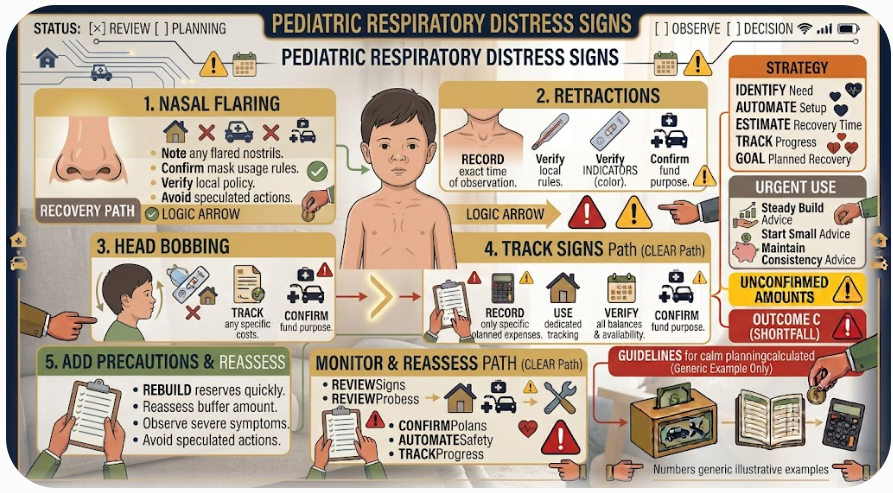
- skin pulling in between or below the ribs, above the collarbones, or at the lower neck with each breath;
- belly breathing that is much stronger than usual;
- nostril flaring, rhythmic grunting, head bobbing, or unusually fast breathing;
- harsh noise when breathing in, especially while resting;
- difficulty feeding, drinking, crying, or speaking because breathing interrupts the activity;
- unusual quietness, limpness, poor interaction, or exhaustion.
Young children normally breathe differently from adults, and breathing rate changes with age, fever, crying, activity, and sleep. A single count taken while a child is upset is not a diagnosis. The important pattern is sustained fast breathing together with effort, reduced function, poor color, or worsening illness.
Decide Between Prompt Advice and Close Observation
Not every new breathing symptom requires an ambulance. However, new wheezing, breathlessness at rest, noisy breathing, or reduced ability to do normal activities deserves prompt clinical assessment even when the person is alert and can speak.
Seek same-day medical advice when:
- breathing is harder or faster than usual and does not settle with rest;
- wheezing or chest tightness is new, recurring, or worsening;
- a child has retractions, persistent noisy breathing, feeding difficulty, or fewer periods of comfortable breathing;
- symptoms improved and then returned with worse cough, fever, or breathing;
- prescribed rescue treatment is needed more often than the person’s plan allows or is not working as expected;
- breathlessness prevents normal drinking, feeding, sleep, or basic movement;
- the person is at increased risk of severe respiratory illness; or
- you are unsure whether the pattern is safe to watch at home.
An infant with breathing changes should be assessed with a lower threshold. Babies may have trouble feeding before their color changes, and some infections can cause pauses in breathing without a dramatic cough. Contact a pediatric clinician promptly for persistent fast breathing, retractions, grunting, poor feeding, reduced responsiveness, or any concerning change. Use emergency services for severe effort, color change, pauses, inability to feed because of breathing, or difficulty waking.
Mild congestion or a cough can often be observed when the person breathes comfortably at rest, speaks or cries normally, drinks adequately, remains alert, and is not worsening. Observation still requires a plan: check again after rest, after a coughing episode settles, and periodically through the day. Escalate if effort, function, color, or alertness deteriorates.
Use Function as a Practical Severity Test
Function often reveals more than an adjective such as “mild” or “bad.” Compare the person with their own baseline.
| Check | More reassuring pattern | Concerning change |
|---|---|---|
| Speech or crying | Full sentences, normal cry | Pauses every few words or cannot cry normally |
| Movement | Usual room-to-room activity | Must stop, cannot walk, or becomes breathless at rest |
| Drinking or feeding | Can drink or feed without repeated interruption | Cannot coordinate breathing with swallowing or feeding |
| Alertness | Awake, interactive, recognizable behavior | Confused, unusually quiet, floppy, exhausted, or hard to wake |
| Trend | Stable or improving between checks | More effort, less function, or faster decline |
Do not make someone perform an exercise test to prove they are safe. The goal is to notice what happens during ordinary necessary activity, not to provoke symptoms.
Put Pulse Oximeter Readings in Context
A fingertip pulse oximeter estimates oxygen saturation. It can add information for some people, particularly when a clinician has told them how to use it and what thresholds apply to their condition. It cannot measure how hard someone is working to breathe, diagnose the cause, or guarantee that the situation is safe.
Readings can be affected by poor circulation, cold hands, movement, skin pigmentation, skin thickness, tobacco use, nail polish, device quality, and placement. Some devices sold for general wellness are not evaluated for clinical decision-making in the same way as medical-purpose devices. Research and FDA reviews have also identified accuracy concerns across skin tones, including the possibility of overestimating oxygen levels in people with darker skin pigmentation.
If using a device, follow its instructions, let the hand rest and warm, remove nail polish if directed, stay still, and wait for a stable reading. Record the number, time, symptoms, and whether the trend differs from the person’s usual readings. Follow a clinician’s individualized threshold when one exists.
Never let one apparently normal reading override severe breathlessness, blue or gray color, chest pain, confusion, inability to speak, or rapid worsening. Conversely, an unexpected low reading should be repeated correctly, but it should not be dismissed if symptoms are present. Seek clinical advice rather than inventing a universal cutoff.
Follow Existing Asthma, COPD, and Cardiac Plans
People with asthma, COPD, heart failure, cystic fibrosis, or another condition may already have a written action plan. Use its symptom zones, prescribed medicines, peak-flow or oxygen targets, and contact instructions. That individualized plan takes priority over generic internet advice.
Having a chronic condition does not make every breathing change “normal.” Escalate when symptoms are different from the person’s usual flare, rescue medicine does not help as expected, the plan enters its emergency zone, or danger signs appear. Do not increase doses, borrow oxygen, or change prescribed flow rates unless the plan or treating clinician directs it.
People at higher risk should also contact a clinician early in a respiratory illness because testing and antiviral treatment can be time-sensitive. That early-treatment decision is separate from emergency triage: danger signs require immediate help regardless of test status.
Reassess the Direction, Not Just the Snapshot
Breathing can change after a coughing fit, activity, medication, sleep, or fever. Write down what you see and when:
- breathing effort at rest;
- ability to speak, walk, drink, or feed;
- color and alertness;
- prescribed medicine used and response;
- pulse oximeter reading, if applicable; and
- whether each check is better, the same, or worse.
A worsening trend lowers the threshold for care. Improvement after rest or prescribed treatment is useful, but it does not erase a danger sign or replace the person’s action plan.
Decision Summary
When breathing changes, focus on effort and function before trying to name the illness.
- Call emergency services for severe breathing difficulty, impaired speech or walking, blue or gray color, severe chest pain, confusion, inability to wake, pauses in breathing, or rapid deterioration.
- In children, watch for retractions, nostril flaring, grunting, head bobbing, feeding difficulty, exhaustion, and reduced interaction.
- Seek prompt advice for new or worsening wheeze, breathlessness, noisy breathing, reduced function, poor response to prescribed rescue treatment, or a high-risk person.
- Use a pulse oximeter only as supporting information; symptoms and trend still matter.
- Follow individualized asthma, COPD, cardiac, or other action plans.
- Recheck effort, function, color, alertness, and direction of change.
The decision is not based on one sound, one number, or one moment. It is based on what breathing costs the person, what they can still do, and whether that cost is rising.
This article provides general health information and cannot diagnose or grade an individual breathing problem. When in doubt about a serious or rapidly worsening symptom, call your local emergency number.
FAQ
Is wheezing always an emergency?
No. Wheezing can occur with several conditions and varies in severity. Emergency help is needed when it accompanies severe effort, inability to speak or walk, blue or gray color, confusion, exhaustion, or rapid worsening. New or persistent wheezing still deserves prompt medical advice.
Can anxiety cause shortness of breath?
Yes, anxiety can change breathing, but it is unsafe to assume anxiety is the cause of a new or severe symptom. Chest pain, fainting, color change, major functional loss, or worsening breathlessness requires medical assessment.
What does “retraction” mean in a child?
Retractions occur when skin pulls inward between or below the ribs, above the collarbones, or at the lower neck with each breath. They indicate increased breathing effort and warrant prompt assessment; severe retractions with poor color, exhaustion, or feeding difficulty require emergency help.
Should I count breaths per minute?
A calm one-minute count can help a clinician, but normal rates vary by age and situation. Fever, crying, activity, and sleep affect the count. Do not use a number alone to decide; also assess effort, function, color, alertness, and trend.
What pulse oximeter number means I should go to the hospital?
There is no single home cutoff that fits every person, altitude, condition, and device. Follow a clinician’s threshold if you have one. Seek emergency help for danger signs even if the displayed number looks normal, and obtain prompt advice for a persistently unexpected reading.
What if an inhaler helps only briefly?
Follow the person’s written action plan. If relief is shorter than expected, medicine is needed more often than allowed, or symptoms remain significant, contact a clinician promptly. Use emergency services for severe effort or other danger signs.
Should I drive someone with severe breathing trouble to the hospital?
Calling emergency services is usually safer when breathing is severe or worsening because treatment and monitoring can begin en route. Follow local dispatcher guidance rather than having the ill person drive or transporting them without support.
Sources
- CDC – About Respiratory Illnesses
- CDC – People at Increased Risk for Severe Respiratory Illnesses
- NHLBI – Asthma Action Plan
- NHLBI – The COPD Caregiver’s Toolkit
- FDA – Pulse Oximeters
- AAP / HealthyChildren.org – RSV: When It’s More Than Just a Cold
More in This Cluster: Cold, Flu, and Respiratory Illness
- Cold, Flu, COVID-19, or RSV? What Your Symptoms Can—and Cannot—Tell You
- When Should You Stay Home from Work or School With a Respiratory Illness?
- Fever Basics for Adults and Children: What the Number Really Means
- Hydration During Illness: What to Drink and When to Get Help
- How to Reduce the Spread of Respiratory Illness at Home
- When Breathing Symptoms Need Urgent Care (you are here)
- Building a Practical Sick-Day Supply Kit