You went to bed eight hours before the alarm. The number looks right, yet the morning still feels wrong. Your eyes are open, but your thinking is slow. Or perhaps the grogginess passes, but you spend the entire day feeling drained.
Those are not necessarily the same problem. “I woke up tired” can describe temporary grogginess after waking, a strong tendency to fall asleep, low physical or mental energy, or sleep that was long enough on the clock but repeatedly interrupted.
The useful question is not “Which diagnosis do I have?” It is: Which pattern am I experiencing, and what information would make the next step clearer?
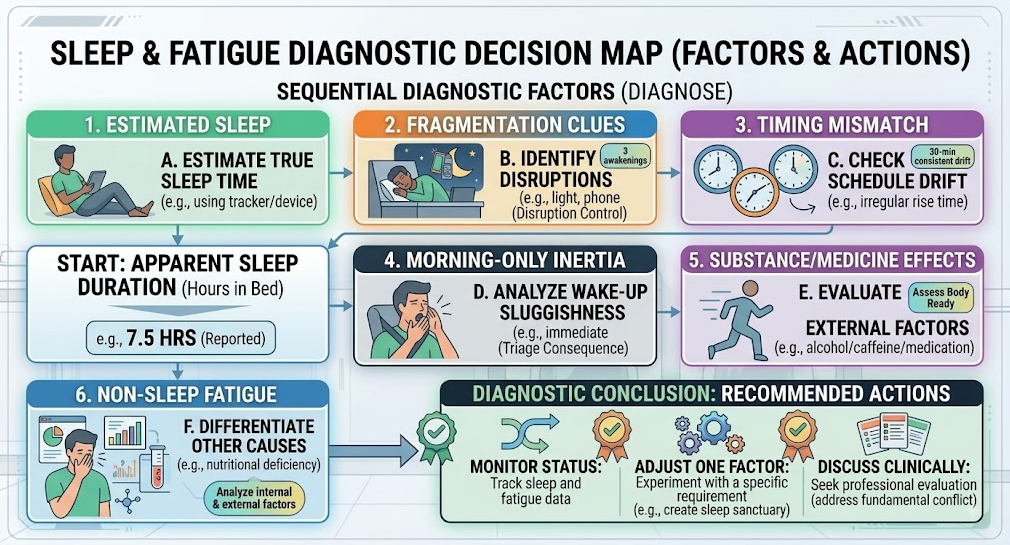
Quick decision: First separate time in bed from estimated sleep. Then identify whether the problem is brief morning grogginess, daytime sleepiness, or all-day fatigue. Track timing, awakenings, breathing clues, pain, substances, medicines, and daytime function for two weeks. If adequate sleep opportunity remains unrefreshing—or if you have unintended sleep, loud snoring with gasping or breathing pauses, or safety impairment—discuss the pattern with a healthcare professional rather than repeatedly extending bedtime.
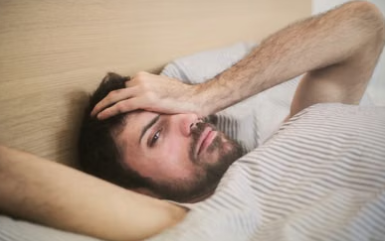
Begin by Naming the Morning Problem
The words tired, sleepy, and fatigued often overlap in everyday speech. Separating them helps you observe the right clues.
Sleep inertia: slow waking that improves
Sleep inertia is the temporary disorientation and reduced performance that can occur immediately after waking. NIOSH notes slower reaction time, short-term memory, thinking, and reasoning during this transition; it often lasts 30 to 60 minutes, although it can last longer.
This pattern looks like:
- feeling foggy at first but becoming reasonably alert;
- needing a little time before complex decisions feel easy;
- worse grogginess after being awakened suddenly or from deeper sleep; and
- little or no unintended sleepiness later in the day.
Do not schedule driving, medication decisions, hazardous work, or other high-consequence tasks in a period when you know your alertness is impaired. Persistent, extreme, or hours-long difficulty waking is not something to dismiss automatically as ordinary sleep inertia.
Sleepiness: difficulty staying awake
Sleepiness means a tendency to doze or fall asleep. It may appear during reading, meetings, television, quiet conversation, driving, or routine work. NHLBI uses daytime dozing and trouble staying awake as important clues when evaluating sleep deficiency.
Repeated unintended sleep is more concerning than simply disliking mornings. It may reflect insufficient sleep, disrupted sleep, circadian misalignment, a medicine or substance, or a sleep disorder.
Fatigue: low energy without necessarily dozing
Fatigue can feel like physical heaviness, weakness, poor stamina, mental depletion, or lack of energy even when you are not likely to fall asleep. MedlinePlus lists many possible contributors, including anemia or iron deficiency, thyroid problems, persistent pain, depression or grief, medicines, alcohol or drug use, and sleep disorders.
This list is not a self-diagnosis menu. It explains why adding another hour in bed may not resolve every form of tiredness.
You can experience more than one category. Record which description is strongest, when it occurs, and whether it improves after you have been awake for a while.
Check Whether Eight Hours in Bed Was Eight Hours Asleep
A clock interval can hide lost sleep. An eight-hour window may include 40 minutes to fall asleep, several awakenings, an hour awake before the alarm, or caregiving and bathroom trips you only partly remember.
For two weeks, estimate:
- when you tried to sleep;
- how long falling asleep seemed to take;
- major awakenings and their likely cause;
- final wake time;
- naps and unintended dozing; and
- how refreshed, sleepy, or fatigued you felt at three points: after waking, midday, and evening.
Do not chase minute-level precision. Use broad categories such as “less than 15 minutes,” “15–30 minutes,” or “more than 30 minutes.” The goal is to reveal whether the apparent duration survives a closer look.
If estimated sleep is repeatedly below your target, return to the duration and practical-routine articles. If the opportunity and estimated sleep both look adequate, move to quality, timing, and non-sleep causes.
Look for Fragmentation You May Not Fully Remember
Quality sleep is not only long enough; CDC describes it as uninterrupted and refreshing. Trouble falling asleep, repeated waking, and feeling tired after enough sleep are signs of poor sleep quality.
Review each major awakening by trigger rather than assuming one cause:
- light, noise, temperature, pets, or another person’s schedule;
- caring for a child or another household member;
- pain, coughing, reflux, hot flashes, itching, congestion, or shortness of breath;
- urination, thirst, or a late large drink;
- alcohol, a large meal, nicotine, or caffeine timing;
- worry, nightmares, or a racing mind;
- restless or uncomfortable sensations in the legs; or
- no known reason.
A wearable may estimate awakenings, but it cannot tell you whether pain, breathing, insomnia, a movement disorder, or another condition caused them. Use device data as one observation, not a diagnosis.
If a bed partner reports loud frequent snoring, breathing that stops and restarts, or gasping, include that exact observation. NHLBI lists those as sleep-apnea symptoms, along with daytime sleepiness, tiredness, dry mouth, headaches, insomnia, and waking often to urinate. Snoring alone does not establish sleep apnea, and people with sleep apnea do not all present identically. The observation is a reason to discuss assessment, not to buy a treatment device independently.
Ask Whether the Sleep Happened at the Right Time
Sleep can be long enough yet poorly aligned with work, school, travel, or the body’s internal timing. NHLBI notes that circadian rhythm disruption can cause extreme daytime sleepiness, reduced alertness, concentration problems, and impaired judgment.
Timing mismatch is more likely when:
- you sleep and wake much later on days off than on workdays;
- you can sleep well on your preferred schedule but struggle on the required one;
- shifts rotate or overnight work repeatedly changes sleep time;
- you recently crossed time zones or changed clocks;
- you are awakened during the sleep period your body strongly prefers; or
- fatigue and alertness occur at predictably “wrong” times.
Do not infer a circadian rhythm disorder from one late weekend or a temporary schedule change. Record workdays and days off separately. If the pattern is persistent and interferes with daily life, bring the schedule to a clinician rather than self-treating with light boxes, melatonin, or stimulants. Timing interventions can produce the wrong effect when used at the wrong time.
Review Substances, Medicines, and the Morning After
Evening choices can affect both sleep continuity and next-morning alertness.
Alcohol
Alcohol may make falling asleep feel easier, but NHLBI notes that sleep can become lighter and more likely to be interrupted. Record amount and timing without assuming that “I fell asleep quickly” means the night was restorative.
Caffeine and nicotine
Caffeine late in the waking period can delay or reduce sleep for some people, while escalating caffeine to fight morning tiredness may push the next dose later. Topic 4 will own the detailed timing decision. For now, record the last serving and approximate amount rather than changing several sources at once.
Medicines and supplements
Prescription medicines, over-the-counter products, and supplements may affect sleep, alertness, blood pressure, breathing, urination, pain, or mood. Some sleep medicines can impair next-morning activity and driving even after the person feels awake; FDA advises reading warnings and asking a healthcare professional when a medicine may affect driving.
Make a list that includes:
- product and active ingredient;
- dose as prescribed or labelled;
- timing;
- when the tiredness began relative to starting or changing it; and
- alcohol, cannabis, or other substances used alongside it.
Do not stop, move, split, combine, or replace a prescribed medicine because it appears on a possible-cause list. Ask the prescriber or pharmacist to review the exact product and timing.
Consider Whether the Main Problem Is Outside Sleep
If you are awake but depleted all day, broaden the record beyond bedtime. Fatigue can accompany illness, recovery, anemia or iron deficiency, thyroid disease, persistent pain, depression or grief, medicines, substance use, and many other conditions.
Useful context includes:
- when the fatigue started and whether it was sudden or gradual;
- recent illness, surgery, infection, pregnancy, or major stress;
- breathlessness, palpitations, dizziness, fever, pain, weakness, or weight change;
- appetite, mood, and ability to complete ordinary activity;
- menstrual or other blood loss;
- new medicines or dose changes; and
- whether rest helps.
Do not order a broad panel of tests or start iron, thyroid products, vitamins, or other supplements based on an online list. Symptoms overlap, excessive supplements can cause harm, and the appropriate evaluation depends on the full history and examination.
Acute chest pain, significant breathing difficulty, fainting, new confusion, one-sided weakness, severe bleeding, or another serious new symptom should be handled through appropriate urgent or emergency care rather than a sleep experiment.
Use a Two-Week “Why Am I Tired?” Record
The record should be short enough to complete when you are tired. Use one row per day:
| Field | What to record |
|---|---|
| Sleep opportunity | Time you tried to sleep through final wake time |
| Estimated sleep | Broad estimate after subtracting major wake periods |
| Fragmentation | Number and likely triggers of major awakenings |
| Morning state | Groggy, sleepy, fatigued, or reasonably refreshed |
| Time to improve | Under 30 minutes, 30–60 minutes, over an hour, or no improvement |
| Daytime function | Unintended dozing, concentration, routine activity, driving or work safety |
| Context | Shift, illness, pain, alcohol, caffeine, medicine change, caregiving, unusual stress |
| Observations from others | Snoring, gasping, breathing pauses, movements, sleep behaviors |
At the end of two weeks, sort the pattern:
- Short actual sleep: protect more opportunity and remove the largest schedule leak.
- Repeated known awakenings: address the trigger or seek care for symptoms causing it.
- Morning-only grogginess that clears: allow a safe wake-up buffer and watch for change.
- Sleepiness throughout the day: prioritize safety and clinical discussion, especially if sleep opportunity is adequate.
- Fatigue without dozing: bring the broader health context to primary care.
- Breathing or unusual sleep observations: document what another person noticed and discuss assessment.
- No clear pattern: the absence of an obvious home explanation is itself useful information for a clinician.

Change One Low-Risk Factor While You Observe
If the record points to an obvious, controllable disturbance, test one change:
- move a noisy notification out of the room;
- protect enough time for sleep;
- shift the last caffeinated drink earlier;
- move a heavy meal earlier if it repeatedly coincides with discomfort;
- ask for coverage for one predictable caregiving interruption; or
- adjust light, noise, or temperature within safe housing limits.
Keep everything else reasonably stable. Improvement after a change makes that factor more plausible; it does not prove that it was the only cause.
Do not self-treat breathing pauses, severe insomnia, persistent excessive sleepiness, or unexplained fatigue with a consumer device, borrowed CPAP machine, sedating antihistamine, alcohol, stimulant, or supplement.
Know When Observation Is No Longer Enough
Arrange professional review when:
- adequate opportunity remains unrefreshing;
- daytime sleepiness is persistent or causes unintended sleep;
- sleep problems or fatigue interfere with work, school, caregiving, mood, or daily activity;
- loud snoring occurs with gasping, choking, or witnessed breathing pauses;
- you wake with frequent headaches, dry mouth, or repeated unexplained urination alongside other sleep-quality concerns;
- insomnia symptoms are regular or prolonged;
- fatigue is new, worsening, unexplained, or accompanied by other symptoms; or
- a medicine or supplement may be involved.
Do not drive or continue hazardous work when you are struggling to stay awake. The immediate decision is safety, not proving the cause.
The final article in this cluster will cover how to prepare for a clinical conversation in detail. For now, bring the two-week record, medication and supplement list, work schedule, and observations from anyone who sees you sleep.
Decision Summary
Waking tired after an apparently full night is not one problem with one fix.
- Distinguish brief sleep inertia, daytime sleepiness, and persistent fatigue.
- Recalculate actual sleep instead of relying on time in bed.
- Look for remembered and observed fragmentation.
- Compare required sleep timing with the timing on which you sleep best.
- Record alcohol, caffeine, medicines, supplements, pain, illness, and other context.
- Change one low-risk factor when the pattern points clearly to it.
- Seek assessment when adequate sleep remains unrefreshing, sleepiness is persistent, breathing pauses are observed, or fatigue is unexplained.
The purpose of the investigation is not to diagnose yourself. It is to replace “I am always tired” with a clear pattern that supports the right next decision.
This article provides general health information and cannot determine the cause of fatigue, sleepiness, or unrefreshing sleep. Do not change prescribed medicines or self-treat a suspected sleep disorder without professional guidance. Use urgent or emergency services for serious acute symptoms or immediate safety risks.
FAQ
Why am I tired after eight hours of sleep?
Eight hours in bed may include time awake, fragmented sleep, or sleep at a poorly aligned time. You may also be experiencing temporary sleep inertia, medication effects, a sleep disorder, or fatigue from a non-sleep health issue.
How can I tell sleepiness from fatigue?
Sleepiness is a tendency to doze or fall asleep. Fatigue is low physical or mental energy without necessarily dozing. They can occur together, so record both and note when each appears.
Is morning grogginess normal?
Brief sleep inertia can occur after waking and often improves within 30 to 60 minutes. Take it more seriously when it is extreme, prolonged, worsening, or creates driving or work-safety problems.
Does snoring mean I have sleep apnea?
No. Snoring alone does not diagnose sleep apnea. Frequent loud snoring with gasping, choking, breathing pauses, or excessive daytime sleepiness is a reason to discuss assessment with a healthcare professional.
Can a sleep tracker tell why I wake tired?
No. A tracker may estimate sleep timing or movement, but it cannot determine whether awakenings come from breathing problems, pain, insomnia, medication effects, or another condition.
Could my medicine make me tired in the morning?
Yes, some prescription and over-the-counter products can affect sleep or next-day alertness. Review the exact active ingredient, timing, warnings, and recent changes with a pharmacist or prescriber rather than changing it yourself.
When should I see a clinician about waking tired?
Arrange a review when adequate sleep remains unrefreshing, daytime sleepiness causes unintended dozing, breathing pauses or gasping are observed, fatigue is persistent or unexplained, or the problem affects safety and daily function.
Sources
- CDC/NIOSH – Sleep Inertia
- NHLBI – Sleep Deprivation and Deficiency: Diagnosis
- CDC – About Sleep
- NHLBI – Sleep Apnea Symptoms
- NHLBI – Circadian Rhythm Disorders: Symptoms
- FDA – Some Medicines and Driving Don’t Mix