Paying the amount printed beside “minimum due” can feel like progress. The payment was made, the account remains open, and the next statement arrives without an obvious crisis.
But a minimum payment is designed to keep the account current under its terms, not to create the fastest credible payoff. If new purchases continue, interest absorbs part of each payment, or the extra amount changes every month, the balance may move too slowly to reinforce the effort.
Momentum comes from making the system visible: protect the due date, define one repeatable payment above the minimum, stop the target balance from refilling, and measure principal reduction rather than payment activity alone.
Quick decision: Put at least the required minimum on a reliable payment system with enough bank balance to cover it. Choose a fixed total payment or fixed extra amount that your cash flow can repeat, and send additional payments earlier when possible under your account terms. Stop new discretionary charges on the payoff card, redirect subscriptions and recurring bills deliberately, and review each statement for interest, fees, purchases, payment allocation, and principal change. After a setback, protect the minimum and restart the next scheduled extra payment instead of waiting for a perfect month.
Read the Statement as a Payoff Dashboard
Do not begin with the current app balance alone. Use the statement and agreement to record:
- statement opening and closing balances;
- minimum payment and due date;
- purchase, cash-advance, balance-transfer, and promotional rates;
- interest and fees charged;
- new purchases and credits;
- payment amount and posting date;
- promotional expiry or penalty-rate conditions; and
- the issuer’s estimate of payoff time at minimum payments, when supplied.
FCAC explains that Canadian federally regulated card statements include the minimum, due date, rates, interest, transactions, and the amount needed to receive the applicable purchase grace period. Required disclosures differ by jurisdiction, but the discipline is portable: use the issuer’s actual statement rather than an assumed rate or remembered due date.
Calculate one monthly result:
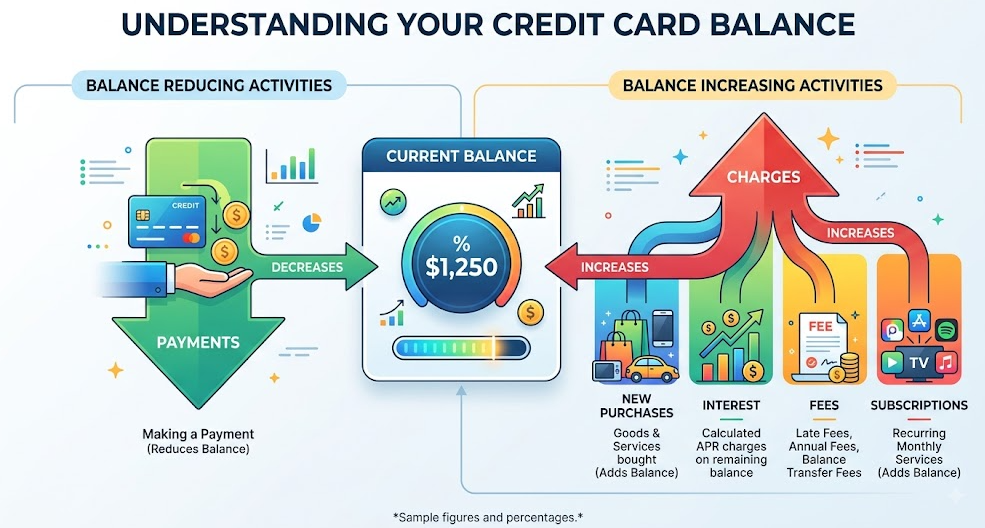
Principal movement = payments and credits − new charges − interest − fees
This is a simplified reconciliation, not the issuer’s interest formula. Its purpose is to reveal why a large payment produced a small balance change.
Protect the Minimum Before Accelerating
Missing the minimum can trigger late fees, loss of a promotional rate, a higher rate, credit-report damage, or account restrictions depending on the contract and local rules. FCAC advises making at least the minimum when the full balance cannot be paid and warns that late or missed minimums may increase rates or cancel promotional terms.
Set up one of these controls:
- automatic payment for at least the minimum;
- a calendar reminder several business days before the due date;
- an automatic transfer into a dedicated bill account before the withdrawal; or
- an issuer alert when the statement posts and before payment is due.
Autopay is not “set and forget.” Confirm the source account has enough money, the payment posted, and the minimum did not change. A returned payment may create fees or other consequences.
If income is irregular, hold the minimum in the bill account as soon as income arrives. Do not schedule an aggressive automatic extra payment that repeatedly causes overdrafts.
Make the Extra Payment Repeatable
“Whatever is left at month-end” is not a payment rule. It gives every other expense first access to the money.
Choose one structure:
- Fixed total payment: the same total amount each month, provided it remains at least the required minimum.
- Minimum plus fixed extra: the current minimum plus a stable additional amount.
- Pay-period payment: divide the planned monthly amount across paydays.
- Base plus windfalls: a sustainable base payment, with a written percentage of eligible lump sums added.
FCAC illustrates that paying above the minimum reduces time and interest, while paying only the minimum extends both. Do not copy its example amounts into your plan; use your balance, contract, and cash flow.
When possible, an extra payment made earlier reduces the balance sooner, but interest calculation and payment allocation vary. Confirm how your issuer handles payments, pending transactions, multiple rate buckets, and statement cycles.
Stop the Target Card From Refilling
A revolving card restores available credit as the balance is paid. That feature can make a declining balance look like new spending capacity.
Create a payoff boundary:
- Remove the card from your wallet and digital wallets if practical.
- Stop using it for discretionary purchases.
- Move recurring charges only after confirming the replacement payment method works.
- Review pre-authorized charges, free trials, app stores, and annual renewals.
- Keep a small sinking fund for predictable expenses that would otherwise return to the card.
Do not cancel an account reflexively. Account age, utilization, insurance, rewards, fees, automatic charges, and credit history may matter. If you want a lower limit, freeze, or closure, ask the issuer how it works and consider your broader situation.
If the card must remain active for an essential recurring bill, isolate that charge and add its full amount to the planned payment. The payoff target should still decline after the new charge posts.
Separate Purchase Types and Rate Buckets
A single card may contain balances with different costs:
- regular purchases;
- cash advances or cash-like transactions;
- balance transfers;
- promotional instalments; and
- fees or interest.
FCAC notes that cash advances generally have no interest-free grace period and often carry a higher rate; balance transfers commonly involve a fee and a limited promotional period.
Ask the issuer:
- how the minimum is allocated;
- how amounts above the minimum are allocated;
- whether a new purchase receives a grace period while another balance remains;
- when a promotional rate expires;
- what rate applies afterward; and
- whether an instalment plan changes available credit or minimums.
Do not assume an extra payment automatically attacks the highest-rate portion. Rules differ. FCAC says federally regulated Canadian issuers may apply amounts above the minimum to the highest-rate portion or proportionally across balance types.
Avoid cash advances during payoff when possible. They can add fees and immediate interest, making progress harder to interpret.
Use Milestones Before the Balance Reaches Zero
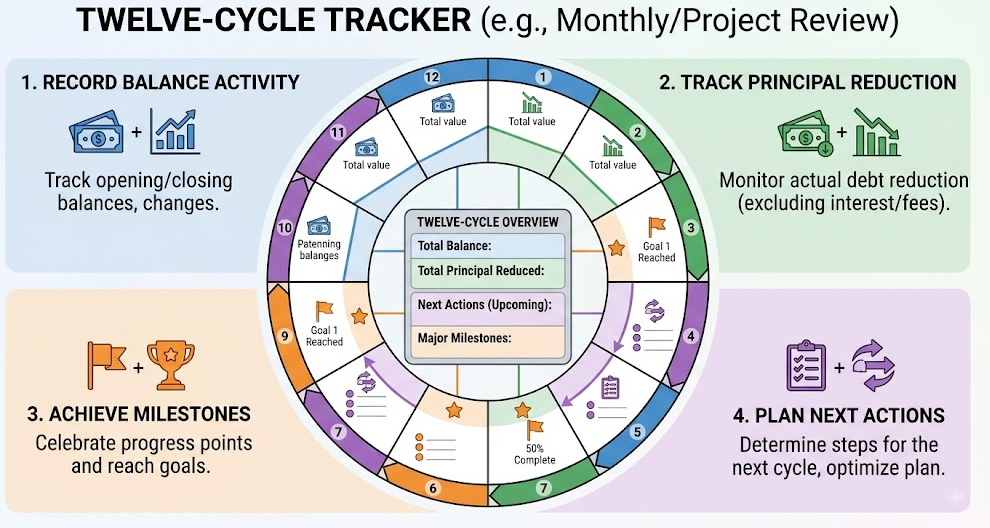
If the only success point is “paid off,” a long repayment can feel unchanged for months. Track milestones that cannot be confused with spending capacity:
- first month with no new discretionary charges;
- three consecutive on-time payments;
- first $500 or 10% of principal reduction;
- balance below the previous year’s low;
- monthly interest below a chosen threshold;
- promotional balance cleared before expiry; or
- one recurring charge successfully moved.
Celebrate without borrowing. A reward funded by the card reverses the signal. Choose a no-cost or already-budgeted marker.
Update a simple chart once per statement cycle, not every hour. Daily balance changes, pending transactions, refunds, and posting delays can create noise.
Jerome’s Experience: Payment Can Become the Normal State
Jerome described becoming accustomed to paying interest on a line of credit because the cost felt manageable. Since only interest needed to be paid, consistent principal repayment did not become habitual.
That was a LOC, not a credit card, and the products should not be treated as identical. The narrow transferable lesson is behavioural: making the required payment can normalize a persistent balance when no separate principal-reduction rule exists.
This account does not provide a card balance, rate, minimum, missed payment, or payoff attempt. None is inferred. The experience is used only to explain why “account current” and “debt shrinking” need separate measures.
Create a Monthly Statement Ritual
Within two days of each statement posting:
- Verify every transaction and credit.
- Record interest and fees.
- Confirm the minimum and due date.
- Check the autopay source balance.
- Compare closing balance with the prior statement.
- Calculate principal movement.
- Schedule the fixed extra payment.
- Identify any charge that violated the no-new-use boundary.
- Update the milestone and next review date.
If a transaction or payment appears incorrect, use the statement’s dispute instructions and act within applicable deadlines. Continue paying undisputed required amounts unless authoritative guidance or the issuer says otherwise.
Keep statements and confirmations securely. Do not store full account numbers in an unsecured worksheet.
Recover From a Setback Without Restarting the Plan
A repair, medical cost, income interruption, or overlooked annual fee may reduce the extra payment or increase the balance. Use a recovery sequence:
- Protect essentials and the required minimum.
- Stop additional nonessential charges.
- Identify whether the event was unexpected or should become a sinking-fund category.
- Use the starter cushion under its rule when appropriate.
- Resume the ordinary extra payment on the next planned date.
- Recalculate the payoff estimate only after the cash flow stabilizes.
Do not “make up” for one weak month with an unaffordable payment that causes an overdraft or another card charge. Momentum is the return to the system, not an unbroken record.
Know When a Balance Transfer Helps—and When It Distracts
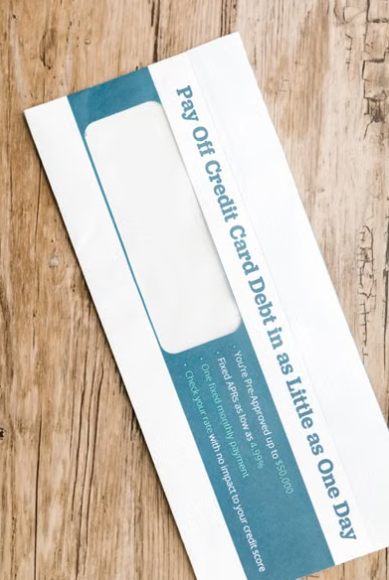
A balance-transfer offer may lower the rate temporarily, but it is not principal repayment. Compare:
- transfer fee;
- promotional rate and exact expiry;
- post-promotion rate;
- payment needed to clear the balance before expiry;
- allocation rules if new purchases occur;
- effect on existing accounts; and
- risk of rebuilding the old card.
Do not open a transfer product based only on the promotional headline. This is a limited card mechanic; the full consolidation decision belongs in Article “Debt Consolidation When It Helps and When It Does Not”.
Contact the Issuer Before Missing a Payment
If the minimum is unaffordable, act immediately. CFPB advises contacting the card company, explaining why payment is difficult, what can be paid, when normal payments might resume, and what temporary amount is requested.
Ask about available hardship options, fees, rate changes, due-date adjustments, and reporting. Get terms in writing. Do not promise an amount the budget cannot support.
Consider reputable credit counselling when several cards or other debts cannot be maintained. Avoid companies that guarantee elimination, demand upfront fees, or instruct you to stop payments or creditor contact without explaining consequences.
Decision Summary
- Read the full statement and agreement, not only the app balance.
- Protect at least the required minimum and verify every automatic payment.
- Choose a repeatable fixed payment structure above the minimum.
- Stop discretionary use of the target card.
- Fund predictable irregular expenses outside the card.
- Understand cash-advance, transfer, promotional, and allocation rules.
- Measure principal movement after purchases, interest, and fees.
- Use interim milestones that do not require new spending.
- Resume the system after a setback instead of waiting for a perfect restart.
- Contact the issuer before the minimum becomes unaffordable.
Credit-card payoff gains momentum when the balance has only one direction to travel and every statement produces a clear next action.
This article provides general educational information, not individualized financial, legal, tax, credit, or insolvency advice. Card terms, disclosures, payment allocation, consumer rights, and hardship options vary by issuer and jurisdiction.
FAQ
Is paying the minimum enough to pay off a credit card?
It may eventually repay the balance if no new charges occur and terms remain stable, but it generally takes longer and costs more interest. A consistent amount above the minimum accelerates principal reduction.
Should I pay weekly or monthly?
Either can work. Pay-period payments may fit cash flow and reduce the balance earlier, but always ensure at least the required minimum is received by the due date under issuer rules.
Should I stop using the card completely?
Stopping discretionary use makes progress clearer. If an essential recurring charge remains, add its full amount to the planned payment and verify that the total balance still declines.
Does autopay guarantee I will never pay late?
No. The source account may lack funds, details may change, or processing can fail. Confirm the amount, account balance, and successful posting every cycle.
Why did my balance barely fall after a large payment?
New purchases, interest, fees, cash advances, and posting timing may have offset the payment. Reconcile the statement and ask the issuer how payments were allocated.
Should I use a balance-transfer card?
Only after comparing the fee, promotion length, post-promotion rate, required payoff payment, allocation rules, and risk of rebuilding the old balance. A transfer is not repayment by itself.
What if I cannot afford the minimum payment?
Contact the issuer promptly with a realistic budget and request. Protect essentials, review all debts under the priority framework, and consider reputable qualified debt guidance.
Sources
- FCAC – Paying Off Your Credit Card
- FCAC – How Credit Cards Work
- CFPB – Missing Payment on Statement
- CFPB – Can’t Pay Credit Card Bills
More in This Cluster: Debt Payoff Strategies
- Debt Snowball vs Debt Avalanche
- How to Prioritize Multiple Debts
- Should You Save or Pay Off Debt First?
- How to Pay Off Credit Card Debt Without Losing Momentum (you are here)
- Debt Consolidation: When It Helps and When It Does Not
- How to Build a Realistic Debt Payoff Timeline
- What to Do After You Become Debt-Free