From Jerome, EverydayWise Contributor
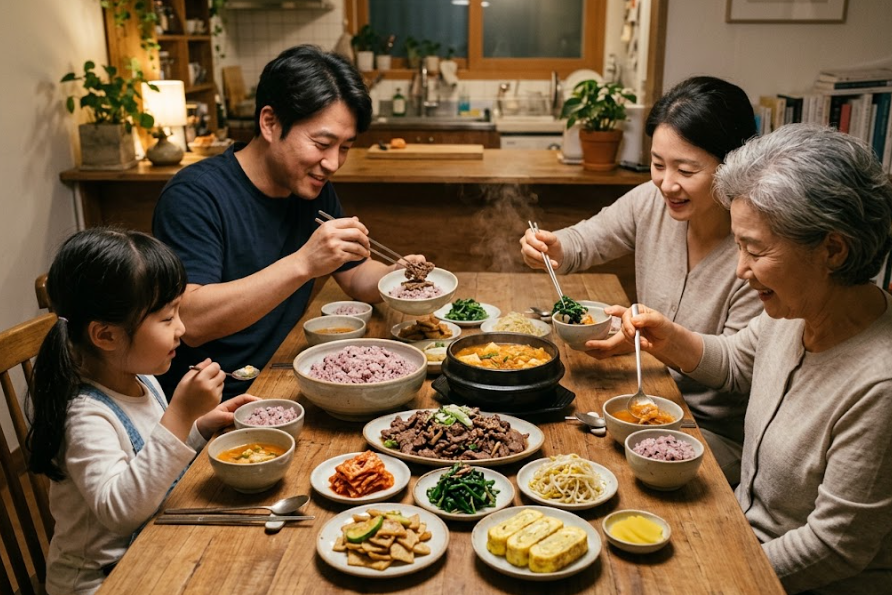
I gain weight fairly easily, while my wife has always been naturally lean. Our growing children seem hungry all the time. All four of us have different appetites and preferences, even though we all enjoy carbohydrate-rich foods.
That makes one family meal harder to balance than it sounds. If I build dinner mainly around rice or noodles, I tend to eat more carbohydrate than works well for my own weight goals. But our children need enough food and energy to grow. We often put meat on the table and serve it with Korean-style side dishes, trying to add vegetables and fibre without making dinner feel like a health assignment.
We cook at home as much as we can because food is closely connected to health. Still, considering carbohydrates, protein, fat, snacks, taste, and four different people can make a supposedly “healthy” meal surprisingly complicated. The challenge is not knowing that vegetables are good. It is making a meal that everyone will actually eat.
The passage above comes from Jerome, an EverydayWise contributor. His household illustrates why a balanced plate is more useful as a flexible structure than as a rigid formula. One meal can contain the same foods for everyone while allowing different amounts, combinations, and second helpings.
A balanced plate does not need to be perfect. It does not require calorie counting, unfamiliar ingredients, or separate meals for every family member. Its purpose is simpler: to help you notice whether a meal contains enough variety to provide energy, protein, fibre, vitamins, minerals, and satisfying flavour.
The Balanced Plate Is a Reference, Not a Prescription
Health Canada’s food guide plate offers a clear visual starting point:
- about half the plate as vegetables and fruits;
- about one quarter as protein foods; and
- about one quarter as whole grain foods.
Water is the default drink in the Canadian guide. Other national guides organize foods somewhat differently, but the broad pattern is similar: emphasize vegetables and fruits, include a source of protein, choose fibre-rich carbohydrate foods regularly, and limit foods or drinks that contribute a great deal of sodium, free sugars, or unhealthy fats without much nutritional value.
The proportions are not a measured prescription. Health Canada explicitly notes that the foods shown do not dictate how much a person should eat at one time. A preschooler, a hungry teenager, an active adult, and an older adult may need different total amounts even if their meals share a recognizable structure.
This distinction matters. “Half vegetables” is a planning prompt, not a test you fail because the broccoli occupies 40 percent of the plate. The plate cannot account by itself for age, body size, activity, pregnancy, medical conditions, allergies, culture, food availability, or appetite on a particular day.
Use it to ask:
- Is there a meaningful vegetable or fruit component?
- Where is the protein?
- Is the main carbohydrate mostly a whole grain or another fibre-rich food?
- Is there enough food for the person eating it?
- Does the meal taste satisfying enough to be repeated?
Those questions are often more useful than trying to make every plate look like a diagram.
Start With Vegetables and Fruit—but Make Them Fit the Meal
Vegetables and fruits provide fibre and a range of vitamins, minerals, and other beneficial compounds. The World Health Organization recommends that people older than 10 aim for at least 400 grams per day, with lower age-adjusted amounts for younger children. That is a daily target across meals and snacks, not a demand that every dinner contain a mountain of raw salad.
There are many ways to build the vegetable and fruit portion:
- roasted, steamed, sautéed, or grilled vegetables;
- leafy greens, cabbage, mushrooms, squash, or root vegetables;
- frozen vegetables added to soup, curry, pasta, or fried rice;
- lower-sodium canned vegetables, drained and rinsed;
- beans or lentils contributing both vegetables-like fibre and protein;
- fresh, frozen, canned, or dried fruit without excessive added sugar; or
- vegetable side dishes served family-style.
Fresh produce is not automatically superior. Health Canada recognizes fresh, frozen, canned, and dried choices as possible healthy options. Frozen spinach in soup may be more practical than a salad that wilts unused. Canned tomatoes may make a nutritious sauce. Convenience can support consistency.
For a Korean-style meal, “half the plate” may be spread across several dishes: seasoned spinach, cucumber, bean sprouts, kimchi, mushrooms, seaweed, radish, or vegetables cooked in soup. These foods can add variety and fibre without changing the meal’s cultural identity. Some fermented vegetables, sauces, soup bases, and prepared side dishes can also contain substantial sodium, so variety and seasoning matter.
Fruit can support the pattern, especially at breakfast or as a snack, but it does not need to replace vegetables entirely. Whole fruit is generally more filling and retains more fibre than juice. WHO classifies sugars naturally present in fruit juice as free sugars, and Health Canada recommends choosing water and whole or cut produce instead of juice more often.
Add a Protein Food That Works for the Household
Protein supports the maintenance and repair of body tissues and is especially important during growth. Protein foods also supply different combinations of iron, zinc, vitamin B12, calcium, healthy fats, and other nutrients.
Options include:
- beans, peas, and lentils;
- tofu, tempeh, and edamame;
- nuts, seeds, and nut or seed butters;
- eggs;
- fish and shellfish;
- poultry and lean meat;
- milk, yogurt, cheese, or fortified soy beverages; and
- combinations of these foods.
Meat can be part of a balanced plate, but it is not the only way to make a meal complete. Health Canada recommends choosing plant-based protein foods more often. That can mean adding tofu to a stew, mixing lentils into meat sauce, serving beans alongside rice, or alternating meat meals with eggs, fish, or legumes. It does not require a family to change its entire food culture overnight.
The quarter-plate image may also be misleading if protein is mixed into the meal. Chicken in a stir-fry, lentils in curry, egg in fried rice, yogurt in a bowl, and tofu in soup still count even when they are not sitting in a separate section.
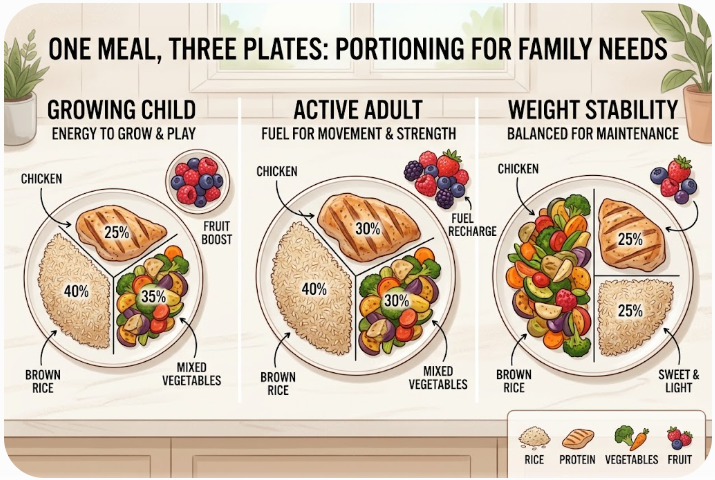
Children and adolescents need adequate energy and nutrients for growth. A parent managing their own weight should not automatically reduce a growing child’s food to match the adult’s portion. The family can share chicken, rice, and vegetables while the child takes more rice, an extra serving, milk or yogurt, or another snack according to age, hunger, and activity.
Keep Carbohydrates on the Plate—Choose Their Form Thoughtfully
Carbohydrates are a major source of energy. A balanced plate is not a low-carbohydrate plan, and rice, bread, noodles, potatoes, corn, oats, and other staple foods do not become unhealthy simply because they contain carbohydrate.
The useful questions are:
- What type of carbohydrate is this?
- What else is served with it?
- How much does this person need and enjoy?
- Does the overall pattern provide enough fibre?
Whole grains such as oats, barley, brown or wild rice, whole grain bread, quinoa, and whole grain pasta usually contain more fibre than refined versions. Beans, lentils, vegetables, and fruit also contribute carbohydrate along with fibre and nutrients.
That does not mean white rice or traditional noodles must disappear. You might mix brown rice or barley with white rice, serve a somewhat smaller rice portion beside more vegetables and protein, rotate in whole grain noodles, or keep the familiar staple while improving the rest of the meal. A change that people enjoy and repeat is more useful than an “ideal” substitute nobody wants.
For Jerome’s family, everyone can eat the same rice-based meal without receiving the same ratio. A growing child may want more rice and a second helping. An adult who notices that large rice portions make weight management harder can begin with more vegetables and protein and add rice according to hunger. This is adaptation, not a judgment about whose plate is morally better.
Do Not Forget Fat, Even Though It Has No Plate Section
Plate diagrams sometimes make dietary fat look absent. In practice, fat is already present in foods and cooking: nuts, seeds, avocado, fish, eggs, meat, dairy products, tofu, dressings, and oils.
Fat is essential. It provides energy, supplies essential fatty acids, and helps the body absorb fat-soluble vitamins. The goal is not to remove it, but to consider type and amount across the eating pattern.
WHO and Health Canada emphasize shifting from saturated and industrial trans fats toward unsaturated fats. Practical examples include using plant oils for cooking, choosing nuts or seeds, eating fish, and selecting leaner meats more often. Butter, fatty meats, rich sauces, cheese, fried foods, and baked goods can still appear, but they need not supply most of the household’s fat every day.
Fat also carries flavour and affects satisfaction. Removing it aggressively may produce a meal that leaves people dissatisfied and searching for snacks soon afterward. A spoonful of sesame oil, a yogurt sauce, nuts on oatmeal, or dressing on vegetables may make nutrient-rich foods easier to enjoy.
How to Balance Meals That Do Not Sit in Sections
Many real meals come in bowls, wraps, sandwiches, soups, stews, lunch boxes, or shared platters. You can use the plate method without dismantling them.
Rice or noodle bowls
Look at the combined ingredients. Add vegetables until they are a substantial part of the bowl, include tofu, egg, fish, chicken, beans, or meat, and adjust the rice or noodles to the eater. Fruit can be served afterward rather than inside the bowl.
Soup or stew
A soup containing vegetables, beans or meat, and a grain or potato may already include all three components. Consider what dominates the pot. If broth and noodles make up nearly everything, add vegetables and protein or serve them alongside it.
Sandwiches and wraps
Choose a whole grain option when practical, add a protein filling, and include vegetables inside or on the side. A sandwich plus fruit and yogurt can be more balanced than trying to force every component between two slices of bread.
Korean family-style meals
Think across the table rather than within one dish. Rice supplies the grain; fish, meat, egg, tofu, or beans supply protein; banchan and soup can contribute vegetables. Because kimchi, soup, sauces, and prepared side dishes can collectively add sodium, lighter seasoning in some dishes can balance stronger flavours in others.
Breakfast
Oatmeal with fruit and nuts, eggs with whole grain toast and tomatoes, or plain Greek yogurt with fruit and whole grain cereal can all express the same structure. Breakfast does not have to resemble dinner.
One Meal, Different People
A family does not need four separate menus to respect four different bodies. The more workable approach is often a shared base with adjustable components.
Try placing vegetables, protein, and the staple food on the table separately enough that each person can build a suitable plate. Offer a familiar food alongside something newer. Let a hungrier person take more. Keep extra fruit, yogurt, whole grain toast, eggs, or another planned snack available for children and others whose needs extend beyond the meal.
Health Canada notes that some people need more food than others and younger children may need a smaller version of the family meal. Appetite also changes from day to day. Growth spurts, activity, sleep, illness, medication, and routine can all influence hunger.
For children, repeated exposure matters more than winning one dinner. A child who ignores salad may accept roasted carrots, cucumber, vegetables in dumplings, seaweed, soup, or fruit. Involving children in choosing and preparing food can help them develop familiarity and food skills. It does not guarantee that they will eat every item that night.
Avoid making a child’s plate a public nutrition scorecard. Pressure, shame, and body comparisons can make meals more stressful. Adults can decide what foods are offered and create a predictable meal environment, while recognizing that children vary in how much they eat.
What If the Plate Is Balanced but the Meal Is Not Satisfying?
Health and taste are not opposing goals. A meal that technically checks every box but feels bland, unfamiliar, or emotionally unrewarding is unlikely to become a lasting routine.
Flavour can come from browning, roasting, herbs, spices, aromatics, acid, fermented foods, toasted seeds, and moderate amounts of sauces or oils. Texture matters too: crisp vegetables, soft rice, chewy grains, creamy yogurt, or crunchy nuts can make a simple meal feel complete.
Satisfaction also comes from familiarity and freedom. A family may enjoy fried food when dining out, dessert on a celebration, or a favourite refined-grain dish. One meal does not determine diet quality. The balanced plate is most useful for the repeated pattern, not as a reason to classify every food as clean or bad.
If adding more vegetables causes the family to dislike dinner, change the preparation rather than simply increasing volume. Roast instead of steam. Add vegetables to a familiar sauce. Serve raw cucumber beside a spicy meal. Use frozen produce when preparation time is the barrier. A realistic improvement should protect enjoyment as well as nutrition.
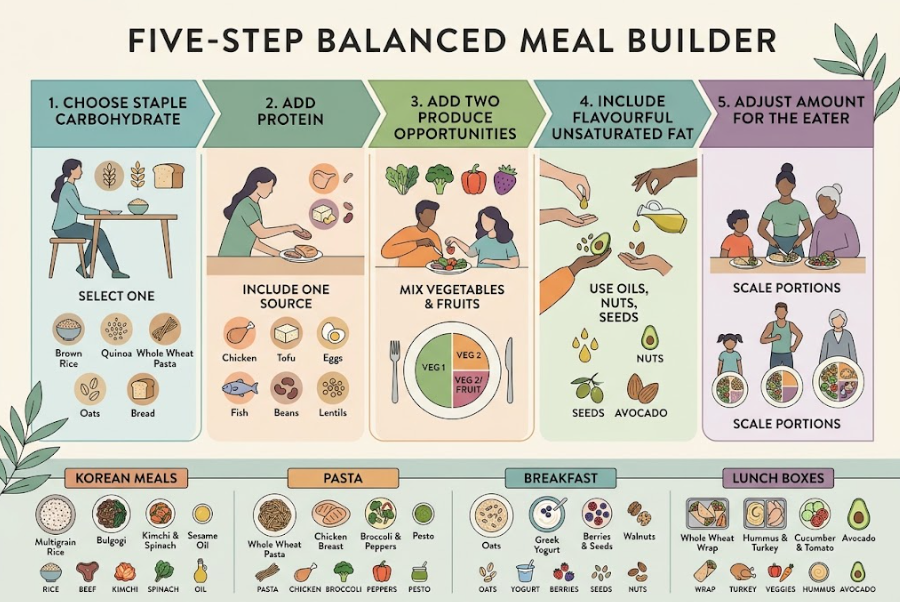
A Five-Step Way to Build Tonight’s Meal
When planning dinner, start with what you already intend to cook.
- Name the main carbohydrate. Rice, bread, pasta, noodles, potatoes, corn, or another staple can remain.
- Choose the protein. Use meat, fish, eggs, dairy, tofu, beans, lentils, nuts, seeds, or a combination.
- Add two produce opportunities. These might be two vegetables, vegetables plus fruit, or vegetables inside the meal and fruit later.
- Add flavour and useful fat. Choose cooking oil, nuts, seeds, avocado, fish, or another ingredient that supports taste and satisfaction.
- Allow individual adjustment. Serve smaller or larger amounts, permit seconds, and keep an appropriate snack available rather than forcing identical portions.
For example:
- Korean-style dinner: mixed-grain rice, grilled fish or tofu, spinach and cucumber banchan, vegetable soup, fruit afterward.
- Fast pasta night: whole grain or mixed-grain pasta, tomato and vegetable sauce, lentils or lean meat, side fruit or salad.
- Low-preparation meal: whole grain toast, eggs, frozen vegetables, plain yogurt, and berries.
- Lunch box: rice or whole grain bread, chicken or beans, cut vegetables, fruit, and water.
When the Plate Method Needs Modification
The plate method is general education, not individualized medical nutrition therapy. A standard high-fibre or high-potassium plate may be inappropriate for some people with kidney disease, certain gastrointestinal disorders, swallowing problems, food allergies, metabolic disorders, or other medical needs. Diabetes management may require closer attention to carbohydrate amount and medication timing. Pregnancy, athletic training, underweight, eating-disorder recovery, and significant unintentional weight change can also change priorities.
Seek individualized guidance from a physician or registered dietitian when:
- a child is not growing as expected;
- eating is extremely restricted or mealtimes cause severe distress;
- weight changes quickly or without a clear reason;
- a medical condition affects food choices or nutrient absorption;
- food allergy or choking risk is involved;
- fatigue, weakness, dizziness, or other symptoms accompany dietary restriction; or
- food rules, fear, guilt, bingeing, purging, or compulsive weight control are present.
For most households, however, the first step does not need to be a customized meal plan. It can be a simple look at the next meal: add a vegetable or fruit, include a protein food, choose a fibre-rich staple when workable, and adjust the amount to the person.
The EverydayWise Perspective
A balanced plate is not a photograph of dietary perfection. It is a repeatable way to notice what might be missing.
The most useful family meal may not give everyone identical portions. It may give everyone access to the same basic components and room to respond to age, hunger, activity, health, and preference. It can preserve rice, noodles, banchan, soup, sauces, and familiar flavours while changing proportions gradually.
If the plate helps you add variety without making dinner joyless, it is working. If it becomes another rigid rule that ignores hunger, culture, or medical needs, step back. Healthy eating is built across many meals. A practical pattern repeated imperfectly is more valuable than one ideal plate that the household cannot sustain.
FAQ
Does every meal need to be half vegetables and fruit?
No. The proportion is a practical reference, not a pass-or-fail rule. Look at the overall meal and the pattern across the day. Vegetables and fruit may be distributed through soups, side dishes, snacks, and dessert rather than occupying one visible section.
Is a balanced plate appropriate for children?
The same food-group structure can be helpful, but children need age-appropriate amounts and adequate energy for growth. They should not automatically receive an adult weight-loss portion. Growth concerns, restrictive eating, or medical needs warrant professional guidance.
Can white rice be part of a balanced plate?
Yes. White rice can remain a cultural and practical staple. You can pair it with vegetables and protein, adjust its amount to the eater, or mix in whole grains when acceptable. Diet quality depends on the broader pattern, not one ingredient.
Where do dairy foods fit?
Milk, yogurt, and cheese are included among protein foods in Canada’s food guide. They can also provide calcium and other nutrients. Choose types and amounts that fit health needs, preferences, allergies, and cultural eating patterns.
Do beans count as protein or vegetables?
They can contribute qualities of both. Beans and lentils provide protein, carbohydrate, fibre, vitamins, and minerals. On a practical plate, count them primarily where they help you see balance rather than worrying about a perfect classification.
How can I balance a one-bowl meal?
Look at the ingredients across the bowl. Include a substantial vegetable component, a protein source, and a suitable amount of grain or another staple. Add fruit, yogurt, or vegetables on the side if the bowl cannot comfortably hold everything.
Is the plate method a weight-loss plan?
Not necessarily. It is a meal-composition tool. Weight change depends on many factors, including total intake, activity, health, medication, sleep, and time. People seeking weight treatment or experiencing unexplained changes should obtain individualized care.
Reference Log
- Healthy Diet — World Health Organization, January 26, 2026. Used for: Core principles; carbohydrates, fibre, fruit and vegetable guidance; free sugars; fats; life-stage variation. Accessed 2026-08-27.
- Make Healthy Meals With Canada’s Food Guide Plate — Health Canada, May 20, 2026. Used for: Half vegetables and fruit, quarter protein, quarter whole grains; proportions as reference rather than serving amount; family adaptations. Accessed 2026-08-27.
- Healthy Eating for Parents and Children — Health Canada, March 21, 2026. Used for: Regular meals and snacks; variety for child growth and development. Accessed 2026-08-27.
- Eat a Variety of Healthy Foods — Health Canada, April 2, 2026. Used for: Healthy eating patterns; plant foods; fibre and saturated-fat context. Accessed 2026-08-27.
- Eat Vegetables and Fruits — Health Canada, May 4, 2026. Used for: Fresh, frozen, and canned options; juice and water; practical produce choices. Accessed 2026-08-27.
- Eat Protein Foods — Health Canada, May 4, 2026. Used for: Range of animal and plant protein foods; plant proteins more often. Accessed 2026-08-27.
- Eat Whole Grain Foods — Health Canada, May 4, 2026. Used for: Whole grain examples and fibre comparison with refined grains. Accessed 2026-08-27.
- Involve Kids in Planning and Preparing Meals — Health Canada, April 2, 2026. Used for: Food skills, cultural traditions, family participation, and exposure. Accessed 2026-08-27.
More in This Cluster: Healthy Eating Foundations
- How to Build a Balanced Plate for Real Family Meals (you are here)
- How to Read Nutrition Labels Without Getting Misled
- Protein, Carbohydrates, and Fat: What Each One Does
- How to Plan Healthy Meals on a Realistic Budget
- Whole Foods vs Processed Foods: What Actually Matters
- How to Make Gradual Dietary Changes That Can Last
- When Nutrition Advice Needs Professional Guidance