From Jerome, EverydayWise Contributor
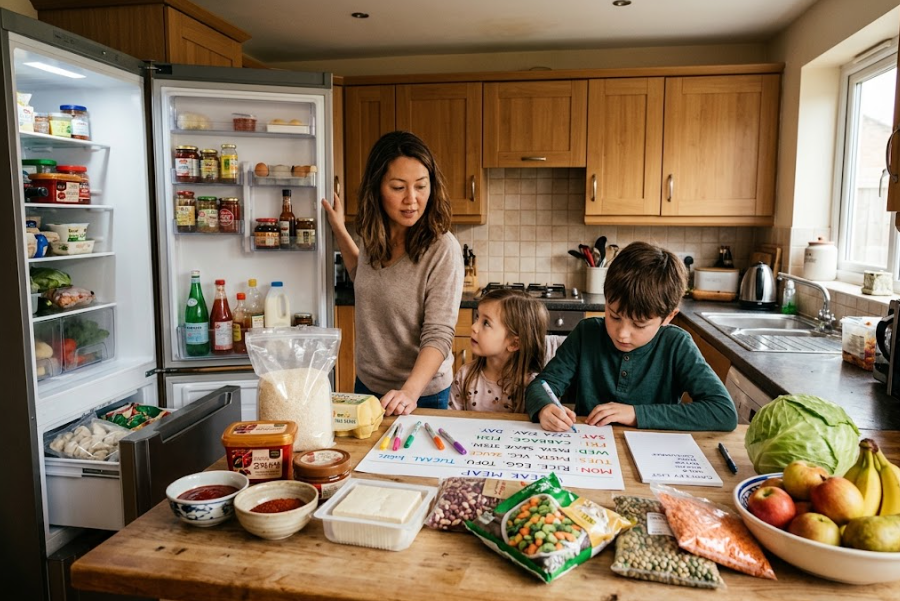
Food affects health, so our family tries to cook at home as much as possible. But one home contains four different appetites. Our children are growing and often hungry. My wife and I do not respond to food or weight in exactly the same way, and all four of us have different preferences.
We all like rice and other carbohydrate-rich foods. I try to put protein on the table and use Korean side dishes to add vegetables and fibre. I also think about snacks after meals. The difficulty is not simply buying “healthy food.” It is preparing enough food for the children, choosing an amount that works for me, and making something everyone will eat.
When health, taste, time, and four people are considered together, even home cooking can become complicated.
The passage above comes from Jerome, an EverydayWise contributor. It does not prove that every home-cooked meal costs less than takeout, nor does it provide his household’s food budget. It does show why a useful budget plan must count more than shelf price.
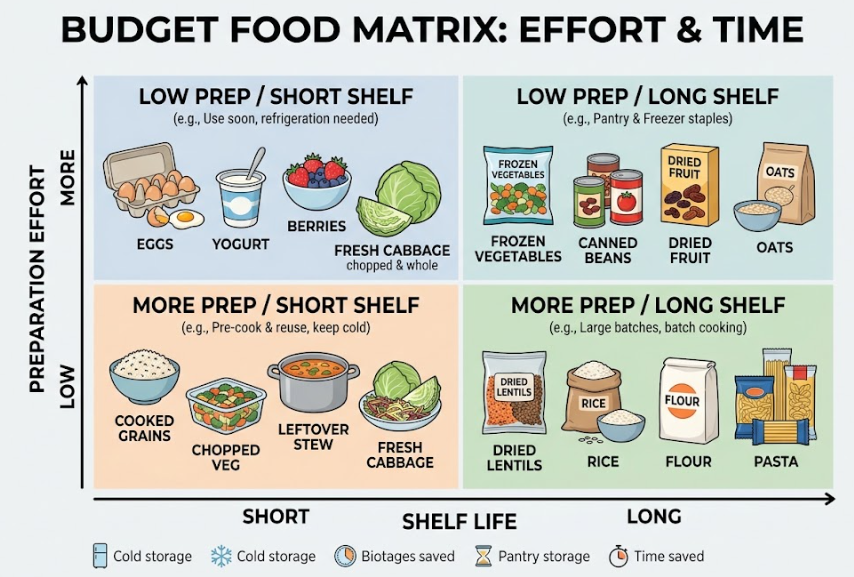
Food is affordable only if the household can buy it, store it, prepare it, and eat it before it spoils. A discounted vegetable that is discarded costs more per eaten serving than a frozen vegetable that goes into three meals. A large package is not a bargain when the family dislikes it. A low-cost recipe is not practical if it requires two hours the cook does not have.
Healthy meal planning on a budget is therefore an allocation problem: decide where money, time, storage, cooking effort, and flexibility will create meals the household can actually use.
Begin With the Budget You Actually Have
Many meal-planning guides begin with recipes. A more honest plan begins with constraints.
Write down:
- how much money is available until the next shopping period;
- how many breakfasts, lunches, dinners, and snacks must be covered;
- which meals are eaten at school, work, or elsewhere;
- what food is already in the refrigerator, freezer, and pantry;
- how much cooking time is realistically available;
- what storage and cooking equipment you have;
- which allergies, medical needs, and cultural preferences are non-negotiable; and
- which foods household members reliably eat.
Do not build the plan around an imaginary week in which nobody works late, children accept every new food, and leftovers are always appealing. If Wednesday is consistently exhausting, schedule the easiest safe meal for Wednesday.
A food budget may be weekly, biweekly, or monthly, but the plan needs a smaller protected amount for late-period basics. Spending the full budget on one ambitious trip can leave no flexibility for milk, fruit, bread, or a replacement ingredient later.
If the available money cannot provide enough food, this is not a meal-planning failure. Health Canada describes household food insecurity as inadequate or uncertain access to sufficient, acceptable food and links it closely to financial ability. Shopping tactics cannot solve an income gap. Local school meal programs, community food organizations, income supports, benefits, and emergency resources may be necessary alongside—not instead of—adequate income.
Shop the Kitchen Before the Store
The least expensive ingredient is often one already purchased.
Before planning meals:
- Check food that must be used soon.
- List freezer proteins, cooked leftovers, bread, and frozen produce.
- Check pantry staples and duplicates.
- Move older usable items where they will be seen.
- Identify partial ingredients that can join another meal.
Then build two or three meals around the most perishable foods. Spinach that needs to be used can go into eggs, soup, pasta, or a rice bowl. Half a cabbage can become slaw, stir-fry, soup, or a side dish. Cooked chicken can appear at dinner and later in a wrap or fried rice.
This “shop first at home” habit reduces duplicate purchases and gives the menu a starting point. It is more specific than promising to use leftovers later.
Build a Flexible Meal Map, Not Seven Independent Recipes
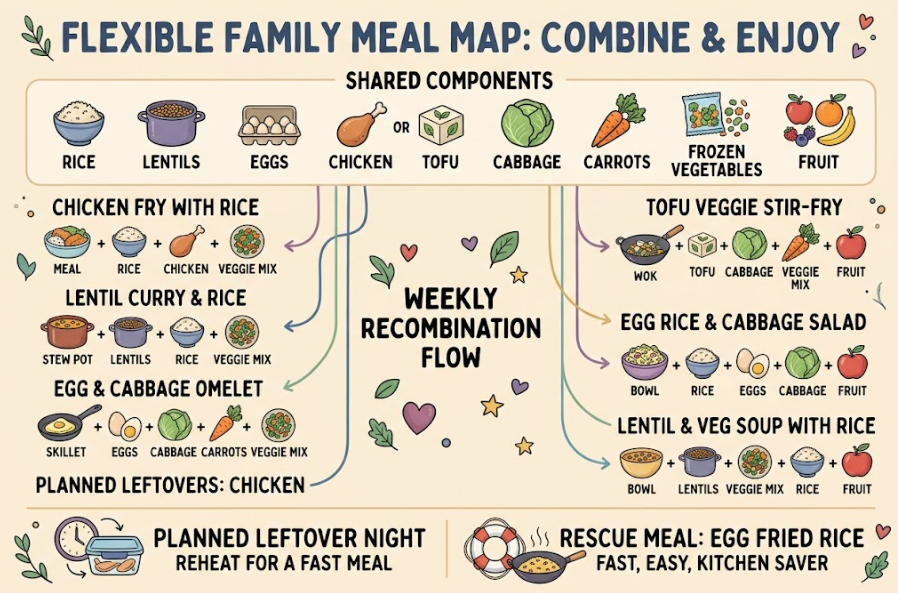
Planning seven unrelated dinners often creates a long ingredient list and small leftovers that do not fit anywhere. A meal map uses overlapping components.
Choose:
- two main protein bases, such as eggs and chicken, or lentils and tofu;
- two staple carbohydrates, such as rice and oats, or potatoes and whole grain pasta;
- three to five vegetables or fruits, including frozen or canned options;
- one or two sauces or flavour profiles; and
- one rescue meal requiring little time.
For example:
- Monday: rice, chicken, cabbage, and carrots;
- Tuesday: lentil and vegetable soup with bread;
- Wednesday: eggs, frozen vegetables, rice, and fruit;
- Thursday: chicken and cabbage wraps;
- Friday: lentil tomato pasta;
- Saturday: leftover rice bowls with eggs or tofu;
- Sunday: rescue meal or planned use-up dinner.
The meals are not identical, but ingredients overlap enough to reduce waste and decision fatigue.
Keep one night partially unplanned. That space can absorb leftovers, a schedule change, or food that needs attention. A plan that assumes perfect execution often creates waste when life changes.
Use the Balanced Plate as a Shopping Framework
From Article”How to Build a Balanced Plate for Real Family Meals”, the plate structure includes vegetables and fruit, protein foods, and whole grain or other staple foods. For budgeting, translate those categories into flexible inventory rather than premium products.
Affordable carbohydrate and fibre bases
- oats;
- rice, barley, or mixed grains;
- whole grain bread when affordable and accepted;
- potatoes and sweet potatoes;
- whole grain or regular pasta paired with other fibre sources;
- corn or tortillas;
- beans, peas, and lentils, which also provide protein;
- frozen or canned vegetables; and
- seasonal fruit.
White rice and regular pasta can remain. A budget does not need to collapse because whole grain versions cost more or the family rejects them. Add fibre through beans, lentils, vegetables, fruit, oats, or mixed grains.
Budget-friendly protein foods
Health Canada identifies beans, lentils, and other legumes as inexpensive protein foods and recommends choosing plant-based proteins more often. Other possibilities include:
- dried or canned beans and lentils;
- eggs;
- tofu;
- peanut or other nut and seed butters, where allergy-safe;
- canned fish;
- plain yogurt or milk;
- lower-cost cuts of meat suited to soups and stews;
- whole poultry divided across meals; and
- meat extended with beans, lentils, tofu, or vegetables.
The cheapest option varies by location, season, culture, store, and preparation time. Dried beans may have a lower unit price, while canned beans save soaking and cooking time. A canned product the family uses can be better value than dried legumes that remain in the cupboard.
Produce that survives the week
Fresh, frozen, canned, and dried produce can all support healthy eating. Health Canada notes that frozen and canned options may cost less than fresh produce when it is out of season.
Use a mix:
- sturdy fresh vegetables such as cabbage, carrots, onions, and potatoes;
- fragile produce scheduled early in the week;
- frozen vegetables for later meals;
- lower-sodium canned vegetables or tomatoes;
- canned fruit with little or no added sugar;
- fresh fruit with different ripening times; and
- dried fruit in suitable portions.
The goal is not to buy the largest variety. It is to create enough variety without losing food to spoilage.
Compare Cost Per Eaten Serving, Not Just Sticker Price
Unit price is useful, but it is not the entire calculation.
Consider:
- edible yield after bones, peels, or trimming;
- cooking fuel and time;
- required extra ingredients;
- number of servings the household actually eats;
- storage life;
- ability to freeze portions;
- likelihood of waste; and
- whether the food replaces a more expensive purchase.
A whole chicken may offer several meals, but only if someone can cook and portion it. Boneless chicken may cost more per kilogram yet save time and produce less inedible weight. Both can be rational choices.
Convenience also has value. Pre-cut frozen vegetables may cost more per weight than a whole fresh vegetable but save washing, chopping, and spoilage. Canned lentils may cost more than dried lentils but make a 15-minute dinner possible instead of takeout.
Do not treat labour as free. If an elaborate “cheap” meal exhausts the cook, the plan may fail later in the week. Paying selectively for convenience can protect the rest of the budget.
Cook Components That Can Change Roles
Batch cooking becomes monotonous when it means eating the same finished dish for five days. Component cooking creates options.
Prepare one or two items such as:
- a pot of rice or another grain;
- roasted or steamed vegetables;
- cooked beans or lentils;
- eggs;
- baked chicken or tofu;
- washed fruit;
- a soup base; or
- a versatile sauce.
Then recombine them:
- rice, protein, vegetables, and sauce become bowls;
- rice becomes fried rice or soup;
- chicken or tofu becomes a wrap filling;
- lentils enter soup, pasta sauce, or curry;
- vegetables enter omelettes, noodles, or side dishes;
- yogurt becomes breakfast, snack, or sauce.
This method also helps households with different appetites. Jerome’s children can take more rice or an extra portion, while he can begin with more vegetables and protein. Everyone uses the same components without requiring separate recipes.
Plan Leftovers Before Cooking
“We will eat the leftovers” is not a plan. Decide what they will become and when.
Before doubling a recipe, ask:
- Who will eat the second meal?
- On which day?
- Will it be refrigerated or frozen?
- Does the household enjoy this food reheated?
- Can the components be stored separately?
Label containers with the food and date. Put a use-up meal on the calendar. Freeze portions early if they will not be used safely in time.
USDA guidance generally recommends using refrigerated cooked leftovers within three to four days and reheating leftovers to 165°F or 74°C. Storage advice varies by food and local authority, so follow applicable food-safety guidance. Freezing pauses bacterial growth but does not make mishandled food safe again.
When in doubt about time, temperature, contamination, or spoilage, discard the food. Preventing waste is important, but it does not override food safety.
Make Family Acceptance Part of the Budget
A child refusing a new vegetable is not proof that the food should never return. But repeatedly buying large quantities of an aspirational food nobody eats is expensive.
Use smaller trials:
- buy one unfamiliar fruit rather than a full bag;
- mix a new grain with a familiar one;
- offer a new vegetable beside a familiar food;
- let family members choose between two affordable options;
- change preparation before abandoning the ingredient; and
- involve children in age-appropriate planning and cooking.
Keep dependable foods in the plan. Every meal does not need to expand anyone’s palate. A familiar rice, egg, soup, yogurt, bread, fruit, or vegetable can make the rest of the meal easier to approach.
Family-style service can reduce plate waste. Start with modest portions and allow more, especially for children whose hunger varies. Food left in a serving dish can often be stored safely; food handled extensively on individual plates may be less reusable.
Avoid using hunger as a lesson about money. Children should not be pressured to clean plates because food cost money, nor should one child’s appetite be compared with another’s. Budget structure belongs to the adults; children can participate without carrying financial anxiety.
Keep a Rescue Meal Cheaper Than Takeout
The rescue meal is not a planning failure. It is insurance against a predictable low-energy evening.
Possible combinations include:
- eggs, toast, frozen vegetables, and fruit;
- canned beans, rice, salsa, and frozen corn;
- pasta, canned tomatoes, lentils, and frozen spinach;
- canned fish, rice, cucumber, and seaweed;
- oatmeal, yogurt, fruit, and nuts;
- soup from the freezer with bread; or
- tofu, frozen vegetables, and noodles.
Choose ingredients the household reliably eats and can store. The best rescue meal is not the absolute cheapest recipe online. It is the meal that can be prepared when the alternative is an unplanned purchase.
A 20-Minute Weekly Planning Routine
Minutes 1–5: Inventory
Check perishables, leftovers, freezer foods, and staples. Mark items that must be used.
Minutes 6–10: Map meals
Choose two protein bases, two staples, produce options, one use-up meal, and one rescue meal. Match the easiest meals to the busiest days.
Minutes 11–15: Write the list
List only missing quantities. Separate essential items from optional sale-dependent items.
Minutes 16–20: Prepare for change
Decide what can be frozen, which meal can move, and what happens if a child eats more than expected or an adult comes home late.
The routine should reduce decisions, not create a perfect calendar.
Where Budget Advice Can Become Unfair
Healthy-budget content often assumes access to transportation, several grocery stores, a full kitchen, stable refrigeration, safe storage, time, physical ability, and money available for bulk purchases. Those assumptions exclude many readers.
Buying in bulk is not helpful without cash or storage. Cooking dried beans is not easy without time or reliable energy. Visiting several stores can consume transportation money. A person with disability, chronic pain, or shift work may need prepared or pre-cut food.
Convenience foods are sometimes the affordable choice when the full cost of preparation is considered. Frozen meals, canned soup, rotisserie chicken, prepared grains, or packaged snacks can be combined with fruit, vegetables, beans, yogurt, or other foods. Compare labels when useful, but do not let an idealized cooking standard prevent adequate eating.
If food regularly runs out, meals are skipped so children can eat, or nutrition is being compromised because money is insufficient, seek local assistance promptly. Community programs can provide short-term help, but food insecurity is fundamentally an access and income problem, not evidence that a household failed to plan cleverly enough.
The EverydayWise Perspective
The purpose of a budget meal plan is not to achieve the lowest possible grocery receipt. It is to use limited resources to produce enough safe, nutritious, acceptable food.
Begin with the kitchen, not a recipe website. Build overlapping meals around a few flexible staples and protein foods. Use fresh produce where it will be eaten and frozen or canned options where they prevent waste. Plan leftovers by name and date. Keep a rescue meal for the night the plan stops working.
Most importantly, count the household. A meal that fits the budget but not the family will not remain affordable for long. Healthy eating becomes more sustainable when cost, time, culture, hunger, taste, and waste are treated as parts of the same decision.
FAQ
Are healthy foods always more expensive?
No. Cost varies by food, location, season, store, and preparation. Beans, lentils, oats, eggs, frozen vegetables, and some canned foods can provide economical nutrition. However, food insecurity cannot be solved simply by identifying cheaper foods.
Is buying in bulk always cheaper?
The unit price may be lower, but bulk buying requires cash, storage, and confidence that the food will be eaten. A smaller package can be better value when it prevents waste or preserves budget flexibility.
Are frozen vegetables as healthy as fresh vegetables?
Frozen vegetables can be nutritious, convenient options and may cost less when fresh produce is out of season. Choose products without unnecessary sauces, breading, or excess sodium when comparing alternatives.
Are canned beans worth buying if dried beans cost less?
They can be. Canned beans save soaking and cooking time and may prevent takeout or an unused bag of dried beans. Choose lower-sodium options or drain and rinse them when appropriate.
How many meals should I plan each week?
Plan the meals that truly need decisions, but leave room for leftovers and schedule changes. Many households benefit from five or six mapped dinners plus a use-up or rescue night rather than seven unrelated recipes.
How long can cooked leftovers stay in the refrigerator?
USDA guidance generally recommends three to four days for cooked leftovers, kept safely refrigerated. Food-specific and local guidance may differ. Refrigerate promptly, label the date, reheat appropriately, and discard food when safety is uncertain.
What if my budget cannot cover enough nutritious food?
Use available school, community, government, benefit, and emergency food resources. Insufficient money for adequate food is food insecurity, not a personal meal-planning failure. A health or social-service professional may help identify local programs.
Reference Log
- Healthy Eating on a Budget — Health Canada, March 21, 2026. Used for: Seasonal, frozen, canned, and plant-protein budget strategies. Accessed 2026-08-27.
- Make Healthy Meals With Canada’s Food Guide Plate — Health Canada, May 20, 2026. Used for: Flexible healthy-food forms and plate structure. Accessed 2026-08-27.
- Eat Protein Foods — Health Canada, May 4, 2026. Used for: Protein-food variety and plant-based options. Accessed 2026-08-27.
- Meal Planning Using Leftovers — Health Canada, April 23, 2026. Used for: Reuse and freezing of legumes and leftovers. Accessed 2026-08-27.
- Household Food Insecurity in Canada: Overview — Health Canada, February 18, 2020. Used for: Definition and economic-access boundary. Accessed 2026-08-27.
- Food-Based Interventions to Mitigate Household Food Insecurity in Canada — Public Health Agency of Canada, September 25, 2025. Used for: Food insecurity as primarily economic rather than a food-skills problem. Accessed 2026-08-27.
- How to Reduce Food Waste at Home — U.S. Department of Agriculture, June 8, 2020. Used for: Planned leftover night and freezing. Accessed 2026-08-27.
- Leftovers: The Gift That Keeps on Giving — U.S. Department of Agriculture, November 24, 2020. Used for: Three-to-four-day refrigerator guidance and reheating temperature. Accessed 2026-08-27.
More in This Cluster: Healthy Eating Foundations
- How to Build a Balanced Plate for Real Family Meals
- How to Read Nutrition Labels Without Getting Misled
- Protein, Carbohydrates, and Fat: What Each One Does
- How to Plan Healthy Meals on a Realistic Budget (you are here)
- Whole Foods vs Processed Foods: What Actually Matters
- How to Make Gradual Dietary Changes That Can Last
- When Nutrition Advice Needs Professional Guidance