From Jerome, EverydayWise Contributor
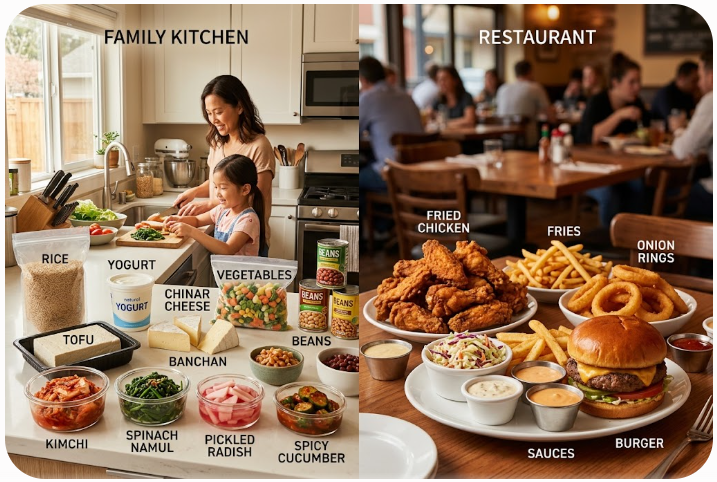
We try to cook at home and put balanced meals on the table. Our children do not show much interest in salad, so we use Korean side dishes and other preparations to get more vegetables and fibre into family meals.
When we eat out, the children are often interested in fried foods that we do not make as often at home. At home, we also use foods that are clearly processed in some way: Greek yogurt, cheese, bread, canned or packaged ingredients, and sometimes zero-sugar soft drinks.
If every processed food is treated as unhealthy, many practical foods disappear. But if processing never matters, it becomes difficult to explain why a plain yogurt and a sugary dessert, or frozen vegetables and deep-fried fast food, should not be judged in exactly the same way.
The passage above comes from Jerome, an EverydayWise contributor. His family’s choices expose the weakness in a simple “whole food good, processed food bad” rule. Processing can preserve food, make it safe, improve access, add nutrients, or reduce preparation time. It can also create products that deliver large amounts of sodium, free sugars, saturated fat, or energy while making overconsumption easier.
The useful question is not whether a food has been processed at all. It is what the processing changed, what the final product provides, how often and how much it is eaten, and what it replaces in the diet.
Almost All Food Is Processed in Some Way
Processing includes many ordinary actions performed before food is eaten:
- washing and cutting;
- freezing or canning;
- drying or fermenting;
- pasteurizing;
- grinding grain;
- cooking;
- adding salt, sugar, oil, cultures, preservatives, or nutrients;
- combining ingredients into a prepared product.
A bag of frozen peas has been processed. So have plain yogurt, tofu, cheese, canned tomatoes, whole grain bread, oatmeal, kimchi, roasted nuts, and pasteurized milk. The word alone does not describe nutritional quality.
“Whole food” generally refers to food close to its original form, such as fruit, vegetables, intact grains, beans, eggs, fish, meat, nuts, and seeds. But the boundary is not exact. Is plain yogurt whole or processed? Is tofu? Is canned salmon? Different classification systems answer differently.
The term ultra-processed creates even more disagreement. As of 2026, U.S. federal agencies have said there is no single authoritative definition for the U.S. food supply and have been working toward a uniform one. WHO has also been developing global guidance. Research often uses classification systems such as NOVA, but consumers should not assume that every app, headline, or study uses identical criteria.
This uncertainty does not mean processing is irrelevant. It means the label should begin an investigation rather than end it.
A More Useful Processing Spectrum
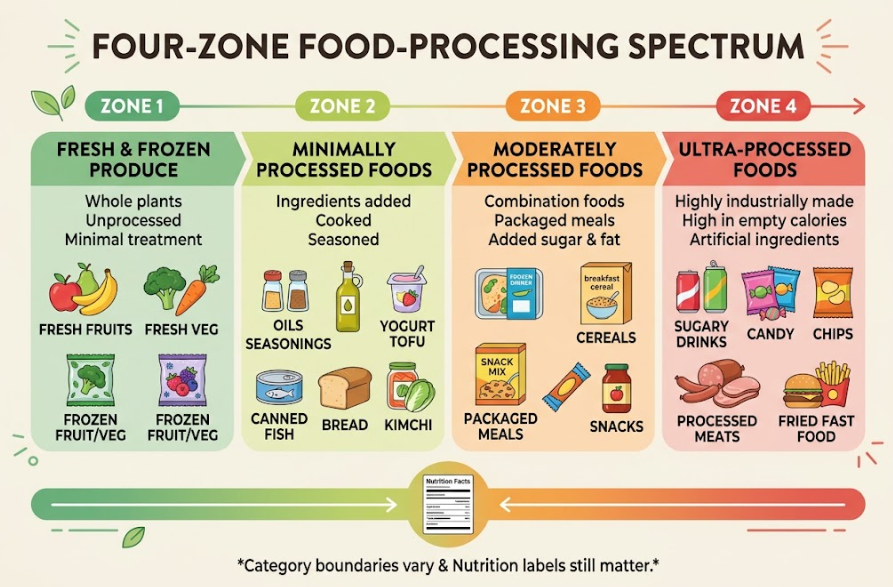
Instead of two boxes, consider four practical zones.
1. Unprocessed or minimally processed foods
These may be washed, cut, chilled, frozen, dried, or otherwise prepared without substantially changing the food’s basic identity.
Examples include:
- fresh or frozen vegetables and fruit;
- plain oats or rice;
- dried or canned beans with minimal additions;
- raw or roasted unsalted nuts;
- eggs;
- plain meat or fish;
- plain milk.
These foods often provide fibre, protein, vitamins, minerals, or healthy fats without excessive sodium, free sugars, or saturated fat.
2. Processed culinary ingredients
These are used to cook or season rather than usually eaten alone:
- oils;
- butter;
- sugar, honey, or syrup;
- salt;
- starches and flours;
- sauces and pastes.
They can make nutritious foods enjoyable and culturally recognizable. Their amount matters because they may be concentrated sources of energy, sodium, free sugars, or saturated fat.
3. Processed foods that retain a recognizable food base
These foods may combine a basic food with salt, oil, cultures, or other ingredients:
- plain or lightly sweetened yogurt;
- cheese;
- canned fish;
- canned vegetables;
- tofu or tempeh;
- whole grain bread;
- nut butter;
- kimchi and other fermented vegetables;
- simple soups.
Some are valuable sources of protein, fibre, calcium, or other nutrients. Their labels may also reveal substantial sodium, sugar, or saturated fat. Products within the same category can differ widely.
4. Highly processed products that dominate the diet with less nutritional return
Health Canada describes highly processed foods and drinks as products that contribute excess sodium, sugars, or saturated fat. Examples may include sugary drinks, candy, chips, many baked desserts, fast-food fries and burgers, processed meats, some frozen entrées, and some sauces or snack foods.
These foods are not chemically identical, and eating one does not damage an otherwise healthy pattern. The concern is what happens when they become frequent defaults and displace vegetables, fruit, whole grains, legumes, nuts, and varied protein foods.
Processing Can Improve Food
Processing can offer real health and practical benefits.
Safety
Pasteurization reduces harmful microorganisms in milk and juice. Canning uses heat and sealed containers to preserve food. Cooking can destroy pathogens and make some foods digestible.
Minimally processed does not automatically mean safer. Fresh produce can carry pathogens, and raw animal foods can cause serious illness. WHO includes food safety as a core requirement of a healthy diet.
Preservation and access
Freezing, drying, and canning extend shelf life. Frozen vegetables can remain available when fresh produce is expensive, out of season, or likely to spoil. Canned beans can make a quick meal possible.
Convenience
Pre-washed greens, frozen chopped vegetables, canned lentils, cooked grains, yogurt, and bread reduce labour. For a person with limited time, disability, fatigue, or equipment, processing may enable a more nutritious meal than scratch cooking would.
Nutrition
Fortification can add nutrients such as vitamin D, folic acid, iron, or vitamin B12. Fermentation can change flavour, preservation, and digestibility. Grinding and cooking can make nutrients more accessible, even though some processing can reduce fibre or other components.
The right comparison is often not processed versus untouched. It is frozen vegetables versus no vegetables, canned beans versus takeout, or fortified soy beverage versus a nutritionally unsuitable substitute.
Processing Can Also Make a Food Easier to Overconsume
Some processing changes texture, concentration, portion format, and eating speed. A product may combine refined starch, fat, sugar, salt, and flavouring in a form that is quick to eat and less filling per calorie than the foods it replaced.
Processing can also remove fibre or water. Whole fruit, fruit purée, juice, and fruit-flavoured candy may begin with related ingredients but do not create the same eating experience or nutrient profile.
Highly processed products are also often packaged in large portions, heavily promoted, convenient, and available everywhere. The concern is therefore not just an ingredient. It is a food environment that makes certain choices frequent and effortless.
This does not mean a person lacks willpower. Availability, cost, work schedules, advertising, taste, stress, and household preferences all shape consumption.
Judge the Product, Not Just the Category
Use five questions.
1. What useful food is still present?
Does the product retain vegetables, fruit, whole grains, beans, nuts, fish, milk, or another nutritious base? Frozen spinach and potato chips are both processed plant foods, but the final products serve different roles.
2. What was added or concentrated?
Check sodium, sugars, saturated fat, and ingredient composition. Canada’s front-of-package HIGH IN symbol can quickly flag products that meet defined thresholds for saturated fat, sugars, or sodium.
3. What was removed?
Refining may remove parts of a grain and reduce fibre. Juicing removes much of the intact fibre and structure of whole fruit. A reduced-fat product may replace fat with starch or sugar.
4. How will it be used?
A tablespoon of sauce that helps someone eat vegetables is different from a bowl of sauce. Cheese used for flavour differs from cheese being the meal’s only substantial component. Context affects the trade-off.
5. What does it replace?
A frozen entrée may be higher in sodium than a home-cooked meal, yet still be more balanced than skipped dinner or an unplanned fast-food order. A protein bar may be unnecessary at home but useful during travel when alternatives are limited.
The answer does not need to be “healthy” or “unhealthy.” It can be: useful often, useful sometimes, or worth comparing with another option.
How Familiar Foods Fit the Spectrum
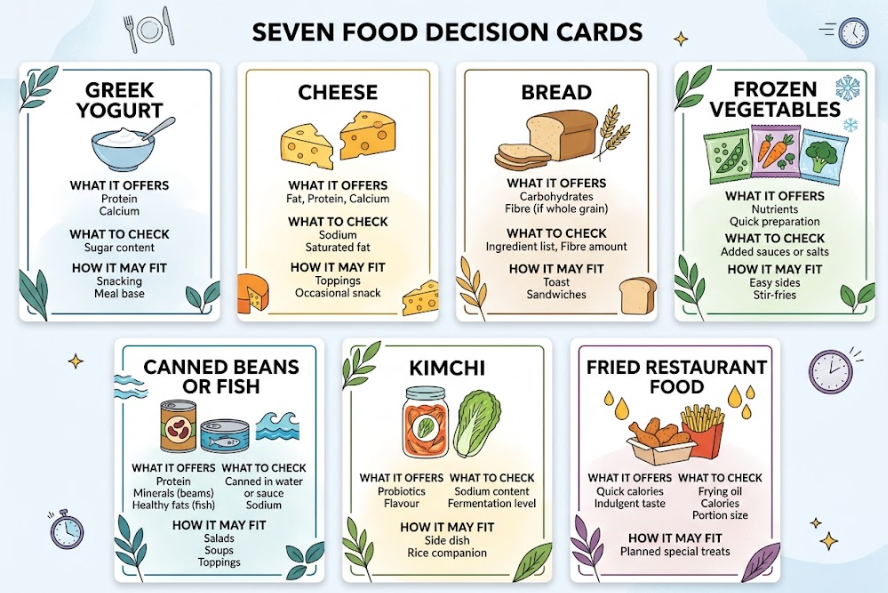
Greek yogurt
Plain Greek yogurt is processed through pasteurization, culturing, and straining. It can provide protein and calcium. Flavoured versions may contain added sugar. Compare serving size, protein, total or added sugars, and saturated fat.
Cheese
Cheese is processed and can provide protein and calcium. It may also contain substantial sodium and saturated fat. The amount, type, and role in the meal matter more than declaring all cheese either essential or unhealthy.
Bread
Bread is processed, but products vary from fibre-rich whole grain loaves to refined, sweetened products. Look for whole grain ingredients, fibre, sodium, and sugars.
Frozen vegetables
Plain frozen vegetables are minimally processed and can be nutritionally valuable. Sauced, breaded, or fried versions may add sodium, saturated fat, or other ingredients. Both convenience and composition matter.
Canned beans and fish
These can provide convenient protein and other nutrients. Choose lower-sodium options when practical, drain and rinse beans when appropriate, and consider oil, sauce, and species-specific advice for fish.
Kimchi and banchan
Fermentation and seasoning are forms of processing. Kimchi and prepared side dishes can contribute vegetables, flavour, and cultural continuity, while also adding sodium. Balance stronger-seasoned foods with lower-sodium dishes rather than treating the tradition itself as the problem.
Zero-sugar soft drinks
These are highly formulated beverages that may replace sugar with non-sugar sweeteners. They can reduce sugar compared with regular soft drinks but do not become nutritionally equivalent to water. Caffeine, acidity, frequency, age, and displacement of other drinks remain relevant.
Fried restaurant foods
Frying is a cooking process, not a complete category. A fried vegetable and a grilled burger cannot be compared by method alone. Still, restaurant fried foods often combine refined starch, fat, sodium, large portions, and sauces. Enjoying them occasionally is different from relying on them as a daily meal pattern.
What About Additives?
Food additives may preserve freshness and safety, improve texture, prevent separation, add colour or flavour, or restore nutrients. FDA notes that direct additives are used for specific purposes and are generally identified in ingredient lists.
An unfamiliar ingredient name is not evidence that a food is unsafe. Conversely, a short ingredient list does not guarantee nutritional quality. Butter, sugar, and flour can make a three-ingredient product high in saturated fat and free sugar.
People with allergies, intolerances, or medical restrictions may need to avoid specific ingredients. That is different from assuming every additive has the same health effect.
Research on ultra-processed dietary patterns may capture more than individual additives: nutrient composition, energy density, food structure, eating speed, marketing, portion size, and displacement of minimally processed foods can all contribute. It is usually not possible to look at one additive and explain the entire association.
A Practical Household Strategy
Do not try to remove every processed food. Instead, organize the kitchen around a strong foundation and choose convenience deliberately.
Keep minimally processed anchors
Stock several foods such as oats, rice, frozen vegetables, fruit, eggs, beans, lentils, tofu, nuts, or plain fish and meat according to preference and access.
Choose useful processed helpers
Bread, yogurt, canned beans, frozen produce, prepared sauces, broth, and cooked grains can make meals possible. Compare labels within categories.
Limit automatic defaults
Notice products that appear repeatedly without a deliberate decision: sugary drinks, packaged desserts, processed meats, chips, fast food, or large fried meals. Change frequency or portion before declaring a permanent ban.
Preserve enjoyment
Children may be excited by fried foods during a restaurant visit partly because they are less common at home. That meal does not erase the household pattern. Avoid turning it into a moral test or using exercise as punishment.
Add rather than only remove
Add frozen vegetables to noodles, beans to meat sauce, fruit to yogurt, or a vegetable side to a frozen entrée. Improving a convenient meal can be more sustainable than replacing it entirely.
When “Clean Eating” Becomes a Problem
Trying to eat mostly minimally processed foods can be reasonable. The problem begins when processing categories create fear, shame, severe restriction, social avoidance, or inadequate intake.
Warning signs include:
- believing a processed food will immediately contaminate or damage the body;
- eliminating broad food groups without medical need;
- anxiety about eating outside the home;
- inability to eat enough because acceptable foods are too limited;
- imposing restrictive adult rules on children;
- spending unsustainable time or money to maintain food purity; or
- compensating for processed food through fasting, purging, or excessive exercise.
A physician, registered dietitian, or eating-disorder professional can help when food rules interfere with health or daily life.
The EverydayWise Perspective
Whole and minimally processed foods are a strong foundation. They make it easier to obtain vegetables, fruit, whole grains, legumes, nuts, varied proteins, and fibre without excess sodium, free sugars, or saturated fat.
But “processed” is too broad to function as a verdict. Frozen vegetables, yogurt, tofu, bread, canned fish, kimchi, candy, and fast-food fries have all been processed, yet they differ enormously in purpose and nutrition.
Use the processing level to ask better questions. What remained? What was added or removed? How much will be eaten? How often? What does it replace? A practical diet can rely mostly on nutritious foods while still using processed foods for safety, access, culture, convenience, and pleasure.
FAQ
Is every processed food unhealthy?
No. Freezing, canning, pasteurizing, fermenting, cooking, and grinding are all forms of processing. Many processed foods remain nutritious and practical. Judge the final product and its role in the eating pattern.
What is the official definition of ultra-processed food?
There is no single globally authoritative consumer definition in use everywhere. Research systems exist, but U.S. agencies were still developing a uniform federal definition and WHO was developing guidance as of 2026. Check how a source defines the term.
Are frozen vegetables whole foods?
They are usually considered minimally processed. Plain frozen vegetables can provide nutrients comparable to fresh options and may reduce preparation time and waste. Sauces, breading, or frying change the product.
Is yogurt a processed food?
Yes, but processing does not make it unhealthy. Plain yogurt can provide protein and calcium. Compare added or total sugars, saturated fat, and serving size among products.
Should children never eat fried or packaged foods?
No absolute ban is necessary for most children. Frequency, portion, overall diet, growth, and the family’s relationship with food matter. Avoid shame and preserve adequate intake.
Are food additives dangerous?
An additive cannot be judged solely by an unfamiliar name. Additives have different functions and safety evaluations. People with allergies or specific medical needs should identify relevant ingredients rather than treating all additives alike.
How can I reduce highly processed foods without cooking everything from scratch?
Keep a few minimally processed anchors and use helpful convenience foods: frozen vegetables, canned beans, yogurt, bread, canned fish, or cooked grains. Add produce or protein to prepared meals and compare labels within categories.
Reference Log
- Healthy Diet — World Health Organization, January 26, 2026. Used for: Minimally processed foundation, highly processed dietary concern, safety requirement. Accessed 2026-08-27.
- Limit Highly Processed Foods — Health Canada, May 4, 2026. Used for: Canadian practical definition, examples, sodium/sugars/saturated-fat rationale. Accessed 2026-08-27.
- Canada’s Dietary Guidelines: Glossary — Health Canada, April 29, 2026. Used for: Formal Canadian “highly processed products” terminology. Accessed 2026-08-27.
- Foundation for Healthy Eating — Health Canada, April 23, 2026. Used for: Nutritious fresh, frozen, canned, and dried foods; cultural context. Accessed 2026-08-27.
- Eat a Variety of Healthy Foods — Health Canada, April 2, 2026. Used for: Healthy-pattern and highly processed food context. Accessed 2026-08-27.
- HHS, FDA and USDA Address Ultra-Processed Foods — U.S. Food and Drug Administration, July 23, 2025. Used for: Absence of one authoritative U.S. definition and federal definition work. Accessed 2026-08-27.
- WHO Call for Experts on Ultra-Processed Food Guideline — World Health Organization, May 15, 2025. Used for: Status of developing global guidance. Accessed 2026-08-27.
- Understanding How FDA Regulates Food Additives — U.S. Food and Drug Administration, June 6, 2024. Used for: Purposes and labeling of direct additives. Accessed 2026-08-27.
- Sodium Reduction in the U.S. Food Supply — U.S. Food and Drug Administration, August 15, 2024. Used for: Processed and prepared foods as major sodium source. Accessed 2026-08-27.
More in This Cluster: Healthy Eating Foundations
- How to Build a Balanced Plate for Real Family Meals
- How to Read Nutrition Labels Without Getting Misled
- Protein, Carbohydrates, and Fat: What Each One Does
- How to Plan Healthy Meals on a Realistic Budget
- Whole Foods vs Processed Foods: What Actually Matters (you are here)
- How to Make Gradual Dietary Changes That Can Last
- When Nutrition Advice Needs Professional Guidance