The missed due date may be discovered in an ordinary moment: an automatic payment failed, a statement went to an old email address, or the bank balance was lower than expected. The account can be only a day late, yet the words “late payment” immediately suggest years of credit damage.
Several clocks have actually started, and they do not all measure the same consequence. The contract can treat a payment as late after the due date. A fee, interest charge, lost promotional rate, or collection contact may follow under the account terms. Credit reporting usually follows a separate schedule and varies by lender and jurisdiction.
The first response is the same: find the required amount, make the payment as soon as possible, confirm that it was credited, and contact the creditor. Waiting for a credit alert gives the delinquency more time to deepen.
Quick decision: If a payment is overdue, pay at least the required amount immediately if you can do so safely, save proof, and call the creditor through a verified channel. Ask for the account’s exact status, the amount needed to become current, any fees or interest, whether information has been or will be reported, and what assistance is available. If the reported late payment is inaccurate, preserve the statement and payment records and dispute the specific error. Do not treat a commonly discussed 30-day reporting interval as permission to wait.
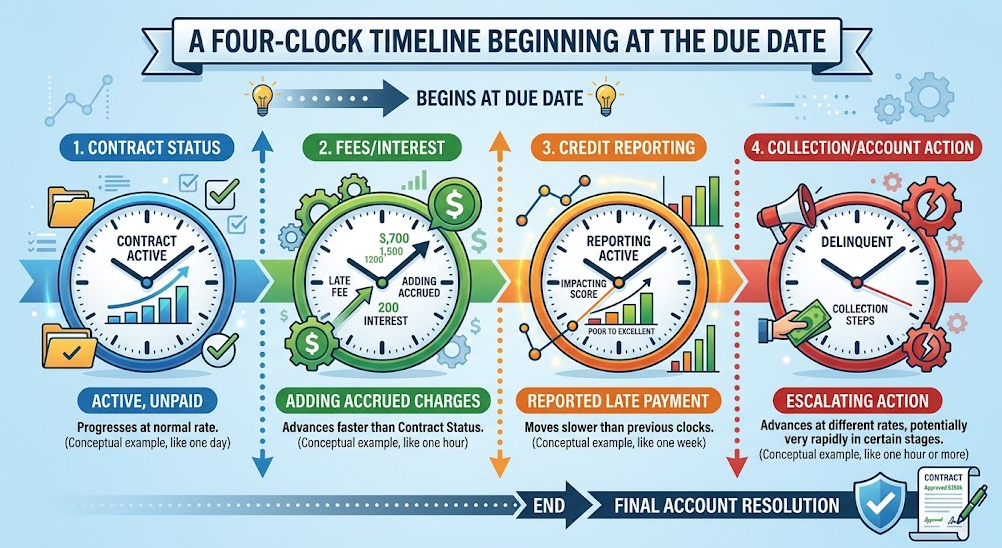
Four Consequences Can Begin on Different Dates
Contract status
The payment agreement establishes the due date, required amount, accepted methods, and processing rules. A payment can be late under the contract before it appears as a late-payment category on a credit report.
Fees and interest
A creditor may impose a late fee, add interest, change promotional terms, or increase a rate when the agreement and local law allow. These costs may appear soon after the missed due date.
Credit reporting
Creditors report on their own schedules and may report to some bureaus but not others. In U.S. credit files, payment status is commonly organized in 30-day increments such as 30, 60, and 90 days past due. A consumer should confirm the creditor’s practice rather than assuming that every account has an identical reporting date.
Collection or account action
Continued delinquency may lead to calls or notices, suspension of purchasing privileges, account closure, collection placement, repossession, foreclosure activity, or legal action depending on the debt. Those consequences are governed by the product, contract, law, and how long the account remains unpaid.
Keeping these clocks separate helps the borrower ask precise questions. It does not make the earliest clock unimportant.
One Day Late: Act Before the Problem Expands
Discovering the error quickly creates more options.
- Check whether the payment truly failed. Review the creditor account and the sending bank. A scheduled payment may be pending, returned, sent to the wrong account, or credited under a different date.
- Find the amount required now. The current amount may include the missed minimum, a regular installment, or a fee. Ask what amount will bring the account current.
- Pay through a verified method. Use the creditor’s official site, app, statement instructions, or confirmed phone number. Avoid links in an unexpected collection text.
- Save evidence. Keep the confirmation number, screenshot, bank record, and the name or reference number from any call.
- Ask for relief. A creditor may choose to waive a first late fee or reverse a charge, particularly when the payment history is otherwise current. A request is not a right to removal or approval.
For U.S. credit cards, CFPB states that payment generally must be received—not merely mailed—by the applicable cutoff on the due date to be timely. Processing rules matter even for online bill pay. Canadian FCAC likewise advises cardholders to learn how long each payment method takes to process.
If cash is insufficient, contact the creditor before choosing which obligation to ignore. Explain the timing problem and ask about a due-date change, short-term arrangement, hardship option, or other available process. Get any agreement in writing and understand whether interest continues or reporting changes.
The 30-Day Threshold Is a Reporting Category, Not a Grace Period
People often hear that a payment “does not count until 30 days late.” That phrase compresses several separate events into one.
A payment can already be contractually late. A fee may already apply. Purchase interest or a promotional-rate consequence may already have started. The creditor may also restrict the account or contact the borrower.
In common U.S. bureau reporting, a missed payment may be coded once it reaches a 30-days-past-due category. The calculation follows the contractual due date, not necessarily a late-fee grace period. Reporting practices and update dates still vary, and other countries use different systems.
The practical value of the threshold is urgency: curing the delinquency before it reaches a more severe reporting category may prevent additional harm. It should never be used as a target payment date.
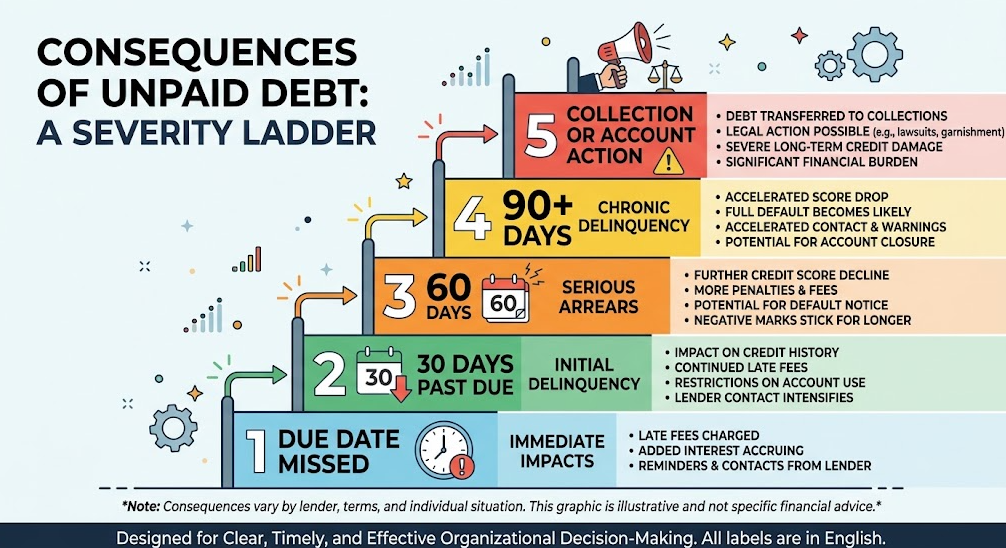
Why 30, 60, and 90 Days Matter
Payment history does not treat every delinquency as identical. Scoring models are proprietary, but the following distinctions commonly matter:
- Severity: A longer delinquency signals a larger break in the payment agreement.
- Recency: A recent event may be more relevant to current risk than an older one.
- Frequency: Repeated missed payments can describe a pattern rather than an isolated disruption.
- File context: The same reported event can interact differently with a long, otherwise current file and a short or already distressed file.
No reliable source can promise that one 30-day late payment will subtract a fixed number of points. The bureau file, model, account type, existing score, and later updates all matter.
A 60-day status does not replace the earlier problem with a new isolated event. It shows that the same obligation remained unresolved into a more severe stage. Continued nonpayment can bring account-specific remedies well beyond score movement.
Credit Cards, Loans, and Household Bills Do Not Follow One Rule
Credit cards
Missing at least the minimum payment can lead to a late fee, additional interest, loss of a promotional offer, restriction, closure, or negative reporting. Paying the full statement balance is preferable when affordable, but the required minimum protects the contractual due date when the full balance cannot be paid.
An interest-free purchase grace period is also easy to confuse with permission to pay after the due date. The grace period generally describes the time between the billing cycle and due date during which full payment may avoid purchase interest. It does not extend the due date.
Installment and auto loans
The contract may include a period before a late fee, but the contractual due date still controls delinquency measurement. A vehicle secures an auto loan, so persistent missed payments can create repossession risk in addition to credit consequences. Contact the servicer before assuming that a partial payment stops every action.
Mortgages
Mortgage statements may show a late-fee date after the contractual due date. Those dates serve different purposes. Serious delinquency can affect loss-mitigation options and foreclosure timelines, which vary by jurisdiction and loan. Contact the servicer promptly and use official housing-counselling resources where available.
Rent, utilities, telecom, and other bills
Routine positive payments may not appear in every mainstream report. Unpaid accounts can still be sent to collection or reported through other consumer-reporting systems. Service interruption and deposits may matter before a conventional score changes.
The bill type determines the immediate risk. Protect housing, utilities, transportation needed for work, insurance, and court-ordered obligations with advice suited to the household and jurisdiction.
United States: What to Confirm
U.S. consumers should separate credit-card payment rules from bureau reporting.
- A card payment generally must be received by the issuer’s stated cutoff on the due date.
- A late fee may arise before a 30-day bureau category.
- Credit reports commonly show delinquencies in 30-day increments.
- Most negative account-payment history may generally be reported for up to seven years.
- Accurate current negative information normally cannot be removed merely because it is harmful.
- Inaccurate reporting can be disputed with both the reporting company and the information furnisher.
If a U.S. credit-card billing error affects the amount due, follow the written billing-error instructions and deadlines. CFPB emphasizes that the undisputed portion still must be paid on time during an investigation. A billing dispute should not become an accidental missed payment on valid charges.
For a mortgage-servicing error, different written-notice protections may apply. Use the servicer’s designated address and preserve delivery evidence.
Canada: What to Confirm
FCAC advises Canadian cardholders that missing at least the minimum payment or paying late may increase the interest rate, affect the score, end a promotional rate, or lead to card cancellation.
Processing time varies by institution and payment method. The account agreement and statement establish what is due and when. If payment difficulty is expected, contact the lender promptly rather than waiting for a bureau update.
FCAC states that information about late or unpaid credit cards and loans may remain on Canadian credit reports for up to six years. Exact retention and reporting can depend on the bureau, province, account, and applicable law.
Canadian consumers who find an incorrect payment status should contact the bureau and the lender or organization that supplied the information. Verified errors must be corrected without a fee. Provincial complaint and consumer-statement options may also apply.
What a Creditor Can—and Cannot—Change
A customer-service representative may be able to:
- explain the current status and amount needed to cure it;
- waive or reverse a fee under the creditor’s policy;
- change a future due date;
- offer a temporary arrangement or hardship program;
- correct a payment-processing error; or
- send an update when the creditor furnished inaccurate information.
The creditor is not required to erase accurate history simply because the borrower asks. A “goodwill” request is a request for discretionary consideration, not a dispute and not a guaranteed remedy.
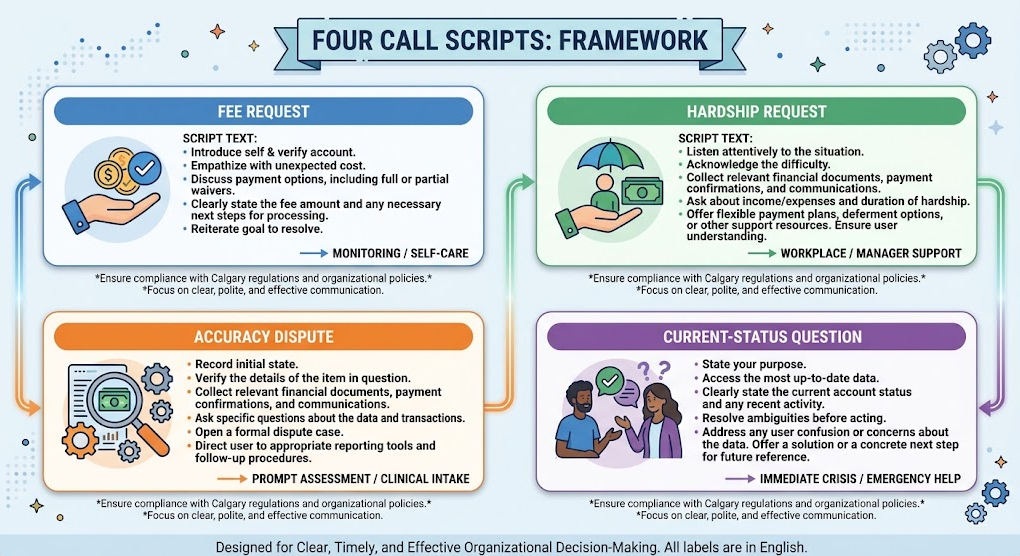
Keep the categories clear:
- Fee request: “Will you waive this fee?”
- Hardship request: “What option is available before the next payment?”
- Accuracy dispute: “The report says 30 days late, but these records show the payment was received on time.”
- Status question: “What amount and date will return the account to current?”
Precision helps the creditor respond to the actual problem.
If the Late Payment on the Report Is Wrong
Start with documents rather than a broad claim that the score is unfair.
Collect:
- the credit report showing the account, bureau, and late status;
- the statement with the due date and minimum amount;
- bank records showing when and how payment was sent;
- the creditor’s confirmation or transaction record;
- any hardship or due-date agreement; and
- records of a system outage or processing error.
Contact both the credit bureau and the furnisher through the official process for the country. Identify the exact month, status, amount, or date that is inaccurate. Keep copies and review the result.
If the late status is accurate, a dispute should not be used to test whether the creditor can verify it. Focus on bringing the account current, protecting future payments, and reviewing the report for accuracy. Article”Credit-Report-vs-Credit-Score” contains the full evidence-led dispute workflow.
Prevent the Second Missed Payment
The next due date may arrive while the first problem is still being resolved. A prevention system should address the actual cause.
If the reminder failed
Use both an issuer alert and an independent calendar reminder. Keep contact details current.
If autopay failed
Check the funding account, payment amount, authorization status, and processing date. A minimum-payment autopay can serve as a backup, but it still requires balance monitoring.
If the due date conflicts with income
Ask whether the creditor can change future due dates. Confirm when the change begins and whether a transition payment is required.
If cash flow is the problem
Stop adding new charges where possible, list required payments by date, and contact creditors before another deadline. An arrangement that lowers a payment may extend repayment or add interest; request the full terms.
If several bills were missed
This is no longer a reminder problem. A qualified nonprofit or regulated local credit counsellor may help organize options. Avoid a company promising quick score deletion or instructing the borrower to stop paying creditors without explaining the legal and financial consequences.
How Long Does the Effect Last?
There are two separate questions:
- How long may the late-payment information remain on the report?
- How does its influence change as the rest of the file develops?
In the United States, negative payment-history information may generally be reported for up to seven years. In Canada, late or unpaid credit-card and loan information may remain for up to six years, subject to bureau and provincial rules.
Retention does not translate into a fixed score penalty for every month of that period. Models weigh the whole file, and lenders make their own decisions. Article”How-Long-Does-It-Take-to-Rebuild-Credit” will examine rebuilding expectations and milestones without promising a universal recovery date.
The Bottom Line
A missed due date deserves action before a score changes. Confirm the payment, cure the account if possible, save evidence, and contact the creditor. Ask separately about fees, current status, hardship options, and credit reporting.
The commonly discussed 30-day category helps describe reported severity. It does not erase the contract due date or create a free waiting period. As delinquency extends from one reporting interval to the next, both credit and account-level consequences can become more serious.
One mistake should lead to a clearer system, not a judgment about character. The useful record is factual: what was due, what happened, what has been corrected, and how the next payment will be protected.
Important Note
This article provides general educational information, not individualized financial, credit, legal, insolvency, or housing advice. Due dates, grace periods, fees, reporting practices, hardship programs, collection actions, repossession, foreclosure rules, and retention periods vary by product and jurisdiction. Review the agreement and current official guidance, and seek qualified local help promptly when housing, essential services, secured property, legal deadlines, or multiple missed payments are involved.
Frequently Asked Questions
Will a payment that is one day late appear on my credit report?
It may already be late under the contract and may trigger a fee, but mainstream bureau reporting often follows a separate schedule. Contact the creditor immediately and do not rely on a reporting interval as a grace period.
Should I pay the full balance or the minimum first?
Paying the full statement balance is preferable when affordable. If it is not, the required minimum is the amount that generally protects the card’s payment obligation. Confirm the current amount with the issuer.
Can a creditor remove a late fee?
The creditor may waive a fee under its policy, especially after an isolated error, but it is not guaranteed. A fee waiver and a change to credit reporting are separate requests.
Can a creditor remove an accurate late payment as goodwill?
You may ask, but accurate reporting is not required to be removed merely because it is unfavorable. Do not pay a company that guarantees deletion.
Does a payment arrangement prevent negative reporting?
Only the written terms can answer that. Ask how the account will be reported during and after the arrangement and whether interest or fees continue.
What if autopay caused the missed payment?
Pay through another verified method if needed, document the failure, and contact both the creditor and bank. Ask about fee relief and verify that future authorization and funding are correct.
How many points will a late payment cost?
There is no universal number. Severity, recency, frequency, bureau data, model, and the rest of the file affect the result.
Sources
- Consumer Financial Protection Bureau — When Is My Credit Card Payment Considered Late?
- Consumer Financial Protection Bureau — What Is a Credit Card Grace Period?
- Consumer Financial Protection Bureau — Fixing Mistakes in a Credit Card Bill
- Consumer Financial Protection Bureau — How Long Information Stays on a Credit Report
- Consumer Financial Protection Bureau — How Long It Takes to Repair a Credit-Report Error
- Consumer Financial Protection Bureau — Mortgage Servicer Federal Rules
- Federal Trade Commission — Using Credit Cards and Disputing Charges
- Financial Consumer Agency of Canada — Paying Off Your Credit Card
- Financial Consumer Agency of Canada — Improving Your Credit Score
- Financial Consumer Agency of Canada — How Long Information Stays on Your Credit Report
- Financial Consumer Agency of Canada — Checking Your Credit Report for Errors and Fraud
More in This Cluster: Credit Fundamentals
- How Credit Scores Work
- Credit Report vs. Credit Score: What Each One Tells You
- What Actually Helps Build Credit?
- Common Credit Score Myths That Can Cost You Money
- How Late Payments Affect Your Credit—and What to Do Next (you are here)
- Credit Utilization Explained: Which Balance Actually Counts?
- How Long Does It Take to Rebuild Credit?