A larger bathroom was one of the changes I enjoyed after moving from Korea to Canada.
The bathtub was spacious enough for my two children, then about four and five years old, to sit together surrounded by bath toys. There was also a separate shower, and the whole room felt more comfortable than the bathrooms I had been used to.
But a larger bathroom did not necessarily mean an easier one to maintain.
Our Canadian bathroom had no floor drain for washing down the entire room. Sticky residue became noticeable on the tile floor. Because the children used the bathtub frequently, a dull film began building up around the tub. The walk-in closet connected directly to the bathroom, with tile meeting carpet at the doorway, which made careless splashing and cleaning more difficult.
Hair collected around the shower-door tracks and eventually slowed the sink drain. As the children grew older, toothbrushes, hair products, skin-care items, and styling tools filled the vanity. Cleaning often meant moving an entire household’s belongings before I could even wipe the counter.
The children are older now, so some parts have become easier. The recurring combination of water marks, hair, soap, and personal-care residue has not disappeared.
What I gradually learned is that bathroom cleaning is not simply a matter of using a stronger product or scrubbing harder. The deposit must be identified, and the cleaner must be safe for the surface underneath it. Otherwise, an attempt to remove a dull film can leave permanent scratches, etching, or discoloration.
That is particularly important with soap scum.
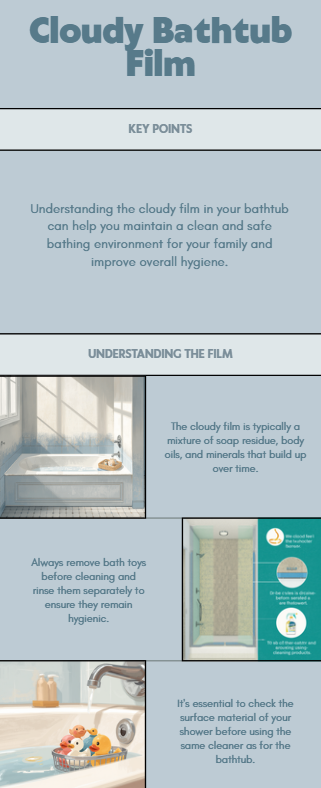
What Soap Scum Actually Is
Soap scum is the cloudy, waxy, or slightly sticky film that develops where bathwater, body products, and water minerals repeatedly meet.
Traditional soap contains fatty-acid salts. When soap interacts with calcium and magnesium in hard water, it can form residue that does not rinse away easily. Body oils, skin cells, shampoo, conditioner, shaving products, and cosmetics can become incorporated into the film.
This is why soap scum may feel greasy in one area, chalky in another, and especially stubborn around the waterline of a frequently used bathtub.
The deposit is often mistaken for several other bathroom problems:
- Hard-water deposits tend to look chalky, crusty, or spotted and are concentrated where water repeatedly dries.
- Soap scum is more likely to feel waxy, cloudy, or greasy and appears where soap and body products are used.
- Mildew or mold staining may appear as dark, pink, orange, or irregular patches, particularly around damp sealant and corners.
- Damaged finishes may remain dull even after cleaning because the surface itself has already been scratched or chemically etched.
These problems can overlap. A shower door, for example, may carry both mineral spotting and soap residue. You do not need to identify the exact chemistry before doing routine cleaning, but you should avoid assuming that every white bathroom deposit needs the same treatment.
Start by Identifying the Surface
The cleaner that works well on glazed ceramic tile may damage marble. A scrubber that seems harmless on tile can dull acrylic. A razor blade sometimes recommended online for ordinary glass may scratch a coated shower door or damage nearby seals.
Before choosing a cleaner, determine what you are cleaning.
If you are unsure whether a bathtub is acrylic, fiberglass, porcelain-enameled steel, or cast iron, look for the manufacturer’s model information or care guide. For tile, determine whether it is ceramic, porcelain, or natural stone. Shower glass may also have a protective coating with its own care requirements.
When the material cannot be confidently identified, begin with the least aggressive option:
- Warm water
- A mild cleaner approved for bathroom use
- A soft microfiber cloth or non-scratching sponge
- A small test in an inconspicuous area
Do not begin with a highly acidic cleaner, abrasive powder, stiff brush, or metal scraper simply because the buildup looks severe. Soap scum is removable; scratched acrylic or etched stone may not be.

A Surface-Safe Soap Scum Removal Method
The following process is appropriate as a general starting framework, but the product label and the surface manufacturer’s instructions take priority.
1. Clear the working area
Remove bath toys, bottles, razors, soap dishes, and other items from the tub or shower. Soap residue frequently accumulates underneath them, especially where water remains trapped.
This was one of the practical difficulties in our family bathroom. With four people leaving daily-use items around the sink and bathing area, cleaning could feel like an organizational job before it became a cleaning job. Reducing the number of items stored directly on wet surfaces makes the next cleaning easier.
2. Rinse away loose material
Use warm—not dangerously hot—water to rinse away loose hair, dirt, and product residue. This will not dissolve established soap scum, but it prevents loose debris from being dragged across the surface during cleaning.
If hair is caught in a shower track or drain, remove it separately rather than trying to wash it farther into the plumbing.
3. Apply one compatible cleaner
Choose a bathroom or soap-scum cleaner whose label specifically permits use on your surface. Apply it according to the stated directions.
Pay attention to:
- approved and prohibited surfaces;
- required ventilation;
- glove or eye-protection instructions;
- dilution directions;
- recommended contact time; and
- whether the surface must be rinsed afterward.
A cleaner needs enough time to loosen residue, but longer is not automatically better. Some manufacturers specifically warn against allowing cleaner to soak or dry on a surface.
For vertical shower walls, a foam or thicker liquid may remain in contact with the deposit more effectively than a thin liquid that immediately runs down the wall.
4. Agitate gently
Use a soft cloth or non-scratching sponge. Work on a manageable section rather than attacking the entire shower at once.
The goal is to loosen the film without grinding it into the finish. If the surface does not improve after the product’s recommended contact time and gentle agitation, rinse it before deciding what to try next.
Applying greater pressure with a rough pad can turn a removable cleaning problem into permanent surface damage.
5. Rinse thoroughly
Residual cleaner and loosened soap can dry into another film. Rinse with clean water as directed, particularly around corners, fixtures, textured floors, and door tracks.
Avoid letting runoff from one surface sit on another. A product safe for glazed tile may not be safe for a nearby stone threshold, metal finish, or acrylic tub.
6. Dry and inspect
Drying makes it easier to distinguish remaining residue from temporary water streaks.
If the surface is mostly clean but still has a few cloudy areas, repeat the same compatible treatment rather than immediately combining products. Multiple moderate cleaning sessions may be safer than one aggressive attempt on an unknown or delicate surface.
If the dull area does not change at all, consider whether it may be surface damage rather than removable soap scum.
Choose the Method by Surface
Glazed ceramic or porcelain tile
Glazed tile generally tolerates bathroom cleaning better than many other materials, but the surrounding grout, sealant, fixtures, and decorative finishes may be more vulnerable.
Use a non-abrasive product approved for tile, allow only the directed contact time, and rinse it fully. Do not assume that a cleaner suitable for the tile face is also suitable for every adjoining material.
Deep grout restoration belongs to a separate cleaning decision. Repeatedly soaking grout with an unsuitable cleaner can create a new maintenance problem while solving the visible film on the tile.
Acrylic and fiberglass tubs or shower surrounds
Acrylic and fiberglass surfaces can scratch or become dull under abrasive powders, scouring pads, stiff brushes, or inappropriate solvents.
Manufacturer guidance for acrylic baths commonly recommends a soft cloth or sponge and warns against abrasive materials. Some care instructions also recommend wiping the bath after use to reduce the buildup of soap and mineral deposits.
For these surfaces, choose a cleaner specifically labeled as compatible with acrylic or fiberglass. Test it first and use gentle pressure. A powerful scrubbing pad may remove the visible film while permanently changing the sheen underneath it.
Ordinary and coated shower glass
Glass often displays soap scum and mineral spots more clearly than an opaque wall or tub. However, not every shower door is simply untreated glass.
Protective coatings, decorative films, hardware finishes, seals, and tracks may have separate restrictions. Avoid abrasive brushes and improvised metal scraping unless the manufacturer explicitly permits them.
Clean one small section first. Rinse nearby frames and hardware so that cleaner does not remain around their edges.
This article addresses soap residue on glass only to the extent needed for removal. A complete routine for shower-door water spots, tracks, seals, and ongoing glass care is covered in “How to Clean Glass Shower Doors.”
Natural stone
Marble, limestone, travertine, and other natural stones need special caution.
Products containing vinegar, lemon, or other acids can dull or etch calcium-based stone. Abrasive creams and powders can also scratch certain finishes. A homemade mixture described as “natural” is not automatically gentle.
Use a stone cleaner approved for the particular material and finish. If the deposit is extensive, the stone is already dull, or you cannot determine whether the problem is residue or etching, consult the installer, manufacturer, or a stone-care professional before escalating.
This is one of the clearest examples of why universal bathroom-cleaning recipes are unreliable. The same acidic product that loosens mineral-related residue on one compatible surface can permanently mark another.
Why Vinegar Is Not a Universal Answer
Vinegar appears in many soap-scum cleaning instructions because its acidity can help with mineral-related residue on compatible materials. That does not make it appropriate for every bathroom.
It may damage or dull natural stone and may be prohibited by manufacturers of certain fixtures, coatings, sealants, or finishes. Even when a surface tolerates a diluted acidic solution, a neighboring surface may not.
More importantly, vinegar must never be mixed with chlorine bleach. Health Canada warns that bleach can react with acidic cleaners—including vinegar—and release toxic gas. Bleach should also not be mixed with ammonia or other household cleaning products.
A safe rule is simple:
Use one cleaning product at a time, follow its label, rinse as directed, and never create an improvised mixture from products already used in the area.
This matters in bathrooms because toilet-bowl cleaner, glass cleaner, disinfectant, mold remover, and soap-scum remover may all be stored within reach of one another. Products designed for different jobs are not ingredients for a stronger combined cleaner.
Open a window when possible, run the exhaust fan, and keep children and pets away from the work area and cleaning products.
What to Do When the First Attempt Does Not Work
A resistant film does not always mean you need more force.
Before changing products, ask four questions.
Did the cleaner have enough contact time?
A cleaner wiped away immediately may not have had time to loosen the film. Check the label rather than estimating. Do not extend the time beyond the instructions or let the product dry unless the manufacturer says to do so.
Is the deposit actually soap scum?
Chalky scale may be primarily mineral buildup. Dark or colored staining may involve mold, mildew, metal corrosion, or pigments from personal-care products. A uniformly dull patch may be etched or scratched.
Changing the diagnosis may be more useful than choosing a stronger version of the same cleaner.
Is the surface limiting the treatment?
If the tub is acrylic or the tile is natural stone, aggressive abrasion or acidity may be too risky. Repeated gentle cleaning with a compatible product may be the better option.
Has the surface already been damaged?
If an area remains cloudy after it is clean and dry, inspect it from different angles. Scratches, worn coatings, etched stone, and deteriorating finishes cannot always be restored through ordinary cleaning.
Stop if the surface changes color, loses gloss, becomes rough, or develops visible scratches. Continued cleaning may worsen the damage.
Make Future Soap Scum Easier to Remove
The most practical time to deal with soap scum is before it becomes a thick, bonded layer.
In our house, the bathtub was used much more often when the children were small. That was a good part of having a larger Canadian home, but frequent baths also meant more soap, bath products, standing water, and residue. Waiting until the tub visibly looked dirty made each cleaning session harder.
A realistic prevention routine does not require fully cleaning the bathroom after every bath.
Instead:
- rinse obvious soap and product residue while the surface is still wet;
- wipe or squeegee high-buildup areas when practical;
- allow the tub or shower to dry;
- keep bottles and toys from permanently trapping water underneath them;
- use the exhaust fan during and after bathing;
- perform a light, surface-compatible cleaning before the film becomes heavy; and
- address slow drainage and trapped hair separately.
For a busy family, consistency matters more than perfection. A quick rinse and occasional wipe will not prevent every deposit, but they can reduce the need for aggressive cleaning later.
Switching from traditional bar soap to a synthetic body wash may reduce some classic soap-mineral residue for certain households, but it is not a complete solution. Body washes, conditioners, oils, and cosmetics can still leave film. Product choice should be based on skin needs and preferences as well as cleaning convenience.
The Practical Decision
Soap scum does not require the strongest product in the cabinet. It requires the right product for the material beneath it.
Use this order:
- Identify the deposit as well as you reasonably can.
- Confirm the bathtub, tile, glass, or stone surface.
- Read both the cleaner label and the manufacturer’s care instructions.
- Test the least aggressive suitable method.
- Allow the directed contact time.
- Agitate gently, rinse completely, and dry.
- Reassess before repeating or escalating.
A larger bathroom can provide more space and comfort, especially for a growing family. It can also combine more materials, more fixtures, and more places for soap, hair, water, and personal-care products to collect.
The goal is not to keep a family bathroom untouched. It is to make ordinary use manageable without turning every cleaning session into a risk to the surfaces you are trying to protect.
FAQ
What is the safest way to remove soap scum?
Identify the surface first, then use a non-abrasive cleaner specifically approved for that material. Test a small area, follow the label’s contact time, wipe with a soft cloth or non-scratching sponge, rinse completely, and dry before deciding whether another treatment is needed.
Does vinegar remove soap scum?
Vinegar may help with some mineral-related residue on compatible surfaces, but it is not safe for every bathroom material. It can etch marble, limestone, travertine, and other calcareous stone, and it may be unsuitable for some coatings, seals, and finishes. Never mix vinegar with bleach.
How can I tell soap scum from hard-water stains?
Soap scum often feels cloudy, waxy, or greasy and develops where soap and body products are used. Hard-water buildup is more likely to look chalky, crusty, or spot-like where water repeatedly dries. The two can occur together, especially on shower glass and around bathtub waterlines.
Can I use an abrasive sponge on an acrylic tub?
Do not use one unless the tub manufacturer explicitly approves it. Acrylic can scratch and lose its sheen under abrasive pads, brushes, powders, or incompatible cleaners. A soft cloth or non-scratching sponge is the safer starting point.
Why does the cloudy area remain after cleaning?
The mark may be mineral scale, staining, worn coating, scratches, or chemical etching rather than removable soap scum. Let the surface dry and inspect it from different angles. Stop if the texture, colour, or gloss has changed.
How often should I clean soap scum?
There is no single schedule for every household. A heavily used family tub or shower may need light cleaning more often than a guest bathroom. Rinsing visible product residue and wiping high-buildup areas before the film becomes thick can reduce the need for aggressive cleaning later.
Reference Log
- Health Canada — Use household chemicals safely
https://www.canada.ca/en/health-canada/services/home-safety/household-chemical-safety.html
Used for household-cleaner label compliance, ventilation, and the direction not to mix chemical products. - Health Canada — Reduce your risk from toxic gases: Never mix bleach with other cleaning products
https://recalls-rappels.canada.ca/en/alert-recall/reduce-your-risk-toxic-gases-never-mix-bleach-other-cleaning-products
Used to verify that bleach must not be mixed with ammonia or acids, including vinegar. - Natural Stone Institute — Learn About Cleaning Products for Natural Stone
https://www.naturalstoneinstitute.org/consumers/care/
Used for warnings about acidic cleaners on calcareous stone and the possible scratching caused by abrasive cleaners. - Sterling by Kohler — How to Clean and Care for Acrylic Baths
https://sterling.kohler.com/en/support/care-and-cleaning/how-to-clean-and-care-acrylic-baths
Used for acrylic-bath care guidance, including soft wiping materials and avoidance of abrasive brushes and pads. - Kohler — How to Use Kohler Cleaning Products
https://www.kohler.com/en/support/how-to-use-kohler-cleaning-products
Used for manufacturer guidance on testing cleaners, avoiding prolonged soaking, using soft materials, and rinsing surfaces. - American Cleaning Institute — Ingredient Functions
https://www.cleaninginstitute.org/understanding-products/ingredients/ingredient-functions
Used for the relationship between soap-scum removal and hard-water minerals such as calcium and magnesium. - American Cleaning Institute — Cleaning Hard Surfaces
https://www.cleaninginstitute.org/cleaning-tips/cleaning-hard-surfaces
Used for general surface-cleaning sequence, rinsing, and following specialty-product label instructions. - American Cleaning Institute — Room by Room Cleaning Guide
https://www.cleaninginstitute.org/cleaning-tips/home/room-guide
Used for maintenance guidance intended to reduce recurring soap-scum and mineral buildup.
Expected update timing: Review within 24 months, or earlier if cited safety guidance or major manufacturer care recommendations change.
More in This Cluster: Bathroom Cleaning
- How to Remove Soap Scum Without Damaging Your Bathroom (you are here)
- How to Clean Grout Without Damaging It
- Toilet Cleaning Routine
- How to Prevent Bathroom Mould
- Best Cleaning Order for a Bathroom
- How to Clean Glass Shower Doors
- When to Replace Bathroom Cleaning Tools