Bathroom mould is rarely just a cleaning failure. It grows when moisture remains long enough on a surface or inside a material, and it often returns when the source of that moisture remains unchanged.
Prevention therefore begins with a diagnosis: Is the room staying humid after bathing? Is water collecting in a seal or corner? Is a plumbing or building leak keeping material damp? The useful response is the one that shortens wet time and corrects the actual moisture path.
Quick Answer
Use a bathroom exhaust fan that vents outdoors while bathing and for a period afterward, following the fan or building guidance. Keep the door or another air path available if that helps the fan draw replacement air safely. Remove standing water, hang towels and mats so they dry, and keep shower curtains, seals, grout joints, and caulk free of trapped residue.
Aim to keep household relative humidity within the range recommended for your climate and home; Health Canada generally recommends 30–50%. More importantly, check whether mirrors, walls, ceilings, window frames, and shower joints dry within a reasonable period after use. Repair leaks promptly. If mould returns quickly after cleaning, spreads beyond a small area, produces a persistent musty odour, or accompanies soft drywall, peeling paint, staining, or recurring dampness, investigate the moisture source rather than applying stronger cleaner.
Treat Mould as Evidence of Moisture
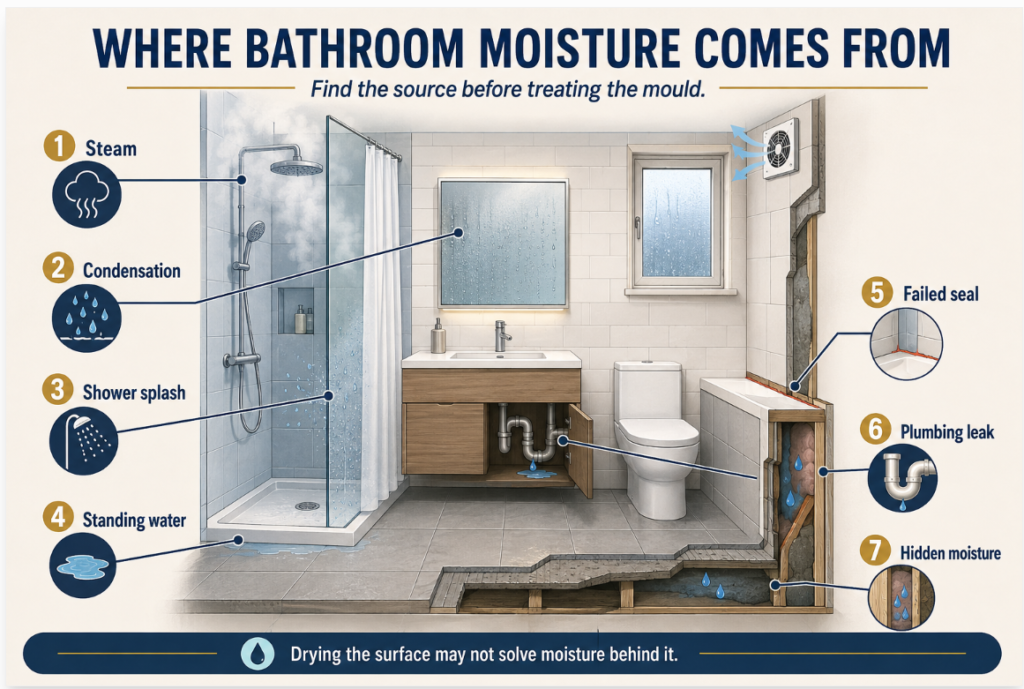
Mould needs moisture and a material on which it can grow. In a bathroom, moisture may come from ordinary bathing, but the route matters:
- humid air condenses on a cold ceiling, wall, window, or pipe;
- shower spray reaches grout, caulk, paint, trim, or flooring;
- water remains in a track, seal, bottle base, bath mat, or folded curtain;
- a supply line, drain, toilet, tub edge, or shower enclosure leaks;
- water enters behind tile through failed grout, caulk, flashing, or waterproofing; or
- an exterior or roof problem dampens a wall or ceiling independently of bathroom use.
Cleaning visible growth can be necessary, but it cannot substitute for controlling moisture. Health Canada advises fixing the underlying cause—such as water damage, excessive humidity, or insufficient ventilation—to prevent growth from returning.
Do not rely on colour to decide whether mould is dangerous or whether it can be ignored. Health Canada states that identifying the species or measuring the concentration is usually unnecessary in a home; the practical task is to find and correct the moisture and mould problem. A musty or earthy odour can also indicate growth that is not immediately visible.
Identify the Moisture Pattern Before Changing the Routine
The location and timing of dampness often reveal more than the appearance of the spots.
Condensation after bathing
Fogged mirrors, beads on the ceiling, wet window frames, or damp upper walls that appear after showers point toward humidity and surface temperature. If these surfaces remain wet long after bathing, the room may need better exhaust, more replacement air, shorter moisture-producing use, or attention to unusually cold surfaces.
Water concentrated at joints
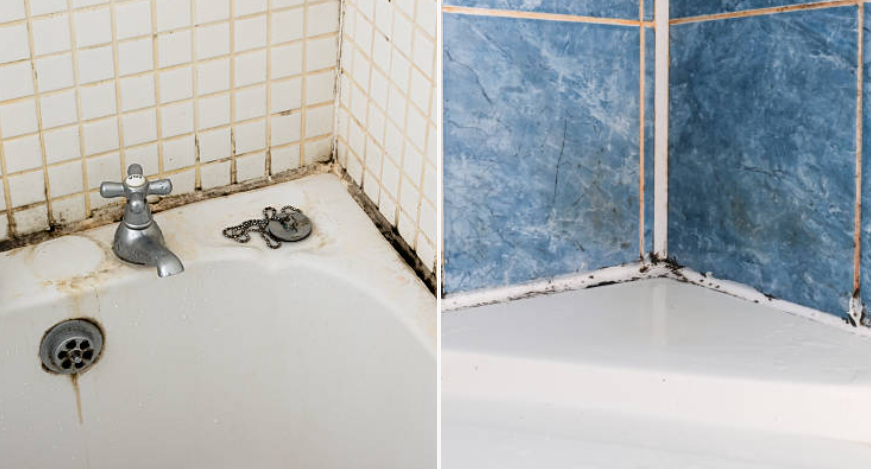
Recurring marks at the tub-to-wall joint, shower curb, door seal, plumbing penetration, or floor edge suggest direct water entry or trapping. Dry the area, observe it during normal use, and note exactly where water first appears. Replacing stained caulk without correcting a leak or failed joint may only hide the evidence.
Dampness unrelated to bathing
A ceiling stain that grows during rain, a wet wall near plumbing, swelling trim, or moisture that returns when nobody has used the bathroom suggests a leak or building problem. Stop treating it as a ventilation-only issue.
Growth behind stored items
Mould behind bottles, bins, mats, curtains, or furniture often means air cannot move and water cannot evaporate. The prevention step is to reduce crowding, drain containers, wash away residue, and allow the surface and item to dry separately.
A persistent odour without visible growth
A musty smell after visible surfaces are clean can indicate concealed damp material. Check under sinks, around access panels, behind the toilet, beneath mats, near baseboards, and on the other side of the affected wall where accessible. Do not cut into a wall or disturb suspect material without considering electrical, plumbing, asbestos, and exposure risks.
Make the Exhaust Fan Prove That It Works
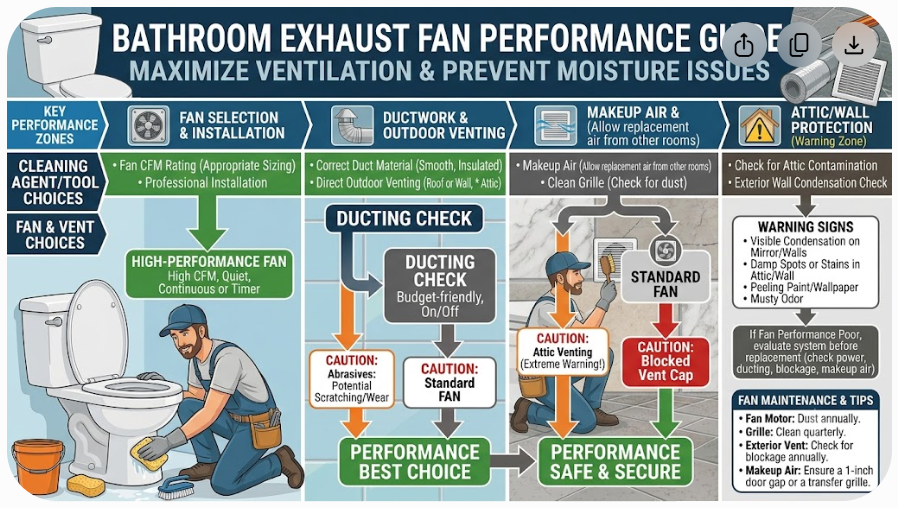
Turning on a fan is useful only if it removes moist air from the room and sends it to an appropriate outdoor termination.
Start with basic observations:
- Turn the fan on before or at the start of bathing.
- Confirm that it sounds and feels as though it is moving air, not merely making noise.
- Check whether the grille is blocked by dust or paint, without dismantling equipment beyond the manufacturer’s maintenance instructions.
- Make sure the room has a safe path for replacement air, such as the intended door undercut or another designed opening.
- Observe whether mirror fog and surface condensation clear after use.
- Verify through building records or qualified inspection that the fan exhausts outdoors rather than into an attic, ceiling cavity, or other indoor space.
Health Canada recommends using bathroom exhaust fans during showering and allowing them to run for a few minutes afterward. The exact run time should be based on the fan, room, climate, and how long surfaces remain damp; a timer or humidity control may improve consistency. Do not treat a fixed number of minutes as proof that the room is dry.
If the fan runs but condensation remains heavy, possible causes include a dirty grille, obstructed or poorly configured duct, weak fan, inadequate replacement air, very long or hot showers, a cold surface, or a fan that does not vent outdoors. A renter should document the pattern and notify the landlord or property manager rather than altering building systems without authorization.
Control Humidity Without Chasing One Number
A small hygrometer can show whether the home stays damp, but one reading does not diagnose the bathroom. Relative humidity changes with temperature, location, and time. A sensor beside the shower may spike while the rest of the home remains within range.
Health Canada recommends maintaining indoor relative humidity at 30–50%. The CDC advises keeping it no higher than 50%. Treat those values as household guidance, not as permission to ignore wet surfaces. Condensation can still form on a cold ceiling, window, or exterior wall even when the room average seems acceptable.
Use a hygrometer to look for patterns:
- the baseline before bathing;
- the peak after bathing;
- how quickly the reading returns toward the household baseline;
- whether humidity remains elevated between uses; and
- whether the problem is seasonal or affects other rooms.
In a humid climate or season, opening a window may introduce more moisture rather than remove it. In cold weather, an open window may chill nearby surfaces and create condensation elsewhere. Use outdoor air only when conditions and building guidance make it helpful. A dehumidifier may help with whole-home humidity, but it should not become a substitute for repairing a leak or providing proper bathroom exhaust.
Shorten the Time That Surfaces Stay Wet
Small routine changes work best when they target places where water actually remains.
After bathing
- Keep the exhaust fan operating long enough for the room to recover.
- Use a squeegee or cloth on compatible shower walls or glass when it materially shortens drying time.
- Spread the shower curtain fully so folds do not stay wet.
- Leave an enclosure positioned as its manufacturer recommends for drying and safety.
- Remove pooled water from ledges, tracks, corners, and seals.
- Hang towels and bath mats with enough space and airflow to dry.
- Empty water from toys, cups, soap dishes, and containers.
Between cleanings
- Keep bottles and organizers from forming a permanently damp barrier against walls or tub edges.
- Wash away soap and body-product residue that can hold moisture and provide material for growth.
- Check caulk, grout, seals, and painted surfaces for cracks, gaps, lifting, or softness.
- Clean the fan grille according to its instructions so dust does not restrict airflow.
- Avoid leaving wet laundry or damp cleaning cloths in the bathroom.
Drying does not require making the room look empty. It requires giving water a route to drain, evaporate, or be removed before materials stay damp.
Distinguish Cleaning, Maintenance, and Repair
Prevention fails when three different problems are treated as one housekeeping task.
A cleanable surface problem
A small amount of visible mould on a washable, intact surface may be suitable for household cleanup when the person doing it can use the required protection. Health Canada recommends water and dish detergent for small and medium areas and states that bleach is not necessary. Follow the federal guidance for area classification, protective equipment, isolation, and cleaning rather than assuming every dark spot can be casually wiped.
This article focuses on preventing recurrence, not prescribing a universal mould-removal recipe. Surface material, affected area, occupant health, and hidden damage can change the safe cleanup method.
A maintenance problem
A clogged fan grille, failed flexible seal, loose shower-door component, or worn surface coating may require maintenance. Use the manufacturer’s instructions and choose products compatible with the material. Do not paint over growth, caulk over wet material, or seal a joint merely to conceal discolouration.
A repair or building problem
Soft drywall, swollen trim, loose tile, cracked enclosure components, water below flooring, recurring ceiling stains, or moisture inside a wall indicates more than surface cleaning. Repair the water path and assess damaged material. If the fan discharges into an attic or the duct is disconnected, the solution belongs in the ventilation system, not on the bathroom ceiling.
For renters, photograph visible growth and moisture, record dates and conditions, and notify the responsible housing provider in writing. Provincial, territorial, state, or local rules determine legal responsibilities; do not delay urgent health or water-damage action while resolving responsibility.
Know When the Problem Has Outgrown Household Prevention
Health Canada classifies an affected area as small when there are no more than three patches and their total combined area is 1 square metre (about 10 square feet) or less. Its medium category includes more than three patches when each is smaller than 1 square metre and their combined area is under 3 square metres (about 32 square feet); its decision chart also places growth greater than 1 but less than 3 square metres in this category. A single patch larger than 3 square metres is large. Health Canada recommends qualified professional assessment and cleanup for large areas, as well as professional assistance when mould returns after cleaning.
Escalate the response when:
- the affected area is large or continues to spread;
- mould returns soon after appropriate cleaning and drying;
- there is a persistent musty odour without a visible source;
- drywall, insulation, wood, flooring, or another porous material is wet or damaged;
- sewage, flooding, contaminated water, or major water intrusion is involved;
- the moisture source is hidden or cannot be safely reached;
- the work would disturb a large area or unknown building material; or
- someone exposed has asthma, severe allergies, a weakened immune system, or symptoms that may be related to dampness or mould.
Health Canada notes that infants, children, seniors, pregnant people, and people with respiratory conditions may be at greater risk. Susceptible people should not be near a mould cleanup area. Anyone concerned that symptoms may be related to indoor air quality should speak with a healthcare professional.
Do not spend money on routine species testing before addressing an obvious moisture problem. Both Health Canada and CDC guidance emphasize that the type of mould usually does not change the basic decision to remove it safely and correct the moisture source.
Use Recurrence as a Diagnostic Test
After cleanup and a prevention change, record what happens. Note the location, date, shower use, weather, fan operation, humidity pattern, and time until the surface dries. A photo taken from the same position can show whether the same patch returns.
If the area stays clear, the change may be controlling the moisture. If growth returns in the same joint, ceiling corner, or wall edge, do not simply repeat the same cleaning cycle. Reconsider the source:
- Is the fan actually exhausting outdoors?
- Is water entering behind a seal or tile?
- Is the surface unusually cold?
- Is there a plumbing or exterior leak?
- Is damp porous material still present behind the finish?
Recurring mould is information. It means the room, component, or building has not yet reached a reliably dry condition.
A Practical Prevention Routine
Use this as a starting system and adapt it to the room:
- During bathing: Run effective exhaust, limit unnecessary steam, and keep the intended replacement-air path open.
- Immediately afterward: Remove standing water, spread curtains and textiles to dry, and leave the fan running until the room is recovering.
- Regularly: Wash away residue, dry bottle bases and organizers, inspect joints and seals, and clean the fan grille as permitted.
- Monthly or seasonally: Review humidity patterns, check around plumbing and fixtures, and look for peeling paint, soft material, staining, or musty odour.
- After any leak or overflow: Stop the source, remove water, dry affected materials promptly, and assess whether porous material or hidden cavities were affected.
- After visible mould returns: Reopen the diagnosis. Do not assume stronger cleaner is the missing step.
The best prevention plan is not the one with the most products. It is the one that makes the bathroom dry predictably, exposes leaks early, and routes cleaning, maintenance, and repair to the correct solution.
FAQ
What is the most effective way to prevent bathroom mould?
Control the moisture source. Use an effective exhaust fan that vents outdoors, remove standing water, let textiles and shower components dry, and repair leaks promptly. If mould returns after cleaning, investigate ventilation, condensation, failed seals, plumbing, and hidden damp material instead of relying on stronger cleaner.
How long should I run the bathroom fan after a shower?
Health Canada advises letting the fan run for a few minutes after showering, but no single time fits every bathroom. Run it long enough for humidity and visible condensation to fall and surfaces to begin drying. Fan capacity, ducting, replacement air, shower length, climate, and room temperature all affect recovery.
What humidity level helps prevent mould?
Health Canada generally recommends 30–50% indoor relative humidity, while the CDC advises no higher than 50%. Use those figures as household guidance and also watch actual surfaces. A cold window, ceiling, or exterior wall can collect condensation even when the room-average reading appears acceptable.
Does opening the bathroom window prevent mould?
Sometimes, but not under every condition. A window may help when outdoor air is drier and building conditions allow it. It can add moisture in humid weather or chill surfaces in cold weather. A bathroom exhaust system that vents outdoors is a more controlled approach where one is installed.
Can I prevent mould by wiping down the shower after every use?
Removing standing water can shorten drying time and help, especially in tracks, seals, corners, and on large wet surfaces. It will not correct a plumbing leak, failed waterproofing, weak exhaust, or damp material inside a wall.
Should I test bathroom mould to find out what type it is?
Usually not. Health Canada and the CDC state that routine species identification or air testing is generally unnecessary in a home. Visible or musty mould should be addressed safely, and the moisture source should be found and corrected regardless of colour or species.
When should I get professional help for bathroom mould?
Consider professional help when the affected area is large under Health Canada’s classification, keeps returning, involves hidden or wet porous materials, follows sewage or major water intrusion, or requires disturbing walls or other building materials. Health conditions and the ability to use protective equipment also affect whether household cleanup is appropriate.
Sources
- Health Canada – Guide to Addressing Moisture and Mould Indoors
- Health Canada – Mould
- Health Canada – Improve Indoor Air Quality in Your Home
- Canada Mortgage and Housing Corporation – Preventing Mould in Your Home
- CDC – Mold
- CDC – Mold Clean Up Guidelines and Recommendations