A stain rarely arrives when laundry is convenient. It appears during breakfast, after a nosebleed, on the way out of the house, or when dinner and bedtime are already competing for attention. The easiest response is often to put the item aside and promise to deal with it on wash day.
Jerome did that with some of his children’s clothes. Nosebleed marks and food-sauce splashes were not always treated promptly, and some remained after washing. The lesson was not that every stain has a guaranteed cure. It was that the first few minutes can preserve options that disappear after rubbing, an unsuitable product, or dryer heat.
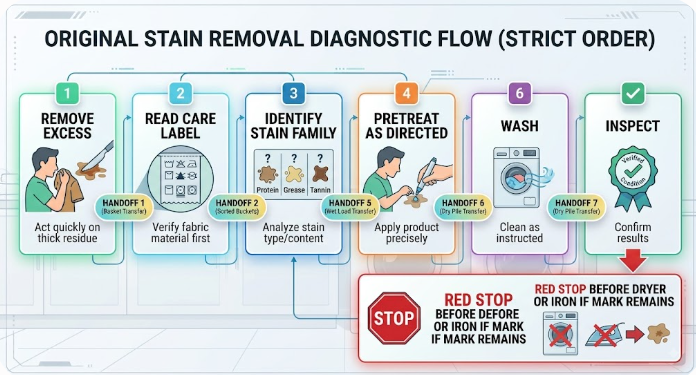
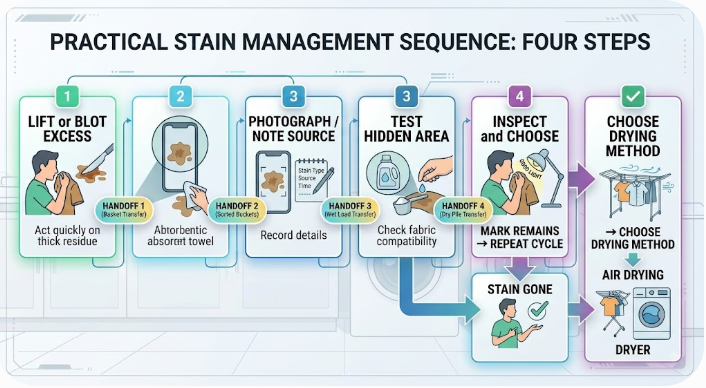
You do not need to identify every ingredient in a spill before acting. You need a safe triage system:
- remove excess material without spreading it;
- check the care label and fabric;
- choose a stain-specific first treatment;
- test unfamiliar products;
- wash as directed; and
- inspect before applying heat.
Practical rule: Stabilize first, identify second, and do not machine-dry until you have checked the stained area in good light.
The First Decision Is Whether Home Treatment Is Appropriate
Before reaching for a stain remover, read the care label. In the United States, the FTC Care Labeling Rule requires covered garments to carry at least one safe care method and necessary warnings. Other jurisdictions use different wording and symbols, but the garment-specific instruction remains the safest starting point.
Pause home treatment when the item is labelled professional clean only, the fabric is leather or suede, the trim is fragile, the dye transfers during a hidden-area test, or the replacement cost makes experimentation unreasonable. Tell a professional cleaner what caused the stain and what has already been applied.
Ordinary food, mud, pen, cooking oil, or a small family nosebleed is also different from laundry contaminated by sewage, floodwater, pesticides, fuel, industrial chemicals, or hazardous workplace material. Those situations may require disposal, employer procedures, public-health advice, or specialist cleaning. Do not bring occupationally contaminated clothing into the household laundry merely because the mark looks like an ordinary stain.
For blood, protect yourself when it is not your own or when the source is uncertain. Avoid direct contact, wash hands after handling, and follow relevant health guidance. This article addresses routine household marks, not healthcare or infection-control laundry.
Use a Five-Minute Stain Triage
The American Cleaning Institute recommends dealing with stains as early as possible, pretreating according to directions, and checking the garment before drying. Turn that advice into a repeatable household sequence.
1. Remove what is sitting on the surface
Lift solids with a spoon or another blunt edge. Blot liquid with a clean white cloth or paper towel. Work from the outside of the mark toward the centre so the affected area does not grow.
Do not scrub automatically. Rubbing can push material deeper, spread pigment, abrade the surface, or distort a delicate weave. Blotting is a transfer action; scrubbing is mechanical force. Use force only when the fabric and treatment instructions support it.
2. Check the item before adding chemistry
Read the fibre and care instructions. Look for limits on water temperature, bleaching, machine washing, drying, and professional care. Check whether the stain crosses a seam, lining, print, coating, elastic, embroidery, or glued decoration.
If you plan to use a product that the item has not encountered before, test it on an inconspicuous area. A successful stain removal that also removes the dye or finish is not a success.
3. Keep the stain identifiable
If you cannot treat it immediately, do not toss it unmarked into a family hamper. Separate it in a way that does not transfer the stain to other items, and leave yourself a note about what happened. A household member who finds a dried red mark later may choose the wrong treatment because the source is no longer clear.
Do not leave wet textiles sealed for an extended period. The goal is a short, visible pause until treatment—not a new moisture problem.
4. Follow one compatible treatment
Use the stain-remover or detergent label exactly. More product and longer soaking are not automatically safer. Do not combine recipes, and never mix bleach with ammonia, acids, or other cleaners. The CDC advises following the product label, ensuring ventilation, and never mixing household bleach with other cleaners or disinfectants.
5. Inspect before heat
After washing, examine the area while the item is wet and again in good light. If the mark remains, repeat a label-safe treatment or escalate to a professional. Do not iron or machine-dry merely because the wash cycle ended. Heat can make some remaining stains more difficult to remove, and a dryer can hide the problem until the full cycle is complete.
Treat Blood as a Protein Stain
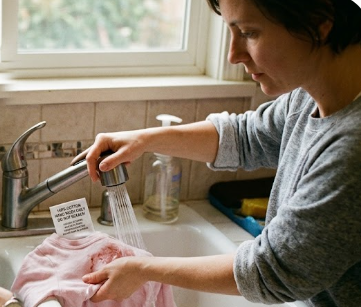
For a fresh, washable blood mark, start with cool water. Flush from the back of the fabric when practical so the water pushes material out through the route it entered rather than deeper through the textile. Blot rather than grinding the area.
University of Georgia textile guidance advises cool-water treatment for blood and emphasizes blotting without forcing the stain farther into the fibre; it also recommends pretesting cleaning agents for colourfastness. After the first rinse, follow the garment label and a compatible detergent, enzyme product, or prewash stain remover label. Enzyme products are not suitable for every fibre or finish, so the product and garment instructions both matter.
For a dried blood mark:
- gently lift any dry surface material with a blunt edge;
- rinse or soak only as the garment and product labels allow;
- pretreat with a compatible product for the stated time;
- wash according to the care label; and
- inspect before drying.
Do not assume chlorine bleach is the next step. The care label may prohibit it, coloured fabric may lose dye, and another product may be the permitted option. The FTC notes that labels may distinguish between chlorine and non-chlorine bleach when one would harm the garment.
If a nosebleed is frequent, severe, or difficult to stop, laundry advice is not the relevant solution; seek appropriate medical guidance. The stain can wait while the person cannot.
Treat Tomato and Food Sauce as a Mixed Stain
A sauce may contain pigment, water, oil, protein, sugar, and spices. That is why one shortcut may remove part of the mark while leaving a ring or oily shadow.
For washable tomato-based sauce, remove excess without smearing, then flush cool water through the back of the stain. The American Cleaning Institute specifically recommends this back-flushing step for tomato sauce before further treatment. Follow with a compatible prewash stain remover or detergent as its label directs, then wash according to the garment label.
For a cream, cheese, curry, meat, or oily sauce, do not assume the tomato sequence alone is enough. Remove the surface material first, then use a product labelled for the relevant oily or protein component if the fabric permits. Treat one layer at a time rather than pouring several household chemicals together.
Be cautious with improvised sunlight, lemon juice, vinegar, dishwashing liquid, or bleaching methods. A technique that appears harmless on a white cotton napkin may alter a dark knit, coated school uniform, elastic blend, or printed garment. Use labelled laundry products or professional advice when the fabric is uncertain.
Treat Grease by Removing Oil Before the Whole Load
Cooking oil, butter, cosmetics, and bicycle or automotive grease can leave a translucent mark that is easy to miss while the garment is wet. Water alone may not remove an oily soil effectively.
Start by lifting any solid or thick material. Blot excess oil; do not spread it across a larger area. Apply a laundry pretreatment or detergent that is labelled for greasy soil and safe for the item. Respect the stated amount and contact time. Then wash at the warmest temperature permitted by the care label—not the hottest temperature available.
Before drying, let enough light reach the area to see whether the darker or translucent patch remains. If it does, repeat a permitted treatment. Do not keep adding product to a saturated area without rinsing or following the label; residue and dye change can become a second problem.
Garments exposed to gasoline, paint thinner, lighter fluid, or other flammable substances are not ordinary grease-stain projects. Do not put them in a dryer. Follow the product and appliance safety instructions and obtain local hazardous-material or professional guidance as appropriate.
Treat Ink by Identifying the Writing Product First
“Ink” is not one stain. Washable marker, ballpoint ink, permanent marker, printer ink, and art materials use different formulations. The pen or marker label may provide the most useful first clue.
Blot fresh liquid without spreading it and place a clean absorbent layer behind the mark if the fabric construction allows. Check the garment and product instructions before applying alcohol, solvent, stain remover, or detergent. Move the item away from heat or flame when any flammable treatment is involved, and ventilate as directed.
Do not keep rubbing because colour appears on the cloth; that may mean you are transferring the garment dye as well as the ink. Stop if the textile colour changes, a finish becomes tacky, or the mark spreads. Ink on acetate, silk, wool, leather, suede, lined clothing, or a valuable item is a sensible point for professional advice.
Wash only after the treatment has been removed or completed as its label directs. Inspect before drying. A faded shadow may be the realistic endpoint if further treatment would damage the garment more than the remaining mark.
Let Mud Dry When Smearing Is the Main Risk
Mud is the exception that shows why “treat everything while wet” is too simple. If a thick layer of mud is still wet, rubbing or rinsing carelessly can drive suspended soil across a larger area. When the item can safely wait, allow surface mud to dry, then brush or lift off as much loose soil as possible outdoors or over a controlled surface.
Check pockets, cuffs, shoe-adjacent hems, and layered knees where grit can collect. Pretreat the remaining mark with a product compatible with the garment and soil, then wash according to the label. Clay-rich or iron-rich soil may leave colour after loose dirt is gone; do not respond by automatically adding chlorine bleach, which may be prohibited and may interact poorly with some mineral stains.
If the “mud” came from floodwater, sewage, an animal-waste area, a contaminated worksite, or an unknown chemical spill, stop treating it as garden soil. Follow the applicable health, safety, employer, or emergency guidance.
Build a Small Stain Station, Not a Chemical Collection
A useful stain station makes prompt action easier without encouraging unsafe mixing. It can be as simple as:
- a blunt spoon or scraper;
- clean white cloths;
- a washable basin or access to a sink;
- the household’s labelled laundry detergent;
- one compatible prewash product;
- disposable gloves for appropriate situations;
- a marker or clip for identifying an untreated item; and
- the washer manual and care-symbol reference.
Store every product in its original container, closed and away from children and pets. Unit-dose laundry packets require particular care because concentrated contents can cause serious injury if swallowed or exposed to eyes or skin; the US Consumer Product Safety Commission advises keeping them in the original container and out of children’s sight and reach.
The best upgrade may be placement rather than more products. If stains happen near the kitchen and children’s bathroom, keep safe blotting supplies accessible to adults there while locked chemicals remain in their proper storage location. The first response can be removal and rinsing; pretreatment can follow when the label has been checked.
Know When to Stop
Stain removal is a damage trade-off. Continue only while the expected improvement is greater than the risk to the fabric, colour, finish, trim, and your own safety.
Stop home treatment when:
- the care label requires professional cleaning;
- colour or finish transfers during testing;
- the fabric weakens, pills, stretches, or changes texture;
- the item contains an unknown or hazardous substance;
- several compatible attempts have produced no improvement;
- the treatment would require a product the garment prohibits; or
- the remaining shadow is less harmful than another aggressive attempt.
Take the item to a professional before adding more chemistry. Bring the care information and disclose the stain source and every product already used. No ethical cleaner can guarantee every stain will disappear, especially after time, heat, dye loss, or fibre damage.
What Not to Assume
- “Hot water removes every stain better.” Temperature must fit both the stain and the care label.
- “Rubbing faster means cleaning faster.” It can spread soil and damage fibres.
- “Natural means fabric-safe.” Acids, alkalis, solvents, sunlight, and pigments can all change textiles.
- “More products improve the odds.” Mixtures can be dangerous or make the result impossible to diagnose.
- “Bleach is the universal last step.” The garment and bleach labels determine whether it is permitted.
- “The wash cycle removed it.” Check before ironing or machine drying.
- “Every old stain can be restored completely.” Time, prior heat, chemistry, and material limits may make a trace permanent.
Decision Summary
- Remove surface material without spreading it.
- Read the care label before choosing water, product, or mechanical action.
- Separate routine stains from hazardous contamination and professional-care items.
- Use cool-water first treatment for ordinary blood marks when the label permits.
- Back-flush washable tomato sauce and address mixed oily or protein components separately.
- Pretreat grease with a compatible labelled product rather than relying on water alone.
- Identify the writing product before treating ink.
- Let thick ordinary mud dry when brushing first will prevent smearing.
- Test unfamiliar products on a hidden area.
- Never mix cleaning chemicals.
- Inspect in good light before dryer heat or ironing.
- Stop when further treatment is more likely to damage the item than improve it.
The most effective household stain system is not a shelf of secret recipes. It is a short decision sequence that protects options: act early, remove excess, respect the textile, use one compatible treatment, and check before heat. Even when a mark cannot be removed completely, that process gives the garment a better chance without turning one spill into chemical damage.
FAQ
Should I use hot or cold water on a stain?
It depends on the stain and the garment. Cool water is the safer first step for routine blood and is commonly used to back-flush tomato sauce, while other soils may respond to a warmer wash. The care label and treatment-product directions control; do not use a universal temperature rule.
Why should I check a stain before using the dryer?
Dryer heat can make some remaining stains harder to remove. Inspect the area after washing and repeat a label-safe treatment or seek professional advice before applying heat.
Can I mix two stain removers if one does not work?
Do not improvise combinations. Rinse or complete the first product’s process as directed, read both labels, and never mix bleach with ammonia, acids, or other cleaners. If the next safe step is unclear, contact the manufacturer or a professional cleaner.
How do I treat an old, dried blood stain?
Gently remove dry surface material, use cool water and a compatible labelled pretreatment as the garment permits, then wash and inspect before drying. Older stains may require repetition and may not disappear completely.
Should wet mud be washed immediately?
Not always. Thick ordinary mud may spread if rubbed while wet. When the source is harmless and the garment can wait, let the surface dry, brush off loose soil, pretreat the remainder, and wash according to the label. Contaminated mud requires situation-specific guidance.
When should I take a stained garment to a professional?
Go early for professional-clean-only, valuable, structured, lined, leather, suede, colour-unstable, or unfamiliar items. Also stop when treatment changes the dye or texture, the substance is hazardous, or repeated safe attempts no longer improve the mark.
Sources
- FTC – Clothes Captioning: Complying with the Care Labeling Rule
- American Cleaning Institute – Stain Removal Guide
- University of Georgia Cooperative Extension – Remove Stains From Blood
- American Cleaning Institute – Tomato Sauce and Spaghetti Dinner Stains
- CPSC – Single-Load Liquid Laundry Packets: Harmful Exposures
More in This Cluster: Laundry Systems
- How to Build a Laundry Routine That Actually Gets Finished
- Sorting Laundry: What Still Matters and What Can Be Combined
- How Much Laundry Detergent Should You Actually Use?
- How to Prevent Musty Towel Odours From Coming Back
- Air Drying vs Machine Drying: Which Is Better for Your Clothes?
- How to Treat Common Laundry Stains Before They Set (you are here)
- Laundry Mistakes That Damage Clothes and Washers Too