A doctor cannot evaluate the part of the story that never reaches the room. Yet mental health is often the part people edit first. They may mention poor sleep, headaches, fatigue, or stomach problems while leaving out the fear, hopelessness, intrusive thoughts, irritability, or behavior change that led them to book the appointment.
That hesitation may come from stigma, uncertainty, privacy concerns, a rushed visit, or the fear that using the wrong word will lead to the wrong conclusion. You may also wonder whether the problem is “serious enough,” especially if you can still work, study, care for others, or appear composed.
You do not need a diagnosis, a perfect timeline, or proof that the cause is psychological before starting the conversation. Your job is to report what has changed and how it is affecting life. The clinician’s job is to help assess what might be contributing and what should happen next.
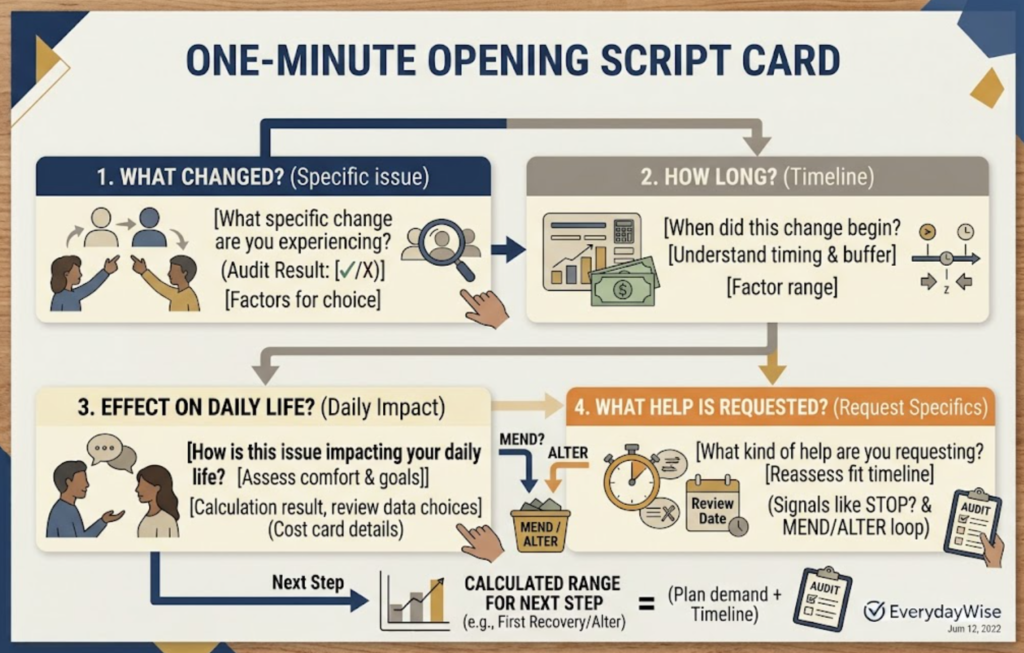
Quick decision: Begin with one sentence: “For the past ___, I’ve noticed ___, and it is affecting ___.” Add any immediate safety concern, then ask for a next step: “Can you help me understand what should be assessed and what support is available?”
Decide Whether This Is a Routine or Urgent Conversation
This article is for a planned or same-day conversation with a family doctor, general practitioner, pediatrician, or other primary care clinician. It does not replace emergency help.
Seek urgent local help if you or another person may act on thoughts of suicide or self-harm, cannot remain safe, is threatening serious harm, is severely confused or disconnected from reality, or has another immediate medical or behavioral emergency. Use your local emergency number, crisis service, or emergency department. If you are unsure how urgent the situation is, tell the health service exactly what is happening and ask for immediate triage.
For a non-emergency concern, a primary care appointment can be a practical starting point. A clinician may ask questions, review physical health and medications, use a screening tool, discuss initial care, arrange follow-up, or refer you to another professional. The available routes differ by country, health system, insurance plan, age, and local capacity.
Open With the Main Concern Early
Appointments can move quickly. If mental health is the main reason you came, name it near the beginning rather than waiting for a perfect opening.
Try one of these:
- “I want to talk about my mental health today.”
- “My anxiety has changed over the past two months, and it is affecting my sleep and work.”
- “I am not sure whether this is depression, but I have stopped enjoying things and I am struggling to function.”
- “I booked because my child’s behavior and communication have changed, and I need help deciding what to assess.”
- “I have been having thoughts about suicide. I need to tell you exactly what has been happening.”
The first sentence does not need to contain the whole history. Its purpose is to reserve the visit for the real concern. If saying it aloud feels difficult, write the sentence in a phone note or on paper and read or hand it to the clinician.
When booking, ask whether a longer appointment is available and state that you want to discuss mental health. You do not have to give detailed personal information to reception staff, although local booking processes vary.
Bring Observations, Not a Self-Diagnosis
Diagnostic labels can help professionals communicate, but they are not an admission ticket to care. Describe the pattern you have observed:
- When it began: a date, life event, season, or approximate period.
- How often it happens: occasionally, most days, in episodes, or under particular conditions.
- How intense it becomes: mild disruption, inability to complete tasks, panic, loss of control, or safety risk.
- What has changed: mood, sleep, appetite, energy, concentration, motivation, behavior, perception, substance use, or physical symptoms.
- Where it shows up: work, school, home, relationships, self-care, driving, finances, or parenting.
- What makes it better or worse: rest, conflict, alcohol or drugs, a medication change, menstrual or hormonal changes, pain, illness, or a particular environment.
- What you have already tried: self-care, time off, peer support, therapy, medication, or another medical visit.
Specific examples give the clinician more to work with than a broad statement such as “I feel bad.” You might say, “I used to sleep seven hours, but for three weeks I have been waking after four hours and cannot concentrate by afternoon.”
The US National Institute of Mental Health recommends being specific about when symptoms started, how severe they are, how often they occur, and whether major stressors or life changes may be involved. A short record can help, but do not postpone seeking care until the record is complete.
Prepare the Information That Can Change the Assessment
Mental and physical health overlap. Bring or be ready to discuss:
- prescription medicines and how you actually take them;
- nonprescription medicines, vitamins, herbal products, and supplements;
- alcohol, cannabis, nicotine, stimulants, sedatives, and other substances;
- recent medication starts, stops, dose changes, or missed doses;
- major illnesses, pain, sleep problems, pregnancy or postpartum changes, injuries, and other health conditions;
- previous mental health diagnoses, treatment, hospital care, or adverse reactions;
- relevant family medical or mental health history; and
- major changes or stressors, including grief, caregiving, work, housing, discrimination, migration, or relationship strain.
Honest substance-use information matters because it can affect symptoms, medication safety, and treatment choices. The goal is clinical accuracy, not a test of character.
Do not stop or change a prescribed psychiatric medicine solely to prepare for the visit. If side effects, missed doses, cost, pregnancy, withdrawal concerns, or fear of dependence are involved, say so directly and ask the prescriber or pharmacist for safe guidance.

From Jerome, EverydayWise Contributor
The passage above comes from the lived experience of Jerome, an EverydayWise contributor.
Jerome had already spent years worrying about his son’s language development before he raised the concern with a family doctor. His son had moved from Korea to Canada as a baby and was learning Korean and English. By the time the boy was older than ten, Jerome and his wife still wondered whether they should ask for help.
Starting that conversation felt risky. Jerome worried that the concern might hurt or label his son. The school had not raised the same issue, which made him question whether the parents were overreacting.
When he finally spoke with the family doctor, the conversation provided direction and information about places that could conduct assessments. Jerome reports that no major problem was found in his son’s case. What stayed with him was how accessible the discussion felt once it began.
That outcome is one family’s experience, not a prediction for another child. Bilingual development does not by itself establish or rule out a condition, and the absence of concern from one setting does not settle what is happening in another. The useful lesson is narrower: a parent can bring a careful observation to a doctor without first deciding what it means.
Talking About a Child or Teen
When the concern involves a child, separate observation from interpretation. Describe what the child does, when it occurs, what has changed, and how it affects daily life.
Bring information from more than one setting when possible:
- what parents or caregivers observe at home;
- what teachers, coaches, or childcare staff observe;
- developmental, language, learning, sleep, sensory, or social changes;
- the child’s own account, in words appropriate to their age; and
- strengths, interests, relationships, and situations in which the concern is less visible.
No feedback from school is still information, but it is not a final verdict. Some difficulties are more visible at home, emerge only under certain demands, or are hidden through effort. Conversely, a family concern may have an explanation that does not require a mental health diagnosis.
Ask how the clinician will include the child without making the child feel that adults have already decided something is wrong. For an older child or teenager, ask how private conversation works and what information must be shared for safety or legal reasons. Those rules vary by age and jurisdiction.
Ask What the Doctor Is Considering
A mental health conversation may include questions about mood, thoughts, behavior, sleep, substances, safety, physical symptoms, medical history, and current stress. The clinician may also consider physical conditions or medication effects that can resemble or worsen mental health symptoms.
Useful questions include:
- “What possibilities are you considering?”
- “Could a physical condition or medication be contributing?”
- “What does this screening result tell us, and what does it not tell us?”
- “Would you recommend treatment here, a referral, further assessment, or monitoring?”
- “What are the benefits, risks, and alternatives of this option?”
- “How long should I expect to wait before reassessment?”
- “What change would mean I should contact you sooner?”
A screening questionnaire can organize a discussion; it is not necessarily a diagnosis by itself. Likewise, normal laboratory results may rule out some contributors without explaining the whole experience.
State What Kind of Help You Need
The clinician may not know whether your priority is explanation, symptom relief, documentation, a referral, medication review, workplace or school support, or simply a plan for what to watch.
Complete the sentence: “Today, I would like help with ___.”
Possible requests include:
- understanding whether further assessment is appropriate;
- discussing therapy or other non-medication support;
- reviewing a medication’s benefit, side effects, interactions, or monitoring;
- finding a professional with relevant language, cultural, age-group, or clinical experience;
- making a plan while waiting for specialist care;
- documenting how symptoms affect work or school; or
- scheduling follow-up rather than leaving the issue open-ended.
A request is not a guarantee that a particular test, diagnosis, medicine, or referral is appropriate. It tells the clinician what decision you are trying to make.
Make the Conversation More Accessible
You can ask for communication support. Depending on the service, this may include a professional interpreter, accessibility accommodation, telehealth, written instructions, a longer visit, or permission to bring a trusted person.
A companion can help you remember information or add observations, but you may prefer to speak alone for part of the visit. Decide beforehand what the companion may discuss. Avoid relying on a child to interpret sensitive medical information when a qualified interpreter is available.
Privacy rules and insurance records vary, and there are exceptions when safety or law requires disclosure. If privacy is affecting what you are willing to say, ask at the beginning: “Before I explain, can you tell me how confidentiality works here and what the exceptions are?” The next article in this cluster addresses privacy and insurance questions in detail.
If You Feel Dismissed or Leave Without a Plan
Sometimes a clinician may not share your interpretation, may need more time, or may have limited referral options. Before leaving, clarify the current position:
- “What has been ruled out, and what remains uncertain?”
- “What should I track between now and the next visit?”
- “When should I return?”
- “What symptoms or safety changes require urgent help?”
- “If this continues, what is the next assessment or referral option?”
Ask for another appointment if the visit was too short. You may also seek another qualified opinion, subject to local access and cost. If communication broke down, record the facts while they are fresh: what you reported, what advice was given, tests or referrals ordered, expected wait times, and follow-up instructions.
Access problems can be exhausting. The US Substance Abuse and Mental Health Services Administration suggests asking whether a service accepts new patients or maintains a waiting list and preparing a repeatable script for calls or emails. Your country may offer different public, private, school, workplace, or community routes.
Leave With a Follow-Up Plan
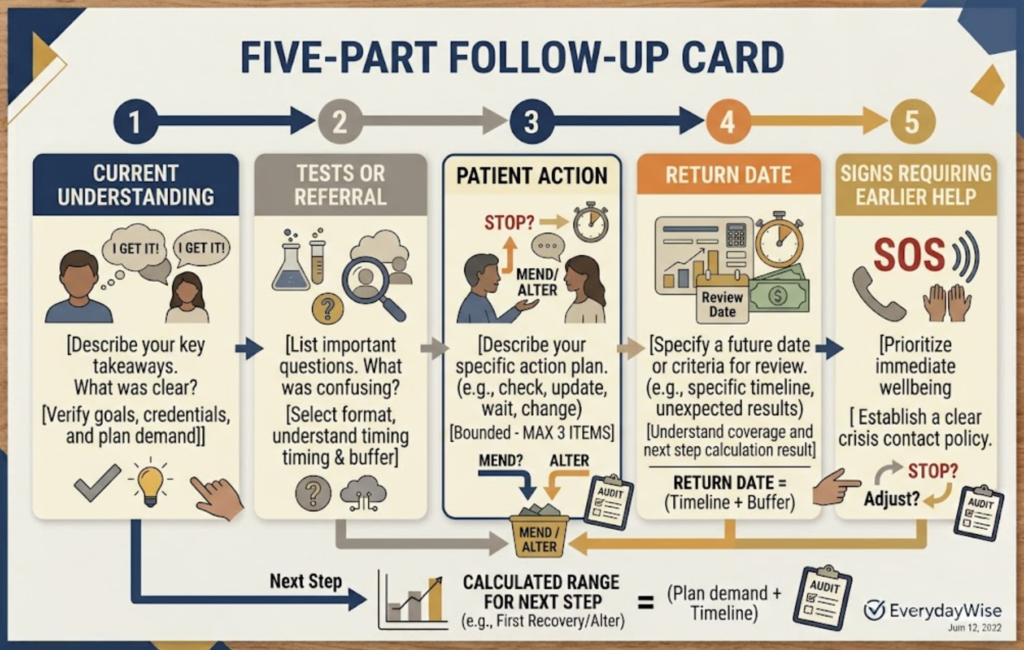
Before the appointment ends, try to confirm five items:
- the clinician’s current understanding, including uncertainty;
- any tests, treatment, referral, or monitoring being proposed;
- what you need to do next;
- when and how follow-up will occur; and
- which changes require earlier or urgent contact.
If a referral is made, ask who will contact whom, the likely waiting period, and what to do if no message arrives. If medicine is prescribed, ask how to take it, common and serious adverse effects, interactions, expected time to benefit, monitoring, and whom to contact with problems.
Decision Summary
You can speak with a doctor before you know the diagnosis or even whether the problem is primarily mental or physical. Open with the main concern, describe the timeline and effect on daily life, disclose health and medication information that may change the assessment, and state the next decision you need help making.
The most useful outcome may be a diagnosis, but it may also be a referral, medication review, physical-health check, monitoring plan, or scheduled follow-up. Make sure the visit ends with a next step and an escalation boundary.
This article provides general educational information and is not a diagnosis or a substitute for care from a qualified professional. Services, referral pathways, confidentiality rules, and emergency systems vary by location. If there is immediate danger or an inability to remain safe, contact local emergency or crisis services now.
FAQ
Do I need to know what condition I have before talking to a doctor?
No. Describe what changed, when it began, how often it happens, and how it affects daily life. The clinician can help decide what needs assessment.
What if I cry, freeze, or cannot explain everything clearly?
Bring a short note with your opening sentence, main examples, medicines, and questions. You can read it, hand it to the clinician, or ask a trusted person to help while preserving any private time you want.
Can physical symptoms be part of the conversation?
Yes. Sleep, pain, appetite, energy, concentration, digestive symptoms, and other physical changes may be relevant. A clinician may consider both physical and mental health contributors.
Should I tell the doctor about alcohol, cannabis, or other drugs?
Yes. Accurate information can affect safety, interpretation of symptoms, and treatment choices. Include frequency, recent changes, and any substances used to sleep, cope, focus, or manage distress.
What if the doctor suggests medication and I am unsure?
Ask about the expected benefit, risks, alternatives, interactions, monitoring, and follow-up. Share your concerns. Do not start, stop, or change prescribed medication without appropriate clinical guidance.
Can I bring someone with me?
Often, yes. Ask the clinic first. A trusted person can provide support or take notes, and you can request to speak with the clinician alone for part of the appointment.
What if I cannot get a referral quickly?
Ask about waiting lists, interim support, another qualified service, follow-up with primary care, and the symptoms that should trigger earlier or urgent help. Available options depend on the local health system and your coverage.
Sources
- National Institute of Mental Health — Tips for Talking With a Health Care Provider About Your Mental Health
- National Institute of Mental Health — Help for Mental Illnesses
- SAMHSA — How to Set Up an Appointment for Mental Health and Substance Use Care
- healthdirect Australia — Talking to Your Doctor (GP) About Mental Health
More in This Cluster: Mental Health Navigation
- Therapist, Psychologist, Psychiatrist, and Counselor Compared
- How to Prepare for a First Therapy Appointment
- How to Evaluate Online Therapy
- What to Do During a Mental Health Crisis
- How to Talk to a Doctor About Mental Health (you are here)
- Mental Health Privacy and Insurance Questions to Ask
- How to Support a Family Member Without Taking Over