When someone you love is struggling with their mental health, helping can quickly become a second job. You may search for clinicians, make appointments, check medication, cover bills, watch for changes, and absorb late-night calls. The work may begin with care and gradually turn into responsibility for another adult’s life.
That shift can leave both people frustrated. The person receiving help may feel watched or managed. The supporter may feel that everything will fall apart if they step back.
Useful support protects two things at once: the family member’s ability to make decisions and the supporter’s ability to remain present without becoming the entire care system. Safety can sometimes require urgent action, but most ordinary support works better when roles, permission, and limits are clear.
Quick decision: Ask what kind of help is wanted, agree on one specific role, and set a limit you can keep. If there is a serious or immediate safety concern, move from ordinary family support to local crisis or emergency help.
Begin With an Observation, Not a Verdict
A conversation is more likely to stay open when it begins with what you have noticed rather than a diagnosis you have assigned.
Try:
“You have seemed exhausted and have missed several things you normally care about. I’m concerned. How have you been doing?”
Avoid opening with a conclusion such as “You are depressed,” “You are having another episode,” or “You need therapy.” Even when your concern is well founded, a label can turn the first conversation into an argument over whether you are qualified to make it.
SAMHSA advises supporters to listen without judgment and recognizes that an adult generally cannot be forced into care simply because a family member believes care would help. A calm conversation may still matter. Ask open questions, allow pauses, and reflect what you heard before proposing a solution.
Useful questions include:
- “What has been hardest lately?”
- “Would you like me to listen, help think through options, or help with one practical task?”
- “What kind of support feels useful, and what feels intrusive?”
- “Is there anyone you already trust with this?”
- “Would you like me to check in again, or would you prefer to contact me?”
If the person does not want to talk, you can leave a low-pressure opening: “You do not have to explain this now. I care about you, and I’m available on Tuesday if you want company or help finding a next step.”
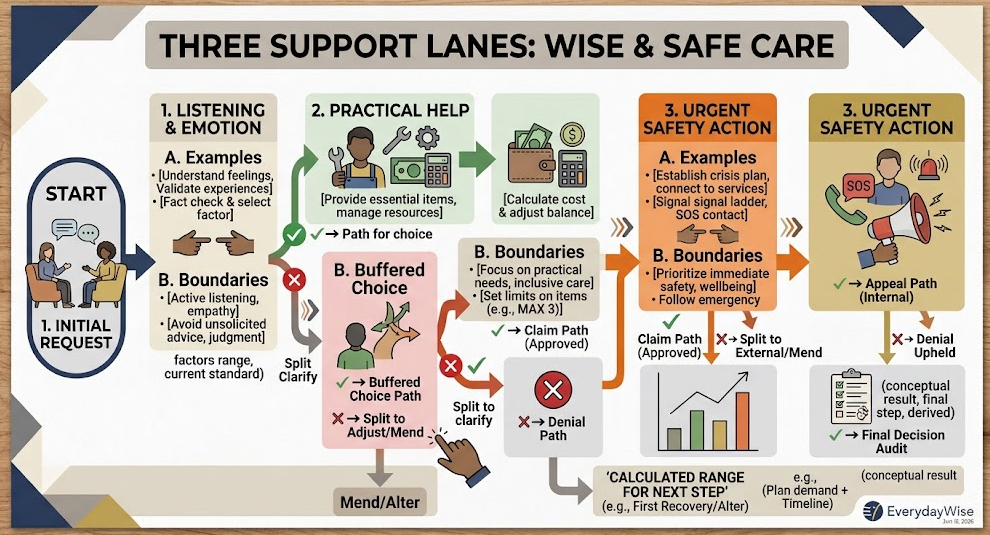
Choose the Support Lane Before You Act
Family support often becomes confusing because several different jobs are treated as one. Separate them.
Lane 1: Listen and stay connected
This may mean having a meal together, sitting quietly, taking a walk, or hearing the same concern more than once. Listening does not require agreeing with every interpretation or promising to keep every possible secret. It means giving the person room to describe their experience without immediately taking control.
Lane 2: Provide practical help by agreement
The person may want a ride, a list of clinics, help checking insurance, company in a waiting room, childcare during an appointment, or a prepared meal. Make the task concrete:
“I can call three clinics with you on Thursday evening, or I can drive you to one appointment. Which would help more?”
A bounded offer is easier to accept and easier to sustain than “I’ll take care of everything.”
Lane 3: Respond to urgent safety risk
Ordinary permission-based support has limits when someone may be in immediate danger, cannot maintain basic safety, or presents a serious threat to another person. Contact a local crisis service, emergency service, or emergency department as appropriate. If you are unsure whether a situation is urgent, a crisis service may help you assess the next step. Country and local procedures differ.
These lanes can change. A person may want company today, appointment help next week, and no family involvement during the clinical conversation. Agreeing to one form of help does not give permanent permission for every form of involvement.
Ask Before Solving
Supporters often act quickly because waiting feels irresponsible. Yet speed can create work the other person never requested: appointments they will not attend, messages they did not approve, or plans they do not recognize as their own.
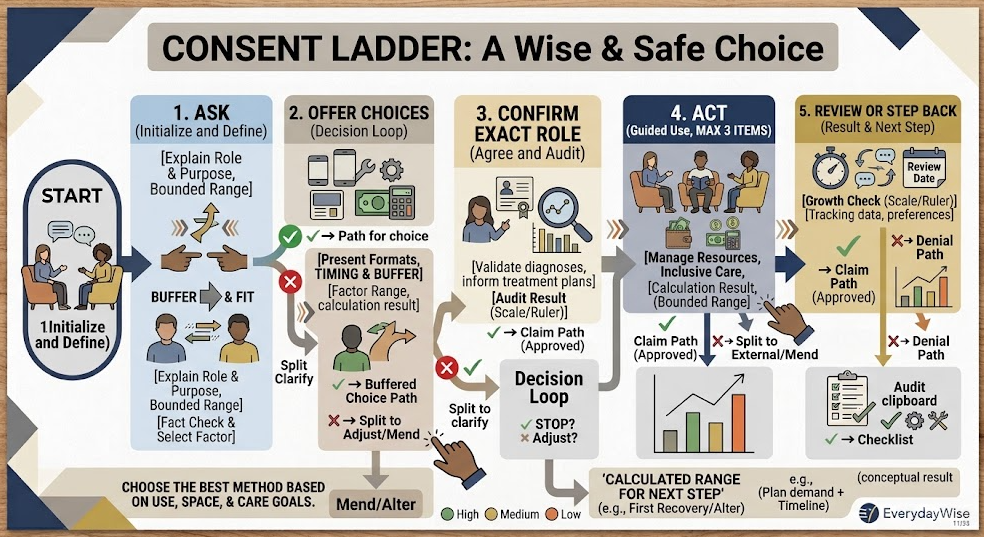
Before acting, use four short questions:
- What outcome does the person want? Relief tonight, an assessment, medication review, help at work, better sleep, or simply someone to listen?
- What help do they want from you? Information, transportation, money, company, reminders, or no action yet?
- What may you share, and with whom? Agree on what can be said to a clinician, employer, school, or another relative.
- When will you review the arrangement? A role that works during a difficult week may become unnecessary or burdensome later.
Consent should be specific enough to guide behavior. “You can help with my appointments” might mean booking times, not reading clinical messages. “You can come with me” might mean sitting in the waiting room, not answering questions for the patient.
Let the Person Do the Parts They Can Do
Taking over can be efficient in the short term. It may also remove practice, confidence, and information from the person whose care it is.
Use the least assistance that makes the next step possible:
- If they can make the call but feel overwhelmed, sit nearby while they call.
- If choices are exhausting, narrow a long list to two or three verified options.
- If they forget details, offer to take notes after asking permission.
- If transportation is the barrier, solve transportation rather than managing the appointment.
- If paperwork is difficult, complete it together while they choose what to disclose.
- If they want you in the room, agree in advance on whether you will listen, add observations, or help ask questions.
There will be times when illness, disability, age, or legal status changes what a person can do independently. Guardianship, substitute decision-making, parental responsibility, and supported decision-making vary by jurisdiction. Even when you have a formal role, involve the person as much as their situation allows and distinguish legal authority from personal preference.
Handle Clinical Information With Permission
Family involvement in mental health care is rarely all or nothing. A person may approve scheduling help but not disclosure of session details. They may want a sibling at one appointment and privacy at the next.
Before contacting a clinician, ask:
- what information the person wants you to share;
- whether the clinician may speak with you;
- whether a written authorization is needed;
- how long that authorization lasts;
- what role you will have during appointments; and
- how the person can change or end the permission.
In the United States, HHS explains that a provider may discuss information relevant to care with involved family when the adult patient agrees or does not object, subject to applicable law. If a capable adult objects, the provider generally must respect that choice except in limited circumstances such as a serious and imminent threat.
Privacy rules may restrict what the provider can tell you, but they do not necessarily prevent the provider from listening to concerns you provide. HHS specifically notes that HIPAA does not stop US providers from receiving information from family members. Before sharing, ask how your message will be documented and whether the patient may later see it. Rules elsewhere differ.
Do not use a provider’s silence as proof that your concerns were ignored. The clinician may be unable to confirm whether the person is a patient, discuss treatment, or report what action was taken.
Support Treatment Without Becoming the Treatment
A family member can encourage professional care, help locate services, or support a treatment plan the person has chosen. They cannot replace a clinician, prescribe a solution, or guarantee an outcome.
This boundary is especially important with medication. Unless you have an agreed or legally defined caregiving role, avoid controlling pills, changing doses, demanding that medication be started or stopped, or interpreting side effects on your own. Encourage the person to contact the prescriber or pharmacist about missed doses, adverse effects, interactions, or plans to discontinue a medicine. Sudden changes can carry risks that depend on the medication and the person.
You can help by asking what the person wants:
- a reminder system they control;
- transport to the pharmacy;
- help writing questions for the prescriber;
- a shared list of current medicines for emergencies; or
- company while they call about a concerning effect.
Therapy, medication, peer support, primary care, social services, housing help, and workplace accommodations solve different problems. Avoid making yourself the single point through which every part of care must pass.
Set Boundaries That Describe Your Actions
A boundary is most useful when it states what you will do, what you will not do, and what happens next. It is not a threat designed to force treatment.
Examples:
- “I can talk for 30 minutes tonight. After that I need to sleep.”
- “I can drive you on Mondays, but I cannot leave work without notice.”
- “I can help compare programs. I cannot choose one or attend every appointment.”
- “I will not lend more money, but I can sit with you while you call the billing office.”
- “You can stay here if we both follow the house safety rules. If there is violence or a credible threat, I will call for emergency help.”
- “I care about you. I will end the call if I am being threatened, and we can try again later.”
Mental health symptoms may explain behavior; they do not require family members to accept abuse, coercion, stalking, theft, unsafe driving, or violence. If a boundary could increase danger, seek guidance from a local domestic-violence, crisis, safeguarding, or emergency service and make a safety plan before announcing it.
Financial and housing support deserve particular clarity. Decide the amount, duration, payment method, and conditions you can sustain. Do not cosign, share accounts, surrender passwords, or assume debt because guilt has made the decision feel urgent. Professional financial, legal, housing, or social-service advice may be needed.
When Help Is Refused
An adult may decline treatment or family involvement. Refusal can be painful, especially when you can see consequences developing.
You can still:
- state the specific changes you have observed;
- express care without repeating the same demand every day;
- offer two or three realistic options;
- reduce practical barriers if the person wants help;
- keep ordinary contact that is not entirely about symptoms;
- maintain your own household and safety boundaries; and
- learn the local threshold and process for urgent intervention.
Avoid secret alliances among relatives unless safety requires information to be shared. Group pressure can feel like an ambush and may damage trust. If several people are involved, agree on who will communicate, what each person can actually offer, and which decisions remain with the individual.
You may need to tolerate a choice you would not make. Respecting an adult’s decision is different from approving it, financing it, or hiding its effects. You remain responsible for your conduct and limits.
Make a Plan During a More Stable Period
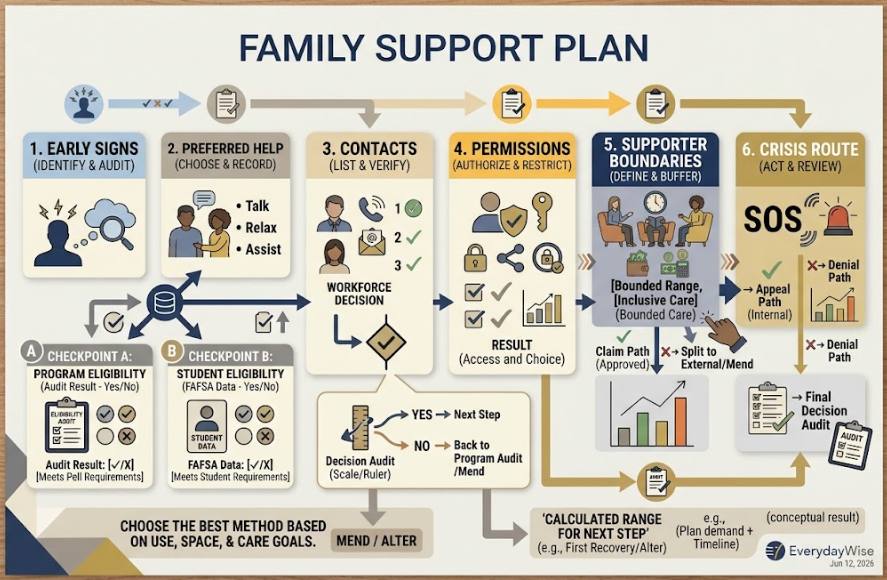
It is easier to decide how family should help before a crisis. With the person’s participation, create a short support plan that answers:
- What changes usually signal that more support may be needed?
- What does the person find calming, and what makes things worse?
- Who should be contacted first?
- Which clinician, clinic, pharmacy, or peer support is involved?
- What help may family provide with appointments, transportation, children, pets, meals, or medication questions?
- What information may be shared?
- Which hospital, crisis service, or emergency route is preferred where a choice exists?
- Are there advance directives, crisis plans, guardianship documents, or consent forms to locate?
- What behavior or safety threshold changes the plan from ordinary support to urgent action?
- Who supports the supporter?
Keep the plan accessible and review it after a major change, hospitalization, move, medication change, or crisis. A plan is a guide, not a guarantee that every service will be available or every situation will unfold as expected.
Protect the Supporter’s Capacity
Family members can experience disrupted sleep, lost work, financial strain, fear, resentment, and social isolation. Waiting until you are exhausted makes boundaries harder to communicate and emergencies harder to judge.
Build support that does not depend on the person you are helping. This might include your own clinician, primary care provider, family or caregiver group, spiritual community, employee assistance program, respite service, or trusted friend. SAMHSA lists support groups specifically for family members and others affected by a loved one’s mental health or substance-use difficulties.
Keep some routines that are not organized around the illness. Protect sleep, medical care, work obligations, other children or dependents, and relationships. Share tasks where the person consents and where doing so is safe. One relative should not automatically become the scheduler, financier, driver, monitor, and crisis responder.
Stepping back from an unsustainable role is not the same as abandoning a person. Explain what is changing, preserve any help you can reliably continue, and connect the person with additional supports when possible.
Know When Ordinary Support Is No Longer Enough
Seek urgent local help when there is an immediate danger, a suicide attempt or stated imminent plan, a credible threat of violence, a medical emergency, severe disorientation, or an inability to maintain basic safety. Do not promise secrecy about an immediate threat.
When contacting help, describe observable facts: what the person said or did, access to weapons or other lethal means if known, injuries, substances involved, location, medical conditions, current medicines if known, and what has changed. Avoid exaggeration, but do not soften facts because you fear embarrassing the person.
If it is safe for you to remain nearby, follow the crisis professional’s instructions. Do not physically restrain someone, conduct a search, seize belongings, or place yourself in danger unless trained authorities direct an action and it is safe and lawful. Emergency and involuntary-care rules differ by location.
For concerns that are serious but not immediate, contact an appropriate local crisis line, health service, or clinician for guidance. US readers can call or text 988; readers elsewhere should use their local crisis or emergency service.
Decision Summary
Good family support has a defined shape. Begin with observations, ask what help is wanted, choose a specific role, and let the person retain the parts they can manage. Clarify permission before joining appointments or exchanging information. Put limits around time, money, housing, communication, and safety before exhaustion turns care into control or resentment.
The safety exception remains clear. Serious and immediate danger calls for crisis or emergency action, even when ordinary support would wait for consent. Outside that exception, the durable goal is partnership: enough help to reduce barriers, enough space for the person to remain an active participant, and enough support for the family member to keep going.
This article provides general educational information and is not medical, legal, or emergency advice. Capacity, consent, guardianship, confidentiality, safeguarding, and involuntary-care rules vary by jurisdiction and circumstance. Consult qualified local professionals about your situation. If anyone may be in immediate danger, contact the appropriate local crisis or emergency service now.
FAQ
How do I offer help without sounding controlling?
Describe what you have observed, express concern, and ask whether the person wants listening, options, or one practical task. Offer a bounded choice instead of presenting a complete plan.
What if my family member refuses therapy?
Unless an urgent safety or legal exception applies, an adult may refuse care. Keep a respectful connection, offer realistic options, maintain your boundaries, and learn the local process for urgent assessment if risk increases.
Can I contact their clinician without permission?
You may be able to send concerns, but privacy law may prevent the clinician from confirming care or sharing information with you. In the United States, HHS says HIPAA does not prevent providers from listening to family concerns. Ask how your information will be recorded; other jurisdictions differ.
Should I remind someone to take psychiatric medication?
Only if the person wants that help or you have a defined caregiving role. Do not change doses or advise stopping medication. Questions about missed doses, side effects, or discontinuation belong with the prescriber or pharmacist; urgent reactions require appropriate medical help.
Is setting a boundary abandoning them?
No. A clear limit identifies what you can reliably provide. Explain the change, keep any support you can sustain, and help connect the person with other resources when possible.
What if their behavior is hurting the family?
Symptoms may provide context, but they do not excuse abuse or unsafe behavior. Protect household members, state enforceable limits, and use local domestic-violence, safeguarding, crisis, or emergency resources when risk is present.
When should I act without waiting for permission?
Act urgently when there is an immediate danger, a suicide attempt or imminent plan, a credible threat of violence, a medical emergency, severe disorientation, or inability to maintain basic safety. Contact the appropriate local crisis or emergency service.
Sources
- SAMHSA — How to Help Someone With Mental Health, Drug, or Alcohol Issues
- SAMHSA — How to Talk to Someone About Help
- SAMHSA — Taking Care of Yourself While Helping Someone
- US Department of Health and Human Services — Family Concerns When an Adult Patient Restricts Disclosure
- US Department of Health and Human Services — Discussing Adult Mental Health Information With Family
- National Institute of Mental Health — Help for Mental Illnesses
More in This Cluster: Mental Health Navigation
- Therapist, Psychologist, Psychiatrist, and Counselor Compared
- How to Prepare for a First Therapy Appointment
- How to Evaluate Online Therapy
- What to Do During a Mental Health Crisis
- How to Talk to a Doctor About Mental Health
- Mental Health Privacy and Insurance Questions to Ask
- How to Support a Family Member Without Taking Over (you are here)