The first person to notice a work-related change may not be the person experiencing it. A coworker sees routine tasks being delayed. A partner notices that work follows the person home. A manager hears a sharper response than usual. Each observer has information, but none has the whole explanation.
During Jerome’s difficult period at a construction company in Korea, strain affected employees and family. He became more irritable while work accumulated and he drank more. People around him may have seen effects that he was not yet ready or able to organize into a clear account. His experience also establishes an important boundary: understanding why behaviour changed does not require other people to accept mistreatment.
Quick decision: Begin with specific observations, ask rather than diagnose, and listen for what the person wants now. Offer one concrete form of help while preserving their authority. Managers should address work conditions within their control; family and friends should protect their own limits. Move to local crisis or emergency support when there is immediate danger, suicide or self-harm risk, severe intoxication or possible withdrawal, violence, or inability to stay safe.
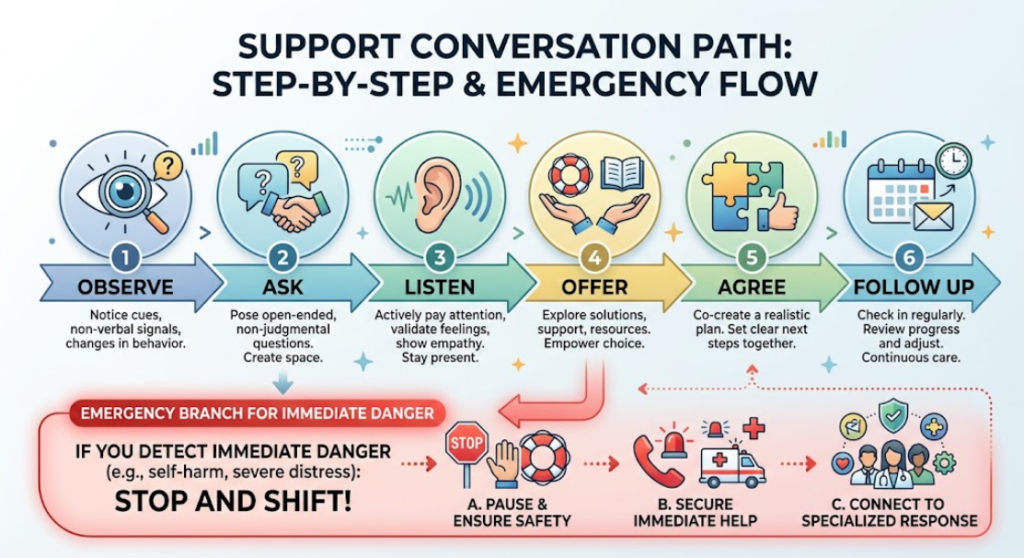
Start With What You Actually Observed
“You are burned out” assigns a label that the other person may reject and that the observer cannot establish. Specific observations create room for correction.
Examples include:
- “You have worked late six nights this month, and you said you are sleeping only a few hours.”
- “Three tasks that are usually routine have stayed open, and you seem worried about them even when you are off.”
- “You have cancelled our last two plans and seemed unusually irritable at home.”
- “I noticed you are drinking more often after difficult shifts, and I am concerned about how you are doing.”
Use a private, reasonably calm setting. Avoid beginning the conversation during an argument, public meeting, performance confrontation, or when either person is intoxicated. A manager may need to address an immediate safety or conduct issue at once, but a broader health conversation should still respect privacy.
Ask a Question That Leaves Authority With the Person
Open questions allow the person to describe the problem in their own terms:
- “What has work been like for you lately?”
- “What feels hardest to carry right now?”
- “Are you getting any time when you can actually switch off?”
- “Would it help to talk, solve one practical problem, or find professional support?”
- “What would make the next few days safer or more manageable?”
Do not interrogate the person into disclosure. They may not trust the setting, may fear employment consequences, or may need time. State the concern and keep the route open: “You do not have to explain everything now. I wanted you to know what I noticed and that I am available.”
SAMHSA advises that a supportive conversation can help and emphasizes listening without judgment; it also notes that one person generally cannot force another into care. Legal exceptions and emergency powers vary, especially for children, dependent adults, or immediate danger.
Listen for the Kind of Help Being Requested
Support can fail when the helper immediately supplies solutions. The person may want to be heard, may need a practical task removed, or may already know that professional help is necessary but lack the capacity to arrange it.
Listen for four needs:
- Understanding: “I need someone to hear what has been happening.”
- Practical relief: “I need coverage, food, transportation, childcare, or help making a call.”
- Workplace action: “The workload, schedule, role, or manager needs to change.”
- Professional support: “I need healthcare, counseling, substance-use support, occupational health, or crisis help.”
Reflect back the main point and check it: “It sounds as though the after-hours calls are preventing any real time off. Is that the part you most want help with?” This reduces the chance that the helper solves a different problem.

Offer One Concrete Action
“Let me know if you need anything” places the work of designing help on the depleted person. A bounded offer is easier to accept or decline.
Possible offers include:
- bring a meal or handle one essential errand;
- sit with the person while they contact a provider;
- help write a short symptom or workload timeline;
- provide transportation or childcare for an appointment;
- cover an agreed task if you have authority and capacity;
- join a workplace meeting at the person’s request;
- identify local low-cost, culturally relevant, or language-accessible services; or
- schedule a specific follow-up conversation.
Ask permission before contacting an employer, clinician, family member, or service on the person’s behalf. Explain what you can and cannot do. Do not promise secrecy if immediate safety, safeguarding duties, or workplace reporting obligations may require action.
If You Are a Coworker
A coworker can notice changes, reduce isolation, share accurate process information, and help escalate a capacity problem. They should not absorb unlimited work or become the person’s clinician.
Useful actions may include:
- checking whether the person wants company during a break;
- helping distinguish urgent from nonurgent work;
- documenting a shared staffing or workflow problem;
- offering a fair, time-limited task exchange;
- identifying a union, occupational-health, safety, or employee-support route; and
- reporting an immediate safety concern through the required channel.
Avoid gossip, speculative diagnosis, and discussing personal information with people who do not need it. If the person’s behaviour is harmful, name the conduct and maintain the boundary while still recognizing possible strain.
If You Are a Manager
A manager controls resources that friends and family do not: priorities, assignments, staffing requests, meeting volume, schedule, coverage, response expectations, and sometimes leave or accommodation routes.
WHO recommends organizational interventions that assess and modify psychosocial risks such as excessive workload, understaffing, long or inflexible hours, low control, limited support, harassment, and unclear roles. A manager’s response should therefore examine work design rather than sending the worker away with only resilience advice.
Ask operational questions:
- Which demands changed?
- What work cannot fit safely?
- Which priorities conflict?
- What authority or information is missing?
- What can be delayed, reassigned, reduced, or stopped?
- What coverage is needed for breaks, leave, or appointments?
- What confidentiality and accommodation process applies?
Separate support from performance management. If conduct or safety must be addressed, use fair procedures and clear expectations. Do not require a public disclosure or a diagnosis in a team meeting.
If You Are Family or a Friend
Family and friends often receive the spillover while having little control over the workload. They may provide connection and practical help, but they also need limits.
A boundary can sound like:
- “I want to listen, and I will not stay in a conversation where I am being shouted at.”
- “I can help make two calls tonight; I cannot manage the entire search.”
- “I will support you in seeking help, but I cannot cover for unsafe drinking or driving.”
- “The children and I need a plan that protects us if anger escalates.”
Burnout language should never be used to excuse intimidation, coercion, violence, unsafe supervision, or repeated verbal harm. Support may include creating distance, contacting a domestic-violence or safeguarding service, or using emergency help.
Help Without Taking Over
WHO describes psychological first aid as humane, supportive, practical help that respects a distressed person’s dignity, culture, and abilities. Although developed for crisis settings, its emphasis on listening, practical support, and restoring control is useful here.
Preserve choice by offering options rather than issuing a plan. A person may prefer a primary-care clinician, therapist, occupational-health service, faith or cultural leader, peer group, substance-use service, union representative, or another trusted route. Check whether the service is appropriate and available in the person’s location.
Taking over may provide short-term relief but can also remove the person’s voice, create dependence on the helper, or expose private information. Exceptions arise when the person cannot remain safe or when legal safeguarding duties apply.
Follow Up in a Specific Way
One conversation rarely changes a sustained workload or health problem. Agree on what will happen next.
Examples:
- “I will text tomorrow evening. Is that okay?”
- “You will call the clinic Monday; I will sit with you while you call.”
- “We will bring the priority conflict to the manager at 10 a.m.”
- “If you miss the safety check or say you cannot stay safe, we will contact urgent help.”
Follow-up should not become surveillance. Ask permission for ordinary check-ins and explain any safety threshold that would require action.

Respond Directly to Immediate Risk
If the person mentions suicide or self-harm, ask directly whether they are in immediate danger and contact local crisis or emergency support. Do not leave them alone when danger is immediate and it is safe for you to remain. Reduce access to lethal means when this can be done safely and lawfully, and follow qualified responder instructions.
Use urgent medical help for severe intoxication, possible withdrawal, confusion, seizure, breathing difficulty, or another medical emergency. Prevent driving or safety-critical work when possible if the person is impaired. For violence or threats, prioritize the safety of those at risk and contact the appropriate emergency or specialist service.
Protect the Supporter Too
Supporting someone can consume time, sleep, money, and emotional capacity. Decide what you can offer sustainably. Share responsibility with appropriate people and services while protecting privacy. A supporter may also need counseling, a peer or family group, occupational support, or time away.
Stepping back from a harmful interaction is compatible with care. A family member, friend, or coworker does not have to become the sole barrier between another person and crisis.
Decision Summary
- Describe observations instead of assigning a burnout diagnosis.
- Ask what the person is experiencing and what kind of help they want.
- Listen before solving and reflect back the main need.
- Offer one concrete, bounded action.
- Obtain consent before sharing information or acting on the person’s behalf, except where immediate safety or legal duties require action.
- Managers should address workload and work design within their authority.
- Coworkers, family, and friends should maintain limits around capacity, privacy, and harmful conduct.
- Agree on a specific follow-up.
- Use local crisis or emergency help when danger cannot safely wait.
Useful support returns some control to the person while connecting them with resources that no individual helper can replace.
This article provides general information and does not replace clinical, crisis, safeguarding, workplace, or legal guidance. Available services and reporting duties vary by jurisdiction and role.
FAQ
What should I say to someone who seems burned out?
Use a specific observation and an open question: “You have been working late and seem unable to switch off. How have you been doing?” Avoid announcing a diagnosis.
What if they deny there is a problem?
Do not force disclosure. State what you observed, leave the route open, and act on any immediate safety or conduct concern within your role.
Should I contact their employer or family?
Usually ask permission first. Immediate danger, safeguarding duties, or role-specific reporting requirements may justify or require action without consent. Obtain local guidance.
How can a manager help without invading privacy?
Discuss observable work demands, capacity, priorities, safety, coverage, and available support. Share only information needed for a legitimate workplace purpose and follow confidentiality rules.
Do I have to tolerate anger because they are burned out?
No. Strain may explain a change but does not excuse harmful conduct. State the boundary, protect people at risk, and involve appropriate support or emergency services when needed.
What practical help is most useful?
Ask. Common options include one meal, one errand, childcare, transportation, appointment support, a workload record, temporary task coverage, or a scheduled check-in.
When should I call emergency or crisis services?
Use urgent local help for immediate suicide or self-harm danger, inability to stay safe, severe intoxication or possible withdrawal, violence, confusion, a medical emergency, or unsafe impairment.
Sources
More in This Cluster: Stress and Burnout
- Stress vs Burnout
- Early Signs of Burnout
- How to Reduce Decision Fatigue
- Building Recovery Time into a Busy Week
- Workload Boundaries Without Perfect Control
- When Self-Help Is Not Enough
- How to Support Someone Experiencing Burnout (you are here)