A bathroom tool does not become unsafe simply because it has reached an arbitrary age. A cloth may remain useful after many washes, while a newer glove may already have a pinhole and a new squeegee may scratch because its blade was damaged in storage. Calendar rules can be convenient, but they often replace the inspection that actually matters.
The better decision is condition-based: can the tool still be cleaned, fully dried, kept in its assigned role, and used without spreading residue, exposing your hands, or damaging a surface? If not, decide whether to wash it, downgrade it, replace a removable part, or retire it completely.
Quick Answer
Inspect bathroom cleaning tools before and after use. Keep a reusable tool only if it can be cleaned according to its care instructions, dried completely, stored without contaminating other items, and still performs its job safely.
Replace or repair a tool when it remains dirty or odorous after correct washing, stays wet because its material or holder cannot dry, sheds or leaves residue, has frayed or distorted working surfaces, scratches or streaks, has cracks or corrosion that trap soil, or no longer provides the protection or control it was designed to provide. Discard disposable items after their intended use. After body-fluid contamination, illness-related cleaning, mould cleanup, or exposure to a strong chemical, follow the applicable public-health guidance and product instructions rather than relying on the tool’s usual routine.
Do Not Use One Replacement Schedule for Every Tool
Bathroom tools have different materials, jobs, and exposure patterns. A machine-washable microfiber cloth is not managed like a foam sponge. A toilet brush head is not managed like a shower squeegee. Reusable chemical-resistant gloves are not interchangeable with single-use gloves.
This is why universal claims such as “replace every month” are weak guidance unless the product manufacturer actually gives that interval. Frequency of use, ventilation, laundry method, cleaning product, storage design, and the type of contamination all change a tool’s useful life.
Use four outcomes instead:
- Clean and return to the same job when the tool is intact, washable, fully dryable, and effective.
- Downgrade or reassign when it is clean but no longer suitable for a delicate or appearance-critical surface. A cloth that leaves faint lint on glass may still be acceptable for a rough utility task, provided the new role is clearly separated.
- Replace the working part when the handle or frame is sound and the manufacturer provides a compatible head, pad, or blade.
- Retire the whole tool when it cannot be restored, dried, safely controlled, or repaired without improvisation.
Age can prompt an inspection. It should not overrule the evidence in front of you.
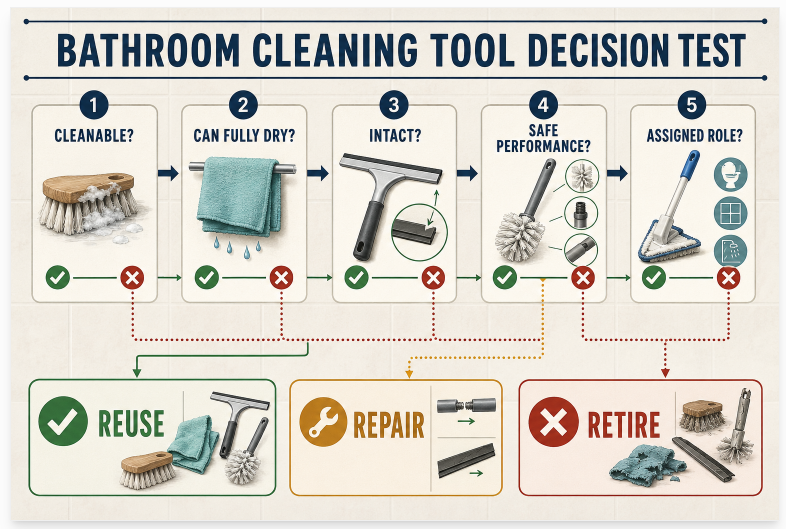
Use the Five-Part Keep-or-Replace Test
1. Can it be cleaned correctly?
A reusable tool must have a realistic cleaning route. Follow the tool manufacturer’s laundering or washing instructions, including temperature, detergent, drying, and restrictions on bleach, fabric softener, or heat.
CDC household guidance tells readers to launder washable items with detergent at the recommended water temperature and dry them completely.[1] More detailed CDC environmental-cleaning guidance, written for healthcare settings rather than ordinary homes, likewise emphasizes laundering reusable cloths and mop heads, following manufacturer instructions, and allowing them to dry fully before storage.[2] The setting is different, but the basic equipment-care logic is useful: reusable does not mean “put away dirty.”
If residue remains after the permitted process, do not keep adding stronger products without checking compatibility. Some odour or staining may be cosmetic, but persistent soil, greasy loading, embedded debris, or an unremovable smell can show that the tool is no longer being restored between uses.
2. Can it dry completely?
Drying is part of tool care, not an optional finishing touch. A brush pushed wet into a sealed cup, a sponge left in pooled water, or a folded cloth placed in a closed bin may remain damp between cleanings.
Correct the storage problem first. Rinse out residue, remove excess water without contaminating clean surfaces, and place the tool where air can circulate. Clean the holder too. A ventilated brush canister or hanging point is useful only if drainage is clear and the surrounding area can itself be cleaned.
Replace a holder that is cracked, impossible to clean, chronically retains water, or repeatedly tips contaminated liquid onto the floor. Replace an absorbent tool that remains sour or damp despite correct washing and adequate drying time. Buying a new tool without fixing the wet storage condition will simply repeat the problem.
3. Is its working surface intact?
Look at the part that actually touches the bathroom.
- Cloths and pads should not shed heavily, hold hard debris, expose scratchy backing, or lose the texture needed for their assigned surface.
- Sponges should not crumble, split, remain slimy, or develop edges that trap residue beyond cleaning.
- Brush bristles should not be flattened, sharply splayed, loose, or permanently loaded with debris.
- Squeegee blades should be smooth, straight, flexible, and free from nicks, hardened sections, or embedded grit.
- Mop heads should remain securely attached and should not leave fibres, dirty water, or backing material behind.
An intact-looking handle does not rescue a failed working surface. Conversely, a worn head does not always require throwing away the handle. OXO, for example, sells replaceable heads for some toilet-brush models, and Unger sells replacement rubber for compatible squeegees.[3][4] These examples do not make the parts universal; verify the exact model and installation instructions.
4. Does it still perform without causing damage?
Test performance on the job it is assigned to. Repeated squeegee lines may come from technique or residue on the blade, so clean and inspect it first. If a nicked or hardened blade still leaves the same line, replace the compatible blade or tool. A cloth that streaks may be overloaded with detergent or fabric-care residue; launder it correctly before deciding it has failed.
Stop using any tool that scratches, catches, leaks, slips unpredictably, or requires so much force that control is lost. Do not “use it up” on coated glass, acrylic, fiberglass, plated hardware, or other vulnerable finishes. Damage to the tool can change a once-safe material into an abrasive edge.
5. Can it remain in one clearly separated role?
Colour coding, labels, or separate storage can keep toilet tools away from sink, shower, and general-surface tools. The system does not need to be elaborate; it needs to be unmistakable to everyone who cleans.
A tool that has been cleaned may still be inappropriate for reassignment. Do not move a toilet brush, toilet cloth, or body-fluid cleanup item into a general bathroom role merely because it looks usable. If a downgraded cloth cannot be reliably identified, retiring it is safer than expecting household members to remember an invisible rule.
Decide by Tool Type
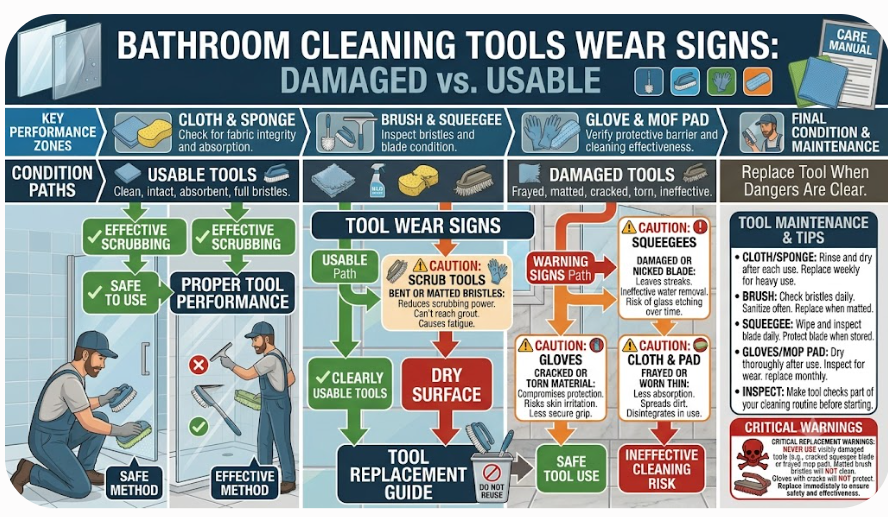
Reusable cloths and microfiber pads
Wash reusable cloths after the cleaning session rather than leaving them wet in a bucket or hamper. Keep toilet-area cloths separate during use and handling. Follow the label for machine or hand washing and complete drying. Some microfiber products are specifically marketed as washable and reusable, but that does not establish a shared lifetime for every brand or weave.[5]
Retire a cloth from delicate glass or polished finishes if it begins to leave lint, streaks after correct laundering, or contains particles that cannot be removed. Replace it entirely if seams or backing expose rough material, it remains odorous or loaded after washing, or its structure has deteriorated so far that it no longer cleans predictably.
Avoid treating a discoloured but clean cloth as automatically contaminated, or a bright-looking cloth as automatically clean. Appearance is one signal, not the full test.
Sponges and nonwoven scrub pads
Sponges are difficult to judge by colour alone because water and residue can remain inside. Rinse and clean them as the manufacturer permits, remove excess water, and store them open to air—not at the bottom of a wet container.
Replace a sponge or pad when it tears, crumbles, separates into layers, remains slimy or odorous after cleaning, traps debris, or develops a rough edge that threatens the surface. If a pad is rated for one material or level of abrasion, do not assume wear makes it gentler. Exposed internal material can make it less predictable.
Do not use the same sponge for the toilet and sink. Do not keep a disposable wipe for a second cleaning session simply because part of it still looks white.
Toilet brushes and detail brushes
After use, rinse a toilet brush without splashing, let excess water drain where the toilet and product design allow, and return it only to a clean, ventilated holder. Clean the holder regularly. Do not place the wet brush on the floor, vanity, or bathtub edge.
Replace the head—or the full brush if the head is not replaceable—when bristles are flattened, loose, brittle, sharply splayed, or permanently loaded; the neck or handle is cracked; metal is corroding; the head is loose; or the tool cannot dry in its holder. A brush that no longer reaches the intended surfaces encourages excessive force and splashing.
For small grout or crevice brushes, downgrade may be possible when clean bristles are merely too soft or uneven for precise work. Retire them if damaged fibres can scratch, if the handle has gaps that retain residue, or if their prior role cannot be kept separate.
Squeegees
Rinse the blade after use, wipe away trapped grit, and store it so the rubber or silicone edge is not bent against a wall or shelf. A blade left under pressure may take a set; a tool left wet against metal hardware may also create storage problems.
If a cleaned blade leaves one line in the same position on every pass, inspect for a nick or hardened section. If the frame is sound and a compatible replacement blade exists, replace the blade rather than the whole tool. Retire a squeegee with a cracked handle, loose channel, sharp corrosion, or a blade that cannot be securely replaced.
Reusable and disposable gloves
The cleaner label determines whether gloves are needed and what material is suitable. Reusable household gloves should be inspected before use for tears, punctures, stiffness, swelling, discoloration, tackiness, or other chemical degradation. OSHA guidance for protective gloves advises inspection before each use and replacement when gloves are torn, punctured, or made ineffective; discoloration or stiffness can indicate deterioration.[6]
That occupational guidance is more formal than ordinary household cleaning, but the physical warning signs remain relevant. Replace a compromised glove immediately. Do not rely on an unseen pinhole when handling a product whose label requires protection.
Single-use gloves are not reusable household cleaning tools. Remove and discard them as directed after the task, then wash your hands. Reusable gloves should be washed and dried as their manufacturer instructs, including the inside if contamination entered them. If you cannot identify what chemical contacted a glove or whether the material remains compatible, replace it rather than guessing.
Mop heads, extendable handles, and powered tools
Remove and launder washable mop pads after bathroom use according to their instructions. Replace a pad that no longer attaches securely, exposes backing, leaves debris, or cannot be restored. Inspect poles, swivel joints, locks, and grips; a loose joint or collapsing extension creates a control and fall hazard even when the pad is clean.
For powered scrubbers, stop use if the housing is cracked, the battery compartment or charging components have been wet, the attachment wobbles, or the instructions prohibit the observed exposure. Replace only approved attachments. Electrical repair and battery disposal are not cleaning improvisations; use the manufacturer or local waste program.
Contamination Can Override the Normal Decision
Routine bathroom soil and a specific contamination event are not the same.
After cleaning vomit, feces, blood, or another body fluid, after illness-related disinfection, or after handling a public-health concern, follow the current instructions for that event. They may require disposable supplies, a specific reprocessing method, or disposal. Do not return the tool to routine storage until that decision is resolved.
The same boundary applies after mould cleanup. A lightly used washable cloth from a small, properly managed task is not automatically equivalent to a porous brush or sponge loaded with growth and debris. Follow the cleanup guidance, product label, and tool care instructions; discard anything that cannot be confidently cleaned and dried.
Chemical exposure can also end a tool’s life. Strong oxidizers, acids, solvents, or incompatible cleaners may stiffen gloves, weaken adhesives, corrode metal, discolor plastics, or change a pad’s texture. Never try to “neutralize” an unknown residue by adding another chemical. Isolate the item, consult the labels, ventilate if appropriate, and contact local poison control or emergency services if an exposure or fumes create a health concern.
Build a Small System That Makes Replacement Obvious
You do not need a spreadsheet of purchase dates. A practical setup can include:
- separate colours or clear labels for toilet, general bathroom, glass, and floor tools;
- a washable container or ventilated holder for each wet tool;
- one clean, dry replacement cloth or pad ready before cleaning begins;
- a brief inspection when the tool is taken out and again when it is washed;
- replacement heads or blades only for models that securely accept them;
- a discard point that keeps contaminated items away from children, pets, and reusable supplies.
If dates help your household, write the first-use or last-inspection date on the holder. Use it as a reminder to inspect, not as proof that the tool is safe until that date or waste after it.

What Not to Do
Do not spray every tool with disinfectant and assume it is ready for storage. A disinfectant must be compatible with the item, used according to its label, and cannot compensate for trapped soil or incomplete drying.
Do not boil, microwave, dishwash, bleach, or machine-wash a tool unless its instructions permit that method. Heat and chemicals can deform plastics, weaken adhesives, damage microfiber, or create unsafe exposure.
Do not keep a tool solely because it looks expensive, or discard a sound washable tool solely because a generic internet schedule has expired. Replace the failed part when the design supports it; retire the whole item when safety, cleanability, or reliable separation has failed.
The useful life of a bathroom cleaning tool ends when it can no longer return to a clean, dry, intact, clearly assigned, and effective condition. That standard is stricter than “it still exists” and more sensible than an unsupported date. Inspect what touches the surface, correct the way the tool is washed and stored, and replace only what no longer passes the job.
FAQ
How often should I replace bathroom cleaning tools?
There is no reliable universal interval for every tool. Inspect each item before and after use. Replace it when it cannot be cleaned and fully dried, remains odorous or loaded after correct washing, has damaged working surfaces, no longer performs safely, or cannot be kept in its assigned role. Follow a manufacturer-stated replacement interval when one applies to the exact product.
When should I replace a toilet brush?
Replace the head or full brush when bristles are flattened, loose, brittle, sharply splayed, or permanently loaded; the head is loose; the handle or neck is cracked; metal is corroding; or the brush and holder cannot be cleaned and dried. Use a replacement head only if it is made for the exact model and attaches securely.
Can bathroom microfiber cloths be reused?
Yes, if the product is reusable and the cloth can be laundered according to its care instructions, dried completely, and kept in a clearly assigned bathroom role. Retire it from delicate surfaces if it leaves lint or traps grit, and discard it if rough backing is exposed or persistent residue or odour remains after correct washing.
Should I throw away a shower squeegee that leaves streaks?
Clean the blade and check your technique first. If a line remains in the same place, inspect the blade for grit, a nick, bending, or hardening. Replace a compatible blade when the frame is sound and the manufacturer supports that part; replace the full tool if the channel, handle, or attachment is damaged.
When should reusable cleaning gloves be replaced?
Replace them immediately if they have a tear, puncture, leak, stiffness, swelling, tackiness, severe discoloration, or another sign of chemical degradation. The cleaner label and glove instructions determine whether the glove material is suitable. Disposable gloves should not be washed for reuse.
Can I disinfect a sponge or brush instead of replacing it?
Only use a cleaning or disinfection method that the tool and chemical labels permit. Disinfection does not repair tears, trapped debris, deteriorated material, a cracked handle, or storage that prevents drying. If the tool cannot return to a clean, dry, intact, effective condition, replace it.
Should I discard tools used for mould or body-fluid cleanup?
Follow the current guidance for the specific cleanup, the chemical label, and the tool’s care instructions. Some events may require disposable supplies or a defined reprocessing method. Discard a tool that cannot be confidently cleaned and dried, has incompatible chemical exposure, or cannot be kept separate from routine tools.
Sources
- CDC – When and How to Clean and Disinfect Your Home
- CDC – Cleaning Supplies and Equipment
- OXO – Toilet Brush Replacement Head
- Unger – 18-Inch Replacement Rubber Blades
- Rubbermaid – Microfiber Cleaning Cloth
- OSHA – Personal Protective Equipment
More in This Cluster: Bathroom Cleaning
- How to Remove Soap Scum Without Damaging Your Bathroom
- How to Clean Grout Without Damaging It
- Toilet Cleaning Routine
- How to Prevent Bathroom Mould
- Best Cleaning Order for a Bathroom
- How to Clean Glass Shower Doors
- When to Replace Bathroom Cleaning Tools (you are here)